
When you compare gaming consoles and PCs, performance and cost often stand out as key factors. Gaming PCs generally offer superior graphics quality and faster load times due to their powerful hardware. In contrast, gaming consoles provide convenience and a more budget-friendly initial purchase. For instance, a high-end gaming PC can cost around $1,900, while a PS5 Pro costs about $700. However, consider how much you value graphics versus cost when choosing your gaming experience. Are you ready to invest in a high-performance setup, or do you prefer the simplicity of a console?
Key Takeaways
Gaming PCs offer superior graphics quality, achieving high resolutions like 4K and 8K for a more immersive experience.
Consoles are more budget-friendly upfront, with lower initial costs, making them accessible for casual gamers.
Consider long-term expenses; while consoles have lower initial costs, ongoing fees for games and subscriptions can add up.
Gaming PCs allow for hardware upgrades, ensuring your setup stays current with technology advancements.
Evaluate your gaming preferences; choose a gaming PC for performance and customization, or a console for simplicity and exclusive titles.
Performance
Graphics Quality
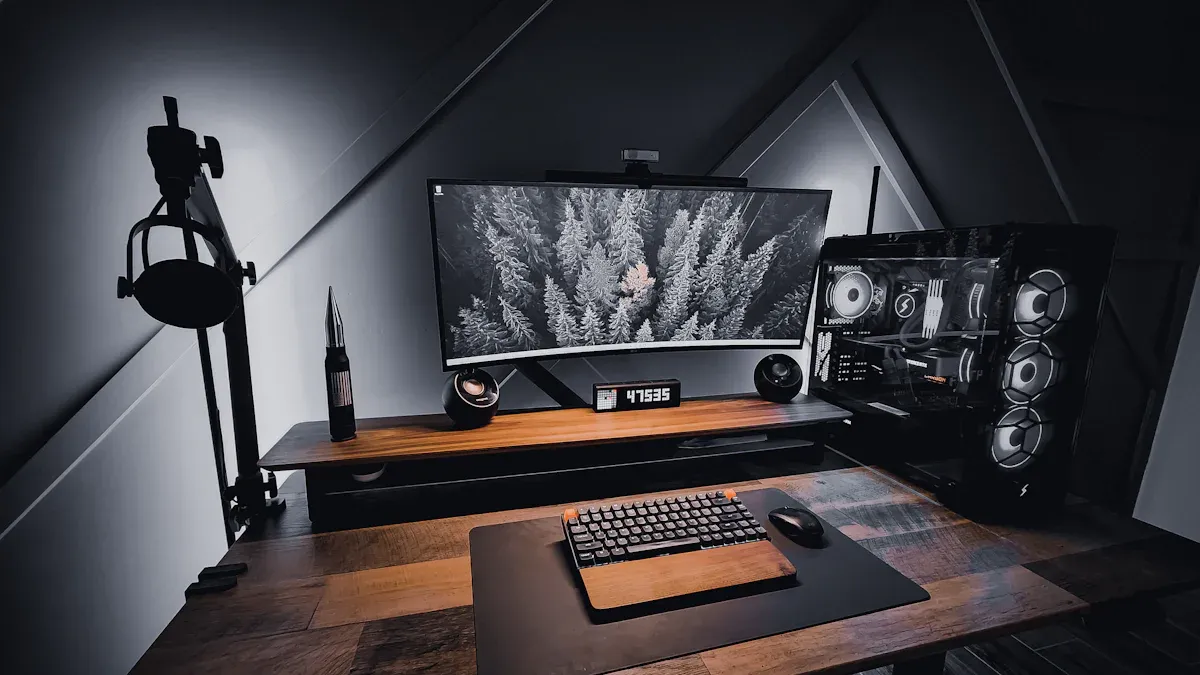
When you think about graphics quality, gaming PCs often take the lead. They can deliver stunning visuals that make games come alive. With powerful graphics cards, PCs can achieve high resolutions like 4K and even 8K. This means you see every detail, from the texture of a character’s clothing to the intricate designs of the game world. Current-generation gaming consoles have made great strides in graphics too. They now support photorealistic textures and advanced rendering techniques. These advancements allow for dynamic environments with realistic lighting and particle effects. However, the level of detail and visual fidelity on a gaming PC usually surpasses that of consoles.
Here’s a quick comparison of graphics features:
Gaming PCs:
High-resolution support (4K, 8K)
Advanced graphics settings
Customizable hardware for better performance
Gaming Consoles:
Improved graphics capabilities
Optimized for specific games
Consistent performance across titles
Load Times and Frame Rates
Load times and frame rates can significantly affect your gaming experience. Gaming PCs typically load games faster than consoles. This speed comes from using high-performance solid-state drives (SSDs). For example, a game like Spider-Man: Miles Morales loads in just 3 to 5 seconds on a gaming PC with a Gen 4 SSD. In contrast, the same game takes about 4 to 6 seconds on a console and can take even longer on standard models, reaching up to 12 seconds.
Here’s a table that shows the load times for this popular game:
Game Title | PC Load Time (Gen 4 SSD) | Console Load Time | Console Load Time (Standard) |
|---|---|---|---|
Spider-Man: Miles Morales | 3–5 seconds | 4–6 seconds | 8–12 seconds |
Frame rates also play a crucial role in performance. A gaming PC can often achieve higher frames per second (FPS) than consoles. This higher FPS leads to smoother gameplay, especially in fast-paced or competitive gaming scenarios. For instance, while many consoles aim for 30 to 60 FPS, a well-built gaming PC can easily reach 144 FPS or more, providing a competitive edge in multiplayer games.
Cost

Upfront Costs
When you consider the initial costs of gaming, the differences between gaming consoles and PCs become clear. A gaming console, like the PlayStation 5, typically costs around $499. This price includes everything you need to start gaming right away, such as a controller. In contrast, a budget gaming PC setup can start at about $750. This price often does not include peripherals like a mouse or keyboard, which can add another $60 or more to your total.
Here’s a quick comparison of the upfront costs:
Expense Category | PlayStation 5 Setup | Budget Gaming PC |
|---|---|---|
Base System | $499 | $750 |
Controller | $0 (included) | $60 (optional) |
Headset | $80 | $80 |
Total Estimated Cost | $499 | $750 |
Long-Term Expenses
Long-term expenses can significantly impact your overall gaming budget. While gaming consoles have lower initial costs, they can incur ongoing expenses that add up over time. For example, you might pay for a subscription service like PlayStation Plus, which can cost around $300 over five years. In contrast, many PC games allow you to play online for free, with optional subscriptions for specific services.
When it comes to games, the price difference is notable. On a console, you might spend about $650 on 15 titles over five years, averaging around $43–$45 each. However, on a gaming PC, you can often find the same games for about $30 each, totaling around $450 for the same number of titles. This difference in game pricing can lead to significant savings.
Here’s a breakdown of long-term expenses:
Expense Category | PlayStation 5 Setup | Budget Gaming PC |
|---|---|---|
Games (15 titles) | ~$650 | ~$450 |
Subscription Fees | $300 | $0 |
Repairs/Maintenance | $50 | $100 |
Component Upgrade | N/A | $300 |
Total Estimated Cost | $1,649 | $1,840 |
Additionally, gaming PCs require occasional hardware upgrades. For example, you might spend around $400 every few years on upgrades like a new GPU or additional RAM. Consoles, on the other hand, do not typically allow for user upgrades, which means you won’t face these costs.
Gaming Platform Comparison
Upgradeability
When you consider upgradeability, gaming PCs offer significant advantages over gaming consoles. You can easily upgrade individual components like graphics cards, CPUs, and storage in a PC. This flexibility allows you to customize your gaming experience based on your preferences. In contrast, gaming consoles have a fixed set of hardware. You cannot upgrade them, which limits your ability to enhance performance over time.
While the initial cost of a gaming PC may be higher, it serves as a long-term investment. You can keep your PC current with technological advancements through upgrades. Consoles, however, become outdated with each new generation. This difference in hardware longevity can affect your gaming experience in the long run.
Game Library
The game library is another critical factor in the gaming platform comparison. Gaming PCs provide access to a vast array of games, including many indie titles and mods. You can find games on platforms like Steam, Epic Games Store, and GOG. This variety allows you to explore different genres and styles that may not be available on consoles.
Consoles, on the other hand, have exclusive titles that often attract players. While recent updates have allowed some games on consoles, like Ark Survival and Fallout 4, to support mods, the overall modding capabilities remain limited. Consoles like the Series-S share RAM and lack dedicated GPUs, which restricts their ability to handle extensive mods effectively.
In summary, gaming PCs generally outperform consoles in graphics quality, load times, and upgradeability. They provide a more immersive experience with smoother frame rates and higher resolutions. However, consoles offer simplicity and exclusive titles, making them appealing for casual gamers.
When choosing your gaming setup, consider your budget and the types of games you enjoy. If you prioritize performance and customization, a gaming PC may be the right choice. For those who prefer ease of use and a straightforward gaming experience, a console could be ideal. Reflect on what matters most to you in gaming, and make a choice that aligns with your preferences.
Remember, quality gear enhances your gaming experience. As you progress, upgrading your setup can help you reach new heights in your gaming journey.
FAQ
What is the main advantage of a gaming PC over a console?
A gaming PC offers superior graphics, faster load times, and upgradeability. You can customize your hardware to enhance performance, ensuring a better gaming experience.
Are gaming consoles cheaper than gaming PCs?
Yes, gaming consoles typically have lower upfront costs. However, consider long-term expenses, as game prices and subscription fees can add up over time.
Can I upgrade my gaming console?
No, gaming consoles have fixed hardware. You cannot upgrade components like you can with a gaming PC, which limits performance enhancements.
Do gaming PCs have a wider game selection?
Yes, gaming PCs provide access to a vast library of games, including indie titles and mods. Consoles have exclusive titles but fewer options overall.
Is online gaming free on PCs?
Many PC games allow free online play. In contrast, consoles often require subscription services for online gaming, which can increase your overall costs.