
Choosing a case shapes almost everything about a desktop build, from airflow and radiator space to how painless cable routing feels behind the tray. The picks below focus on roomy layouts, pre-installed fans, tempered glass, and the kind of details that matter when you’re building for a gaming desk, a showcase rig, or a quieter all-round machine. You’ll also see where each case asks for a trade-off, because a bold front panel or a huge fan setup can make assembly easier in one area and stricter in another. That balance is what keeps a case useful after the first weekend of building.
Quick Look At The Shortlist

HYXN H2 (2026) ATX PC Case

DARKROCK EC2 ATX Mid Tower PC Case

MONTECH King 95 PRO Dual-Chamber ATX Mid-Tower PC Gaming Case

Lian Li V100-ATX Mid-Tower PC Case Black V100RX

Geometric Future M5 Tempered Glass Mid Tower GEO-M5F-BNY

Geometric Future M5 Tempered Glass Mid Tower GEO-M5F-BY
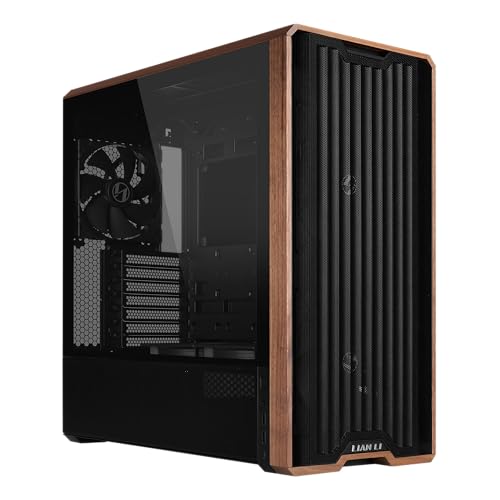
Lian Li LANCOOL 217 ATX Mid-Tower PC Case LAN217X

Thermaltake View 380 TG ARGB Black ATX Case CA-1Z2-00M1WN-00
More Details On Our Top Picks
Eight pre-installed fans give this HYXN case a very direct pitch, strong airflow with less setup work. The dual-chamber layout also helps separate the main hardware zone from the cable area, which is handy for builders who hate a cramped back side.
The trade-off is size, because a case built around 6 x 140mm and 2 x 120mm fans is not trying to be discreet. That extra room suits a gaming tower, a long graphics card, or a radiator-heavy build far better than a tiny desk setup.
Strong Points
- Eight included fans reduce the number of add-ons you need.
- Dual-chamber layout makes cable routing easier to manage.
- 420mm radiator support gives you room for large cooling hardware.
- Type-C 3.2 front connectivity suits newer peripherals and storage gear.
- Airflow-focused design fits hot GPUs and long gaming sessions.
Things To Consider
- The larger layout asks for more desk or floor space.
- Many fans can mean more dusting over time, especially in open rooms.
- The black RGB styling leans bold rather than subtle.
Key Specs
Who It Suits Best
Gamers and performance-focused builders who want a roomy, airflow-first ATX case will get the most out of it.
A Better Fit Elsewhere
DARKROCK EC2 ATX Mid Tower PC Case suits a simpler first build better, especially for someone who wants fewer fans and a more restrained setup.
Compared with the HYXN above, this DARKROCK case stays simpler and easier to think through. It still leaves room for a modern graphics card, a 360mm radiator, and up to eight 120mm fans, so you can shape the build without jumping into a more complex chassis.
The tempered-glass side panel gives you the usual showcase angle, while the single pre-installed fan keeps the starting point modest. That makes it a sensible fit for a first-time builder or anyone who prefers to add cooling piece by piece instead of buying a heavily loaded case up front.
What We Like
- Type-C readiness gives the front panel a modern edge.
- Support for current large graphics cards helps with upgrade plans.
- 360mm radiator support leaves room for stronger cooling.
- Tempered glass suits a clean desktop display.
Areas To Watch
- Only one fan comes installed, so airflow builds on your own budget.
- The starting setup feels lighter than the more fully equipped picks here.
- Glass surfaces need regular wiping to stay clear.
Feature Snapshot
Built With In Mind
New builders, tidy office-gaming setups, and upgrade paths built around a single-step case choice all fit well here.
Swap It Out When
MONTECH King 95 PRO makes more sense for someone who wants more included fans and a stronger visual statement from day one.
This MONTECH case leans into presentation, but it doesn’t ignore build convenience. Curved tempered glass on the front, toolless panels, and six pre-installed ARGB PWM fans make it a strong fit for a desk that doubles as a display space.
Where the DARKROCK EC2 starts lean, this one starts fully dressed, and the included fan hub helps keep the wiring more orderly. In most gaming rooms, that means less time sorting headers and more time getting the system buttoned up without fuss.
Upsides
- Curved tempered glass gives the front a polished look.
- Toolless panels can make access less fiddly.
- Six included ARGB PWM fans reduce extra purchases.
- Fan hub support helps organize multiple connections.
- Dual-chamber design supports cleaner cable management.
- High-airflow intent suits hotter gaming hardware.
Minor Gripes
- The glass-heavy styling asks for more cleaning than a steel-front box.
- Its showpiece look suits some desks more than others.
Technical Sheet
Right Fit For
Showcase-style gaming setups and builders who want plenty of included airflow without a lot of separate fan shopping fit this case well.
Another Choice May Suit
Lian Li LANCOOL 217 ATX Mid-Tower PC Case suits anyone who wants a more restrained look with wood accents and a different cooling layout.
Some cases are built to disappear, and this one is clearly not. The Lian Li V100 puts the display platform, LED strip, and tempered glass into the foreground, so it suits a build that’s meant to be seen as much as used.
Four pre-installed ARGB PWM fans give you a useful start, though the cooler balance is less aggressive than the MONTECH above. That makes it a cleaner match for a visual-first system where appearance, lighting, and decent airflow need to sit in the same room.
Best Bits
- Four included ARGB PWM fans cut down starter setup work.
- LED strip adds another layer of visual detail.
- Display platform gives you room for a showcase element.
- Tempered glass keeps the interior visible.
Small Caveats
- The visual focus may feel busy in a minimalist room.
- Lighting and glass mean a bit more upkeep.
- It leans style-first more than pure airflow-first.
Core Details
Whose Shelf It Belongs On
Style-led builders and anyone who wants the case to be part of the room’s look will appreciate this one most.
Look Elsewhere When
Geometric Future M5 GEO-M5F-BNY is the better route for someone who wants heavier steel construction and more radiator headroom.
The Geometric Future M5 feels aimed at builders who want more structure around a large, serious system. Its 1.2mm steel frame, toolless panels, and support for E-ATX or ATX boards put it in a sturdier lane than the lighter showpieces above.
Five pre-installed 140mm ARGB PWM fans and room for 420mm or 360mm radiators make this case a strong fit for a custom loop or a hot high-end GPU setup. The honest read is that it rewards a big plan, so smaller office towers may find the scale harder to justify.
Highlights
- 1.2mm steel adds a more solid feel to the shell.
- Toolless panels can speed up maintenance and upgrades.
- Five included 140mm fans provide a strong cooling base.
- 420mm and 360mm radiator support opens up large-loop builds.
- Type-C front connectivity suits modern desktop gear.
Worth Noting
- The larger format fits best beside a full-size desk or on the floor.
- Black and green styling is more specific than neutral black.
- Big cooling support can invite heavier dust buildup over time.
Feature Rundown
Made For
Enthusiasts building large, well-cooled ATX or E-ATX systems will get the most out of this chassis.
Where A Sibling Pick Shines
Geometric Future M5 GEO-M5F-BY makes more sense for someone who wants the same structure in a brighter black-and-yellow look.
This version of the M5 keeps the same platform as the black-and-green model, but the black-and-yellow finish changes the mood quite a bit. It still brings the 1.2mm steel body, toolless access, and support for large radiators, so the visual difference does not come at the cost of the core layout.
For a themed gaming room or a build that needs a warmer accent, that colorway may feel like the missing piece. The trade-off is simple, the styling is more specific, so a muted work desk will probably lean toward the darker black/green version instead.
Reasons To Buy
- The black and yellow finish adds character without changing the platform.
- 1.2mm steel keeps the structure in the sturdier camp.
- Toolless panels simplify routine access.
- Five 140mm ARGB PWM fans arrive already installed.
- Large radiator support gives you room to grow the cooling plan.
Points To Note
- The colorway is intentionally bold.
- Like the other M5 version, its larger footprint needs space.
Details At A Glance
The Right Fit
Theme builds, color-matched gaming desks, and enthusiasts who want the same core M5 platform in a warmer finish fit this version well.
Another Choice May Suit
Geometric Future M5 GEO-M5F-BNY is the more restrained route for someone who wants the same hardware support in a darker black-and-green finish.
Wood panels change the whole feel of a desktop tower, and this LANCOOL 217 uses that idea well without losing practicality. The mix of two 170mm fans, two 120mm fans, and one 140mm fan gives it a cooling profile that feels different from the more uniform fan walls on the HYXN and MONTECH cases.
Back-connect readiness and flexible PSU mounting make the layout friendlier for cleaner cable runs, especially in a build where the rear side matters as much as the front. The honest catch is that the wood styling is specific, so it works best for someone who likes a warmer, furniture-like look.
Positives
- Genuine wood panels give the case a distinct, natural accent.
- Five PWM fans arrive pre-installed, which reduces setup work.
- Two 170mm fans can move a lot of air with less clutter.
- Back-connect readiness supports a neater cable path.
- Flexible PSU mounting helps with layout planning.
Ongoing Watchpoints
- The walnut look is not a neutral fit for every desk.
- Wood surfaces deserve a gentler cleaning routine than plain metal.
- Large fans can leave less room for a very compact component layout.
Spec Overview
Perfect Match For
Style-conscious builders, wood-accent workspaces, and anyone who wants a more furniture-like tower will appreciate this case most.
Where Shoppers Go Wrong
Lian Li V100 may suit someone who wants a stronger RGB display presence instead of the warmer wood finish.
The Thermaltake View 380 is built around a modern clean-build idea, especially with hidden-connector motherboard support and glass on both the front and side. That layout is useful for builders who care about a tidy interior because it hides some of the wiring clutter that normally steals attention.
Four included 120mm ARGB fans give it a solid baseline, though the case feels more display-minded than the heavier M5 options. For a showcase rig in a bedroom, office, or gaming den, that balance can be just right without going overboard.
Positives
- Front and side tempered glass keep the build visible from multiple angles.
- Hidden-connector motherboard support helps create a cleaner-looking interior.
- Four included ARGB fans reduce the need for an early fan purchase.
- Three-year coverage is listed on the product page.
Small Caveats
- The clear panels can show dust and fingerprints quickly.
- Display-first styling may feel too flashy for a plain office.
- The case’s looks matter more here than brute cooling volume.
Feature Card
Who Should Grab It
Builders who want a polished showcase case with cleaner cable visibility and ready-made lighting will get the most from it.
Skip It When
Geometric Future M5 GEO-M5F-BY makes more sense for someone who wants a heavier chassis and larger radiator support.
How To Choose The Right Awesome Pc Cases
Airflow, Fan Layout, And Heat
Start with the heat your parts are likely to make, not with the front panel photo. A case with several included fans, like the HYXN H2 or MONTECH King 95 PRO, suits a gaming tower or a graphics-heavy build because you get stronger airflow from day one.
Fan size matters too, since 140mm units often move air in a different way than 120mm units. Larger fans can help a case feel calmer, while many smaller fans can give you more flexibility, but both routes need space and dust care.
Space For Hardware And Cable Routes
GPU length, radiator support, and motherboard style shape the real fit more than marketing language does. Cases like the Geometric Future M5 help when you want room for E-ATX boards or a large 420mm radiator, while a simpler tower may suit a more modest build.
Cable routing also deserves attention. Dual-chamber shells, back-connect support, and toolless panels make later upgrades less annoying, which matters a lot once the machine is under a desk and not just on the workbench.
Looks Versus Maintenance
Tempered glass, RGB strips, and display platforms can make a build feel finished, but they also ask for more upkeep. Fingerprints, dust, and internal cable clutter show faster on showcase cases than on closed steel boxes.
Wood panels or darker matte finishes can soften the look without losing character. That’s why the LANCOOL 217 feels so distinct, it trades some visual loudness for a warmer, more furniture-like presence.
Pick By Use Case, Not Hype
First-time builders usually do better with a case that reduces extra purchases and keeps assembly simple. Enthusiasts, on the other hand, may gladly pay more for heavier steel, larger radiator support, or a more polished interior.
The right choice depends on your desk space, your cooling plan, and how much time you want to spend opening the side panel later. A case should fit the way you build now, then stay practical when you upgrade the rest of the system.
Things Worth Knowing Before You Decide
Wrong Turns To Avoid
Many shoppers focus on glass and lighting first, then discover the cooler or graphics card they want needs more room than expected. Another common miss is forgetting how much dust, cable length, and fan wiring a highly open case can create in daily use.
It also helps to think about desk footprint before falling for a tall dual-chamber design. A roomy chassis feels great during assembly, but it can become awkward beside a monitor stand or under a shallow desk.
The Upgrade Payoff
Higher-tier cases often cost more because they include more metal, better panel mechanisms, larger fans, or more polished visual touches. You also tend to get more room for radiators, cleaner rear-space planning, and less need to buy extra cooling parts right away.
That spend makes the most sense for long-term systems, show builds, and hot hardware that benefits from easy airflow. For a basic office tower, a simpler case can be the smarter use of your budget.
Frequently Asked Questions
What size motherboard fits most of these cases?
Most of the picks here center on ATX, with several also supporting E-ATX or dual-chamber layouts. Always match the case to your board size before you plan the rest of the build.
Do pre-installed fans really matter?
Yes, because they reduce the number of separate parts you need at the start. They also give you a useful airflow baseline before you decide whether to add more cooling later.
Are tempered-glass cases harder to maintain?
They usually need more wiping because fingerprints and dust show faster on clear panels. A microfiber cloth and a steady cleaning habit go a long way.
Why choose a dual-chamber case?
Dual-chamber layouts separate the main hardware from the cable and PSU space. That can make the inside look cleaner and give you more room to work during assembly.
Is Type-C on the front panel worth it?
It’s useful if you plug in newer phones, drives, or accessories often. It’s less important for a simple build that stays connected to older USB gear.
Final Thoughts
The right Awesome Pc Cases choice comes down to how you build and where the tower will live. The HYXN H2 and MONTECH King 95 PRO make sense for airflow-heavy gaming rigs, the LANCOOL 217 stands out for its wood styling, and the Thermaltake View 380 suits a cleaner showcase look. Geometric Future’s M5 versions offer the most serious structure in this group, while the DARKROCK EC2 keeps things simpler for a first build. Pick the one that matches your space and your hardware plan, then let the rest of the system follow that lead.
