
You’re probably sorting through a mix of full desktop systems, small-form-factor towers, and a few upgrade parts, all while trying to avoid mismatched hardware. This roundup keeps the focus on practical use, so you can match each item to your desk space, workload, and comfort with setup. Some picks are ready-to-run machines, while others are single components that make sense in a repair or upgrade path. That mix matters, because the right choice for a home office is not always the right choice for a hobby build.
Quick Look At the Shortlist
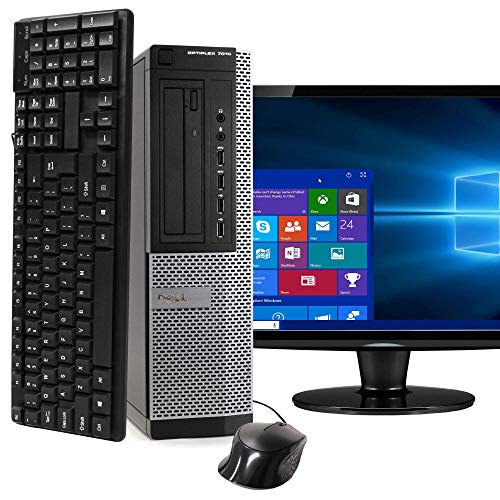
Dell Optiplex 7010 Desktop Package

Dell Optiplex 7050 SFF Desktop PC

Dell Optiplex 3050 SFF Desktop PC

PC Power Button Desktop Power Switch

GEEKOM IT12 Business Mini PC

PC Power Button Switch Splitter

ASRock DESKMINI 310W Barebone

Timetec Pinnacle Konduit RGB 32GB Kit
More Details On Our Top Picks
A full desktop bundle like this is for the person who wants fewer moving parts in the decision. You get the tower, 19-inch LCD, keyboard, mouse, WiFi, DVD drive, and Windows 11 Pro, so setup feels closer to plugging in a workstation than building a system.
The trade-off is age and expansion headroom, since the 8GB memory and 500GB hard drive are modest by 2026 standards. Still, for email, documents, web work, and a spare desk in a small office, it keeps the scope clear and the ownership simple.
Strong Points
- Complete bundle cuts down on separate accessory shopping.
- 19-inch display helps you start working right away.
- Windows 11 Pro suits basic office routines and remote logins.
- WiFi and DVD support cover older and newer usage patterns.
Things To Consider
- 8GB of memory can feel tight with many browser tabs open.
- 500GB HDD storage is slower than an SSD for booting and file loads.
- The 19-inch screen size may feel cramped for long spreadsheet sessions.
Feature Snapshot
Who Should Grab It
You’re a good match here if you want a straightforward desk setup for web work, records, or a family computer.
A Better Fit Elsewhere
Dell Optiplex 3050 SFF Desktop PC suits you better if you want a smaller chassis with SSD storage for quicker everyday responsiveness.
This one is built for busier desks, especially where multiple apps, browser tabs, and a second display are part of the day. The 32GB DDR4 memory, 1TB SSD, HDMI output, Bluetooth, and dual-monitor support give it a much more flexible feel than the 7010 bundle.
The honest read is that this is overkill for simple email and invoices, but that’s exactly why it works so well for heavier multitaskers. In a home office or shared workstation, the solid-state drive also matters because it keeps file access snappier than a mechanical drive.
Highlights
- 32GB memory helps with many open apps and larger spreadsheets.
- 1TB SSD gives you fast loading and generous file room.
- Dual-monitor support helps split work across screens.
- Small-form-factor casing saves desk space without feeling stripped down.
- Bluetooth and WiFi reduce cable clutter around the tower.
Minor Gripes
- More capable hardware can be more than basic home use needs.
- Compact cases usually leave less room for add-on expansion.
- Renewed condition can mean cosmetic marks, depending on the unit.
Core Details
Whose Shelf It Belongs On
You’ll get the most from this one in a home office, small studio, or shared desk that sees real daily use.
Swap It Out When
Dell Optiplex 3050 SFF Desktop PC is the better fit for a lighter setup that still wants SSD speed but doesn’t need as much memory.
The 3050 lands in a sensible middle ground, especially for desks where space is tight but a tower still makes more sense than a mini PC. You get a quad-core i5, 16GB of DDR4 memory, a 256GB SSD, WiFi, DP, HDMI, and 4K support, so the essentials are covered without a lot of fuss.
Compared with the 7050 above, this one is less muscular but easier to justify for everyday work. It feels like the practical path for home users, students, and anyone who wants a compact machine that won’t take over the desk.
Upsides
- 16GB RAM handles mainstream multitasking with less strain than 8GB systems.
- SSD storage helps the machine wake up and load programs quickly.
- DP and HDMI make it easier to connect modern displays.
- 4K support gives you room for sharper monitors and cleaner text.
Small Caveats
- 256GB storage is fine for basics, but large media libraries fill it fast.
- The i5-6500 is capable, though not the strongest choice for heavy creative work.
Technical Sheet
Best Suited To
You’re looking at a good fit for a small office desk, school work, or general household use.
Look Elsewhere When
Dell Optiplex 7050 SFF Desktop PC makes more sense for heavier multitasking and a roomier SSD.
A small external switch like this solves a very specific headache, namely a damaged or awkwardly placed front power button. For a repair bench, workshop PC, or a tower tucked under a desk, an outside switch can make startup access much easier.
The catch is obvious, it’s a single-purpose part rather than a complete component upgrade. That said, for a case repair that just needs a clean on-off extension with LED presence, it can be a tidy fit.
Plus Points
- Gives you an outside power-switch option for easier reach.
- LED support helps the button stand out in low light.
- Useful for repairs, bench setups, and custom desk builds.
Areas To Watch
- It only helps a narrow set of repair and build scenarios.
- Fit depends on how your case and motherboard headers are arranged.
Feature Rundown
Right Fit For
You’re the best match here if you repair desktops, tinker with cases, or need a simple front-panel replacement.
Reach For A Different Pick When
ASRock DESKMINI 310W Barebone fits better for a compact system build that starts with more of the core platform in place.
Mini PCs like this are for desks where space is precious but you still want a proper desktop experience. The IT12 pairs an Intel i3-12300HE, 16GB of RAM, a 512GB SSD, USB4, and 8K UHD support, so it reads like a compact business machine rather than a stripped-down box.
Compared with the Dell towers above, the advantage here is the small footprint and lower-heat design. You may find it especially appealing for a front desk, apartment office, or study corner where a full tower would feel oversized.
Reasons To Buy
- Small chassis keeps the desk clear and leaves room for accessories.
- 16GB memory and a 512GB SSD cover common office work well.
- USB4 adds modern connectivity for fast peripherals and docks.
- 8K UHD support gives you headroom for high-resolution display setups.
- Upgradable storage makes future expansion easier than on many tiny systems.
Softer Spots
- The smaller enclosure usually means less internal room than a tower.
- Light business use suits it best, while very heavy workloads call for more chip power.
- Compact systems often need more careful cable planning behind the monitor.
Details At A Glance
Made For
You’re looking at a smart fit for light office use, front-desk work, or a small room that needs a quiet footprint.
A Better Fit Elsewhere
Dell Optiplex 7050 SFF Desktop PC is the stronger choice for more demanding multitasking and a larger memory pool.
Where the previous switch is about a straightforward power-button extension, this one adds reset and HDD LED connections into the mix. That makes it useful for hobby builds or repair work where you want a bit more front-panel flexibility without replacing the whole case.
The trade-off is still the same: this is a connector part, not a full upgrade. For anyone rebuilding older hardware or sorting a stubborn motherboard layout, that narrow focus can actually be the point.
Best Bits
- Includes power, reset, and HDD LED support in one small part.
- Handy for case repairs and custom desktop layouts.
- Can simplify front-panel access on a desktop tucked away under a desk.
Worth Noting
- Installation depends on matching your motherboard headers correctly.
- Only solves front-panel control needs, not broader system issues.
- Best suited to hands-on builders rather than casual office setups.
Core Details
Built With In Mind
You’ll appreciate this most during a repair job, a case transplant, or any desktop setup that needs a tidy front-panel reroute.
Where A Sibling Pick Shines
PC Power Button Desktop Power Switch makes more sense if you only need a straightforward external power-button extension.
The DESKMINI sits closer to a build platform than a finished desktop, and that changes the whole conversation. You get a barebone system with support for an Intel 8th-generation processor, 32GB DDR4 RAM support, triple video outputs, and an Ultra M.2 PCIe Gen3 x4 slot, so it’s clearly aimed at hands-on setup.
That makes it a sharper fit for someone who wants to choose storage and other parts with more freedom. The honest read is that it asks more of you during assembly, but in return it gives compact-build flexibility that the preconfigured Dell systems cannot offer.
Standout Traits
- Barebone format lets you shape the system around your own part choices.
- Triple video outputs help with multi-display desk setups.
- Ultra M.2 PCIe Gen3 x4 slot supports fast storage expansion.
- Compact footprint works well where a full tower would feel bulky.
Room For Improvement
- You still need to source key internal parts to finish the build.
- Best suited to people comfortable with component matching and assembly.
- Compact systems can feel less forgiving when cooling space gets tight.
Spec Overview
The Right Fit
You’re in the right place if you enjoy building a compact system and want more control over the finished parts list.
Skip It When
Dell Optiplex 7050 SFF Desktop PC suits you better when you want a ready-made machine with far less assembly work.
Memory upgrades like this are where a desktop can feel less cramped in daily use. The 2 x 16GB layout, DDR4 3200MHz speed, CL16-18-18-38 timings, XMP 2.0 profile, 1.35V rating, and dual-rank design make it aimed at systems that want more breathing room, especially gaming rigs and heavier multitaskers.
Compared with the prebuilt desktops above, this is the most direct path to improving responsiveness in a compatible tower. You may still need to confirm fit with the motherboard, but once compatibility is right, it’s the kind of part that supports smoother multitasking without forcing a full system replacement.
Positives
- 32GB kit gives you a strong memory ceiling for demanding desktop work.
- Dual-stick layout supports a matched pair installation.
- 3200MHz speed suits modern DDR4 platforms well.
- XMP 2.0 support makes higher-speed setup easier on compatible systems.
- Dual-rank design can suit performance-focused desktop builds.
Points To Note
- You need a compatible motherboard and desktop system before installation.
- RGB lighting is a style choice, not a performance feature.
- Memory upgrades help most when the rest of the system is already sensible.
Feature Card
Who Will Love This
You’ll get the most value here if your desktop already has the right motherboard and you want more multitasking room.
Another Choice May Suit
Dell Optiplex 7050 SFF Desktop PC is the simpler path for anyone who wants memory already installed in a full system.
How To Choose The Right Desktop Computer Components
Start With The Job Your Desk Has To Do
Workload comes first. A basic home office setup can live comfortably on an older i5 tower with 8GB memory, while heavy spreadsheet use, browser-heavy workdays, or a second monitor call for more RAM and a faster SSD.
That’s why the Dell Optiplex 7050 SFF feels so different from the 7010 package. The 7050’s 32GB DDR4 and 1TB SSD serve a busier desk, while the 7010’s included monitor and accessories make sense for a simpler setup where convenience matters more than speed.
Match Form Factor To Space
Desk size changes what feels sensible. Small-form-factor towers and mini PCs tuck neatly beside a monitor, while a barebone system like the ASRock DESKMINI asks you to think through storage, cooling, and cable routing before the build is finished.
Mini systems can be a clean fit for tight rooms, but they also reduce room for expansion. A standard tower usually gives you more breathing room for future parts, which helps if you plan to upgrade memory or storage later.
Check The Parts That Shape Daily Comfort
Memory, storage type, and display outputs affect your experience every day. SSDs load faster than hard drives, DDR4 memory helps with multitasking, and HDMI, DisplayPort, or dual-monitor support changes how easy it is to run your desk the way you like it.
The Timetec 32GB kit shows how much a memory upgrade can matter in a compatible build. It won’t fix a weak processor, but it can give a desktop more room to juggle apps without feeling pinned down.
Think About Setup Effort And Support Needs
Ready-made systems fit people who want a quick start, while parts like the two PC power switches and the ASRock barebone unit suit hands-on owners. That difference matters more than glossy specs, because the right machine is the one you can actually live with after the box is opened.
For a dorm, home office, or front desk, a preconfigured desktop keeps the learning curve low. For a hobby bench or repair station, component-level pieces can make more sense because they let you fix a broken button, replace a chassis function, or build around an existing case.
What To Weigh Before You Decide
Common Shopping Slip Ups
One easy mistake is treating every desktop like it fills the same role. A compact office tower, a barebone system, and a memory kit solve different problems, so you want the right category before you compare features.
Another common miss is overlooking storage type. A hard drive may offer capacity, but an SSD usually makes daily use feel much quicker, especially for boot-up and app loading.
What The Higher Tier Buys
Extra spend in this category usually goes into faster storage, larger memory capacity, stronger processors, or smaller chassis engineering. You also pay for convenience, because a ready-to-run desktop with monitor and peripherals saves setup time that a barebone system does not.
The upgrade makes the most sense for busy workdays, shared family computers, and desks that handle several tasks at once. For lighter use, a simpler system often keeps the purchase cleaner and easier to live with.
Frequently Asked Questions
What should you prioritize first in a desktop setup?
Start with the job the machine needs to do, then match memory, storage, and size to that role. A small office desk usually wants a simple tower, while a more demanding setup benefits from more RAM and an SSD.
Are compact desktops hard to maintain?
They usually need a little more care with airflow and cable routing because the enclosure is tighter. That trade-off is often worth it on a crowded desk.
Does a memory upgrade help an older desktop?
Yes, as long as the motherboard supports the kit. More RAM can make multitasking feel smoother, especially in browsers, office apps, and light creative work.
What’s the point of a barebone system?
A barebone system gives you a starter platform and leaves part selection to you. It suits hands-on builders who want more control over storage and other internal pieces.
Why choose a prebuilt desktop instead of individual parts?
Prebuilt systems cut down on setup work and reduce the chance of mismatched pieces. They’re usually the easier route for home offices, school work, and shared household use.
Final Thoughts
Your best match here depends on how much setup you want and how busy the desk really is. The Dell 7050 SFF and GEEKOM IT12 cover different ends of the convenience spectrum, while the ASRock barebone and Timetec memory kit lean toward hands-on upgrades. For simple work, the 7010 package keeps things easy, and the switch parts fill in repair gaps that many desktop owners eventually face. Pick the one that fits your space first, then the specs will make a lot more sense.
