
Fast refresh matters most when your screen has to keep up with your hands, not just your games. You get smoother motion, cleaner scrolling, and less visual drag during long work sessions or late-night matches. This roundup focuses on 24-inch and 27-inch options that suit desks, dorms, and mixed-use setups. Some lean hard into gaming speed, others stay friendlier for office duty, and a few sit neatly between those two jobs.
Quick Look At The Shortlist

LG 24G411A-B 24-inch Ultragear Gaming Monitor 144Hz

Dell 27 SE2726HG Gaming Monitor 240Hz

Sceptre 24.5-inch Gaming Monitor E255B-FWD240 Series

msi PRO MP243L E14 24-inch IPS Monitor 144Hz

Dell 24 SE2426H Monitor 23.8-inch 144Hz
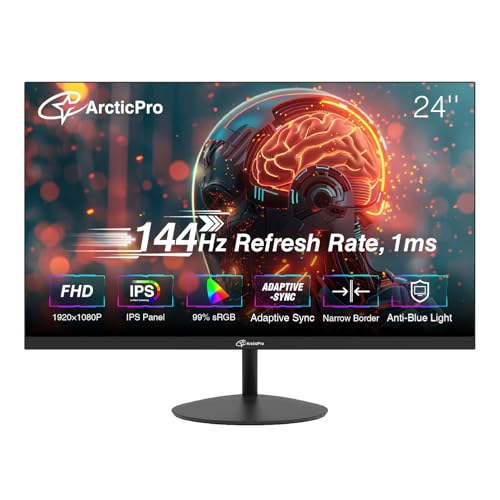
ArcticPro 24 Inch Gaming Monitor 144Hz

Hikers 27 Inch Curved Gaming Monitor G27H1Q Pro
More Details On Our Top Picks
A 24-inch 1080p IPS panel like this fits neatly on a desk where space matters, yet it still leaves room for a mouse and keyboard. The 144Hz overclocked refresh rate, 1ms motion blur reduction, and G-Sync Compatible plus FreeSync support make it a steady choice for fast shooters, sports games, or just smoother desktop motion.
The slim stand keeps the footprint modest, and HDR10 adds format support for compatible content, though it’s still a mainstream gaming monitor rather than a cinematic display. You benefit most here when you want a cleaner, quicker-feeling screen without moving into a larger, more expensive setup.
Strong Points
- IPS panel gives you wide viewing angles, useful on a desk shared with another seat.
- 144Hz with 1ms MBR helps motion look tighter in fast game scenes.
- G-Sync Compatible and FreeSync support broaden GPU matching options.
- 24-inch size stays manageable for smaller desks and dorm setups.
Things To Consider
- The 1080p resolution is sensible at 24 inches, though text sharpness won’t match higher-resolution models.
- HDR10 support is present, but the panel class still keeps expectations modest.
- The slim stand saves room, yet it may feel basic beside more adjustable arms or stands.
Feature Rundown
Who It Suits Best
Space-conscious gamers and everyday desktop users get the cleanest fit here, especially in a bedroom, dorm, or office corner.
Where A Sibling Pick Shines
Dell 27 SE2726HG Gaming Monitor 240Hz suits you better when a larger 27-inch screen and higher refresh rate matter more than compact sizing.
Moving up from the 24-inch LG, this Dell gives you a 27-inch IPS canvas with a much higher 240Hz refresh rate. That makes it a strong fit for competitive play, and the DisplayPort 1.4 plus two HDMI inputs keep connection options straightforward for a PC and console mix.
The tilt-only design keeps setup simple, which suits a fixed desk, though it leaves less room for ergonomic fine-tuning. TÜV 3-Star labeling and AMD FreeSync Premium round out a display that feels aimed at smooth motion first, convenience second.
What We Like
- 240Hz refresh rate gives fast motion a notably quicker feel than 144Hz options.
- 27-inch screen offers more room for aiming and multitasking.
- Two HDMI ports make console and PC switching easier.
- IPS technology keeps colors and angles stable for shared setups.
Worth Noting
- Tilt adjustment only is fine on a basic desk, though height changes need a separate arm.
- Full HD on 27 inches can look less dense than 24-inch 1080p panels.
- The faster refresh pushes the graphics load higher than the LG 24G411A-B.
Core Details
Who Will Love This
Fast-paced gamers who want a larger screen and already own hardware that can push high frame rates will get the most from it.
Another Choice May Suit
LG 24G411A-B 24-inch Ultragear Gaming Monitor 144Hz fits better for compact desks and for anyone who wants a lighter GPU load.
This Sceptre model leans into connector count and extras, which makes it useful for a desk that juggles more than one device. Two DisplayPort inputs, two HDMI inputs, built-in speakers, and 100% sRGB coverage give it a broader utility profile than the simpler Dell SE2426H.
The 24.5-inch size sits between compact and spacious, so it should feel comfortable for gaming and daily browsing alike. One thing worth considering is the utility-first feel, because the emphasis here is less about polish and more about giving you several useful features in one frame.
Highlights
- Four video inputs make mixed hardware setups easier to manage.
- Built-in speakers reduce the need for separate desktop audio.
- 100% sRGB coverage supports more consistent color work and media use.
- 24.5-inch size splits the difference between small and roomy.
- 240Hz refresh and 1ms response target quick on-screen motion.
Small Caveats
- Built-in speakers are convenient, though external audio usually sounds fuller.
- The feature load adds value, but it also makes setup choices a little busier.
- At 1080p, the panel still stays in mainstream resolution territory.
Details At A Glance
Best Suited To
Desk-heavy users who want one monitor to handle gaming, console input, and basic media audio will get the best fit here.
Swap It Out When
msi PRO MP243L E14 24-inch IPS Monitor 144Hz makes more sense for a quieter office setup that leans a little harder toward work.
MSI gives you a monitor that speaks the language of desks, spreadsheets, and late-night games without making the design feel busy. The 4-side slim bezel helps it look clean in a dual-monitor setup, and the VESA mount option gives you a path to an arm or wall mount that the Dell SE2426H doesn’t explicitly offer.
With HDMI, VGA, tilt, HDR Ready support, and 1ms timing, it suits a mixed-purpose room where older hardware still has a role. The honest read is that this one favors utility over flair, which is often exactly what a home office needs.
Upsides
- VESA mount support gives you more desk layout flexibility.
- VGA input helps older PCs stay in service.
- 4-side slim bezel works well in side-by-side setups.
- 144Hz and 1ms keep gaming use credible after office hours.
Room For Improvement
- The design is clean, though it doesn’t chase a premium visual style.
- VGA is useful for legacy gear, but many newer desks won’t need it.
- HDR Ready support is a format-level feature, not a reason to expect dramatic display punch.
Feature Snapshot
The Right Fit
Office users who also game after hours will appreciate how easily this monitor moves between work and play.
Look Elsewhere When
Dell 27 SE2726HG Gaming Monitor 240Hz suits you better when higher refresh and a larger panel matter more than desk-friendly flexibility.
At 23.8 inches, this Dell keeps the footprint tight while still giving you a Full HD IPS panel and 144Hz refresh for smoother motion. It is the kind of monitor that slips into a home office or starter gaming desk without asking for much rearranging.
Two HDMI ports make it easy to swap between a laptop and console, and AMD FreeSync helps keep motion from feeling ragged in supported games. Compared with the MSI PRO MP243L E14, this Dell feels a little simpler, but that simplicity also makes setup feel easy.
Best Bits
- 23.8-inch size is friendly to smaller desks and shared spaces.
- Two HDMI ports help with everyday device switching.
- IPS panel keeps colors and angles dependable.
- 144Hz refresh gives you a smoother feel than standard office screens.
Points To Note
- The design is straightforward, so it won’t feel feature-heavy.
- 23.8 inches is compact, though some gaming setups may want more width.
- Tilt-only adjustment keeps the stand simple and limits ergonomics.
Quick Facts
Built With In Mind
Home users who want a modest, uncomplicated screen for mixed daily use will find the fit easiest here.
Reach For A Different Pick When
ArcticPro 24 Inch Gaming Monitor 144Hz makes more sense for someone who wants wider color coverage and a slimmer frame.
This ArcticPro monitor builds its case around color coverage, slim edges, and a clean 24-inch footprint. The 110% sRGB claim is useful shorthand for richer color coverage than basic office panels, and that matters most in general media use or casual content work.
Adaptive Sync, HDMI, DisplayPort, VESA support, and anti-blue-light design make it feel like a well-rounded desk companion. The trade-off is that the brand is less familiar than Dell or MSI, so it suits shoppers who are comfortable judging by features rather than name recognition.
Reasons To Buy
- 110% sRGB coverage gives you a wider color target than plain budget panels.
- Three-sided frameless styling keeps the image area looking clean.
- VESA support opens up mounting and arm options.
- Adaptive Sync helps motion stay smoother with supported hardware.
- HDMI and DisplayPort cover the most common hookups.
Softer Spots
- The brand may feel unfamiliar beside Dell and MSI.
- Anti-blue-light tuning is useful for long sessions, though it changes the image mood a bit.
- The spelling on the product title is rough, so the listing presentation feels less polished.
Core Details
Whose Shelf It Belongs On
Desk builders who want a compact screen with a little more color ambition than the usual budget option will appreciate this one.
A Better Fit Elsewhere
LG 24G411A-B 24-inch Ultragear Gaming Monitor 144Hz suits you better if you want a more familiar gaming brand and stronger sync support.
This Hikers model moves beyond the 140Hz class entirely, which is why it feels like the step-up option in this lineup. The 27-inch curved 1440p VA panel, 1500R curve, 5000:1 contrast ratio, and dual HDMI 2.1 inputs are tuned for a more immersive gaming desk.
The trade-off is clear enough: you get more screen, more resolution, and more input bandwidth, but also a stronger need for hardware that can drive it well. For enthusiasts who want a broader, more cinematic gaming view, it stands apart from the simpler 24-inch models like the Dell SE2426H.
Bright Spots
- 1440p resolution gives you more workspace and sharper game detail than 1080p panels.
- 27-inch curved format adds presence on the desk.
- 5000:1 contrast suits darker scenes and deeper-looking imagery.
- HDMI 2.1 and DisplayPort 1.4 give modern connection headroom.
- VESA compatibility helps with mounting flexibility.
Areas To Watch
- The higher-resolution panel asks more from your graphics hardware.
- The larger curved shape takes more desk room than the 24-inch options.
- Its feature set targets gaming first, so it may feel excessive for plain office work.
At A Glance
Perfect Match For
Enthusiast gamers with the desk space and GPU power for a more ambitious display will get the most out of it.
Skip It When
Dell 24 SE2426H Monitor 23.8-inch 144Hz makes more sense for a smaller room, a lighter system, or a simpler daily-use setup.
How To Choose The Right 140hz Monitors
Panel Size And Desk Fit
Size shapes the whole experience before refresh rate even enters the picture. A 24-inch panel like the LG 24G411A-B or Dell SE2426H sits well on compact desks, while a 27-inch screen such as the Dell SE2726HG gives you more room for side-by-side windows and larger game HUDs.
The trade-off is simple, larger screens ask for more desk depth and make low-resolution text look softer at the same pixel count. For a bedroom desk or a shared work surface, the smaller class is easier to live with.
Refresh Rate And Motion Demand
144Hz is the practical center point for this category, and it already feels smoother than a standard office panel. Push into 240Hz or higher, as on the Dell SE2726HG, Sceptre E255B-FWD240, or Hikers G27H1Q Pro, and motion can feel much more immediate in fast shooters.
The catch is hardware load, because higher refresh rates only pay off when your PC or console can keep frame output steady. That’s why a 144Hz option often makes more sense for mixed use, while 240Hz and above suit more focused gaming rigs.
Ports, Mounting, And Daily Use
Connection count matters more than many shoppers expect. Two HDMI ports help when you swap between a laptop and console, DisplayPort is handy for PC gaming, and VESA mounting opens up arm setups that free desk space.
For everyday use, ergonomic movement matters too. Tilt-only stands keep costs and complexity lower, but VESA support or a more adjustable stand makes long desk sessions easier on your neck and shoulders.
Color, Contrast, And Built-In Extras
IPS panels usually make sense for mixed gaming and office work because they keep images stable across wider angles. VA panels, like the Hikers model, often bring stronger contrast, which can suit darker scenes, though viewing behavior feels different.
Color claims such as 100% or 110% sRGB hint at broader color coverage, and built-in speakers add convenience for a spare room or simple setup. The right call depends on whether you want a cleaner desk or plan to add separate audio and stronger color control later.
Things Worth Knowing First
Mistakes Worth Dodging
Many shoppers focus on refresh rate alone and miss the basics, like desk size, stand movement, and port layout. A 27-inch 1080p panel can feel less dense than a 24-inch screen, so size and resolution should be judged together.
Another common miss is buying more speed than your hardware can support. A 240Hz panel looks great on paper, but a midrange PC may get more practical value from a solid 144Hz monitor with better ergonomics.
The Upgrade Payoff
Higher-tier 140hz Monitors usually cost more because they combine faster panels, larger or sharper screens, and broader connection options. You also tend to see nicer stands, VESA support, wider color claims, or curved 1440p designs that ask for more from the panel itself.
The upgrade is worth it when your desk has a clear job, like competitive gaming or a shared media station with multiple sources. For light office work and casual play, a good 144Hz IPS model already covers most needs without adding much complexity.
Frequently Asked Questions
Is 144Hz enough for everyday gaming?
For most desks, yes, 144Hz already feels noticeably smoother than standard displays. It also keeps hardware demands more manageable than very high refresh models.
Do IPS and VA panels feel very different?
IPS panels usually hold color and angle stability better, which helps in mixed use. VA panels often bring stronger contrast, which can make darker scenes look deeper.
Should you choose 24 inches or 27 inches?
Twenty-four inches fits tighter spaces and keeps 1080p text looking tighter. Twenty-seven inches gives you more screen area, but it works best when your desk has enough depth.
Are built-in speakers worth having?
They help when you want a simpler setup or just need basic sound. Separate speakers or headphones still sound better for most gaming and media use.
Do you need VESA support?
VESA mounting is useful when you want an arm, wall mount, or a cleaner desk layout. It is less important when the included stand already fits your posture and space.
Closing Thoughts
The right 140hz Monitors choice depends less on raw speed and more on how you use your desk. A compact 24-inch IPS model suits everyday play and mixed work, while a 27-inch 240Hz screen starts making sense for faster games and bigger setups. For most homes, the sweet spot is still a balanced 144Hz panel with the right ports and stand. Match the size to your space, then let the refresh rate do the rest.
