
27-inch OLED panels have become the sweet spot for people who want fast response, deep contrast, and a desk-friendly footprint. You get enough screen space for long work sessions and competitive play, without jumping into oversized territory that can dominate a room.
This roundup focuses on models that make sense for gaming-heavy setups, console play, and mixed use in a home office. The differences matter: refresh rate, panel type, stand adjustment, and port mix all shape how the monitor feels once it’s on your desk.
The Shortlist At A Glance

ASUS ROG XG27AQDMG 27 Inch 1440p 240Hz Glossy OLED Gaming Monitor

LG 27GX704A-B 27-inch Ultragear QHD OLED Gaming Monitor
Samsung 27” Odyssey OLED G5 (G50SF) Series QHD QD-OLED Gaming Monitor
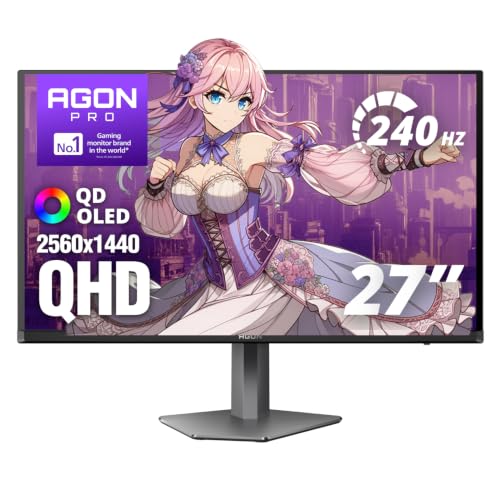
AOC Agon Pro 27 Inch Gaming Monitor QD OLED AG276QZD2

Samsung 27” Odyssey OLED G6 (G60SD) Series Gaming Monitor

LG 27GS93QE 27-inch Ultragear OLED Gaming Monitor

ASUS ROG PG27AQDP 27 Inch 1440p 480Hz OLED Gaming Monitor
More Details On Our Top Picks
Glossy OLED works best on a desk with controlled lighting, and this ASUS leans hard into that clean, high-contrast look. The custom heatsink and anti-flicker tuning matter most for long evening sessions, while uniform brightness helps keep large dark scenes from feeling uneven.
Compared with the more esports-leaning ASUS PG27AQDP later in this list, this model feels a little more rounded than extreme. PS5 and Xbox owners also get a strong fit here, especially for games that benefit from deep blacks and a 240Hz panel without moving to a larger screen.
Strong Points
- 240Hz refresh suits fast PC play and keeps motion looking crisp in shooters and racers.
- The glossy finish gives images extra depth, which stands out in darker rooms.
- Anti-flicker support can feel easier on the eyes during long sessions, especially after work.
- 99% DCI-P3 coverage points to wide color reproduction for games, video, and creative side work.
Things To Consider
- Glossy panels can reflect room light, so desk placement matters more than with matte screens.
- The fixed 27-inch format is great for desks, but it won't satisfy someone chasing a larger cinematic field of view.
- OLED owners typically stay mindful of static desktop elements, so mixed work use calls for some habit changes.
Feature Snapshot
Who It Suits Best
You get the most from this model if you game at a desk in a dim or controlled room and care about rich contrast as much as speed.
A Better Fit Elsewhere
ASUS ROG PG27AQDP is a sharper match for serious competitive play, since its 480Hz ceiling pushes motion handling further than this one.
LG keeps this one tightly focused on the core gaming formula, and that restraint helps it make sense for many desks. The 240Hz panel, 0.03ms response, and both NVIDIA G-Sync and AMD FreeSync Premium Pro support form a clean trio for smooth play across hardware setups.
Compared with the ASUS XG27AQDMG, this LG feels more straightforward and less style-driven. HDMI 2.1 and DisplayPort also make it easier to connect a modern console and a gaming PC without swapping cables all the time.
Highlights
- 240Hz refresh and very fast response help keep motion artifacts from stealing attention.
- G-Sync compatibility and FreeSync Premium Pro widen the fit across Nvidia and AMD systems.
- HDMI 2.1 is useful for modern consoles and high-bandwidth connections.
- VESA DisplayHDR TrueBlack 400 points to strong black depth for game worlds and movie nights.
Worth Noting
- The model favors functional design, so you won't get the more expressive visual identity of some rivals.
- As with most OLED monitors, careful desk placement helps reduce glare and keep the image clean.
- The spec sheet leans gaming-first, so office-focused extras stay minimal.
Details At A Glance
The Right Fit
You suit this monitor well if you want a no-drama 27-inch OLED for a PC plus console setup and prefer broad compatibility over flashy extras.
Where A Sibling Pick Shines
ASUS ROG XG27AQDMG makes more sense for you if you want a glossier image and a slightly more distinctive premium look on the desk.
This Samsung trims the spec race a little and that makes it easier to judge on its own terms. The 180Hz refresh rate is still quick, and QD-OLED brings the color character many people want for gaming and streaming in a bedroom or den.
Compared with LG's 240Hz models, you give up some motion headroom, but the trade-off is a more approachable pitch for everyday gaming. The G-Sync and FreeSync support also keeps it flexible for mixed PC hardware, which is useful in homes where one machine does everything.
Upsides
- QD-OLED panel tech supports vivid color and deep blacks without needing a huge desk footprint.
- 180Hz is still a strong refresh point for action games and general responsiveness.
- 0.03ms GtG response keeps the motion profile sharp during quick camera moves.
- Broad sync support helps the monitor slot into different gaming rigs more easily.
Softer Spots
- It trails the 240Hz and 480Hz options in raw motion ceiling.
- The feature mix is more focused, so you won't get the deeper list of extras seen on some higher-tier Samsung models.
- OLED care still matters for static taskbars and long desktop sessions.
Core Details
Whose Shelf It Belongs On
You fit this pick best if you want a QD-OLED monitor for regular gaming and value strong image quality more than chasing the highest refresh ceiling.
Another Choice May Suit
Samsung Odyssey OLED G6 suits competitive specialists better, since its 360Hz panel gives you more room to chase ultra-fast motion clarity.
AOC takes a very desk-friendly route here, and that matters more than it sounds. Height adjustment, VESA mount support, and built-in speakers give you flexibility that the sleeker Samsung G5 leaves behind.
The overall profile suits a setup where the monitor has to do several jobs, not just gaming. For a small room, the built-ins save space and the adjustable stand makes it easier to line up the panel with your chair.
Bright Spots
- Height adjustment helps you set the screen at a more natural eye line without extra accessories.
- VESA mount support opens the door to arm mounts and tighter desk layouts.
- Built-in speakers are useful for light use or quick setup without a soundbar.
- 240Hz and 0.03ms keep it firmly in fast-gaming territory.
Points To Note
- Built-in speakers are handy, but external audio still makes more sense for fuller sound.
- Panel upkeep is still part of OLED ownership, especially in a setup with lots of static UI.
- The design is practical rather than dramatic, so the appeal is mostly in flexibility.
Feature Card
Built With In Mind
You get the most from this AOC if you want a gaming monitor that can slide into a compact desk without giving up adjustment options.
Skip It When
LG 27GS93QE is the cleaner fit for a minimalist gaming desk, since it leans more into the core display spec and less into extras.
Samsung pushes this model toward fast competitive play, and the 360Hz ceiling makes that clear immediately. The anti-glare finish and cooling system matter because a high-refresh OLED can spend long sessions under bright desk lamps or in a room with changing light.
Compared with the Odyssey OLED G5, this one is the clearer upgrade for esports-minded play. The dedicated support line and use of Samsung Genuine Parts are also notable for owners who care about repair routing and service consistency over the long haul.
Reasons To Buy
- 360Hz gives you a higher motion ceiling than the 240Hz and 180Hz models nearby.
- Anti-glare treatment helps tame reflections in brighter rooms.
- The cooling system supports the monitor's focus on sustained high-speed use.
- FreeSync Premium Pro keeps the gaming feel smooth on compatible gear.
Areas To Watch
- That speed focus matters most for competitive players, so casual use won't fully justify the spec jump.
- Samsung's service-related extras are useful, but they don't change the fact that OLED care still applies.
- The design leans sleek, which is fine, though some setups may prefer the AOC's adjustable stand.
Quick Facts
Who Should Grab It
You fit this Samsung best if you chase very high frame rates and want a 27-inch OLED that keeps motion handling at the front of the spec sheet.
Look Elsewhere When
Samsung Odyssey OLED G5 makes more sense for a tighter budget-minded setup, because it keeps the same basic format while stepping back from the 360Hz focus.
This LG lands in a very sensible middle ground. You get 240Hz, 0.03ms response, and a stand that tilts, raises, and pivots, which makes it easier to place in a workday setup that also sees a lot of gaming.
Compared with the AOC Agon Pro, the LG gives you a more complete stand package, while the AOC leans harder on built-in speakers and VESA mounting. That makes the LG the cleaner desk companion for someone who wants the panel itself to do most of the work.
Best Bits
- The tilt, height, and pivot stand gives you real placement flexibility.
- HDMI 2.1 and DisplayPort support multi-device desks well.
- 240Hz and 0.03ms keep it firmly in serious gaming territory.
- DisplayHDR True Black 400 points to strong black depth for films and darker games.
Small Caveats
- It does not chase the 360Hz or 480Hz extremes, so elite esports players may want more headroom.
- OLED maintenance still matters, especially for people who leave static windows open all day.
- The design stays fairly clean, which is good, though not especially distinctive.
Feature Rundown
Perfect Match For
You suit this monitor well if you want a balanced gaming display that still adjusts easily for long desk sessions and different seating positions.
Reach For A Different Pick When
AOC Agon Pro AG276QZD2 makes more sense for you if built-in speakers and VESA mounting matter more than a fully adjustable stand.
ASUS pushes hard toward competitive speed here, and 480Hz is the obvious headline. That kind of refresh rate matters most for players who already run very high frame rates and want the monitor to keep up without feeling like the limiting factor.
Compared with the 240Hz ASUS XG27AQDMG, this one is built for a more aggressive esports profile. The WOLED panel, custom heatsink, AI Assistant, and true 10-bit support round out a monitor that feels aimed at serious play first, broad versatility second.
Positives
- 480Hz refresh raises the ceiling far above the rest of this list.
- 0.03ms response helps keep quick motion looking immediate.
- Custom heatsink design points to serious thermal attention for long sessions.
- True 10-bit color and 99% DCI-P3 help the screen avoid looking stripped down outside gaming.
Room For Improvement
- The speed focus makes the value case strongest for highly competitive play.
- Like any OLED, it rewards sensible desktop habits and a bit of care around static content.
- The extra performance may be more than many console setups can fully use.
Technical Sheet
Built For In Mind
You fit this ASUS best if you play at a high level and want a 27-inch OLED that does very little compromising on speed.
Swap It Out When
LG 27GX704A-B is the easier choice for mixed gaming use, since its 240Hz target is easier to justify for a wider set of setups.
How To Choose The Right 27 Oled Monitors
Start With Your Frame Rate Goals
Refresh rate tells you how many times the screen can update each second, and that matters most in fast games. A 240Hz panel already feels quick for many players, while 360Hz and 480Hz models suit you only when your PC can actually push very high frame rates.
Response time is the other half of the motion story. OLED panels are quick by nature, but the numbers still help compare models, especially when you move between an LG 240Hz option and the ASUS 480Hz model.
Match The Panel To Your Room
Glossy OLED, like the ASUS XG27AQDMG, gives a rich, glassy image that looks especially good in dim rooms. Anti-glare or darker-room control matters more when your desk sits near windows or bright lamps.
QD-OLED and WOLED also shape how color and contrast feel. QD-OLED tends to look vivid and lively, while WOLED often leans a little more restrained, so the better fit depends on the tone you prefer in games and media.
Check The Stand And Connections
A great panel can still feel awkward on a bad stand. Height adjustment, tilt, pivot, and VESA mounting make a big difference in a real desk setup, especially for small rooms where the monitor needs to sit just right.
Ports matter too. HDMI 2.1 helps with modern consoles, while DisplayPort usually makes the most sense for a gaming PC, so a monitor with both keeps your options open without cable juggling.
Balance Extras Against Actual Use
Built-in speakers, cooling systems, and service support can be useful, but they should match your habits. A desk that already has external audio and a tidy cable plan may value panel quality and ergonomics more than extras.
For a mixed-use setup, the calmer middle ground often wins. The LG 27GS93QE and LG 27GX704A-B show that you do not need the absolute highest refresh rate to get a very capable 27-inch OLED.
What To Weigh Before You Commit
Common Shopping Slip Ups
People often focus only on refresh rate and ignore the rest of the desk setup. That can leave you with a fast panel that reflects light, sits too high, or lacks the ports you actually need.
Another mistake is treating every OLED the same. QD-OLED, WOLED, glossy finishes, and anti-glare coatings all change how the screen behaves in a real room.
When Paying More Pays Off
Higher-tier models usually spend the extra cost on stronger motion performance, more careful cooling, and better connectivity. In this group, that shows up most clearly in the ASUS PG27AQDP and Samsung G60SD.
The upgrade is worth it when you play competitive titles often and your PC can keep up. For general gaming, a well-rounded 240Hz panel still makes a lot of sense.
Frequently Asked Questions
Are 27-inch OLED monitors good for everyday use?
They work well for gaming and media, and the 27-inch size fits most desks easily. You should still keep static desktop elements in mind during long work sessions.
Is 240Hz enough for a 27-inch OLED monitor?
Yes, 240Hz is already very fast for most gaming setups. You only need more when your hardware and game type can really use it.
Do QD-OLED and WOLED feel different?
Yes, they can look different in color character and overall tone. QD-OLED often feels more vivid, while WOLED usually has a slightly different contrast presentation.
Do you need HDMI 2.1 on a 27-inch OLED?
It helps a lot for modern console connections and cleaner compatibility. A gaming PC can also benefit, though DisplayPort remains important too.
What matters more, refresh rate or stand adjustment?
For esports play, refresh rate usually matters more. For long desk sessions, a flexible stand can have a bigger effect on comfort.
Closing Thoughts
Your best 27-inch OLED comes down to how you actually use the desk. Fast competitors should look hardest at the ASUS PG27AQDP or Samsung G60SD, while mixed-use setups usually fit better with the LG 27GX704A-B, LG 27GS93QE, or AOC Agon Pro. The ASUS XG27AQDMG stands out for glossy contrast, and the Samsung G5 keeps the entry point sensible without feeling stripped down. Match the panel to your room and your hardware, and the choice gets much easier.
