
A good 2k OLED monitor changes daily use fast: less blur in fast games, richer contrast in dark scenes, and cleaner text on a 27-inch desk setup. The seven picks below cover glossy and matte finishes, 240Hz to 360Hz refresh rates, and the mix of HDMI, DisplayPort, and USB-C that matters in a real desk or console setup. You get the useful middle ground here, not the oversize stuff that crowds a small space.
Quick Look At The Shortlist

ASUS ROG XG27AQDMG 27 Inch 1440p 240Hz Glossy OLED Gaming Monitor

LG 27GX704A-B 27-inch Ultragear QHD OLED Gaming Monitor 240Hz
Samsung 27” Odyssey OLED G5 (G50SF) Series QHD QD-OLED Gaming Monitor
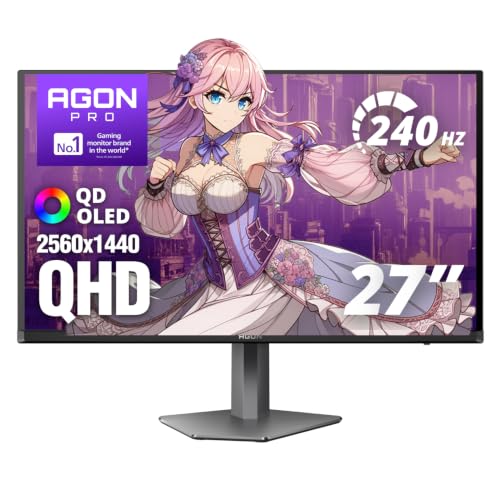
AOC Agon Pro 27 Inch Gaming Monitor QD OLED 240Hz AG276QZD2

ASUS ROG Strix 26.5” 1440P QD-OLED Gaming Monitor XG27ACDNG

LG 27GS93QE 27-inch Ultragear OLED Gaming Monitor QHD 1440p 240Hz

msi MPG 271QRX QD-OLED 27 OLED Gaming Monitor 2560 x 1440
More Details On Our Top Picks
The glossy finish is the first thing you notice, and it matters because it gives OLED contrast a bit more bite in a bright room. The custom heatsink and anti-flicker features point to a model shaped for long sessions, not just short highlight reels. For PS5 and Xbox use, the 27-inch 1440p format stays easy to place on a desk without feeling cramped.
You may find the glossy surface less forgiving under strong window light, so placement matters. For mixed console and PC use, this sits in a sweet spot that feels sharper and more polished than simpler 240Hz panels like the Samsung G5, though it asks you to be a little more careful about reflections.
Strong Points
- 240Hz refresh rate suits fast motion in shooters and racing games.
- 0.03ms response time helps keep movement crisp and reduces smear.
- Uniform brightness is useful for desktop work where window changes are constant.
- 99% DCI-P3 coverage points to wide color for games and media.
- G-SYNC compatibility supports smoother play on supported NVIDIA systems.
Things To Consider
- Glossy OLED can show reflections more readily than matte finishes.
- The premium cooling setup adds appeal, but it does not make placement irrelevant.
- Console owners still need to match the monitor’s 1440p focus to their setup goals.
Feature Snapshot
Who It Suits Best
Console and PC gamers who want a glossy OLED look in a 27-inch footprint will get the most from it.
Where A Sibling Pick Shines
ASUS ROG Strix XG27ACDNG suits competitive PC players better, since its 360Hz panel shifts the priority toward speed.
This LG lands as the most even-handed pick in the group, especially for someone who wants a 27-inch OLED without leaning too hard into one ecosystem. HDMI 2.1, DisplayPort, G-Sync compatibility, and FreeSync Premium Pro give it broad hookup flexibility, which helps in a room where a console and gaming PC share the same desk. The HDR TrueBlack 400 label also points to strong contrast handling for dark scenes.
The trade-off is that this model feels more about coverage than flash. Compared with ASUS’ glossy XG27AQDMG, it sounds less styled around a specific visual personality, and that’s fine for many desks that need one monitor to do everything without drama.
What We Like
- HDMI 2.1 and DisplayPort keep source switching flexible.
- 240Hz and 0.03ms fit fast-paced gaming without overcomplication.
- FreeSync Premium Pro and G-SYNC compatibility widen system match-up.
- 27-inch QHD size works well on compact or mid-size desks.
Worth Noting
- The black finish is plain, so the design leans functional rather than flashy.
- OLED care still matters in daily use, especially with static desktop elements.
- The feature mix is broad, but it does not push into 360Hz territory like ASUS Strix or MSI MPG.
Feature Rundown
Whose Shelf It Belongs On
Gamers who swap between a PC and console on the same desk will appreciate the flexible input support and balanced format.
Another Choice May Suit
ASUS ROG XG27AQDMG fits shoppers who want a more distinctive glossy OLED look and are comfortable managing reflections.
The Samsung G5 takes a slightly calmer route than the 240Hz crowd, and that makes sense for a lot of home setups. Its 180Hz refresh rate still sits well above ordinary office screens, while QD-OLED brings the color and contrast behavior many people are after in this class. The listed G-Sync and FreeSync support also makes it easier to pair with different gaming rigs.
That lower refresh rate is the trade-off, plain and simple. Compared with the LG 27GX704A-B and ASUS XG27AQDMG, this one gives up some speed on paper, but it still makes sense for someone who values a balanced daily screen more than chasing the highest refresh number.
Highlights
- QD-OLED panel should deliver strong contrast and lively color.
- 180Hz is still plenty fast for most living-room or desk gaming.
- 0.03ms GtG response keeps motion blur in check.
- G-SYNC Compatible and FreeSync support widen hardware pairing options.
Points To Note
- 180Hz trails the 240Hz and 360Hz picks in this roundup.
- The feature set is focused, so you do not get the extra bells and whistles seen on some ASUS and MSI models.
- Like any OLED monitor, static interface habits still call for sensible care over time.
Technical Sheet
Best Suited To
Gamers who want a strong everyday OLED without needing the fastest number on the page will feel at home here.
Look Elsewhere When
ASUS ROG Strix XG27ACDNG suits competitive setups better, since its 360Hz refresh rate gives esports-style play more headroom.
The AOC Agon Pro stands out for the practical extras that matter on a desk, especially the height-adjustable stand and built-in speakers. Those details sound small until you’re setting up a tight workspace, then they save you from reaching for separate hardware right away. The 27-inch QD-OLED panel and 240Hz refresh rate keep it squarely in gaming territory.
The built-in speakers are handy, but they are still speakers inside a monitor, so serious desk audio fans will likely add their own setup. Compared with the LG 27GX704A-B, this model leans a little more toward convenience features than universal connectivity polish.
Best Bits
- Height adjustment makes desk positioning easier.
- Built-in speakers are useful for simpler setups.
- 240Hz and 0.03ms keep gaming motion responsive.
- QHD resolution fits the 27-inch size neatly.
Room For Improvement
- Onboard speakers are practical, though external audio still makes more sense for richer sound.
- The setup-friendly stand helps, but it still takes desk space like any full monitor base.
- The feature mix is strong, yet the listing centers less on ecosystem breadth than some rivals.
Core Details
Who Will Love This
Desk setups that need monitor convenience without adding extra accessories straight away suit this AOC well.
Swap It Out When
LG 27GS93QE fits shoppers who want a cleaner, more stripped-back gaming screen with fewer built-in extras.
For fast mouse movement and competitive play, this ASUS Strix model pushes harder than the 240Hz crowd. The 360Hz refresh rate and 0.03ms response time are the headline numbers, but the custom heatsink, OLED Care+, and DisplayWidget support give it a more complete feel than a bare speed-first panel. That mix matters in a room where gaming sessions stretch long.
The trade-off is straightforward: this is a premium-leaning choice that may feel like overkill for slower-paced gaming or general media use. Compared with the ASUS ROG XG27AQDMG, it asks less about glossy presentation and more about pure motion control, which is exactly the point for serious PC play.
Upsides
- 360Hz refresh rate suits fast competitive titles.
- 0.03ms response time keeps motion very tight.
- Custom heatsink and OLED Care+ suggest long-session focus.
- 99% DCI-P3 coverage supports rich color for games and media.
- DisplayWidget and AI gaming features add desktop convenience.
Softer Spots
- 360Hz makes the most sense for a high-end PC rig.
- At 26.5 inches, the screen is slightly smaller than the common 27-inch crowd.
- The advanced feature set asks for more setup attention than a simpler monitor.
Details At A Glance
The Right Fit
Competitive PC gamers who want a speed-forward OLED with deeper care features will get the most from this ASUS.
Where A Sibling Pick Shines
ASUS ROG XG27AQDMG makes more sense for mixed console use, since its glossy finish and 27-inch layout feel friendlier for a broader living setup.
This LG feels like the cleanest “just give me the right gaming monitor” choice in the lineup. You get 240Hz, 0.03ms, HDR True Black 400, FreeSync Premium Pro, G-SYNC support, and a stand that handles tilt, height, and pivot, so the hardware does a lot without making the desk look busy. For workday use that slides into gaming at night, that matters.
The honest read is that it skips the flashier extras seen on ASUS and MSI models. That’s not a weakness for everyone, though, because a straightforward stand and a familiar black finish can be easier to live with every day.
Reasons To Buy
- Tilt, height, and pivot give the stand real everyday utility.
- 240Hz and 0.03ms keep motion fluid for fast games.
- HDR True Black 400 indicates strong contrast handling.
- FreeSync Premium Pro and G-SYNC support widen compatibility.
Minor Gripes
- The design stays understated rather than distinctive.
- It does not bring the higher-speed 360Hz class found on the ASUS Strix or MSI MPG.
- A pivot stand is handy, but it still asks for enough desk depth to move comfortably.
Quick Facts
Built With In Mind
Gamers who also use the same screen for general desk work will appreciate the flexible stand and simple finish.
Reach For A Different Pick When
MSI MPG 271QRX fits you better if USB-C and a 360Hz panel matter more than a simpler overall setup.
The MSI MPG 271QRX leans into the higher tier with a 360Hz panel, 0.03ms response time, True Black HDR 400, and a port mix that includes HDMI, DisplayPort, and USB Type-C. USB-C matters because it can simplify a laptop-centric desk, especially for people who dock and undock through the day. The tilt and height adjustments round it out as a practical display rather than a pure speed slab.
Compared with the ASUS Strix XG27ACDNG, this one brings a similar performance pitch but adds USB-C for a slightly more flexible desk workflow. The caveat is simple: more capability usually means more to think about during setup, so this suits someone who wants a strong monitor and will actually use the extra connectivity.
Plausses
- 360Hz refresh rate suits high-end competitive gaming.
- USB Type-C makes laptop and dock setups easier.
- HDMI and DisplayPort support broad source compatibility.
- Tilt and height adjustment help dial in ergonomics.
Areas To Watch
- The richer port set helps, but it also pushes this model toward more complex desk planning.
- At 27 inches, it remains focused rather than expansive.
- Its best fit is a performance-heavy desk, not a casual TV-style setup.
Feature Card
Who Should Grab It
High-refresh PC gamers who also want USB-C on the back panel will get a lot of value from this MSI.
Where Another Pick Suits Better
LG 27GS93QE fits you better if you want a simpler desk setup and do not need USB-C in the mix.
How To Choose The Right 2k Oled Monitors
Screen Size, Resolution, And Desk Distance
A 27-inch panel hits the sweet spot for most 2k OLED setups because it keeps QHD sharpness easy to use without dominating the desk. You get more screen space than 24 inches, but you avoid the bulk that comes with larger OLED panels. That balance matters for home offices, dorm setups, and compact gaming desks.
Refresh Rate And Response Time
Refresh rate, measured in hertz, tells you how many times the image updates each second, so 240Hz and 360Hz matter most in fast shooters and racing games. Response time, often listed as 0.03ms or 0.03ms GtG, helps motion stay clean during rapid camera swings. You do not need the highest number just because it exists, though, since slower-paced gaming and general use can be perfectly comfortable at 180Hz or 240Hz.
OLED Panel Type, Glossy Finish, And Color
QD-OLED combines OLED contrast with quantum-dot color behavior, while standard OLED focuses on deep blacks and strong shadow detail. Glossy screens, like the ASUS XG27AQDMG, can make contrast look especially rich, but they also reflect more light in bright rooms. Matte or darker finishes are easier in daylight, so room lighting should shape your choice as much as refresh rate does.
Ports, Stands, And Daily Use
HDMI 2.1, DisplayPort, and USB-C affect how smoothly the monitor fits your gear. A height-adjustable or tilt-and-pivot stand matters more than it sounds, since a comfortable angle reduces neck strain during long sessions and makes desk layouts easier to manage. For a console and PC combo, broad input support usually beats chasing one extra spec on the box.
A Quick Reality Check
Common Shopping Slip Ups
A lot of people fixate on refresh rate and ignore the room itself, which is a mistake with OLED. Glossy panels look great, but strong window light can make reflections annoying during daytime use. Port selection and stand adjustment also matter more than they seem once the monitor sits on the desk.
The Upgrade Payoff
Higher-tier models usually cost more because they add faster panels, better connectivity, and extra care features like cooling or OLED protection tools. That matters most for competitive PC gaming, multi-device desks, and users who keep a monitor for long daily sessions. For casual play or a simple desk, the midrange picks already cover the important ground.
Frequently Asked Questions
Are 2k OLED monitors good for console gaming?
Yes, they fit console gaming very well, especially at 27 inches and 1440p. HDMI 2.1 support on some picks makes that pairing smoother.
Is 240Hz enough for competitive gaming?
240Hz is already very fast for most gaming situations. 360Hz only makes sense when your PC and game settings can actually push that pace.
Do glossy OLED monitors look better than matte ones?
Glossy panels usually make contrast look sharper in a controlled room. Matte screens handle reflections more easily in bright spaces.
Why do some monitors list QD-OLED instead of OLED?
QD-OLED is an OLED variation that uses quantum dots to shape color output. It’s a different panel design, not a separate category of monitor use.
What size works best for a 2k OLED monitor?
27 inches is the safest fit for most desks. It gives you QHD sharpness without forcing you to sit too far back.
Final Thoughts
A strong 2k OLED monitor should fit your room, your console or PC, and the way you sit at your desk. The ASUS XG27AQDMG and LG 27GX704A-B give you the broadest everyday appeal, while the ASUS Strix XG27ACDNG and MSI MPG 271QRX push hardest for speed-focused setups. The Samsung G5 and LG 27GS93QE keep things more balanced, and the AOC Agon Pro adds useful desk-friendly extras. Match the panel finish, refresh rate, and ports to your setup, and the right choice becomes clear.
