
37-inch displays sit in a useful middle ground for you if a 32-inch screen feels cramped but a full desktop dual-monitor setup sounds like clutter. They suit gaming desks, home offices, and mixed-use stations where screen width matters more than flashy branding. The right choice depends on panel type, refresh rate, curvature, ports, and how much desk depth you have to spare.
Quick Look At Our Shortlist

Samsung 32-inch Flat Computer Monitor LS32B304NWNXGO
CRUA 34-inch WQHD 165Hz IPS Ultrawide Gaming Monitor White
LG 39GX90SA-W 39-inch Ultragear WQHD OLED Curved Gaming Monitor

Dell 34 Monitor S3425DW
Samsung 43-inch M7 M70F 4K UHD Smart Monitor LS43FM702UNXZA
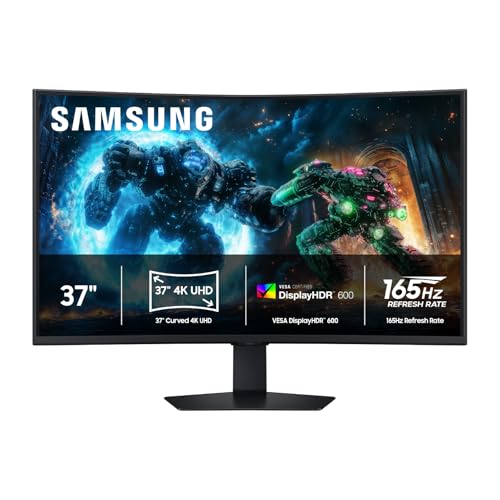
Samsung 37-inch Odyssey G7 G75F 4K UHD Curved Gaming Monitor

Sceptre 34-inch Prime Monitor E345W Series Machine Black
More Details On Our Top Picks
This Samsung keeps the formula plain: a flat 32-inch screen, borderless styling, and a 75Hz refresh rate, which means motion feels a bit smoother than a basic 60Hz office panel. For a home desk or student setup, that usually lands in the sweet spot without asking for extra desk depth.
AMD FreeSync helps reduce tearing with compatible graphics, and Game Mode plus Advanced Eye Care make the listing friendlier for mixed work and casual play. The trade-off is obvious, though, it is still a conventional monitor rather than a high-end ultrawide or HDR showpiece, so you’re buying restraint more than spectacle.
Strong Points
- Flat 32-inch layout keeps desk placement straightforward.
- 75Hz support gives everyday motion a smoother feel.
- Borderless edges suit multi-monitor desks with less visual clutter.
- HDMI and DisplayPort cover common PC connections.
- Game Mode and FreeSync make casual play easier to live with.
Things To Consider
- It stays in mainstream monitor territory, not ultrawide territory.
- Eye comfort features help with long sessions, but they don’t replace good room lighting.
- Owners who want deep contrast or dramatic color effects will likely want a different panel type.
Key Specs
Who It Suits Best
Office users, students, and casual gamers who want a straightforward 32-inch screen with enough flexibility for everyday mixed use.
A Better Fit Elsewhere
Samsung 37-inch Odyssey G7 G75F 4K UHD Curved Gaming Monitor suits you better for fast-paced gaming and a more immersive curved view.
The CRUA leans wide, fast, and practical, with a 34-inch ultrawide format, WQHD resolution, and 165Hz refresh rate. That extra horizontal space helps a lot in video timelines, side-by-side documents, or open-world games where a standard 32-inch display can feel tight.
Its IPS panel brings wide 178-degree viewing angles, so the image holds up better when you’re not sitting perfectly centered. Built-in speakers and a white finish round out the package, though the integrated audio is usually more about convenience than rich sound, and the wall-mount pattern matters only for desks or arms that match it.
What We Like
- 34-inch ultrawide shape gives you more room across the screen.
- 165Hz refresh suits fast gameplay and smoother cursor movement.
- IPS panel supports broad viewing angles for shared desks.
- 120% sRGB coverage points to lively color handling.
- Built-in speakers reduce the need for separate desktop audio.
- White finish and VESA-style mounting make it easier to match neat setups.
Worth Noting
- Ultrawide sizing asks for more desk width than a standard panel.
- Integrated speakers tend to be the fallback, not the centerpiece.
- Wall or arm mounting depends on matching the 75 x 75 mm pattern.
Feature Snapshot
Made For
Gamers, editors, and multitaskers who want more horizontal room than a classic 16:9 monitor can offer.
Another Choice May Suit
LG 39GX90SA-W 39-inch Ultragear WQHD OLED Curved Gaming Monitor suits you better when you want deeper contrast and a more premium gaming panel.
The LG moves into a very different lane from the Samsung 32-inch option, with OLED, a curved 39-inch chassis, and 240Hz refresh. OLED, or organic light-emitting diode, means each pixel lights itself, which is why this kind of panel usually appeals to people who care about contrast and motion clarity in equal measure.
USB-C makes it friendlier for modern laptops, and the webOS layer adds smart-monitor convenience that most plain PC displays do not bother with. The trade-off is that this is clearly the most specialized pick here, so you’re paying for a premium feature stack that only makes sense when your desk time is heavy and your expectations are high.
Highlights
- OLED panel supports deep contrast and crisp image separation.
- 240Hz refresh rate suits fast competitive and action-heavy gaming.
- 1ms response time helps reduce blur in fast motion.
- Curved 39-inch shape fills more of your field of view.
- USB-C supports cleaner laptop hookup on modern systems.
- webOS adds app access without relying on a separate source device.
Minor Gripes
- The feature set leans premium, so it makes sense for specialized setups more than casual desk use.
- Curved ultrawide sizing asks for a deeper desk and a centered seat.
- Smart features can add menu layers that some plain-monitor users won’t want.
Details At A Glance
The Right Fit
Serious PC gamers and desk-bound media fans who want premium motion handling and a curved OLED panel.
Swap It Out When
Dell 34 Monitor S3425DW fits better for a calmer work-first setup with fewer premium extras.
Dell’s S3425DW sits in the practical middle, with a WQHD VA panel, 120Hz refresh, and an anti-glare finish. VA, or vertical alignment, usually brings stronger contrast than basic IPS office panels, which helps this model make mixed work, streaming, and casual gaming feel more composed.
The 95% DCI-P3 color coverage, 2 x 10W speakers, and USB-C with 65W power delivery push it toward a clean single-cable desk. You may find the 34-inch width more manageable than the larger Samsung smart monitor later in this list, especially in a room where desk space matters.
Upsides
- 120Hz refresh keeps everyday motion smooth enough for both work and play.
- Anti-glare coating helps in brighter rooms with windows or overhead light.
- USB-C with 65W power delivery can reduce cable clutter for laptops.
- Built-in 10W speakers offer a neater desk layout.
- Eye comfort tuning is useful for long office sessions.
Areas To Watch
- VA panels can feel different from IPS if you prefer wider viewing consistency.
- Built-in speakers keep things tidy, but they rarely replace a dedicated audio setup.
- Its strengths lean practical, so it will feel less dramatic than the OLED and gaming-focused picks.
Core Details
Whose Shelf It Belongs On
Home-office users and mixed-use setups that need a wide screen, clean cabling, and decent built-in audio.
Where A Sibling Pick Shines
CRUA 34-inch WQHD 165Hz IPS Ultrawide Gaming Monitor White suits you better for a wider-feeling layout and a faster refresh rate.
The Samsung M7 is the most TV-like display in this lineup, and that’s the point. You get 4K resolution, smart apps, Gaming Hub, USB-C, HDMI, and USB-A, so it works as both a monitor and a living-room style screen for mixed use.
Samsung Vision AI and the dedicated support line shift it toward convenience rather than raw display purity. The catch is size: at 43 inches, it asks for a deep desk and a use case that benefits from large-scale browsing, streaming, or console play more than close-in spreadsheet work.
Positives
- 4K resolution gives text and media a detailed look at larger scale.
- Smart apps reduce the need for a separate streaming device.
- Gaming Hub keeps compatible gaming sources in one place.
- USB-C, HDMI, and USB-A cover a broad mix of connections.
- 43-inch size suits relaxed viewing across a roomy desk or media area.
Small Caveats
- Large footprint can feel overwhelming on shallow desks.
- Smart-monitor menus add complexity that plain PC users may not want.
- It makes more sense for media and mixed use than compact office layouts.
Feature Card
Best Suited To
People who want a large smart screen that can handle work, streaming, and casual gaming from one panel.
Look Elsewhere When
Dell 34 Monitor S3425DW fits better for a smaller, simpler desk with less screen bulk.
This Odyssey G7 sits right in the zone where gaming speed and image scale start to matter equally. The 165Hz refresh rate, 1ms response time, and curved 37-inch layout give you a more enveloping view than the flat Samsung 32-inch monitor earlier in the list.
VESA DisplayHDR 600 and AMD FreeSync Premium Pro move it up another step for people who spend long hours in fast titles or detailed single-player worlds. The honest read is that this much hardware makes the most sense on a desk built around gaming first, since the monitor’s strengths are less about office calm and more about visual intensity.
Best Bits
- 37-inch curved panel creates a more immersive gaming view.
- 165Hz refresh suits fast motion and responsive play.
- 1ms response time helps keep quick scenes cleaner.
- HDR 600 support can improve highlight punch in compatible content.
- FreeSync Premium Pro supports smoother frame matching with compatible systems.
Trade Offs
- The gaming-first spec mix can feel excessive for basic office work.
- Curved sizing works best when you sit near the centerline.
- Its scale asks for a desk with enough depth to keep viewing comfortable.
Feature Rundown
Built With In Mind
Competitive and enthusiast gamers who want a large curved panel with fast response and stronger HDR support.
Consider Something Else When
Dell 34 Monitor S3425DW fits better for work-first use and a calmer everyday layout.
Sceptre’s Prime monitor keeps the pitch straightforward: 34 inches, 3440 x 1440 resolution, and up to 115Hz refresh. That combination gives you a useful ultrawide layout for side-by-side work, casual gaming, or a desk where you want more screen area without moving into premium pricing territory.
Built-in speakers and DisplayPort plus HDMI make it easy to slot into a typical PC setup. It does not carry the higher-end panel tech you see in the LG or Samsung premium picks, and that’s the trade-off, but for everyday use the feature set stays easy to justify.
Bright Spots
- 3440 x 1440 resolution gives the ultrawide screen useful detail.
- Up to 115Hz refresh keeps motion smooth enough for mixed use.
- 103% sRGB coverage suggests a color range above basic office panels.
- Built-in speakers keep the desk simpler.
- DisplayPort and HDMI make setup familiar for most PC users.
Softer Spots
- It is a simpler ultrawide, so premium contrast and smart features are not the focus.
- Integrated speakers are handy, though external audio still sounds fuller for many setups.
- Ultrawide footprint still needs more desk width than a standard 16:9 screen.
At A Glance
Who Should Grab It
Value-focused shoppers who want an ultrawide monitor with sensible specs and uncomplicated setup.
Where Another Pick Suits Better
CRUA 34-inch WQHD 165Hz IPS Ultrawide Gaming Monitor White suits you better for faster gaming and a brighter-feeling feature set.
How To Choose The Right 37 Inch Monitors
Size, Desk Depth, And Viewing Distance
A 37-inch screen sounds simple until it lands on the desk, because width alone does not tell the full story. A curved panel can feel easier to take in at close range, while a flat panel works better when you sit farther back or share the screen with someone else.
Desk depth matters as much as stand width. A larger monitor close to your face can feel overwhelming during spreadsheet work, while a little extra space behind the screen makes gaming and media easier to enjoy.
Panel Type Changes The Whole Experience
IPS panels usually favor wide viewing consistency and clean color, which suits side-by-side work and shared spaces. VA panels generally lean toward stronger contrast, so darker scenes and mixed media can look richer without extra effort.
OLED sits in a different class entirely, because each pixel emits its own light. That gives you excellent contrast behavior, but it also makes the panel choice more about premium image quality than everyday practicality.
Refresh Rate, Response Time, And Sync Support
Refresh rate tells you how many times the image updates per second, so higher numbers help motion look smoother. Response time describes how quickly a pixel changes state, which matters most in fast games where trailing can be distracting.
Adaptive sync features like FreeSync or G-Sync Compatible help match monitor movement to graphics output. For gaming, that pairing can feel more coherent than chasing raw resolution alone, especially on larger displays.
Ports, Audio, And Workload Fit
USB-C can simplify laptop setups, and higher power delivery can reduce the number of cables on your desk. HDMI and DisplayPort remain the safest fallback for PCs, consoles, and mixed rigs.
Built-in speakers help when you want a cleaner setup, though they usually serve as convenience audio rather than the main event. For office work, streaming, or casual gaming, that trade-off often makes sense, but a separate audio setup still wins for fuller sound.
What To Weigh Before You Decide
Mistakes Worth Dodging
Many people focus on screen size and skip desk depth, which leads to a display that feels too close. A second common miss is choosing a gaming refresh rate without matching it to the graphics hardware that will actually drive it.
Ultrawide models also need a careful look at mounting and footprint. A monitor arm, a wide stand, or a deeper desk can make the difference between a setup that feels open and one that feels crowded.
The Upgrade Payoff
Higher-tier models usually cost more because of panel tech, faster refresh rates, better color handling, and added convenience features like USB-C or smart apps. Those extras matter most when your monitor spends hours on desk duty and has to cover work, play, and streaming without feeling limited.
Paying up makes sense for fast games, content work, or a one-monitor setup that replaces several smaller screens. For lighter office use, a restrained model often gives you the cleaner value.
Frequently Asked Questions
Are 37-inch monitors good for work?
Yes, they can be excellent for wide document layouts, editing timelines, and side-by-side windows. A flat panel usually feels easier for office use than a strongly curved one.
Do 37-inch monitors need a lot of desk space?
They usually need more depth and width than a standard 27-inch or 32-inch screen. A stable stand or matching monitor arm helps keep the setup comfortable.
Is ultrawide better than 16:9 for gaming?
Ultrawide can feel more immersive and gives you extra horizontal space. Standard 16:9 still works better for some competitive setups and older game support.
Does higher refresh rate matter outside gaming?
Yes, smoother scrolling and cursor movement can make daily use feel calmer. The difference is most noticeable on larger screens where motion has more room to show.
Which matters more, refresh rate or resolution?
That depends on your use case, but gaming usually benefits from refresh rate first. Creative work and media tend to care more about resolution and color handling.
Closing Thoughts
You have a wide spread here, from the simple Samsung 32-inch flat monitor to the more ambitious LG OLED and Samsung Odyssey gaming screens. The best fit depends on whether your desk leans toward work, gaming, streaming, or a mix that has to stay tidy. Ultrawide models reward extra space, while smart-monitor models reward convenience, and the safer choice is the one that matches how you actually sit and work each day.
