
Four-kilometer? No, 4K at 32 inches gives you room for sharp text, layered windows, and a more relaxed view of long work sessions. You’re looking at the sweet spot where a big screen still fits a standard desk without feeling like a TV pulled too close. This roundup focuses on practical use, from home offices and mixed work-gaming setups to living room desktops and creator corners.
Each pick leans on a different strength, whether that’s higher refresh rate, better color coverage, USB-C convenience, or a cleaner stand setup. The useful question is not just which panel looks sharpest, but which one fits your desk, your cables, and the way you actually sit and work.
Quick Look At Our Shortlist

Samsung 32″ Flat Computer Monitor 75Hz Refresh Rate
ViewSonic VX3276-4K-MHD 32 Inch 4K UHD Monitor HDR10

Dell 32 Monitor S3225QS 4K UHD VA 120Hz

LG 32UR500K-B Ultrafine 32-inch 4K UHD Computer Monitor

Sceptre 32-inch 4K UHD Monitor U325W-UPT Series

32″ 4K UHD IPS Monitor 60Hz HDMI DP Ergo
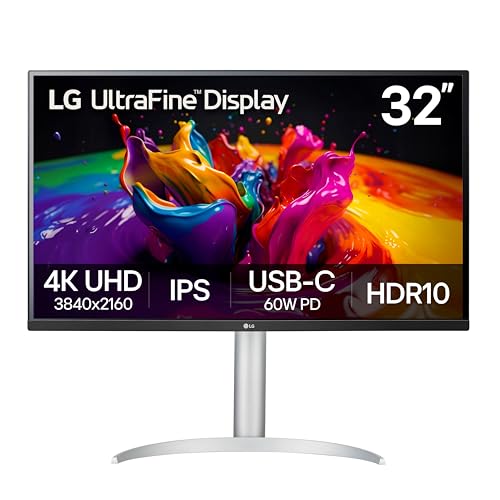
LG 32UP83AK-W 32-inch Ultrafine 4K UHD IPS Monitor
More Details On Our Top Picks
Samsung keeps this one plain and useful: a flat 32-inch frame, a borderless look, and 75Hz refresh for smoother scrolling than a basic office panel. That 75Hz rate matters most for everyday desktop use, where windows feel a little less sticky and motion looks cleaner.
The mix of AMD FreeSync, Game Mode, and Advanced Eye Care makes it a sensible bridge between work and casual play. It won’t feel as feature-heavy as the Dell S3225QS, but for a standard desk and a straightforward setup, you may find the balance easier to live with.
Strong Points
- 75Hz gives you a bit more motion smoothness than a basic 60Hz office panel.
- Borderless styling helps a dual-screen desk look cleaner and less crowded.
- AMD FreeSync can reduce visible tearing in supported games.
- Game Mode and eye-care tuning suit long stretches of mixed work and browsing.
Minor Caveats
- It leans more toward everyday use than higher-end color work or fast gaming.
- Connectivity is practical, but the feature set stays simple beside the LG 32UP83AK-W.
- A matte borderless screen still needs regular dusting, especially on bright desks.
Feature Snapshot
Made For
Home-office users who want a clean, uncomplicated 32-inch monitor for documents, streaming, and light gaming fit this well.
Another Choice May Suit
Dell 32 Monitor S3225QS suits gaming-leaning shoppers better, thanks to its 120Hz panel and stronger motion focus.
The ViewSonic leans into a frameless design, so it suits desks where visual clutter matters almost as much as screen size. HDR10, a 4K UHD panel, and wide sRGB support make it a calm fit for spreadsheets by day and movies after work.
The built-in dual 2W speakers help trim cable mess, though they won’t replace a proper desk speaker setup. Compared with Samsung’s 75Hz model, this one feels more like a clean display-first choice than a casual gaming hybrid.
Upsides
- Frameless styling works well for a tidy single-monitor desk or a side-by-side setup.
- HDR10 and wide sRGB support give it a more capable media and content view.
- Dual speakers reduce the need for extra desktop hardware.
- VESA mount support helps you reclaim desk space with an arm or wall setup.
Worth Noting
- The 2W speakers are functional, but they stay small for room-filling sound.
- It is more about clean 4K presentation than fast-motion gaming.
- The frameless look can show fingerprints and dust more clearly on bright desks.
Details At A Glance
Best Suited To
Shoppers who want a tidy 32-inch screen for work, video, and general desktop use will get the most from it.
Where A Sibling Pick Shines
LG 32UP83AK-W fits better for you if USB-C and an adjustable stand matter more than speakers.
For mixed-use desks that see both work tabs and fast-moving games, the Dell’s 120Hz refresh rate changes the feel of the whole panel. A VA panel, or vertical alignment panel, usually brings stronger contrast than many basic IPS screens, and Dell pairs that with a 3000:1 contrast spec and 300 cd/m2 brightness.
The honest read is that this one suits you best when motion and contrast sit near the top of your list. Compared with the ViewSonic, it pushes harder on responsiveness, though the 31.5-inch size is a touch smaller than the full 32-inch class on some desks.
Highlights
- 120Hz refresh helps fast motion look cleaner for gaming and quick scrolling.
- FreeSync Premium supports steadier gameplay on compatible systems.
- 3000:1 contrast gives darker scenes more depth than many basic office monitors.
- 99% sRGB coverage suits photo, web, and general color-sensitive work.
- Anti-glare coating helps in bright rooms with windows or overhead lights.
Areas To Watch
- Its gaming focus can be more than casual office users actually need.
- VA panels often trade some side-angle consistency for stronger contrast.
- Anti-glare helps, but a very bright room still puts pressure on visibility.
Core Details
Who Will Love This
Gaming-leaning home office users who still care about image depth and text clarity should keep this near the top.
Reach For A Different Pick When
Samsung 32″ Flat Computer Monitor 75Hz Refresh Rate suits you better if you want a simpler setup with a lighter motion focus.
LG aims this one squarely at everyday desk use, and the shape of the feature list backs that up. HDR10, dual built-in speakers, OnScreen Control, Reader Mode, and a borderless design create a monitor that feels easy to live with rather than crowded with extras.
Reader Mode tones down the visual intensity for longer document sessions, which helps when your workday stretches from emails into reports. Compared with the ViewSonic, it adds more control tools, though the built-in speakers still make the most sense as backup audio.
Bright Spots
- Reader Mode is handy for long reading sessions and document-heavy days.
- OnScreen Control gives you a more direct way to adjust display settings.
- Two built-in speakers trim desk clutter for basic audio needs.
- The borderless frame keeps a work setup looking neat.
Room For Improvement
- Built-in speakers are convenient, but not a stand-in for better audio gear.
- It is more of a steady office monitor than a speed-first gaming display.
- A white or black desk setup may show dust differently, so routine cleaning helps.
Key Specs
The Right Fit
Office users who want a simple 32-inch 4K screen with a little extra comfort for long reading sessions fit this well.
Swap It Out When
Dell 32 Monitor S3225QS suits you better if refresh rate and gaming motion matter more than built-in convenience tools.
Sceptre gives you a lot of practical hardware for a desk that needs to stay reasonable on cost without looking stripped down. Two DisplayPort inputs, two HDMI inputs, built-in speakers, and 100% sRGB make it more capable than the bare minimum category entry.
The trade-off shows up in the overall presentation, which leans functional rather than refined. That’s fine for a secondary desktop, a shared room, or a setup where connections matter more than premium finish, but the Dell and LG models step up the polish.
Best Bits
- 100% sRGB gives it a respectable color baseline for general desktop use.
- Two DisplayPort and two HDMI inputs offer flexible hook-up options.
- Built-in speakers keep the desk simpler for casual use.
- The 32-inch size still gives you plenty of room for split windows.
Softer Spots
- The design emphasis sits on utility more than refinement.
- Built-in audio is useful, but you may still want external speakers later.
- Fingerprints and dust can stand out on darker monitor finishes.
Feature Rundown
Whose Shelf It Belongs On
Value-focused home users and secondary desk setups fit this model well, especially where multiple inputs matter.
Look Elsewhere When
ViewSonic VX3276-4K-MHD suits you better if you want a slimmer frameless look for a main work station.
This ZZA model stands out for one simple reason, it tries to be useful across more setups than a single-purpose monitor. IPS means in-plane switching, a panel type known for broader viewing consistency than many basic alternatives, and the slim bezel plus Ergo VESA support keep the desk layout flexible.
The honest read is that the 60Hz ceiling makes it more office and console friendly than fast-PC oriented. Still, for a MacBook desk, a home office, or a PS5 corner, the mix of FreeSync, 100% sRGB, HDR10, HDMI 2.0, and DisplayPort 1.4 gives you a practical spread of connections and image features.
Standout Traits
- IPS panel behavior suits side-by-side desk use and frequent angle changes.
- Ergo VESA support makes desk arms and custom positioning easier.
- HDMI 2.0 and DisplayPort 1.4 handle modern laptop and console hookups.
- Blue light filter and flicker-free design help long work sessions feel calmer.
- 100% sRGB and HDR10 give it a stronger feature mix than barebones office screens.
Points To Note
- 60Hz is fine for office work, but it is not built around high-speed gaming.
- Ergonomic mounting helps, though you still need the right arm or stand for your desk.
- As with many slim-bezel displays, careful cleaning keeps edges looking neat.
Technical Sheet
Built With In Mind
Desk users who split time between a laptop, a game console, and routine office work will get a lot from this layout.
Another Choice May Suit
LG 32UP83AK-W suits you better if USB-C with power delivery matters more than console-first versatility.
LG gives you the cleanest desk story in this group, thanks to USB-C with 60W power delivery, an adjustable stand, and the familiar 32-inch 4K IPS format. Power delivery means the monitor can send charging power through the same USB-C cable that carries video, which is exactly the kind of detail that makes a laptop station feel less tangled.
Reader Mode and HDR10 add comfort and flexibility, while tilt, height, and pivot adjustment make it easier to dial in a usable sitting position. Compared with the ZZA model, this one feels more polished for laptop users who want the cable count lower and the desk posture easier to manage.
Reasons To Buy
- USB-C with 60W power delivery simplifies a compatible laptop setup.
- Tilt, height, and pivot adjustment make positioning more adaptable.
- Reader Mode helps long document or web sessions feel easier on the eyes.
- Built-in speaker support trims the need for extra desk gear.
- The white finish gives it a lighter visual presence on a modern desk.
Small Caveats
- 60Hz keeps it oriented toward work and mixed use, not speed chasing.
- USB-C matters most on laptops that support video and charging through one port.
- The adjustable stand is useful, but it also means you need enough depth on the desk.
Core Details
Perfect Match For
Laptop-heavy desks, especially those built around USB-C docking and cleaner cable management, fit this monitor best.
Skip It When
Dell 32 Monitor S3225QS makes more sense for you if 120Hz gaming motion matters more than USB-C convenience.
How To Choose The Right 4k 32 Inch Monitors
Start With Panel Behavior
A 32-inch 4K screen packs a lot of detail into a desk-friendly footprint, so the panel type matters more than casual shoppers sometimes expect. IPS panels usually keep color and contrast more consistent from different seating angles, while VA panels tend to lean into stronger dark-tone depth. That difference shows up fast in shared desks, side seating, and long work sessions.
Refresh rate matters too. Sixty hertz works for office tasks, streaming, and console use, but 75Hz or 120Hz feels smoother when you scroll a lot or jump into games after work. The right choice depends on whether your day is mostly documents or a mix of work and motion-heavy content.
Match Ports To Your Devices
Connection choice can save you from adapter clutter. HDMI and DisplayPort cover most desktops and consoles, while USB-C with power delivery is a strong fit for modern laptops that can charge and send video through one cable.
That’s where desk simplicity starts to matter. A laptop user with a docking-style setup gets more value from LG’s USB-C model, while a desktop gamer may care more about DisplayPort and a higher refresh rate. The best port layout is the one that matches the device you use most often.
Think About Stand And Space
On a 32-inch panel, the stand is part of the ownership experience, not an afterthought. Tilt, height, pivot, and VESA support change how the monitor sits on the desk and whether it works in a shallow corner or a deeper setup.
Borderless styling can make a workspace feel lighter, though it also tends to show dust and fingerprints more clearly. For compact rooms, that matters as much as the panel itself. A clean stand and the right mount support can make the whole desk feel more organized.
Choose Features That Fit Your Day
Reader Mode, eye-care tuning, built-in speakers, and OnScreen Control each solve a different small problem. None of them matter equally to everyone, but the right combination can make a monitor easier to live with over years of work, streaming, and casual gaming.
Higher-refresh models cost more because the panel has to do more work and usually comes with a stronger feature stack. You feel that difference most if you game on PC, move between apps constantly, or want a display that does more than sit behind email. For plain office use, a simpler 4K panel often makes better sense.
A Quick Reality Check
Common Shopping Slip Ups
One mistake is focusing on 4K alone and ignoring refresh rate or stand adjustment. Another is buying a 32-inch monitor without checking desk depth, since a bigger screen can feel awkward on a shallow setup.
Ports cause trouble too. A laptop user who needs charging through the display should not settle for a model that only offers standard video inputs.
When Paying More Pays Off
Higher-tier models often add USB-C power delivery, better stand adjustment, stronger color support, or higher refresh rates. Those extras cost more because they solve several setup problems at once instead of just adding pixels.
The upgrade makes sense for laptop-heavy desks, mixed work-gaming use, and anyone who wants fewer cables. For a basic home office, a simpler 4K monitor can still cover the job cleanly.
Frequently Asked Questions
Is 32 Inches Too Large For A 4K Monitor?
No, 32 inches is a very common size for 4K because the pixel density stays sharp at desk distance. It also gives you room for split windows without crowding the screen.
Do You Need 120Hz For Work?
No, 120Hz is not required for office tasks. It mainly helps with smoother motion, which matters more for gaming and lots of scrolling.
Is USB-C Worth Paying More For?
Yes, USB-C is useful when your laptop supports video and charging over the same port. It cuts cable clutter and makes a desk feel simpler.
Which Panel Type Is Better For Mixed Use?
IPS usually feels more flexible for mixed use because color and viewing consistency hold up well from different angles. VA can be a strong choice too, especially when deeper contrast matters more.
Do Built-In Speakers Replace Desk Speakers?
No, built-in speakers are usually fine for system sounds, calls, or casual viewing. For richer audio, external speakers still make a noticeable difference.
Closing Thoughts
The right 4K 32-inch monitor depends on the way you work, not just the panel count on the box. Samsung and ViewSonic make sense for straightforward desks, Dell leans harder into motion and contrast, and LG’s USB-C model is the cleanest fit for laptop users. Sceptre keeps value in play, while the ZZA and LG white model bring more setup flexibility. Pick the one that fits your cables, your desk depth, and the hours you spend in front of it.
