
4K gaming looks great on paper, but the right monitor has to fit your desk, your console, and the way you actually play. Some of these picks lean toward fast PC gaming, while others make more sense for long sessions, mixed work use, or a larger screen that fills your view without fuss.
You’ll see a mix of flat, curved, IPS, VA, and OLED panels here, along with different refresh-rate targets and connection options. That spread matters, because a monitor that feels perfect for a competitive setup can feel overbuilt for a casual living-room rig.
Seven Strong 4K Gaming Displays At A Glance

Dell 27 Monitor S2725QS 4K UHD IPS 120Hz USB-C

CRUA 32 4K UHD 160Hz Curved Gaming Monitor 1500R White

ZZA 27 Inch 4K Gaming Monitor 4K 144Hz Flat Monitor Black

Samsung 27 Odyssey G5 G51F Series QHD Gaming Monitor LS27FG512ENXZA
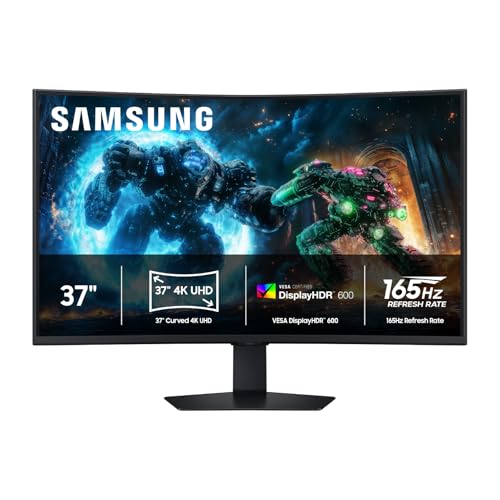
Samsung 37 Odyssey G7 G75F Series 4K UHD Curved Gaming Monitor LS37FG75DENXZA

ASUS TUF Gaming 27 4K HDR Monitor VG27UQ1A 160Hz Black

ASUS ROG PG32UCDMR 32 Inch 4K 240Hz OLED Gaming Monitor QD-OLED
More Details On Our Top Picks
That 27-inch size keeps this Dell grounded in desk-friendly territory, and the IPS panel helps it stay usable for gaming and general work side by side. The USB-C input, height adjustment, swivel, and pivot support make it easy to live with in a mixed setup, especially for a home office that also sees evening play.
Compared with the bigger curved picks below, this one feels more straightforward and less space-hungry. You may find the 4K detail shines most with a good graphics card, while the 120Hz ceiling gives motion a smoother feel than a plain 60Hz display without pushing into the premium extremes of the ASUS ROG model.
Strong Points
- 4K resolution on a 27-inch screen keeps text, HUD elements, and game detail crisp.
- 120Hz refresh rate helps fast movement look cleaner than standard office monitors.
- USB-C plus HDMI and DisplayPort give you flexible connection options.
- Height, swivel, and pivot adjustments make desk setup easier to tailor.
- Anti-glare coating helps cut reflections in bright rooms.
Things To Consider
- 27 inches at 4K can feel dense, so smaller interface text may need scaling.
- It lacks the curved, wraparound feel that the CRUA and Samsung G7 options bring.
- USB-C usefulness depends on how your laptop or dock is wired.
Feature Snapshot
Who It Suits Best
Desk users who want a 4K screen that can handle work hours and after-hours gaming without taking over the whole setup will get the most from this one.
A Better Fit Elsewhere
ASUS ROG PG32UCDMR 32 Inch 4K 240Hz OLED Gaming Monitor QD-OLED suits you better if you want a much faster premium panel and can accept a more serious price tier.
A 32-inch curved panel changes the feel of a desk fast, and this CRUA leans hard into that wider, more enveloping layout. The 1500R curve is gentler than the Samsung G7’s deeper wrap, so it stays approachable for gaming, streaming, and everyday multitasking.
The 160Hz ceiling gives this one more motion headroom than the Dell, and the built-in speakers plus wall-mount support make the package easier to place in a spare room or apartment setup. The trade-off is that VA panels can feel a bit different from IPS in side-by-side viewing, so color and off-angle behavior matter more here than on the Dell.
Highlights
- 32-inch 4K layout gives you more room for games and side-by-side apps.
- 160Hz refresh rate supports smoother action than many midrange 4K screens.
- 1500R curve adds a more immersive feel without becoming extreme.
- Built-in speakers reduce the need for extra desk audio gear.
- HDMI 2.1 and DisplayPort 1.4 help with current PC and console hookups.
Room For Improvement
- The white finish looks clean, but it may show dust more readily than darker shells.
- VA panels usually trade some viewing-angle consistency for deeper contrast.
- At 32 inches, it asks for a bigger desk than the 27-inch picks.
Details At A Glance
Whose Shelf It Belongs On
This suits you best if you want a large curved display for gaming first, then streaming and productivity second.
Swap It Out When
Dell 27 Monitor S2725QS 4K UHD IPS 120Hz USB-C is the calmer pick for smaller desks and lighter cable needs.
Flat 27-inch 4K monitors often hit a sweet spot for mixed use, and this ZZA keeps the shape simple while still pushing 144Hz. That makes it a sensible fit for someone who games at night, edits or streams during the day, and doesn’t want a curved panel taking up extra visual space.
Its HDMI 2.1 and DisplayPort 1.4 inputs make it easier to connect modern gear, and the tilt adjustment gives you a little more control over posture than a fixed stand would. The 4000:1 contrast claim stands out on paper, though VA-style behavior can still matter in bright-room viewing and side-angle use.
Upsides
- 144Hz motion support keeps the screen feeling quick for a 4K panel.
- Flat layout is easy to place for work, play, and content tasks.
- HDMI 2.1 helps with newer consoles and compatible PCs.
- Tilt adjustment gives you a simple way to tune viewing comfort.
Softer Spots
- It skips the curved immersion some gamers prefer for larger screens.
- The black finish is practical, though fingerprints and dust can still show up.
- Built-in speakers are not listed, so an external audio plan may matter.
Core Details
Made For
This is a good match for you if you want a no-nonsense 27-inch 4K screen that can cover gaming and desk work without asking for a huge footprint.
Look Elsewhere When
CRUA 32 4K UHD 160Hz Curved Gaming Monitor 1500R White suits you better if a bigger, more wrapped-around image matters more than a flat panel.
This Samsung leans away from 4K and toward higher-refresh 1440p play, which is useful to keep in mind before you lock in a purchase. That trade-off can make sense for you if smooth competitive motion matters more than raw pixel density, and the height-adjustable stand helps the panel sit where your neck wants it.
Black Equalizer, Virtual Aim Point, and Auto Source Switch+ make it feel tuned for fast play rather than just general desktop duty. Compared with the Dell and ZZA options, it gives up 4K detail, but it can be the better fit for a person who’d rather spend performance headroom on frame rate than on ultra-fine image detail.
Bright Spots
- 180Hz refresh rate supports very brisk motion for fast games.
- QHD resolution is easier for many systems to drive than 4K.
- Height-adjustable stand helps with ergonomic desk positioning.
- Gaming tools like Black Equalizer and Virtual Aim Point add useful on-screen control.
Areas To Watch
- It is not a 4K panel, so it sits outside the main keyword lane.
- Console and PC users chasing sharper desktop text may prefer the Dell or ASUS picks.
- The feature set is more gaming-focused than work-first.
Feature Rundown
Who Should Grab It
This suits competitive players who care more about speed and comfort than about 4K sharpness.
Another Choice May Suit
Dell 27 Monitor S2725QS 4K UHD IPS 120Hz USB-C is the stronger fit for someone who wants the extra detail of a true 4K panel.
At 37 inches, this Samsung brings a much larger sweep of screen than the 27-inch models, and the 1000R curve wraps that space around your view in a way that feels built for long gaming sessions. It sits close to a cockpit-style setup, though that also means you need enough desk depth to avoid feeling crowded.
The 165Hz refresh rate and 1ms response time put motion handling in a very different lane from the slower Dell, while DisplayHDR 600 gives it more headroom for bright highlights than the basic HDR support you see elsewhere in the list. The honest read is that this is a statement piece for a large desk, not a casual all-purpose monitor.
Best Bits
- 37-inch size gives you a broad, immersive canvas for games.
- 1000R curvature deepens the wraparound feel.
- 165Hz refresh rate helps keep fast action fluid.
- DisplayHDR 600 adds stronger contrast potential than lower-tier HDR support.
- AMD FreeSync Premium Pro helps reduce tear-prone motion in supported setups.
Minor Gripes
- Its size can dominate a desk, so placement matters a lot.
- It is less casual to fit into a small office or dorm room.
- Big curved panels usually ask for more careful cleaning around the edges.
At A Glance
The Right Fit
Big-screen gaming fans who want a wraparound 4K display and have the desk space to match will get the most from this Samsung.
Skip It When
ZZA 27 Inch 4K Gaming Monitor 4K 144Hz Flat Monitor Black is easier to live with in smaller rooms and simpler setups.
This ASUS TUF model reads like the practical gamer’s sweet spot: 27 inches, 4K resolution, and 160Hz all in a size that still feels desk-friendly. The mix of Extreme Low Motion Blur Sync, G-SYNC compatibility, and AMD FreeSync Premium matters because it gives you more room to match the screen to different PC setups without overthinking it.
HDMI 2.1 support for 4K at 120Hz makes it easy to think about console use as well, and the 95% DCI-P3 color range gives it more color headroom than the most basic screens here. Compared with the Dell, it pushes harder on speed, though the trade-off is that this line is more focused on gaming polish than on office-style flexibility.
What We Like
- 160Hz refresh rate gives you extra motion headroom over 120Hz models.
- G-SYNC Compatible and FreeSync Premium broaden pairing options.
- HDMI 2.1 support makes console connection planning easier.
- 95% DCI-P3 coverage gives color work more room than a plain sRGB-only panel.
- 27-inch size keeps it manageable on many desks.
Points To Note
- It is still a 27-inch 4K panel, so scaling choices matter.
- The spec set leans gaming-first, not office-first.
- You may want careful cable routing if you connect several systems.
Quick Facts
Built With In Mind
This is a strong match for PC and console gamers who want a fast 27-inch 4K panel with a little more tuning flexibility.
Where A Sibling Pick Shines
Dell 27 Monitor S2725QS 4K UHD IPS 120Hz USB-C makes more sense if you want a friendlier everyday monitor with USB-C and a slightly calmer feature set.
This is the pick that makes the rest of the list look sensible rather than modest. A 32-inch QD-OLED panel with 240Hz and a 0.03ms response time is aimed at people who care about motion clarity, deep black levels, and vivid color far more than they care about keeping things simple.
USB-C with 90W power delivery adds practical desk utility, and the 99% DCI-P3, true 10-bit color support, and PS5 or Xbox compatibility widen its appeal beyond PC-only setups. The trade-off is clear, though, because OLED carries more ownership caution than the IPS and VA picks, so it suits careful users who want premium image quality and are happy to treat the panel with respect.
Best Bits
- 240Hz refresh rate gives this panel exceptional motion headroom.
- QD-OLED technology delivers deep blacks and rich color separation.
- 0.03ms response time supports very sharp-looking fast action.
- USB-C with 90W can simplify laptop docking on a desk.
- True 10-bit color and 99% DCI-P3 suit color-sensitive work and play.
- Console compatibility broadens use beyond a single platform.
Worth Noting
- OLED panels ask for more care in how you leave static content on screen.
- It sits in a very high-end part of the field, so it is not the casual choice here.
- Some setups will need time to tune brightness and image settings to taste.
Core Details
Right Fit
This is for serious gaming setups and mixed PC-console systems where display quality and speed matter more than budget or simplicity.
Another Choice May Suit
ASUS TUF Gaming 27 4K HDR Monitor VG27UQ1A 160Hz Black suits you better if you want a more practical high-end display without stepping into OLED care.
How To Choose The Right 4k Monitors For Gaming
Panel Type Changes The Whole Feel
IPS panels, like the Dell and ASUS TUF, usually give you more even viewing angles and a balanced look for mixed gaming and desk work. VA panels, such as the CRUA and ZZA, tend to lean harder toward contrast, which helps dark scenes stand out but can feel a bit different off-center.
OLED sits in its own lane. The ASUS ROG model brings deeper blacks and very fast response, but it asks for more care than an IPS monitor you can leave on a work desk all day.
Refresh Rate Should Match Your Setup
120Hz already feels smooth for many console and PC sessions, especially on the Dell. Stepping up to 144Hz, 160Hz, 165Hz, or 240Hz matters most when your hardware can actually push those frame rates consistently.
That’s the part many people miss. A 240Hz OLED looks incredible, yet a midrange graphics card may get more practical value from a sharp 4K 120Hz screen or even a faster 1440p option like the Samsung G5.
Screen Size Affects Comfort As Much As Image Quality
Twenty-seven inches suits most desks and keeps text and game detail within easy view. Thirty-two inches and above, especially on curved models, gives you more immersion, but you need more depth in front of the panel and a setup that lets you sit back a little.
For cramped desks, the Dell and ASUS TUF are easier to place. For couch-adjacent desks or wide battlestations, the CRUA and Samsung G7 feel more natural.
Connections And Ergonomics Matter In Daily Use
HDMI 2.1 and DisplayPort matter because they affect what you can plug in without friction. USB-C is especially helpful for a laptop dock style setup, since one cable can handle display and power on supported systems.
Stand adjustment matters just as much. Height, tilt, swivel, and pivot help the screen fit your posture, and that can matter more than a flashy spec sheet after a long workday or a long gaming run.
What To Weigh Before You Choose
Common Shopping Slip Ups
Many people chase resolution first and forget about desk space, graphics headroom, or connection needs. A 4K panel can look great and still feel awkward if your setup can’t feed it properly.
Another common miss is ignoring stand adjustment. A fixed screen height can turn a good monitor into a tiring one after a few hours, especially on a smaller desk.
Where The Extra Money Goes
Higher-tier models usually spend money on faster panels, stronger HDR support, richer color, and better build details. The ASUS ROG OLED shows that clearly, while the Samsung G7 adds size and curvature that change the whole experience.
That upgrade makes sense when you want a more immersive setup, cleaner motion, or better color depth for both games and creative work. For casual play, the middle of the list often gives you the saner balance.
Frequently Asked Questions
Is 4K worth it for gaming?
Yes, especially on a 27-inch or 32-inch panel where the extra detail is easy to notice. It matters most when your PC or console can keep up with the higher load.
What refresh rate should you aim for?
120Hz is already a strong baseline for smooth gaming. Faster options make more sense when your system can push high frame rates without stutter.
Are curved monitors better for gaming?
Curved screens can feel more immersive on larger panels, especially at 32 inches and up. Flat screens stay easier to place on smaller desks and feel simpler for mixed work use.
Do OLED monitors need extra care?
OLED panels reward careful use because they’re more sensitive to static elements left onscreen for long stretches. They also deliver a very different picture style, with deep blacks and vivid contrast.
Which size works best for most desks?
Twenty-seven inches fits most setups well and keeps the screen manageable. Thirty-two inches is better when you have the depth to sit back and enjoy the larger image.
