
You’re shopping for a screen that can keep up with long work sessions, careful editing, and the occasional game night, without turning your desk into a tangle of compromise. The right panel gives you space, clarity, and cleaner text, so your eyes do less work by the end of the day. This roundup focuses on seven monitors that make sense for creative work, mixed home office setups, and desks where one display has to do a lot.
The Shortlist At A Glance

Dell 27 Monitor S2725QS 4K UHD IPS, 120Hz

Amazon Basics 24-inch Full HD IPS Monitor 75 Hz
ASUS ProArt PA27JCV 27 Inch 5K USB-C Monitor for Mac
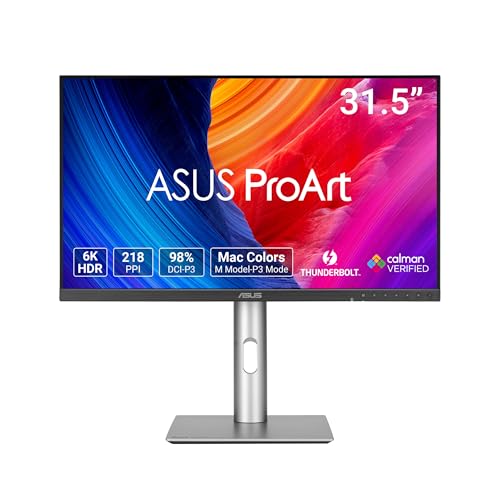
ASUS ProArt PA32QCV 32 Inch 6K DCI-P3 Thunderbolt 4 Monitor for Mac
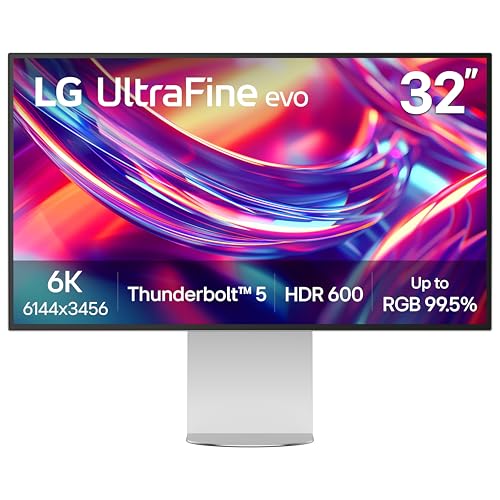
LG 32U990A-S 32-Inch Ultrafine 6K Thunderbolt 5 Monitor

G32P 32’’ UHD 6K Glossy Monitor with Stand

Dell UltraSharp U3224KB 31.5' Webcam 6K LED Monitor
More Details On Our Top Picks
The Dell S2725QS sits in the middle of the field in a useful way, because it blends 4K detail with a 120Hz refresh rate. That mix makes it easier to handle spreadsheets, editing timelines, and a little after-hours gaming without feeling boxed in by an office-only panel.
USB-C is the practical part here, especially for a desk that swaps between a laptop and a docked setup. You also get a height-adjustable stand with swivel and pivot movement, so the monitor can fit tighter spaces or a portrait workflow with less fuss.
Strong Points
- 4K resolution gives text and fine UI elements more breathing room.
- 120Hz refresh helps motion feel smoother in daily use.
- USB-C keeps laptop setups cleaner with fewer loose cables.
- Height, swivel, and pivot adjustments make it easier to place on varied desks.
- 99% sRGB coverage suits general design work and everyday color-sensitive tasks.
Things To Consider
- It’s still a 27-inch screen, so you may prefer a larger panel for side-by-side window work.
- The built-in strengths lean balanced rather than ultra-specialized for pro studios.
- Gloss-prone desk lighting can still matter, even with anti-glare treatment.
Feature Snapshot
Who It Suits Best
Hybrid workers, casual gamers, and home office users who want one screen for many tasks fit this model well.
Where A Sibling Pick Shines
ASUS ProArt PA27JCV makes more sense for color-critical creators who want a 5K canvas and tighter calibration focus.
This Amazon Basics 24-inch monitor is the practical end of the lineup, and that’s a strength rather than a drawback. For email, meetings, coursework, or a secondary display beside a larger 6K panel, the Full HD resolution keeps the setup straightforward.
The adjustable stand and VESA compatibility matter more than they look on paper, because they let you fit the screen into a compact desk or mount it on an arm. Built-in speakers are handy for casual calls, though serious audio still belongs on separate speakers or headphones.
What We Like
- 24-inch size fits smaller desks and shared workspaces well.
- IPS panel helps the image stay readable from different seating positions.
- HDMI, DisplayPort, and VGA give you broad device flexibility.
- Adjustable stand helps with basic ergonomic setup.
- Built-in speakers make quick meetings and simple media playback easier.
Room For Improvement
- 1080P is a modest fit beside the sharper 5K and 6K models in this list.
- 75Hz suits office work, though it won’t feel as fluid as the higher-refresh Dell.
- The speaker setup is fine for convenience, not for fuller sound.
Core Details
Who Will Love This
Students, office workers, and anyone building a basic desk setup on a tighter budget will get the most from it.
Another Choice May Suit
Dell 27 Monitor S2725QS fits better for someone who wants sharper 4K detail and a faster 120Hz panel.
Color work is where the ASUS ProArt PA27JCV starts to separate itself from the Dell and Amazon Basics models. The 5K panel gives you a denser workspace, so photo edits, type, and interface details all land with more precision on a 27-inch frame.
The USB-C port with 96W power delivery is the kind of detail that makes sense on a Mac desk, because one cable can carry video and charge a laptop at the same time. Auto KVM is useful for people who move between two computers, though the honest read is that this model makes the most sense when your day leans heavily toward creative or production work.
Highlights
- 5K resolution gives you a very dense and crisp workspace.
- Factory calibration and low Delta E help color-sensitive work feel more dependable.
- USB-C PD 96W supports cleaner single-cable laptop setups.
- Auto KVM helps shared keyboard and mouse control across two systems.
- Height adjustment makes long editing sessions easier to set up comfortably.
Minor Gripes
- It leans toward specialists, so casual desk use won’t tap all of its strengths.
- Mac-focused features matter most in a setup that actually uses them.
- Advanced calibration language may feel like overkill for simple office tasks.
Details At A Glance
Right Fit For
Mac users, photographers, and designers who spend time in color-managed apps will get the clearest payoff here.
Look Elsewhere When
LG 32U990A-S is the better step-up for someone who wants a larger 32-inch 6K canvas and Thunderbolt 5 connectivity.
Moving from the 27-inch ASUS ProArt to this 32-inch PA32QCV, the big change is space. That larger 6K canvas helps you keep timelines, palettes, and reference material open side by side, which is a real comfort in long studio sessions.
Thunderbolt 4 with 96W power delivery gives it a clean single-cable feel, and the ergonomic stand adds the kind of adjustment range that matters on a serious desk. It’s a strong fit for Mac workflows, though the feature set is dense enough that casual users may be paying for more monitor than they need.
Upsides
- 32-inch 6K panel gives you a very large workspace for detailed projects.
- High-end color tuning suits design, video, and proofing jobs.
- Thunderbolt 4 supports simple connectivity and laptop charging through one cable.
- Ergonomic stand helps with height and angle adjustments on a crowded desk.
- Mac-friendly tuning makes it easier to match a modern Apple setup.
Areas To Watch
- Its feature depth is most useful in a serious content-creation setup.
- The 32-inch scale can feel large on a shallow desk.
- Several premium features make more sense for professionals than casual home use.
Technical Sheet
Best Suited To
Creative professionals working from a Mac desktop or notebook will get the most from this monitor’s size and connectivity.
Skip It When
ASUS ProArt PA27JCV makes more sense for a smaller desk or a user who wants a 27-inch workspace with less bulk.
The LG 32U990A-S pushes hard on both size and connectivity, which is why it stands apart from the ASUS models above it. A 32-inch 6K panel gives you plenty of room for dense work, and the Thunderbolt 5 connection points toward a newer, more flexible desk setup.
Its 60Hz refresh rate keeps the focus on clarity rather than motion, so this is better for production work than fast-paced gaming. The built-in speakers and port spread are practical extras, though you still want to think about desk depth and how much of that 32-inch panel your workspace can comfortably hold.
Plus Points
- 32-inch 6K canvas helps demanding layouts feel less cramped.
- Thunderbolt 5 supports a very modern desktop connection path.
- DisplayHDR 600 and Nano IPS Black point toward stronger image depth.
- HDMI 2.1, DisplayPort 2.1, and USB-C cover a wide range of hardware.
- Tilt, height, and pivot controls help you tune it to your desk.
Softer Spots
- 60Hz is fine for work, though motion-focused users may want more speed.
- Its footprint asks for a roomy desk and careful placement.
- It makes the most sense when you already plan to use the premium port set.
Feature Rundown
Whose Shelf It Belongs On
Power users and creative teams who want a large, modern, high-detail screen will appreciate this model most.
Reach For A Different Pick When
Dell UltraSharp U3224KB is the better call for someone who wants a 6K monitor with a built-in webcam for meeting-heavy days.
The G32P leans into a glossy finish and high pixel density, so it gives off a sharper, more vivid feel than the matte Dell and Amazon Basics options. In a bright room with controlled lighting, that kind of presentation can look especially clean on photos, UI elements, and detailed media work.
Its 10-bit color support, 99% sRGB, and 99% DCI-P3 coverage make it appealing for color-conscious work, while the included stand keeps setup simple. The trade-off is the glossy surface, which can show reflections more readily than a matte panel, so desk lighting matters more here.
Best Bits
- 6K resolution and 223PPI give text and imagery a very fine look.
- 10-bit color supports smoother tonal transitions in supported content.
- 99% sRGB and 99% DCI-P3 help with color-rich work.
- 2000:1 contrast helps darker scenes carry more depth.
- Included stand makes the setup more straightforward out of the box.
Small Caveats
- Glossy surfaces ask for more careful lighting placement.
- 60Hz keeps it focused on detail, not motion speed.
- The display style may suit studio desks more than shared family rooms.
Core Details
The Right Fit
Designers and media workers who want a glossy, high-density 6K panel for a controlled desk setup are the clearest match here.
Swap It Out When
Dell 27 Monitor S2725QS suits someone who wants a more versatile matte display with faster refresh and a smaller footprint.
The Dell UltraSharp U3224KB is built around a very specific kind of desk life, where meetings and focused work both matter. The built-in webcam changes the shape of the setup, because you’re not adding another accessory just to make video calls usable.
Its 31.5-inch 6K display gives you a large, sharp workspace, and the 16:9 aspect ratio keeps familiar app layouts feeling natural. Thunderbolt connectivity and the strong power delivery figure are useful for a tidier desk, though this is clearly aimed at people who want a work hub more than a casual home screen.
Reasons To Buy
- Built-in webcam reduces the need for a separate camera on the desk.
- 31.5-inch 6K panel offers a spacious layout for multitasking.
- Thunderbolt cable management helps keep a workstation cleaner.
- Wide color coverage supports creative and presentation work.
- Strong power delivery helps many laptop setups stay simple.
Trade Offs
- The webcam feature adds value mainly for meeting-heavy setups.
- Its size and focus make it a less casual choice than the Dell S2725QS.
- The design is more workstation-first than lounge-room friendly.
Feature Card
Made With In Mind
Office professionals, remote workers, and anyone who spends much of the day in meetings will get the most from this setup.
A Better Fit Elsewhere
LG 32U990A-S suits a creator who wants more modern connectivity and a larger 32-inch 6K canvas without the built-in camera focus.
How To Choose The Right 6k Computer Monitors
Resolution First, Then Everything Else
6K gives you a lot of workspace, but the number only matters when your desk and tasks can use it. A 31.5-inch or 32-inch panel fits people who keep several windows open, while a 27-inch screen works better for smaller desks or closer viewing distances.
Panel type matters just as much. IPS panels usually keep color and contrast more stable at normal angles, while glossy finishes can look lively but ask more from your room lighting.
Match The Screen To Your Work Style
Creative work, coding, and document-heavy office work all use 6K in different ways. Designers usually care most about color coverage, calibration, and density, while multitaskers care more about screen size, port layout, and whether the stand can swivel, pivot, or adjust height.
Refresh rate also changes the feel of daily use. A 60Hz studio screen can be a great fit for editing, but 120Hz makes scrolling and motion feel easier on the eyes during mixed work and play.
Ports And Power Can Simplify The Desk
USB-C and Thunderbolt matter because they can carry display signal, data, and power through a single cable. That helps laptop users cut down on chargers and adapters, especially in compact home offices.
Power delivery numbers matter too, because they tell you how much charging headroom the monitor can supply. For most laptop desks, a higher figure is more comfortable than a bare-minimum port, though the right match still depends on your machine.
Stand Design And Ergonomics Pay Off Daily
Height adjustment sounds ordinary until you spend six hours at the same desk. Swivel and pivot matter for shared workstations, portrait layouts, or anyone who needs to turn the display without moving the whole base.
A roomy stand can be worth the trade-off on a deep desk, but it becomes annoying on a tight one. That’s why checking dimensions and adjustability matters just as much as the resolution badge on the box.
What To Weigh Before You Click
Hidden Buying Traps
A common mistake is treating every 6K monitor as a creator tool. Some are tuned for office work, some for color accuracy, and some for desk convenience, so the right pick depends on whether you spend your day in spreadsheets, edits, or meetings.
Another slip-up is overlooking desk depth. A large 32-inch display can feel wonderful, then crowd your keyboard and notebook the moment it arrives on a shallow surface.
The Upgrade Payoff
Higher-tier models cost more because of denser panels, better color tuning, stronger power delivery, and advanced ports. Extras such as Thunderbolt, Auto KVM, or a built-in webcam also add value for people who use them every day.
Paying up makes sense when your monitor is part of your work setup all day. A simpler 24-inch or 27-inch screen usually covers casual use well, while premium models earn their keep in creative studios, meeting-heavy offices, and laptop-first desks.
Frequently Asked Questions
What makes a 6K monitor different from 4K?
A 6K screen gives you more pixels to work with, so text, images, and interface elements can look finer. That extra density matters most for large displays and detail-heavy tasks.
Is 6K overkill for office work?
Not always, because a sharper screen can make long days with documents and spreadsheets feel cleaner. The main question is whether your desk, budget, and device setup can actually use that extra resolution.
Do you need USB-C or Thunderbolt for a 6K monitor?
You don’t need them, but they make laptop setups much tidier. They’re especially helpful when you want video, data, and charging through one cable.
Which screen size works best for 6K?
A 27-inch display suits tighter desks and focused work, while 31.5-inch or 32-inch models give you more room for multitasking. The right size depends on how far you sit from the panel and how many windows you keep open.
Are glossy 6K monitors a bad idea?
Not at all, but they ask for more careful lighting placement than matte screens. In a controlled room, they can look especially crisp and rich.
