
Affordable monitors can do a lot of the heavy lifting in a home office, dorm setup, or shared family desk. You want clear text, sensible screen size, and ports that match your laptop or desktop without turning setup into a weekend project.
This roundup focuses on practical 1080p options with different strengths, from simple work displays to smoother 100Hz and 144Hz picks. You’ll see where each one fits best, and where a small trade-off may matter more than the spec sheet suggests.
Quick Look At The Shortlist

Amazon Basics 24-inch Full HD IPS Monitor

Amazon Basics 24 Inch (23.8 Inch Viewable) Monitor

AOPEN by Acer 21.5in FHD 1920×1080 IPS 100Hz Office Monitor 22SA2Q EBI
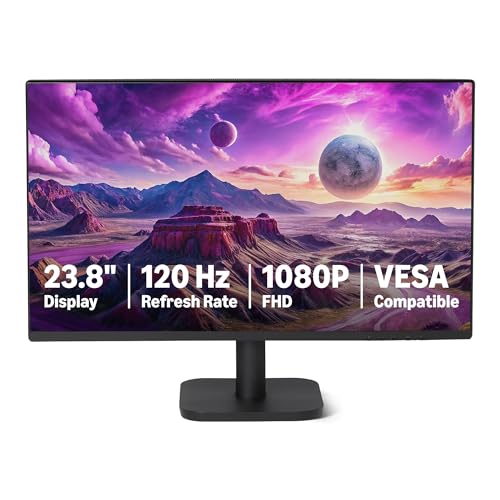
Amazon Basics 23.8-Inch 1080P Computer Monitor

Acer 21.5in FHD 1920×1080 100Hz Office Monitor KB220Q H2bi

Dell 24 Monitor – SE2426H – 23.8-Inch FHD 144Hz 1ms Display

Westinghouse 22 Inch Computer Monitor
More Details On Our Top Picks
That 24-inch IPS panel makes this a straightforward desk monitor for work, browsing, and video calls. IPS means in-plane switching, a panel type known for steadier color and wider viewing angles, so the picture stays more consistent when you shift in your chair.
The 75Hz refresh rate is a modest step above basic 60Hz screens, which can make scrolling feel a little calmer. The adjustable stand, VESA mount support, and built-in speakers give you a tidy setup path, though the speaker quality will matter less if you already use headphones or a soundbar.
Strong Points
- 24-inch size gives you enough room for documents, a browser, and a chat window side by side.
- IPS viewing helps keep text and color more even across the screen.
- HDMI, DisplayPort, and VGA cover older and newer hardware.
- Adjustable stand and VESA support make desk placement easier.
Things To Consider
- 75Hz is fine for office use, but it won’t feel as fluid as the 100Hz and 144Hz options in this roundup.
- Built-in speakers suit casual audio, yet many setups will still want separate speakers.
- At 24 inches, it takes more desk depth than the 21.5-inch models here.
Key Specs
Who It Suits Best
Office users, students, and home setups that need a simple 24-inch display with broad compatibility will get the most from it.
A Better Fit Elsewhere
Amazon Basics 23.8-Inch 1080P Computer Monitor suits you better if you want a faster 120Hz panel for a busier mix of work and motion.
This one keeps the same straightforward 24-inch work-friendly shape, but the 100Hz ceiling gives it a little more snap than the 75Hz Amazon Basics monitor above. For a home office that also handles light streaming or casual games, that bump can make mouse movement and window scrolling feel more responsive.
The built-in speakers and VESA support are useful in smaller rooms where you want fewer cables on the desk. One practical note: the panel ships with a protective film, so setup should begin with a careful peel before you judge the screen itself.
What We Like
- 100Hz is a nice middle ground for work and lighter motion use.
- 23.8-inch viewable size keeps the footprint manageable.
- Built-in speakers can simplify a compact setup.
- VESA compatibility gives you mounting flexibility.
Room For Improvement
- The built-in audio is handy, but separate speakers still sound fuller for music or long meetings.
- The screen film needs removal before use, which is easy to miss during unboxing.
- It shares the same 1080p resolution as the smaller picks, so very dense multitasking still benefits from a larger or sharper panel.
Feature Rundown
Built With In Mind
Students, office workers, and home users who want a tidy all-purpose screen without a lot of setup complexity will appreciate it.
Where A Sibling Pick Shines
Amazon Basics 23.8-Inch 1080P Computer Monitor is the better match for you if smoother 120Hz motion matters more than built-in speakers.
The 21.5-inch footprint makes this AOPEN model easy to place on a smaller desk, and the 100Hz panel keeps it from feeling too bare-bones. For a compact home setup, that size and speed pairing can be the sweet spot between saving space and keeping motion comfortable.
Its 1ms response time, AMD FreeSync support, and VESA mounting give it a more flexible profile than the basic office screens above. The trade-off is simple: the smaller panel works well in tight spots, but you give up some screen room for spreadsheets and split-window work.
Highlights
- 21.5-inch size fits neatly on tighter desks.
- 100Hz helps motion feel smoother than a standard 60Hz office screen.
- 1ms response time suits casual gaming and fast-moving video.
- HDMI and VGA support make it easy to pair with mixed hardware.
Minor Gripes
- The smaller panel can feel cramped for side-by-side documents.
- You may want more screen height for long work sessions.
- The added gaming features matter less for purely office-focused use.
Core Details
Right Fit For
Compact desks, students in smaller rooms, and casual users who want a little motion polish without moving up to a larger display will like it most.
Swap It Out When
Amazon Basics 23.8-Inch 1080P Computer Monitor suits you better if you want a larger panel and a more expansive work surface.
Among the value-minded screens here, this is the one that pushes motion smoothness the farthest with a 120Hz panel. For a desk that handles spreadsheets by day and entertainment by night, that extra fluidity can make the monitor feel a step more current without jumping into a pricier class.
The 23.8-inch size keeps it practical, and the mix of HDMI, DisplayPort, and VGA works well for homes with more than one device. The trade-off is that you still get full HD rather than a sharper resolution, so text clarity depends more on size and seating distance than on pixel density alone.
Best Bits
- 120Hz stands out in this group for smoother motion.
- 23.8-inch size keeps the screen useful without swallowing the desk.
- HDMI, DisplayPort, and VGA give you broad connection options.
- VESA compatibility helps with monitor arms and wall setups.
Points To Note
- Full HD is still the resolution ceiling, so very detail-heavy work may call for more.
- No built-in speakers are listed, so sound plans need to come from elsewhere.
- The stronger refresh rate matters most once your computer can actually send 120Hz output.
Details At A Glance
Whose Shelf It Belongs On
You’re the right match for this monitor if you want a faster-feeling daily screen without leaving the affordable 1080p range.
Look Elsewhere When
Dell 24 Monitor – SE2426H fits better for you if you want a premium-feeling 144Hz step up with IPS and a more refined overall package.
This Acer leans harder into color and motion tuning than the simpler office picks above. The 99% sRGB claim matters because sRGB, a standard color space used for web and general content, helps the screen present tones more faithfully for everyday photo work, design tasks, and streaming.
AdaptiveSync, the brand’s flicker-reduction approach, and blue-light filtering give it a more comfort-focused profile for long sessions. The honest read is that the 21.5-inch size still keeps it compact, so it suits smaller desks best even though the feature list is busy.
Plus Points
- 99% sRGB coverage supports more faithful color in everyday use.
- 100Hz keeps motion above basic office levels.
- AdaptiveSync can help visuals feel steadier with supported hardware.
- VESA support and HDMI, VGA inputs make setup more flexible.
Small Caveats
- The 21.5-inch panel is compact, so wide spreadsheets can feel tight.
- Color-focused extras matter most for work that actually uses them.
- Like many compact monitors, it benefits from careful stand placement so the smaller screen sits at a comfortable height.
Spec Overview
Whose Shelf It Belongs On
Home office users, students, and casual content creators who want a compact monitor with a stronger color focus will get the most from it.
Where Shoppers Go Wrong
Amazon Basics 24-inch Full HD IPS Monitor makes more sense for you if you want a larger, simpler screen without paying extra attention to color extras.
The Dell brings the strongest motion spec in this list, and the 144Hz refresh rate is the part most people will notice first during scrolling, light gaming, or fast video. IPS helps preserve viewing consistency, so it’s not just about speed, it’s about keeping the picture stable across a workday.
TÜV 3-star eye comfort certification points toward a screen designed with long sessions in mind, while AMD FreeSync helps reduce visible stutter with supported graphics hardware. The trade-off is the usual one for a higher-tier 1080p monitor, you’re paying for refinement in speed and comfort rather than a bigger panel or sharper resolution.
Reasons To Buy
- 144Hz gives this monitor the smoothest everyday motion in the lineup.
- 1ms response time suits quick movement and casual gaming.
- IPS technology helps with color consistency from different angles.
- FreeSync support can make supported systems feel more even in motion.
- Tilt adjustment gives you a little extra setup control.
Areas To Watch
- The premium motion focus makes sense most for users who will feel it.
- It still stays at 23.8 inches, so desk depth remains part of the equation.
- Two HDMI ports are useful, though some setups may still want more variety.
Feature Card
Made For
Commuter desks, hybrid workstations, and casual gaming setups will get the most from this monitor’s speed and polish.
Another Choice May Suit
Amazon Basics 23.8-Inch 1080P Computer Monitor fits you better if you want a similar size with a lower-key feature set and simpler value focus.
Westinghouse leans into the features that help a modest gaming or general-use desk feel more complete: IPS, 100Hz, 1ms, HDR, and built-in speakers. The frameless design helps it look less bulky on a small desk, which matters more than people admit when the monitor sits in a shared room.
Adaptive Sync support and the gaming mode add some extra motion polish, while the 22-inch size keeps the footprint restrained. You may find the 300-nit brightness useful in brighter rooms, though the smaller size also means it works best when you sit fairly close and want a tidy setup instead of a large canvas.
What We Like
- 22-inch size is easy to place on tight desks.
- IPS panel and wide viewing angles make shared use more comfortable.
- 100Hz and 1ms support smoother motion than basic office screens.
- Built-in speakers reduce the need for extra desk hardware.
- HDMI and VGA give you simple connection flexibility.
Softer Spots
- The compact size can feel narrow for layered work windows.
- Built-in speakers are convenient, but external audio still tends to sound fuller.
- Gaming mode helps motion, yet it won’t replace a more advanced panel if you want a bigger leap in smoothness.
Quick Facts
Who Should Grab It
You fit this monitor best if you want a compact screen for casual gaming, schoolwork, and small-room use with a few extra comfort features.
Skip It When
Dell 24 Monitor – SE2426H suits you better if you want a more refined 144Hz option for faster motion and a slightly more polished feel.
How To Choose The Right Affordable Monitors
Match The Screen To The Desk
Screen size changes the way a setup feels more than many people expect. A 21.5-inch monitor leaves room for a laptop stand, notebook, or speakers, while a 23.8-inch or 24-inch screen gives you more room for side-by-side windows.
That matters in small apartments, dorm rooms, and shared desks where every inch counts. Larger screens feel easier for spreadsheets and multitasking, but they also need a little more viewing distance to feel natural.
Look Past Resolution Alone
Most of the monitors here use 1920 x 1080, which is the familiar full HD standard. That works well for web use, office tasks, and streaming, but the real difference often comes from refresh rate, panel type, and stand flexibility.
IPS panels usually keep color steadier from the side, while faster refresh rates such as 100Hz or 144Hz make motion look calmer. The practical payoff shows up during scrolling, long work sessions, or casual gaming, not just in a spec sheet.
Think About Ports And Placement
HDMI covers most modern laptops and desktops, but DisplayPort and VGA still matter for mixed hardware. A monitor with several inputs saves you from adapters and keeps switching devices simpler.
VESA compatibility matters too, since a wall mount or arm can free up desk space. Tilt and adjustable stands are worth attention for anyone who spends hours at a desk and wants the screen at a more natural angle.
Balance Comfort Features With Real Needs
Blue-light filters, flicker control, and AdaptiveSync can make a screen feel easier to live with, especially during long evenings. They are useful details, though they matter most when your use case matches them.
Office users often benefit more from good ergonomics and clear text than from gaming extras. Fast-motion shoppers, on the other hand, will notice a higher refresh rate far more than built-in speakers.
A Quick Reality Check
Hidden Buying Traps
Many shoppers focus on screen size and forget the stand, ports, or actual desk depth. That leads to awkward placements, especially in narrow home offices where the monitor sits too close to your face.
Another common miss is assuming every monitor includes speakers or the same cable options. Checking those details first saves you from a setup that feels incomplete on day one.
The Upgrade Payoff
Higher-tier monitors usually cost more because they bring faster refresh rates, better motion handling, wider color support, or more refined panel behavior. Those extras matter most for people who spend hours in front of the screen and notice small differences quickly.
In plain terms, a smoother 120Hz or 144Hz display feels worth it for mixed work and entertainment, while a simpler 75Hz screen still makes sense for basic tasks. Paying up only pays off when your daily use actually benefits from the extra speed or comfort.
Frequently Asked Questions
What size works best for a small desk?
A 21.5-inch monitor usually fits best when desk space is tight. A 23.8-inch model gives you more room without becoming unwieldy.
Is 100Hz enough for everyday use?
Yes, 100Hz feels smooth for office work, browsing, and casual media. It also gives light gaming a nicer feel than a basic 60Hz screen.
Do built-in speakers matter much?
They help keep a desk simple and uncluttered. For music, long calls, or fuller sound, separate speakers still usually do a better job.
Should you choose IPS over other panel types?
IPS is a strong fit for shared viewing and steady color. It’s a sensible pick for work, school, and mixed home use.
Is 144Hz worth the step up?
It makes sense for you if smoother motion matters in games, scrolling, or fast-moving video. For basic office work, the gain is nice but not essential.
