
Budget 27-inch monitors often sit in the sweet spot for desks that need more breathing room without jumping to a larger panel. That size can feel especially useful for spreadsheets, web calls, casual gaming, and split-screen work, where a cramped display turns into a daily nuisance. You’re usually balancing refresh rate, panel type, ports, and stand adjustability, not chasing flashy extras. The seven picks below focus on where each monitor makes the most sense in real use.
Quick Look At The Shortlist

Amazon Basics 27 Inch Monitor 100Hz IPS


Dell SE2726HG 27 240Hz Gaming Monitor
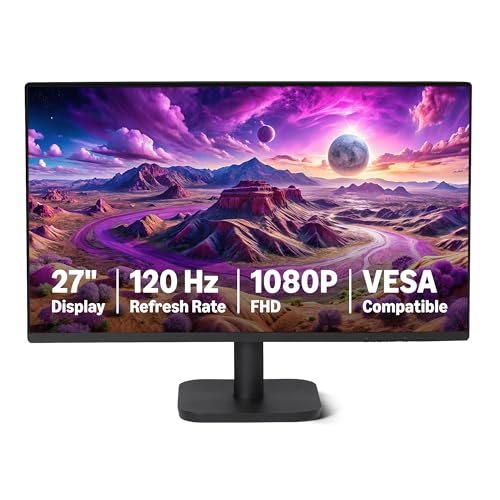
Amazon Basics 27-inch Computer Monitor 120Hz

Dell S2725HSM 27 Plus Monitor

Dell SE2726H 27 Monitor 144Hz

msi PRO MP272LE 27-inch IPS 100Hz
More Details On Our Top Picks
This Amazon Basics panel makes sense for a desk that does a bit of everything. The 27-inch size gives you room for side-by-side windows, while the IPS panel, or in-plane switching panel, helps colors stay steadier from an angle. Built-in speakers and four USB ports keep the setup cleaner than a barebones screen. You give up some gaming flair, but that trade-off feels fair for everyday use.
Office tasks, video calls, and casual streaming suit it well, especially in a spare room or apartment desk. The VESA mount support also helps if you want to free up desk space with a wall arm or monitor arm. The honest read is that this one is more practical than flashy, and that’s exactly the point for many setups.
Strong Points
- 100Hz refresh rate keeps cursor motion and light scrolling smoother than basic 60Hz screens.
- IPS viewing angles help the picture stay consistent during shared desk use.
- Built-in speakers reduce desk clutter for simple workstations.
- Four USB ports make peripheral hookups less awkward for keyboards, mice, and small accessories.
- VESA compatibility gives you more mounting options for tighter spaces.
Things To Consider
- Built-in audio is handy, but most desktop setups still sound fuller with separate speakers.
- The design leans plain, so style-focused setups may want something with a more distinctive stand.
- Gaming-first shoppers may want higher refresh rates than 100Hz.
Feature Card
Whose Shelf It Belongs On
You’ll like this most if you want one monitor for office work, streaming, and general home use.
Where A Sibling Pick Shines
AOC 27B35H3 fits better for someone who wants a quicker-feeling panel with more gaming-leaning features.
The AOC 27B35H3 leans a bit more toward speed and flexibility than the first Amazon Basics pick. Its 120Hz refresh rate and fast IPS panel suit everyday use that occasionally turns into light gaming or fast-moving video. HDR support can add more punch to compatible content, though it’s still wise to keep expectations grounded at this price tier. For a mixed-use desk, it feels like a sensible step up.
HDMI, VGA, VESA support, and tilt adjustment make it easier to fit into older or simpler setups. Low blue light and flicker-free behavior also matter for long work sessions at a home office desk. You may find the feature mix especially appealing if your monitor has to handle both a work laptop and a game console without much fuss.
What We Like
- 120Hz refresh rate gives scrolling and motion a smoother feel than basic office displays.
- Fast IPS helps keep response snappy while preserving familiar IPS viewing angles.
- HDMI and VGA broaden compatibility with older and newer gear.
- VESA support and tilt adjustment help it fit different desk layouts.
- Low blue light and flicker-free design suit longer desk sessions.
Room For Improvement
- HDR on this class of monitor helps most with supported content, not every app or game.
- The stand only tilts, so height-sensitive desks may need an arm.
- People who want richer built-in audio will still need separate speakers.
Technical Sheet
Made For
This suits you best if you want a budget monitor that can handle work, movies, and some gaming without feeling basic.
Another Choice May Suit
Dell SE2726HG is a better fit for competitive gaming setups that need a much higher refresh rate.
This Dell is the clearest gaming-first pick in the group. The 240Hz panel, plus 0.5ms response time, is aimed at fast motion and quick input in shooters or racing games, where every frame feels more urgent. FreeSync Premium helps reduce tearing with supported hardware, so gameplay can look steadier. The trade-off is simple, it’s more specialized than the more general Amazon Basics and AOC options.
TÜV 3-star eye comfort certification also makes it more practical for long sessions than many speed-only screens. HDMI and DisplayPort 1.4 give you flexible hookup options for a PC or console desk. You may want this one most if your main priority is motion handling, not built-in extras or office-style convenience.
Highlights
- 240Hz refresh rate keeps motion extremely fluid for a 27-inch Full HD panel.
- 0.5ms response time helps reduce blur during fast on-screen movement.
- FreeSync Premium supports smoother gameplay with compatible systems.
- DisplayPort 1.4 and dual HDMI inputs make connection choices simple.
- TÜV 3-star eye comfort support adds a practical note for long use.
Areas To Watch
- Gaming-focused speed is the main attraction, so office-only users may be paying for more than they need.
- The stand only tilts, which may matter on taller desks.
- FHD at 27 inches is fine for gaming, though text-sensitive work can feel less sharp than higher-resolution panels.
Core Details
Best Suited To
You’ll appreciate this most if gaming takes priority over office polish and you want a fast 27-inch screen.
Look Elsewhere When
Amazon Basics 27 Inch Monitor 100Hz IPS suits mixed office use better if you want built-in speakers and USB ports.
This Amazon Basics model feels like the cleaner, more straightforward sibling to the first one. You still get 27 inches, IPS, and VESA support, but the 120Hz refresh rate nudges it closer to smoother everyday motion. The 99% sRGB coverage and 1500:1 contrast ratio matter for color-rich work and media, especially when you spend long hours in front of the screen. It’s a calm, usable choice rather than a showpiece.
The HDMI and DisplayPort pairing makes it easy to match newer laptops and desktop towers. Just keep in mind that the higher refresh rate depends on the right cable, graphics output, and system settings. That small setup detail matters more here than on a basic office monitor, so it suits someone comfortable checking connections once and leaving them alone.
Upsides
- 120Hz refresh rate makes work and scrolling feel a bit more fluid.
- IPS panel supports steady color from different seating positions.
- 99% sRGB coverage helps color-sensitive tasks feel more dependable.
- DisplayPort and HDMI give you practical connection choices.
- VESA support makes arm mounting easy in tighter desks or shared rooms.
Softer Spots
- Hitting the full 120Hz rate depends on compatible hardware and the correct input setup.
- The design stays plain, so it won’t stand out in a style-heavy setup.
- Built-in audio is absent here, unlike the first Amazon Basics pick.
Details At A Glance
Who Should Grab It
This fits you best if you want a simple, smoother-looking monitor for office use, streaming, and general home computing.
Swap It Out When
Dell S2725HSM makes more sense for someone who wants built-in speakers and full height, tilt, pivot, and swivel adjustment.
This Dell takes the friendly, all-purpose route but adds more comfort around the edges. The 144Hz panel and 1ms response time help motion stay smooth for casual gaming and streaming, while the dual 3W speakers reduce the need for separate audio gear. The ash white finish also gives it a softer look than the black-heavy options above. For a shared living room desk or a tidy home office, that can matter more than a little extra technical flash.
Height, tilt, pivot, and swivel adjustment give you more freedom than the tilt-only models in this list. That flexibility makes it easier to get the screen aligned for long workdays or mixed-use family setups. You may find this one especially comfortable if your desk height changes often or more than one person uses the same workstation.
Reasons To Buy
- 144Hz refresh rate keeps motion smoother for entertainment and light gaming.
- 1ms response time supports cleaner movement on fast scenes.
- Two 3W speakers save space and simplify a basic desktop setup.
- Height, tilt, pivot, and swivel adjustment make it easier to fine-tune posture.
- The ash white finish gives the desk a lighter visual feel.
Points To Note
- Built-in speakers are convenient, though separate audio still sounds fuller in most rooms.
- The more adjustable stand may take a little extra time to position neatly.
- People who mainly work in spreadsheets may not need 144Hz at all.
Feature Rundown
The Right Fit
You’ll get the most from this if you want a polished 27-inch monitor for work, streaming, and some gaming without adding extra desk clutter.
Reach For A Different Pick When
Dell SE2726HG suits you better for higher-speed gaming, while the Amazon Basics 27 Inch Monitor 100Hz IPS makes more sense for a simpler desk.
The SE2726H keeps the Dell formula focused and fairly lean. A 144Hz panel with 1ms MPRT gives it a smoother feel for work, streaming, and casual gaming, while IPS helps viewing angles stay consistent across the desk. The 178-degree viewing angle also matters in shared spaces, since the image holds up better when you aren’t sitting dead center. That mix makes it a sensible middle ground between the more basic office-style picks and the very fast gaming model above.
TÜV 3-star eye comfort support and slim bezels round out the practical side. Thin bezels help the screen look less bulky, especially in a dual-monitor setup. The catch is that the stand only tilts, so a monitor arm may still be the cleaner option for you.
Best Bits
- 144Hz refresh rate and 1ms response time help motion look smoother.
- IPS technology supports consistent color and wider viewing angles.
- 178-degree viewing angle is useful in shared or side-by-side setups.
- Slim bezels make it a tidy fit for multi-monitor desks.
- FreeSync helps compatible setups look steadier during gameplay.
Small Caveats
- The stand only tilts, so height adjustment depends on your desk or arm mount.
- FHD on 27 inches works fine, though text-heavy work can feel sharper on higher-resolution screens.
- There are no built-in speakers, so audio needs another source.
Quick Facts
Who Will Love This
This suits you best if you want a tidy 27-inch display for light gaming, daily work, and shared desk viewing.
A Better Fit Elsewhere
Dell SE2726HG is the stronger choice for gaming-first setups that need the highest motion speed in this list.
The MSI PRO MP272LE keeps things plain in a good way. A 100Hz IPS panel gives you a smoother feel than basic office screens, and the four-sided slim bezel design suits dual-monitor desks without making the frame feel bulky. Tilt adjustment, HDMI, and DisplayPort cover the basics for a work-first setup. It’s the sort of monitor that disappears into the routine, which is often exactly what office gear should do.
For home offices, student desks, and small business workstations, that simplicity is a strength. The 1ms rating and Adaptive Sync add a little extra polish for casual gaming or fast scrolling, though this is still more of a clean office monitor than a dedicated gaming screen. You may like it most if your priority is a tidy desk and dependable everyday use rather than a long feature list.
Positives
- 100Hz refresh rate gives you a smoother desktop feel than older 60Hz screens.
- Four-sided slim bezels help the monitor look neat in side-by-side setups.
- HDMI and DisplayPort make everyday connectivity straightforward.
- Tilt adjustment lets you make quick viewing tweaks without much effort.
Honest Caveats
- This is a simple office monitor, so it won’t feel as lively as higher-refresh gaming picks.
- The stand only tilts, which may leave some desks wanting more flexibility.
- There are no built-in speakers, so you’ll need separate audio if sound matters.
Core Details
Perfect Match For
You’ll get the most from this if you want a no-nonsense 27-inch monitor for office work, study, and routine home use.
Skip It When
Dell S2726H fits better for someone who wants a more gaming-friendly 144Hz screen with a similar clean IPS look.
How To Choose The Right Budget 27 Inch Monitors
Start With Your Main Use
Most budget 27-inch monitors land in one of three lanes: office work, mixed use, or gaming. A 100Hz or 120Hz screen already feels smoother for scrolling and app switching, while 144Hz or 240Hz matters more for fast games than for email and documents.
IPS panels suit shared desks because colors and contrast stay steadier from the side. That matters in a home office, a student room, or any place where you don’t sit dead center all day.
Check Ports And Desk Fit
HDMI covers a lot of common setups, but DisplayPort can matter for higher refresh rates on some monitors. VESA support gives you the option to mount the screen and reclaim desk space, which helps in smaller rooms.
Stand movement is easy to overlook. Tilt-only designs are fine on simple desks, while height, swivel, or pivot adjustment becomes worth paying attention to in long work sessions or shared workstations.
Think About Motion And Color
Refresh rate affects how smooth motion feels, especially with fast cursor movement, video, and games. Response time, often listed as MPRT, or moving picture response time, points to how quickly moving images can appear to settle.
Color-focused work benefits from broader gamut coverage and stable IPS viewing angles. For casual streaming and office use, the basic goal is simpler, you want text that looks clean and motion that does not feel sticky.
Balance Extras Against Real Value
Built-in speakers, USB ports, and eye-comfort features can make a monitor easier to live with every day. The catch is that each extra can nudge the price up, so the right choice depends on whether you’ll actually use it.
A plain monitor with a sturdy panel and solid refresh rate often makes more sense than a crowded feature list. That is usually the sweet spot for budget shoppers who want a monitor that just works without fuss.
What To Weigh Before You Click
Common Shopping Slip Ups
Many shoppers fixate on screen size and forget the stand, which matters a lot on a crowded desk. Others pay for gaming speed they’ll never use, or miss the need for VESA mounting when the desk layout is tight.
Another common miss is connection planning. A monitor can look great on paper, then feel awkward if the laptop or desktop needs a different port, cable, or refresh-rate setup.
Where The Extra Money Goes
Higher-tier models usually spend more on faster panels, stronger stands, better motion handling, and more complete connectivity. In this group, that often means a 144Hz or 240Hz refresh rate, richer adjustment, or built-in audio that saves space.
That upgrade makes sense when the monitor sits in front of you all day, or when gaming and work share the same desk. For lighter home use, a simpler screen often leaves more money where it belongs.
Frequently Asked Questions
Is 27 inches too large for a Full HD monitor?
No, not for most everyday desk setups. You may notice softer text than on a higher-resolution screen, but many people still like the extra workspace.
Which refresh rate makes the most sense for office work?
100Hz or 120Hz is already a pleasant step up from older basic panels. A 144Hz model helps too, though it matters less for spreadsheets than for motion-heavy use.
Do IPS monitors help with shared viewing?
Yes, IPS panels usually hold color and contrast better from wider angles. That helps a lot on a shared desk or a monitor arm that gets moved around.
Are built-in speakers worth having?
They’re useful for calls, quick videos, and simple setups. Separate speakers or headphones usually sound fuller, so built-in audio is more about convenience than depth.
Should you choose VESA compatibility?
VESA support gives you more flexibility with arms and wall mounts. That can be a big help in small rooms or cleaner multi-monitor layouts.
