
You’re shopping in a category where sharp text, deep contrast, and fast motion all matter at once. That can make the wrong monitor feel like a compromise from the first desktop login or the first game session. This roundup keeps the focus on practical fit, so you can separate daily work comfort from pure gaming speed without sorting through marketing noise.
Some of these screens lean toward desktop versatility, while others are built for fast-paced play with OLED contrast and high refresh rates. The right match depends on your desk space, your console or PC setup, and how much you value motion clarity versus sheer pixel density.
The Shortlist At A Glance

Dell 27 Monitor S2725QS 4K UHD IPS 120Hz

ASUS ROG PG32UCDM 32 Inch 4K 240Hz OLED Gaming Monitor QD-OLED

LG 27GX704A-B 27-inch Ultragear QHD OLED Gaming Monitor 240Hz
Samsung 27 Odyssey OLED G5 G50SF QHD QD-OLED Gaming Monitor
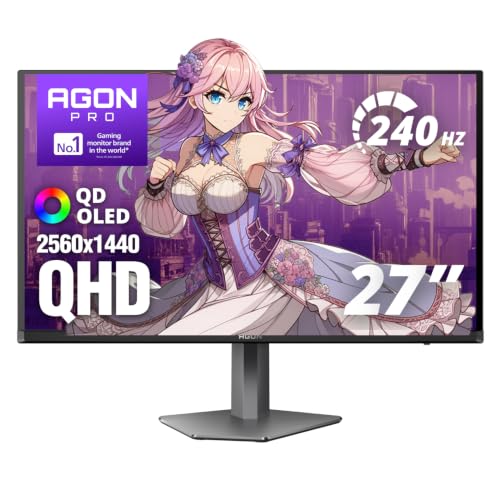
AOC Agon Pro 27 Inch Gaming Monitor QD OLED AG276QZD2

ASUS ROG PG32UCDP 32 Inch 4K 240Hz OLED Gaming Monitor
SAMSUNG 27-inch Odyssey QD-OLED G8 G81SF 4K 240Hz Gaming Monitor
More Details On Our Top Picks
For a desk that handles work by day and games at night, this Dell keeps the pitch straightforward. The IPS panel means stable viewing angles, while the 4K resolution gives you crisp text and a lot of room for side-by-side windows, which helps in a busy home office.
The 120Hz refresh rate and FreeSync Premium support make motion feel much smoother than a plain office screen, and the USB-C input is handy for a laptop-centered setup. The trade-off is obvious, though, this is more of a versatile everyday monitor than a pure OLED flex, so contrast and black depth won’t match the pricier gaming-focused picks.
Strong Points
- 4K detail makes spreadsheets, documents, and streaming look clean without leaning on scaling tricks.
- 120Hz adds a fluid feel for scrolling, casual gaming, and fast cursor movement.
- USB-C gives you a tidier laptop desk with fewer separate cables.
- Height, swivel, and pivot adjustments help the screen fit narrower or shared workspaces.
Room For Improvement
- IPS contrast is fine, but it does not deliver the deep blacks OLED fans expect.
- 5ms response time is respectable for mixed use, though speed-focused players will want faster OLED options.
- The anti-glare finish helps in bright rooms, but strong overhead light can still soften image punch a little.
Feature Snapshot
Who It Suits Best
You’ll get the most from this Dell if you want one screen for office work, streaming, and occasional gaming on a single desk.
A Better Fit Elsewhere
The ASUS ROG PG32UCDM suits a serious gaming setup better, since its OLED panel and 240Hz speed go much further for motion-heavy play.
High-end gaming rigs have a natural home on a 32-inch 4K OLED like this one. The QD-OLED panel brings rich color and very dark blacks, while the 240Hz refresh rate and 0.03ms response time keep motion clean in fast shooters and racing games.
The custom heatsink and graphene film are the details that matter to long-session players, because they point toward better thermal control around the panel. The honest read is that this model leans hard into premium gaming, so it makes less sense for someone who mostly edits documents and watches videos at a casual pace.
Highlights
- 32-inch 4K layout gives you plenty of room for immersive games and dense desktop work.
- 240Hz makes fast movement feel smooth and responsive on a capable PC.
- USB-C 90W can simplify a laptop dock-style setup.
- True 10-bit color support is useful for more subtle gradients and richer image handling.
- Console-friendly support makes it a strong match for modern living room and desk setups.
Points To Note
- OLED panels need mindful use, so static desktop elements deserve some attention over time.
- Its feature set puts it in a more serious price lane than simpler 4K monitors.
- Large 32-inch panels need enough desk depth to feel comfortable at normal viewing distance.
Core Details
Whose Shelf It Belongs On
You’ll appreciate this ASUS most if you want a premium gaming display with enough size and speed to keep up with a powerful PC.
Swap It Out When
The Dell 27 Monitor S2725QS fits better for mixed office use, because its IPS panel and lower-key feature mix are easier to justify on a shared desk.
The LG 27GX704A-B sits in a sweet spot for competitive play, because QHD resolution keeps frame load lighter than 4K while still looking sharp at 27 inches. That balance matters on midrange GPUs, where a 240Hz OLED panel can be easier to feed than a 4K screen.
Its glossy screen surface and HDR True Black 400 support also make games look richer, especially in darker scenes. The trade-off is that glossy finishes can show room reflections, so a bright window behind your desk is worth thinking about before you commit.
Upsides
- 27-inch QHD is easier to drive than 4K, which helps keep high frame rates within reach.
- 240Hz pairs well with the 0.03ms response time for fast aim and smooth motion.
- NVIDIA G-Sync Compatible and FreeSync Premium Pro help reduce tearing with the right graphics card.
- HDR True Black 400 is a useful cue for deeper contrast handling in supported content.
Softer Spots
- Glossy panels can pick up reflections in sunlit rooms or under strong desk lamps.
- QHD looks sharp at 27 inches, though 4K fans may still want finer text density.
- The all-gaming focus leaves less room for office-oriented extras.
Details At A Glance
Built With In Mind
You’ll like this LG most if you want a high-refresh gaming monitor that stays easier to run than a 4K panel.
Another Choice May Suit
The ASUS ROG PG32UCDM makes more sense for someone who wants a larger 32-inch canvas and doesn’t mind moving up to 4K.
This Samsung lands a little more casually than the LG 27GX704A-B, since it trims refresh rate to 180Hz but keeps the OLED look that makes dark scenes feel so much richer. That difference matters for console play and general gaming, where 180Hz still feels quick without pushing the rest of your setup as hard.
The G50SF also makes sense on a typical 27-inch desk, especially when you want the image quality jump of QD-OLED without chasing every last spec. A small caveat, though, is that Samsung’s hardware support features sound useful on paper, but the monitor itself still asks for sensible OLED care around static interface elements.
Bright Spots
- QD-OLED panel quality gives you strong contrast and vivid color for games and media.
- 180Hz is plenty fast for most console and PC use.
- 0.03ms response time helps keep motion crisp in action-heavy scenes.
- 27-inch size fits comfortably on desks that feel cramped with 32-inch screens.
Small Caveats
- 180Hz sits below the 240Hz class used by several other picks here.
- OLED screens still benefit from varied content and sensible screen care over time.
- Samsung’s service package is part of the overall value story, not the panel itself.
Quick Facts
Who Should Grab It
You’ll be happiest with this Samsung if you want OLED contrast in a 27-inch size and don’t need the fastest refresh rates in the group.
Where A Sibling Pick Shines
The LG 27GX704A-B is the stronger call for competitive PC gaming, because its 240Hz ceiling gives you more room for very fast play.
Some picks stay focused on the panel, and this AOC adds a few helpful extras around it. The height-adjustable stand, built-in speakers, and VESA mount support make it easier to fit into a desk setup that changes over time.
That flexibility matters for dorm rooms, compact offices, or anyone who wants the option to move the monitor onto an arm later. The honest read is that built-in speakers are usually a backup, not the main attraction, so the panel and stand still do the heavy lifting here.
Best Bits
- 240Hz and 0.03ms give it the speed profile you want for quick motion.
- Height adjustment helps you match the screen to your chair and desk height.
- VESA mount support opens the door to arm mounting and tighter desk layouts.
- Built-in speakers help in setups where separate audio gear isn’t in place yet.
Areas To Watch
- Integrated speakers are convenient, though most desk setups still sound better with external audio.
- The 27-inch QHD format is sharp, but less spacious than a 32-inch 4K screen.
- OLED care still matters, especially for long desktop sessions with fixed UI elements.
Core Details
The Right Fit
You’ll like this AOC most if you want a speed-first 27-inch OLED with a little more setup flexibility than the average gaming screen.
Reach For A Different Pick When
The Dell 27 Monitor S2725QS works better for a mixed work desk, because its IPS panel and USB-C connection are easier to live with for office tasks.
This ASUS is for the person who wants one screen to handle both high-detail 4K play and a very fast fallback mode. Dual mode means you can switch from 4K at 240Hz to FHD at 480Hz, which is a genuine advantage for esports-style sessions and lighter graphics loads.
The custom heatsink is the sort of detail that matters more than it sounds, since heat management is part of what keeps an OLED gaming panel feeling comfortable over long stretches. You’ll notice the trade-off in price and complexity, so it makes the most sense on a serious gaming desk rather than a casual all-purpose setup.
Reasons To Buy
- Dual-mode operation gives you two very different performance profiles in one monitor.
- 4K at 240Hz works well for high-end gaming PCs and modern consoles.
- FHD at 480Hz suits players who care more about speed than pixel density.
- USB-C 90W keeps laptop setups cleaner and more flexible.
- True 10-bit support helps the screen handle smooth gradients.
Trade Offs
- The feature set is more complex than most people need for basic desk work.
- High-end specs usually mean the rest of your system needs to keep up.
- Large 32-inch OLED screens need enough space to feel comfortable at arm’s length.
Technical Sheet
Perfect Match For
You’ll get the most value here if you play competitive titles but still want a 32-inch 4K screen for everything else.
Skip It When
The LG 27GX704A-B fits better for a smaller desk and a tighter budget, especially if 27-inch QHD already covers your gaming needs.
Samsung’s 27-inch G8 is the polished small-desk OLED in this group, especially for someone who wants 4K detail without moving up to 32 inches. The QD-OLED panel and 240Hz refresh rate make it feel quick and rich at the same time, which is a nice combination for both solo gaming and general media.
The ergonomic stand is more useful than it sounds, because a monitor this sharp deserves a comfortable viewing angle. The main trade-off is simple: you’re paying for a compact premium display, so it suits focused gaming setups more than a budget-first office desk.
Standout Traits
- 4K on a 27-inch screen delivers a very tight pixel layout for crisp detail.
- 240Hz keeps motion fluid for fast-paced games.
- DisplayHDR True Black 400 points toward stronger dark-scene handling.
- Ergonomic stand adjustment makes it easier to fit a smaller desk.
Minor Gripes
- 27-inch 4K can feel demanding on the graphics side in some games.
- OLED ownership still benefits from a bit of care with static desktop content.
- The compact format gives you less physical workspace than a 32-inch screen.
Feature Card
Made For
You’ll get the best match here if you want a compact but premium-feeling 27-inch OLED for gaming and media.
Look Elsewhere When
The ASUS ROG PG32UCDM suits larger-desk setups better, because its 32-inch size gives you more breathing room at 4K.
What To Weigh Before You Choose
Hidden Buying Traps
Resolution and refresh rate can pull you in opposite directions, so a 4K panel at 240Hz sounds exciting but may ask a lot from your graphics card. Desk depth matters too, because a 32-inch screen can feel oversized in a shallow workspace even when the specs look tempting.
Glossy OLED finishes can also be a headache in bright rooms, where lamps and windows show up more than you’d like. That’s why panel type, stand adjustability, and port selection matter as much as raw image quality.
The Upgrade Payoff
Higher-tier models usually cost more because they combine faster refresh rates, better panel tech, and extras like custom cooling or USB-C power delivery. In this category, that money often goes toward motion clarity, deeper contrast, and a cleaner one-cable setup.
The upgrade makes sense for competitive gaming, mixed-console use, or a desk that doubles as a media station. For plain office work, the extra spend is harder to justify unless you really value the visual quality jump.
Frequently Asked Questions
Are OLED monitors good for everyday computer use?
Yes, especially when you want strong contrast and crisp text on a modern desk. The catch is that static taskbars, toolbars, and other fixed elements deserve sensible use habits over time.
Is 4K worth it on a 27-inch monitor?
It can be, because text and interface elements look very fine at that size. You’ll notice the gain most in desktop work, photo viewing, and games with detailed art direction.
Do you need 240Hz for a gaming monitor?
You do not need it for every game, but it feels very smooth in fast motion. Competitive players and anyone sensitive to motion blur usually notice the jump right away.
What size works best for a mixed work and gaming desk?
A 27-inch screen suits tighter desks and keeps everything close without feeling crowded. A 32-inch display makes more sense when you want extra room for immersive play and have space to sit back a little farther.
Why do some monitors include USB-C power delivery?
USB-C power delivery can send display signal and charge a laptop through one cable. That keeps a desk cleaner, especially in hybrid work setups where you switch between a notebook and a tower PC.
