
Cheap desktop monitors only feel simple on paper. In real use, you’re balancing screen size, panel type, refresh rate, inputs, and how much desk space you can spare. That matters whether you’re working from a home office, setting up a student desk, or adding a second screen beside a laptop.
The seven picks below keep the focus on usable features, not fluff. You’ll see where a basic 75Hz panel is enough, where 100Hz or 120Hz adds a smoother feel, and where extras like VESA mounting or built-in speakers save space.
Quick Look At The Shortlist

Amazon Basics 24-inch Full HD IPS Monitor

Amazon Basics 24 Inch (23.8 Inch Viewable) Monitor

Sceptre 22-Inch 75Hz 1080p LED Monitor (E225W-19203S)

AOPEN by Acer 21.5in FHD 1920×1080 IPS 100Hz Office Monitor 22SA2Q EBI

19-Inch Full HD 75Hz Small Thin Monitor
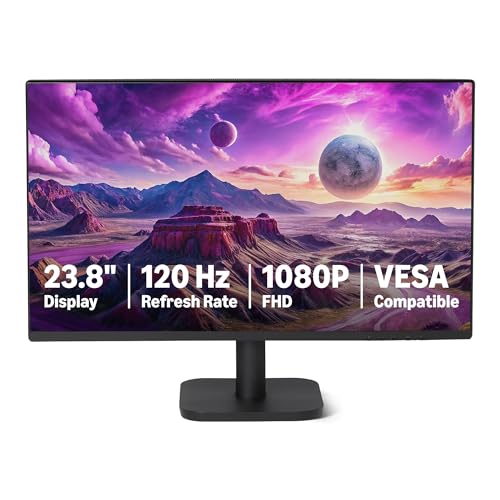
Amazon Basics 23.8-Inch 1080P Computer Monitor

Acer 21.5in FHD 1920×1080 100Hz Office Monitor KB220Q H2bi
More Details On Our Top Picks
Round 1 starts with the most flexible desk companion in the group. The 24-inch IPS panel gives you wide viewing angles, so a second person leaning over your shoulder won’t see the picture wash out as quickly as with older TN-style panels. That matters in shared workspaces, and the tilt-adjustable stand plus VESA 100 x 100 mm mount support makes it easier to fit a monitor arm or wall setup.
For office work, webinars, and general home use, the 1080p resolution hits a sensible middle ground on a 24-inch screen. The built-in speakers and HDMI, DisplayPort, and VGA inputs make setup more forgiving than a single-input display, though the speaker quality will still suit casual audio more than movie-night expectations. The honest read is that this one does a lot well without trying to be flashy.
Strong Points
- IPS panel keeps colors steady from angled seating.
- 24-inch size gives you room for spreadsheets and browser tabs.
- Adjustable stand helps fine-tune height and tilt.
- VESA support opens the door to cleaner desk layouts.
- Multiple video inputs make older and newer systems easier to connect.
Things To Consider
- 75Hz is fine for routine work, but not a gaming-first spec.
- Built-in speakers usually suit light use better than richer audio needs.
- The lighter feature set keeps the price focus on essentials, not extras.
Feature Snapshot
Who It Suits Best
Home-office users who want one screen for work, meetings, and light entertainment will get the most from this model.
A Better Fit Elsewhere
Amazon Basics 23.8-Inch 1080P Computer Monitor suits you better if higher refresh speed matters more than the extra stand flexibility here.
This one feels like the first model’s faster sibling, especially if you spend long days dragging windows around a desktop. The max 100Hz refresh rate can make everyday motion look smoother, and that usually helps on scrolling-heavy work, casual media, and lighter gaming. The 23.8-inch viewable area keeps it compact enough for a modest desk without feeling cramped.
Built-in speakers and VESA compatibility make the setup practical, not fussy. One small ownership note matters here, the protective film on the panel should come off before use, or the screen can look hazy and people may think something is wrong with the display. For most mixed-use spaces, this is a tidy step up from a plain 75Hz monitor like the Amazon Basics 24-inch IPS.
What We Like
- 100Hz output helps motion feel smoother in daily use.
- 23.8-inch viewable size suits smaller desks well.
- Built-in speakers reduce the need for extra desktop clutter.
- VESA support gives you more mounting options.
- Plug-and-play setup keeps first-time installation simple.
Worth Noting
- Built-in audio is convenient, but external speakers still sound fuller.
- The panel film has to be removed before first use.
- Like most budget-friendly screens, it’s tuned more for utility than premium styling.
Core Details
Who Should Grab It
Desk workers who also watch a lot of video or want a little extra smoothness from their monitor will find the mix appealing.
Where A Sibling Pick Shines
Amazon Basics 23.8-Inch 1080P Computer Monitor is the stronger fit for anyone who wants the highest refresh rate in this Amazon Basics pair.
The Sceptre is the smallest-feeling choice in this list, and that can work in your favor on a crowded desk. A 22-inch screen is easier to place beside a laptop or on a compact computer station, while the 75Hz rate keeps everyday motion a bit calmer than older 60Hz panels. It’s a straightforward monitor, almost like a sturdy notebook page for your apps.
HDMI and VGA inputs help with newer and older machines, which is handy in homes that still keep a legacy desktop around. Built-in speakers add convenience, though you’ll probably want separate audio for anything beyond basic video calls. Compared with the Amazon Basics 24-inch IPS pick, this one gives up some screen size and wider-angle color performance, but it can fit better where space is tight.
Upsides
- 22-inch footprint works well on compact desks.
- HDMI and VGA keep older systems in play.
- 75Hz refresh feels familiar for office tasks and general use.
- Built-in speakers handle simple audio needs without extra gear.
Small Caveats
- The smaller screen gives you less room for side-by-side windows.
- Audio from built-in speakers is usually fine for calls, not rich listening.
- As a simpler model, it leans more on utility than polish.
Details At A Glance
Built With In Mind
Students, spare-room setups, and second-monitor users should find this size and connection mix easy to live with.
Look Elsewhere When
AOPEN by Acer 21.5in FHD 1920×1080 IPS 100Hz Office Monitor 22SA2Q EBI suits you better if smoother scrolling and IPS color matter more than a smaller footprint.
This AOPEN model pushes a little harder than the simpler office screens above it. You get a 21.5-inch IPS panel, 100Hz refresh, 1ms response time, and AMD FreeSync, which is the sync tech that helps the monitor better match graphics-card output and reduce visual tearing. For work, that makes scrolling and cursor movement feel tidy; for light gaming, it gives you more headroom than the Sceptre 22-inch.
The trade-off is easy to understand, you’re paying for more motion-focused features in a size that still stays desk-friendly. HDMI and VGA keep compatibility broad, and VESA mounting helps it disappear into a cleaner workstation setup. The blue-light filter and flicker-free design are nice to have for long evenings at a screen, though the exact comfort you feel still depends on your room lighting and viewing habits.
Highlights
- 100Hz refresh adds a smoother feel for day-to-day motion.
- 1ms response time supports cleaner movement in fast scenes.
- FreeSync helps reduce mismatch between graphics output and display timing.
- IPS panel keeps the picture more consistent from the side.
- VESA support makes it easier to build a tidy setup.
Areas To Watch
- The extra features matter most if you’ll use them regularly.
- Light gaming benefits are real, but this still sits in the office-monitor class.
- 21.5 inches may feel smaller than the 23.8 and 24-inch picks for split-screen work.
Quick Facts
Right Fit For
Office users who also want a little gaming flexibility or smoother scrolling will get strong value from this feature mix.
Another Choice May Suit
Amazon Basics 24-inch Full HD IPS Monitor fits you better if you want a larger 24-inch work surface more than the faster gaming extras here.
The smallest monitor here makes the most sense in tight quarters. A 19-inch frame is easy to tuck beside a laptop, on a dorm desk, or in a room where every inch counts, and the anti-glare finish helps cut reflections from lamps and windows. You also get a 75Hz refresh rate, which gives this compact screen a more modern feel than the oldest office displays.
The interesting part is the resolution mix, since the listing points to both 1440 x 900 and Full HD language, so you’ll want to pay close attention to the exact panel details on the product page before pairing it with sharp text-heavy work. VGA and HDMI connections keep it broadly usable, and the thin profile should help in a crowded setup. For simple schoolwork or a second screen, it stays practical, though it’s not the most spacious option for lots of side-by-side windows.
Best Bits
- 19-inch size works well where desk space is limited.
- Anti-glare finish helps in bright rooms.
- 75Hz refresh gives basic use a smoother feel.
- VGA and HDMI make it easy to match with older and newer gear.
Points To Note
- The smaller panel feels tight for heavy multitasking.
- You should confirm the exact resolution detail on the listing before expecting a specific text layout.
- A thin monitor is handy, but it usually offers less ergonomic adjustment than larger office models.
Feature Card
Whose Shelf It Belongs On
Students, secondary-desktop users, and anyone working with a narrow desk will appreciate the small footprint most.
Reach For A Different Pick When
Amazon Basics 23.8-Inch 1080P Computer Monitor is the better fit for you if a fuller work area matters more than saving space.
This is the monitor in the group that leans hardest toward smoother motion. A 120Hz refresh rate is a real jump over the 75Hz and 100Hz screens above it, so you’ll notice the difference most in scrolling, dragging windows, and casual gaming sessions that benefit from cleaner motion. The 23.8-inch size keeps it close to the sweet spot for home offices, not too large, not too cramped.
The IPS panel, 16.7 million colors, 1500:1 contrast ratio, and 99% sRGB coverage point toward more confident color handling than the plain budget crowd. That said, you still need compatible graphics output, the right cable, and system settings to reach the full 120Hz rate, so setup matters a little more here. Compared with the Amazon Basics 24-inch IPS monitor, this one is the stronger pick for anyone who wants speed before stand flexibility.
Reasons To Buy
- 120Hz refresh brings the smoothest motion in this group.
- 23.8-inch size works well on most desks.
- IPS panel and 99% sRGB coverage support more confident color handling.
- HDMI, DisplayPort, and VGA make connection options broad.
- VESA compatibility helps with arm or wall mounting.
Room For Improvement
- To reach full refresh speed, your PC and cable need to support it.
- The faster panel makes the most sense for users who notice motion quality.
- Compared with some office-first models, this one asks a bit more from setup.
Technical Sheet
Best Suited To
Desk users who care about motion smoothness as much as basic office clarity will get the most from this model.
Swap It Out When
AOPEN by Acer 21.5in FHD 1920×1080 IPS 100Hz Office Monitor 22SA2Q EBI is the easier fit if you want a simpler setup with less attention to refresh-rate tuning.
This Acer lands in a nice middle zone for you if office work needs a cleaner color profile without jumping all the way into more advanced display territory. The 21.5-inch IPS panel, 100Hz refresh, 1ms response time, AdaptiveSync, sRGB 99%, and flicker-free display create a spec sheet that feels carefully chosen rather than padded. For home office use, that mix can make long sessions feel less tiring than a plain 75Hz panel.
The thin profile and ZeroFrame-style design help it sit neatly on a desk or alongside another monitor, and the VESA mount support gives you room to build a tighter setup. Compared with the AOPEN model, this Acer puts more emphasis on color coverage with sRGB 99%, which can matter for basic image work, design tasks, or just a display that looks more even across everyday apps. It’s not the largest screen here, but for a compact office station, that can be exactly the point.
Positives
- 100Hz refresh keeps motion smooth for work and casual use.
- IPS panel helps colors look steadier from the side.
- sRGB 99% is useful for more color-conscious tasks.
- VESA support makes dual-monitor setups easier to manage.
- Thin design saves space on a busy desk.
Honest Caveats
- 21.5 inches feels smaller than the 23.8 and 24-inch options for heavy multitasking.
- The stronger color and sync features matter most in the right setup.
- It’s still an office-first screen, so don’t expect it to replace a higher-end gaming display.
Core Details
The Right Fit
Home-office users, light designers, and anyone who wants a compact monitor with a more polished image profile should feel at home here.
Where A Sibling Pick Shines
Amazon Basics 23.8-Inch 1080P Computer Monitor suits you better if you want the larger surface and faster 120Hz option instead of this Acer’s color-focused balance.
How To Choose The Right Cheap Desktop Monitors
Screen Size and Desk Fit
A 19-inch screen can disappear into a small dorm desk, while 23.8-inch and 24-inch monitors give you more room for side-by-side windows. That size jump matters more than people expect, because a monitor that feels generous for spreadsheets can feel crowded once you add chat, email, and a browser.
The right size also depends on how far you sit from the panel. Close desk positions often work fine with 21.5-inch models, while a little extra distance makes 24-inch screens easier to live with.
Refresh Rate, Smoothness, and Everyday Motion
Refresh rate is how many times per second the screen updates, and that affects how smooth motion looks. A 75Hz panel is a decent baseline for routine work, 100Hz feels cleaner for scrolling and lighter play, and 120Hz is the point where motion starts to feel notably smoother.
That upgrade only matters when the rest of your setup can keep up. For a standard office PC, a 75Hz or 100Hz display may be the practical sweet spot, while gamers and fast-scroll users will notice the jump to 120Hz more clearly.
Panel Type, Color, and Viewing Angles
IPS panels are the most forgiving choice in this roundup. They tend to keep colors steadier when you’re not sitting dead center, which helps in shared desks, side-by-side monitor layouts, and rooms where you glance at the screen from different angles.
LED is a backlighting method, not a panel type, so it helps to separate those terms. A screen can be LED-lit and still vary a lot in color behavior depending on whether the panel is IPS or something else.
Inputs, Mounting, and Setup Ease
HDMI covers most modern laptops and desktops, while DisplayPort is useful for more capable PCs and higher refresh targets. VGA still matters for older towers, and that can save you from replacing hardware that still works fine.
VESA mounting matters too. A monitor with VESA holes gives you more freedom to use an arm or wall mount, which helps in compact rooms and cleaner office setups.
A Quick Reality Check
Common Shopping Slip Ups
A common mistake is focusing only on screen size and forgetting the rest of the setup. A larger panel with only one useful input or no VESA support can be a pain in a real desk setup, especially beside a laptop or older desktop.
Another easy miss is ignoring the refresh-rate limit of your computer. A 120Hz monitor still needs compatible graphics output and the right cable settings to show its full speed.
The Upgrade Payoff
Spending more in this category usually pays for IPS color steadiness, faster refresh rates, better contrast, and extra connectivity. You also see cleaner designs, more mounting flexibility, and features like AdaptiveSync that help motion look calmer on supported systems.
That upgrade makes the most sense for you if the monitor sits at the center of your day. For casual spreadsheets and occasional browsing, a simpler 75Hz display does the job. For long work sessions, lighter gaming, or a shared family desk, the extra polish can feel worthwhile.
Frequently Asked Questions
Is 75Hz enough for a desktop monitor?
Yes, for office work, streaming, and everyday browsing, 75Hz is a sensible starting point. You’ll mainly notice the gap if you spend a lot of time scrolling or gaming.
Do IPS monitors matter for cheap desktop monitors?
IPS helps keep colors and viewing angles more stable than many basic panel types. That makes it a smart fit for shared desks and dual-monitor setups.
Do built-in speakers replace external speakers?
They usually handle calls, alerts, and casual video just fine. For fuller sound, separate speakers or headphones still make more sense.
Is 1080p still a good resolution in 2026?
Yes, 1080p remains practical on 19- to 24-inch monitors. It gives you a clear image without asking too much from an everyday computer.
What size works best for a small desk?
A 21.5-inch or 23.8-inch monitor is usually the easiest place to start. A 19-inch screen saves even more space, but you give up working room.
