
Color work lives or dies on what your screen shows. You need accurate tone, stable viewing angles, and connections that fit your desk, edit bay, or camera rig without turning cable management into a mess. These seven picks cover desktop grading, photo editing, and field monitoring, so you can match the monitor to the way you actually work. Some lean toward Mac setups, some toward creators who want broad color coverage, and a couple suit on-location video use far better than a typical office display.
Quick Look At The Shortlist

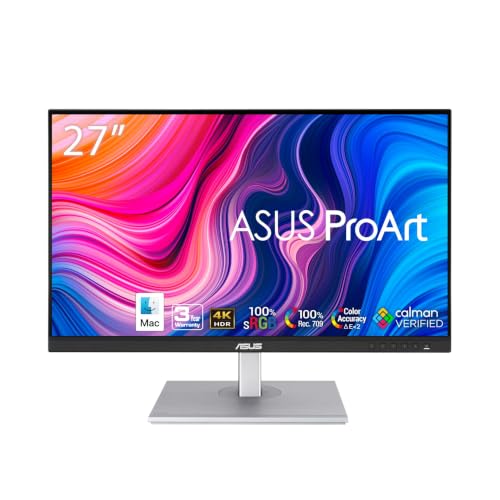
ASUS ProArt PA278CV 27 Inch 1440p QHD USB-C Professional Monitor
ASUS ROG XG27UCG 27 Inch 4K 160Hz USB-C G-SYNC Gaming Monitor

ASUS ProArt PA279CRV 27 Inch 4K UHD USB-C HDR Professional Monitor for Mac

FEELWORLD F5 Pro V4 6 Inch Touch Screen DSLR Camera Field Monitor

ViewSonic VP2756-4K 27 Inch 4K ColorPro Monitor

BenQ MA270UP 27” 4K 3840×2160 Monitor for MacBook Pro/Air

NEEWER F600 7′ Camera Field Monitor
More Details On Our Top Picks
The PA278CV sits in the sweet spot for desk-based color work. A 27-inch IPS panel with 2560 x 1440 resolution gives you enough room for timelines, palettes, and reference windows without pushing your graphics card as hard as 4K.
Its Calman Verified factory tuning, Delta E under 2, 100% sRGB, and Rec. 709 support make it a sensible fit for design and video tasks that need consistent tones. The trade-off is simple, you’re choosing accuracy and workflow comfort over raw resolution, so this fits creators who value a steady everyday screen more than ultra-dense detail.
Strong Points
- Wide-gamut coverage keeps web and broadcast-oriented work on a predictable path.
- USB-C helps reduce desk clutter, especially for laptop-based editing.
- Daisy chaining can simplify a dual-monitor setup with less cable tangle.
- The ergonomic stand helps you match screen height to a long work session.
Points To Note
- QHD is a practical middle ground, but it won’t satisfy anyone chasing 4K detail.
- Color-critical users still need to manage their own workflow, including proper profile handling.
Feature Rundown
Who It Suits Best
Desk-based editors, photographers, and design students who want dependable color on a sensible screen size will get the most from it.
A Better Fit Elsewhere
ASUS ProArt PA279CRV suits you better if 4K detail and broader Adobe RGB coverage matter more than the PA278CV’s lighter QHD workload.
This ROG display leans harder toward motion than the rest of the list. The 4K, 160Hz panel gives you crisp stills and very fluid scrolling, while the dual-mode option shifts to Full HD at 320Hz for the kind of gaming or rapid-screen work that benefits from speed over density.
It also carries 99% DCI-P3 coverage, G-SYNC support, and ELMB Sync, which helps it feel more like a hybrid monitor than a pure color bay tool. The honest read is that its gaming-first personality makes it better for creators who also play, not for someone who wants a calm, print-leaning reference screen.
What We Like
- 4K resolution gives you strong desktop detail for creative work.
- High refresh support keeps motion very smooth during games and fast navigation.
- Dual mode gives you a speed-focused option without changing monitors.
- USB-C and console-friendly sync support broaden how you can use it.
Room For Improvement
- The feature mix is broad, so pure color purists may want a less gaming-led panel.
- Fast settings can add menu complexity that casual desk users may not need.
- Its value depends on whether you’ll actually use the high-refresh modes.
Core Details
Who Should Grab It
Gamers who also edit photos or video on the same desk will get the most out of its split personality.
Where A Sibling Pick Shines
ViewSonic VP2756-4K suits you better if your focus stays on photo editing and you care less about high-refresh motion features.
The PA279CRV is the more serious sibling to the PA278CV, and that 4K panel changes the feel right away. You get more room for toolbars, finer image detail, and a stronger match for video timelines or high-resolution photos where pixel density matters.
USB-C with 96W power delivery is a real desk simplifier for MacBook users, and the 99% DCI-P3 plus 99% Adobe RGB coverage pushes it closer to print and post-production needs. The trade-off is that it’s built for precision-first work, so casual office use won’t capture everything you’re paying for.
Highlights
- 4K resolution makes fine detail easier to judge on a 27-inch panel.
- Wide DCI-P3 and Adobe RGB coverage suit color-critical creative work.
- USB-C with strong power delivery can keep a laptop setup tidy.
- Height adjustment helps you line up the screen comfortably in a studio chair.
- Daisy chain support can reduce clutter in a two-screen setup.
Small Caveats
- The feature set leans professional, so it may feel like more monitor than a simple home desk needs.
- Mac-focused users benefit most from its workflow features, while others may not use every function.
Details At A Glance
Built With In Mind
Video editors, photographers, and MacBook users who want a sharper, more color-ambitious screen should feel right at home here.
Swap It Out When
ASUS ProArt PA278CV makes more sense if you want a lighter QHD workload and don’t need the added 4K density.
This FEELWORLD belongs on a camera rig, not next to a spreadsheet. The 6-inch touchscreen and 1920 x 1080 panel make it easier to judge framing, focus, and exposure than a tiny camera display, which matters on run-and-gun shoots or small crews.
The 3D LUT support, waveform, histogram, and focus assist tools give you more control on location, while the F970-style external battery kit support helps with power flexibility. The trade-off is portability versus screen size, so it works best for filmmakers who value a serious on-camera monitor more than desk-side viewing comfort.
Bright Spots
- Touch control keeps menu handling faster on a busy set.
- Focus and exposure tools help with shot checking in the field.
- The 4K HDMI input and output support flexible camera routing.
- External battery support suits longer shoots away from wall power.
Areas To Watch
- Six inches is compact, so it suits a rig more than a shared viewing station.
- Field use usually means more handling, so a protective case or careful storage makes sense.
Feature Card
Whose Shelf It Belongs On
Beginner filmmakers and solo videographers who want a compact on-camera monitor with real monitoring tools will get strong value from it.
Reach For A Different Pick When
NEEWER F600 suits you better if you want a larger screen and much higher brightness for tougher outdoor shooting.
The VP2756-4K is built for photo work that benefits from a calm, dependable panel. Its 27-inch 4K IPS screen, 100% sRGB coverage, and Pantone Validated tuning make it especially appealing for studios that care about consistent-looking exports and a neat multi-monitor desk.
USB-C with 60W power delivery is handy for laptop users, and the 3-sided frameless design helps dual-screen layouts feel less boxed in. The trade-off is that it’s less feature-heavy than some of the other displays here, so you’re paying for clean color behavior and ergonomics rather than extras.
Upsides
- 4K resolution helps you inspect fine image detail.
- 100% sRGB fits common photo and web delivery work.
- Advanced ergonomics make long desk sessions easier to arrange.
- USB-C cuts down on separate laptop power and display leads.
Softer Spots
- Its appeal is strongest for photo-focused desks, not mixed gaming-heavy setups.
- The frameless look is great on a desk, but it can make fingerprints more visible.
Technical Sheet
Made For
Photographers and studio editors who want a tidy desk and trustworthy sRGB color handling should feel at ease with this one.
Another Choice May Suit
BenQ MA270UP is a better fit for MacBook users who want deeper Mac integration and stronger keyboard-based brightness and volume control.
The MA270UP is clearly tuned for MacBook setups, and that matters more than it first sounds. Dual USB-C ports, 90W power delivery, and built-in Mac color matching create a smoother handoff between laptop and screen, especially on a desk where you want one cable to carry most of the load.
Brightness and volume control from the Mac keyboard is the small but useful detail that makes daily use feel less fussy. The trade-off is focus, since the monitor is optimized for Apple workflows, so mixed-platform desks may not benefit as much from its Mac-specific touches.
Reasons To Buy
- Mac color tuning helps the screen blend more naturally with a MacBook workflow.
- Dual USB-C ports make docking and switching devices more convenient.
- 90W power delivery can keep a MacBook charged through one cable.
- Keyboard-based brightness and volume control saves small but repeated desk effort.
Trade Offs
- Its strongest features are Mac-specific, so non-Mac setups may not use them fully.
- The experience depends on your preference for a desk built around Apple controls and matching.
Feature Snapshot
The Right Fit
MacBook Pro and MacBook Air users who want a neat desktop monitor with strong single-cable behavior will appreciate this setup most.
Look Elsewhere When
ASUS ProArt PA279CRV suits you better if your work spans Mac and non-Mac gear and you want broader Adobe RGB coverage.
The F600 is the bright, practical field option in this roundup. A 7-inch IPS touchscreen with 2400 nits of brightness gives it a strong case for daylight shooting, and the automatic brightness control helps it stay readable without constant menu changes.
It also brings 3D LUT support, peak focus, HDR tools, waveform, and 4K HDMI loop in and out, so it’s built for camera work that needs more than a simple preview screen. The trade-off is size and rig weight, though the included batteries and cold shoe mount make that easier to live with for most handheld or gimbal-heavy shoots.
Best Bits
- 2400-nit brightness helps the screen stay visible outdoors.
- Automatic brightness control reduces fiddling during changing light.
- 7-inch size gives more room for framing and focus tools.
- Included batteries and cable help you get set up faster on location.
- Loop in and out support adds flexibility for camera routing.
Points To Note
- The larger body can feel more noticeable on compact rigs.
- Field gear benefits from careful storage, especially once batteries and cables get packed together.
Core Details
Perfect Match For
Videographers who shoot outdoors or move fast between setups will get the most from this monitor.
Skip It When
FEELWORLD F5 Pro V4 makes more sense if you want a smaller, lighter on-camera monitor for tighter rigs.
How To Choose The Right Color Grading Monitors
Start With The Work You Actually Do
Color grading for short-form video, still photography, and mixed desk work does not ask for the same display. A 27-inch 4K panel like the ASUS ProArt PA279CRV gives you fine detail and more room for timelines, while a field monitor such as the NEEWER F600 serves a camera rig far better than a desk. Match the monitor to the task first, then think about extras.
Treat Color Coverage As A Working Tool
sRGB, Rec. 709, DCI-P3, and Adobe RGB are color spaces, meaning they describe different ranges of colors a display can show. Rec. 709 fits common video delivery, sRGB covers much of web and everyday image work, and wider gamuts like DCI-P3 or Adobe RGB suit more demanding creative tasks. A broader gamut helps, but it also asks more from your workflow, so proper color management matters.
Pay Attention To Resolution And Size
A 27-inch 1440p screen feels comfortable for many desks because text stays readable and GPU strain stays moderate. Step up to 4K when you want cleaner fine detail, especially for photo retouching or UHD video timelines, but remember that sharper panels usually demand more from your hardware and scaling settings. For field use, a smaller 6- or 7-inch monitor trades desk comfort for portability and camera-side convenience.
Don’t Ignore Ergonomics And Connections
A height-adjustable stand, USB-C, daisy chaining, and video pass-through all change day-to-day use more than the marketing copy suggests. USB-C can reduce cable clutter, while a solid stand helps during long edit sessions and a camera monitor with loop in and out can sit neatly inside a live rig. The right ports matter most when your desk or set already feels crowded.
Things Worth Knowing First
Common Shopping Slip Ups
A lot of shoppers focus only on resolution and ignore color space, which leads to a sharper screen that still isn’t a great fit for the job. Another easy miss is buying a desk monitor for field work, or a camera monitor for a studio where you need larger text and better ergonomics. You also want to check your actual connection needs, because the wrong port mix can create more cable clutter than you planned.
The Upgrade Payoff
Higher-tier color monitors usually cost more because they add wider gamut support, tighter factory calibration, stronger connectivity, and sturdier stands. That extra spend makes sense when you edit for clients, move between print and video work, or want one display to anchor a serious Mac or multi-device setup. For casual office use, those premium touches can be overkill, so the upgrade only pays off when color accuracy and workflow speed matter every week.
Frequently Asked Questions
What makes a monitor better for color grading?
A good color grading monitor offers accurate factory calibration, steady color across viewing angles, and the right color space for your work. Resolution and panel type matter too, but color handling comes first.
Is 4K always better than 1440p for color work?
4K gives you more detail, which helps with photos and UHD timelines. 1440p can still be a smart choice for a smoother, lighter desktop setup.
Do you need wide color gamut support?
Wide gamut helps most when your work goes beyond basic web color. For photo editing, print-oriented tasks, and certain video workflows, it can make a real difference.
Are field monitors useful outside video shoots?
They can be handy for any camera-based setup where you need a larger preview, but they are not a replacement for a desktop monitor. On a desk, their small size and rig-first design usually feel cramped.
What port should you look for first?
USB-C is a strong first choice for many desk setups because it can carry display signal and power through one cable. HDMI and DisplayPort still matter when your computer or camera gear depends on them.
