
Editing photos on the wrong screen can leave you second-guessing skin tones, shadows, and print output. You need a monitor that keeps color steady, shows enough detail for crop work, and stays comfortable through long sessions in Lightroom, Capture One, or a busy weekend cull. The seven picks below lean toward accurate color, useful stand adjustments, and practical connections for desktop work. Some skew more creator-focused, while others make sense for mixed work and play.
Quick Shortlist For Photo Editing
ASUS ROG XG27UCG 27 Inch 4K USB-C G-SYNC Monitor

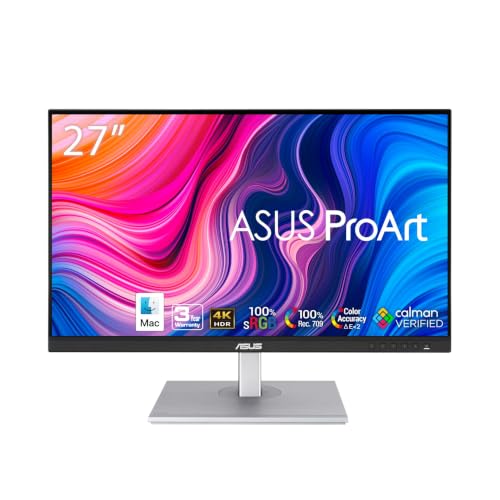
ASUS ProArt PA279CRV 27 Inch 4K UHD USB-C HDR Monitor

Dell 32 Monitor S3225QS 4K UHD VA Monitor

ViewSonic VP2756-4K 27 Inch 4K ColorPro Monitor

LG 27UP650K-W 27-inch Ultrafine 4K UHD IPS Monitor

Dell 27 Plus Monitor S2725HSM 27-inch FHD Monitor
ASUS ProArt PA248QFV 24 Inch WUXGA 16:10 Monitor
More Details On Our Top Picks
This ASUS leans hard into speed without ignoring color, which makes it unusual in a photo-editing roundup. The 27-inch 4K panel gives you dense detail for retouching, and the USB-C connection helps keep a desk tidy when your laptop is the main machine.
The dual-mode twist matters too, because the panel can trade resolution for a much higher refresh rate for motion-heavy work or casual gaming after edits. That flexibility suits you best when your monitor has to do more than color proofing, though the gaming-first DNA does mean this pick feels less studio-serious than the ProArt models below.
Strong Points
- 4K resolution makes fine edge work, skin cleanup, and local corrections easier to judge.
- USB-C simplifies single-cable laptop setups, which is handy on a compact desk.
- DCI-P3 coverage gives you a wide gamut for vivid but controlled color work.
- The Fast IPS panel keeps the viewing angle stable, so side-by-side proofing stays consistent.
- ELMB Sync and FreeSync Premium add smooth motion for mixed creative and gaming use.
Things To Consider
- Its gaming lean means you pay for features that pure photo editors may never use.
- HDR 400 is modest, so bright-scene preview work still calls for realistic expectations.
- The included tripod socket is useful, but it also reminds you this is a hybrid monitor, not a stripped-back studio tool.
Feature Snapshot
Who It Suits Best
You should look at this if you edit photos on a laptop but also want a monitor that can keep up with games or fast-moving content after work.
A Better Fit Elsewhere
ASUS ProArt PA279CRV is the more natural match for pure color-critical editing, especially for Mac-based studio desks that value a calmer, more creator-first design.
This ProArt lands in the sweet spot for photo work, because it pairs 4K detail with factory color calibration and broad gamut coverage. Calman Verified means the factory tuning is aimed at dependable color behavior, which matters more than flashy specs when your edits need to stay consistent across sessions.
The 96W USB-C port is a practical touch for laptop users, since one cable can carry display signal and charging for many portable setups. Compared with the ROG XG27UCG, this one feels much more focused on creative work, and that focus shows up in the calmer feature set and the emphasis on color fidelity over speed tricks.
What We Like
- 4K resolution gives you crisp detail for precise retouching and crop checks.
- 99% DCI-P3 and 99% Adobe RGB coverage suit print-oriented and wide-gamut work.
- Delta E under 2 signals tight color tuning, which helps you trust what you see.
- USB-C with 96W power delivery reduces cable clutter on laptop-focused desks.
- Daisy-chain support can simplify a multi-monitor desk without extra adapters.
- Height adjustment makes long editing sessions less awkward on the neck and shoulders.
Worth Noting
- The feature set is work-first, so motion-focused extras stay in the background.
- For a mixed-use gaming desk, the 60Hz ceiling may feel restrained.
- Color accuracy still depends on your own profile management, so the setup step matters.
Core Details
Who Should Grab It
You fit this monitor well if your editing work is serious, your laptop is central to the setup, and you care about color confidence more than gaming extras.
Where A Sibling Pick Shines
ViewSonic VP2756-4K makes more sense for a photo-only desk that values a softer ergonomic stand and a simpler creator-focused presentation.
A 32-inch screen changes the editing rhythm, because you get more room for palettes, reference shots, and a larger preview without constantly zooming around. The VA panel brings stronger contrast than many IPS office monitors, so deeper tones and shadow separation can look more grounded on a desk used for both work and entertainment.
The 120Hz refresh rate is more than photo editors strictly need, but it does make everyday scrolling and general system motion feel smoother. That said, the larger VA panel can feel a little less color-consistent from extreme angles than the IPS options above, so it suits you best when size and contrast matter as much as pure studio precision.
Highlights
- The 31.5-inch panel gives you generous working space for layered edits and side panels.
- 4K detail helps with image inspection, especially on high-resolution files.
- 3000:1 contrast supports deeper blacks and stronger shadow separation than many basic office screens.
- Anti-glare treatment is useful in bright rooms or near windows.
- HDMI and DisplayPort keep desktop hookup straightforward.
- FreeSync Premium and 120Hz make the screen pleasant for mixed work and media use.
Areas To Watch
- The larger footprint asks for a deeper desk than a typical 27-inch monitor.
- VA viewing behavior can be less forgiving than IPS for off-center color checks.
- The extra smoothness is nice, yet it adds less for pure still-image editing than better gamut tuning would.
Details At A Glance
Built With In Mind
You fit this Dell best when you want a big 4K workspace for editing, viewing, and general home-office comfort on a single screen.
Another Choice May Suit
ASUS ProArt PA279CRV is the better match for color-critical editing where broad gamut coverage and laptop-friendly USB-C matter more than a large VA panel.
Where the ASUS ProArt pair leans into broad gamut numbers, this ViewSonic keeps the focus on dependable photo work and a tidy desk setup. The 27-inch 4K IPS panel gives you fine detail without a huge footprint, which is handy in a studio corner or home office that doubles as a laptop station.
Pantone validation and 100% sRGB support make sense here, because many photographers need a screen that behaves predictably across web delivery and common color-managed workflows. The 60W USB-C port is helpful, though it gives less charging headroom than the ProArt PA279CRV, so heavier laptops may still need their own power brick nearby.
Upsides
- 4K IPS clarity supports careful cropping and retouching work.
- 100% sRGB suits web-first photo editing and most casual client deliverables.
- Pantone validation adds reassurance for color-sensitive day-to-day use.
- Advanced ergonomics make it easier to match the monitor to your chair height.
- USB-C, HDMI, and DisplayPort keep it flexible for desktop and laptop setups.
Small Caveats
- 60W power delivery is useful, though it may feel modest for power-hungry notebooks.
- The 4K panel is excellent for detail, but it still sits in a standard 27-inch frame.
- The value here comes from creator-friendly tuning, not from extra gaming features.
Feature Rundown
Whose Shelf It Belongs On
You should look at this ViewSonic when your photography work is serious but your desk space is still fairly ordinary.
Where A Better Fit Elsewhere
ASUS ProArt PA279CRV is the stronger step up for Adobe RGB-heavy work and for desks where 96W USB-C charging is worth paying attention to.
This LG makes a sensible middle ground for people who edit photos, browse, and work from the same screen all day. The 27-inch 4K IPS panel and tilt, height, and pivot stand give you the practical ingredients for a comfortable desk, while Reader Mode and Flicker Safe tilt the experience toward long stretches of text and images.
DisplayHDR 400 adds a modest HDR layer for compatible content, though the real appeal here is how straightforward the monitor feels in daily use. Compared with the ViewSonic VP2756-4K, it looks a little more like a general-purpose monitor that still respects creative work, which suits you if photo editing is part of a wider home-office routine.
Best Bits
- 4K IPS detail supports clean viewing of high-resolution images.
- The adjustable stand helps you line up the screen with your seated position.
- Reader Mode is useful for long sessions that move between text and photos.
- Flicker Safe is a welcome comfort feature for all-day desk work.
- HDMI and DisplayPort make it easy to connect to a desktop or laptop dock.
Softer Spots
- 60Hz is fine for photo work, though it feels plain beside the 120Hz and 144Hz screens here.
- HDR 400 is modest, so don’t expect dramatic highlight performance.
- The monitor is versatile, but the feature mix is less specialized than the ProArt and ColorPro picks.
Quick Facts
Perfect Match For
You fit this LG best if you want one monitor for photos, document work, and normal daily use without fuss.
Look Elsewhere When
Dell 32 Monitor S3225QS makes more sense for a larger desk that needs extra screen space and stronger contrast for mixed work.
This Dell is less about pixel-dense editing and more about a smooth, comfortable all-round desk screen. The 27-inch FHD panel is easier on the system than 4K, and the built-in 2 x 3W speakers help when you want a cleaner desk without separate audio gear.
For casual edits, social content, and general home-office use, it keeps the setup simple and the motion lively. The trade-off is clear, though, because full HD on a 27-inch panel won’t give you the same editing detail as the 4K options above, so you feel the limits fastest when you zoom into fine image work.
Bright Spots
- 144Hz refresh makes scrolling and everyday motion feel smooth.
- 1ms response helps keep fast movement looking crisp for mixed use.
- Built-in speakers reduce desk clutter for a simpler setup.
- Height, tilt, pivot, and swivel adjustments give you lots of positioning flexibility.
- HDMI connectivity keeps it easy to attach to a laptop or desktop.
Points To Note
- FHD on a 27-inch screen is the main compromise for detailed photo work.
- The speakers are convenient, though separate audio still usually sounds fuller.
- It fits general use better than print-minded or color-critical editing.
Technical Sheet
Right Fit For
You should consider this Dell when your editing is light, your desk setup needs to stay simple, and you still want a monitor that feels lively day to day.
Where A Different Pick Helps
LG 27UP650K-W makes more sense for anyone who wants 4K detail and a clearer photo-editing view without moving up to a larger 32-inch screen.
The 16:10 shape is the reason this ProArt stands out, because that extra vertical space can make tool palettes and timelines feel less cramped than on a standard 16:9 screen. For photo work on a smaller desk, that taller canvas often matters more than raw size, especially when you want room for editing panels without losing your image preview.
Calman Verification, Delta E under 2, and 100% sRGB put it squarely in the color-conscious category, while the 100Hz refresh rate adds a little smoothness to daily use. Compared with the 27-inch 4K monitors here, it gives up some total screen real estate, but it gives back a more compact footprint and a layout many creative desks will appreciate.
Reasons To Buy
- 16:10 formatting gives you extra vertical workspace for editing tools and image viewing.
- 100Hz makes navigation feel smoother than standard 60Hz office screens.
- Calman Verification and Delta E under 2 support careful color work.
- 100% sRGB fits web and general photo editing well.
- IPS panel behavior helps keep the image steady from off-center angles.
Honest Caveats
- The smaller 24.1-inch class means less overall canvas than the 27-inch options.
- 1920 x 1200 is sharp, though it is not as expansive as 4K for dense image files.
- The added height helps, but the screen still suits compact desks more than sprawling studios.
Core Details
The Right Fit
You fit this ASUS best when your desk is tight and you want a taller screen that still respects color-sensitive editing.
Swap It Out When
ASUS ProArt PA279CRV is the stronger option for a bigger 27-inch 4K workspace and wider gamut coverage.
What To Weigh Before You Choose
Common Shopping Slip Ups
A common mistake is chasing panel size before color behavior. A 32-inch screen can feel luxurious, but photo editing still depends on gamut coverage, calibration, and a stand that keeps your posture stable.
Another misstep is assuming 4K alone solves everything. You still want the right color space for your work, whether that means sRGB for web delivery or broader coverage for print-heavy projects.
The Upgrade Payoff
Higher-tier models usually cost more because they add tighter factory calibration, wider gamut coverage, better USB-C power delivery, and sturdier ergonomics. Those details matter most when you edit often, switch between laptop and desktop setups, or share files that need predictable color.
For occasional edits, a solid midrange screen is enough. For daily creative work, the extra money often goes into less guessing and less rework, which is where it starts to feel worthwhile.
Final Thoughts
The right monitor for photo editing depends on how serious your workflow is and how much desk space you actually have. For pure color work, ASUS ProArt PA279CRV leads the list by a wide margin in practical terms, while the ViewSonic and LG picks keep things simpler for mixed home-office setups. Choose the screen that matches your space first, then match its color features to the kind of images you edit most often.
