
Photo editing asks a lot from a screen, especially at 27 inches and above, where sharp text, even color, and comfortable stands start to matter just as much as raw resolution. You’re probably balancing desk space, cable clutter, and the kind of image work you actually do, from casual retouching to color-sensitive projects. The seven picks below cover that spread, from simple everyday displays to panels built for more exacting work. You’ll also see where each one gives something up, because no monitor covers every job cleanly.
The Shortlist At A Glance

HP Series 3 27 inch FHD Monitor 327se (2025)
ASUS ROG XG27UCG 27 Inch 4K USB-C Gaming Monitor

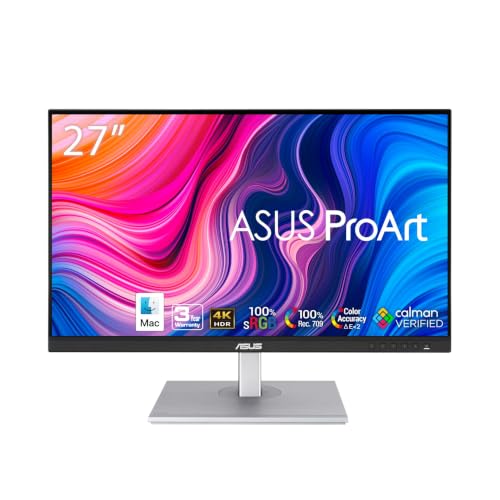
ASUS ProArt PA279CRV 27 Inch 4K UHD USB-C HDR Monitor

Dell 32 Monitor S3225QS 4K UHD VA

LG 27US500-W Ultrafine Monitor 27-Inch 4K UHD White

LG 27UP650K-W 27-inch Ultrafine 4K UHD White

Dell 27 Plus Monitor S2725HSM 27-inch FHD
More Details On Our Top Picks
The HP Series 3 keeps the formula simple: 27 inches, Full HD resolution, and an IPS panel, which means wide viewing angles and a layout that’s easy to live with on a daily desk. That 1300:1 contrast ratio and 250-nit brightness sit squarely in the comfort zone for casual editing, web assets, and office work.
Eye Ease with Eyesafe certification matters most during long sessions, especially in a home office where the screen stays on for hours. The trade-off is plain, though, because Full HD on a 27-inch panel won’t feel as crisp as the 4K picks lower in this list.
Highlights
- IPS panel keeps colors and angles steady for shared viewing.
- 27-inch size gives you room without swallowing a smaller desk.
- Eye comfort tuning helps during long editing stretches.
- The modest resolution keeps the setup straightforward for everyday work.
Points To Note
- Full HD at this size is less sharp for fine retouching than 4K.
- It suits light-to-moderate image work better than precision grading.
- A 27-inch panel benefits from a tidy desk, since scaling can feel roomy rather than dense.
Feature Snapshot
Built With In Mind
Beginners, students, and home-office users who want a plain, comfortable screen for light editing will get along well with this one.
Swap It Out When
ASUS ProArt PA279CRV 27 Inch 4K UHD USB-C HDR Monitor suits you better when color accuracy and finer image detail matter more than keeping costs and setup simple.
Some monitors are built to stay in one lane, and this ASUS ROG model clearly isn’t. The 27-inch panel combines 4K with a high refresh rate, while dual-mode support lets you trade resolution for even faster motion, which is handy for gaming sessions that share space with editing work.
USB-C keeps the desk cleaner, and the claimed 99% DCI-P3 color space coverage gives it more creative headroom than a simple gaming screen. The catch is that its strengths lean toward speed and versatility, so color-critical photo work still points you toward the ProArt model just ahead of it.
Reasons To Buy
- 4K detail helps with image review and fine layout work.
- Dual-mode support gives you a faster option for motion-heavy use.
- USB-C reduces cable clutter on a mixed-use desk.
- Wide color coverage makes it more credible for creative tasks than a plain gaming panel.
- ELMB Sync and adaptive refresh features suit fast-moving content.
Small Caveats
- Its gaming focus makes it less specialized than a true creator-first display.
- Many of its strengths only matter fully in mixed work-and-play setups.
- Tripod socket support is useful, though not something every desk setup needs.
Core Details
Right Fit For
Gamers who also edit photos, stream, or manage a creative desk will get the most from this hybrid setup.
Where A Sibling Pick Shines
ASUS ProArt PA279CRV 27 Inch 4K UHD USB-C HDR Monitor fits better for color work first, especially when your editing needs matter more than gaming extras.
This is the pick that makes the strongest case for photo editing, video grading, and any desk where color consistency matters. The 27-inch 4K panel gives you dense detail, and the factory calibration plus Delta E under 2 means the screen is tuned to stay close to accurate color from the start, which saves a lot of guesswork.
USB-C with 96W power delivery is especially helpful on a laptop-based setup, since one cable can handle display output and charging. You also get daisy chaining support, so multi-monitor desks stay cleaner, though the higher-end feature set makes sense most for people who actually need that level of accuracy.
What We Like
- 4K resolution gives you sharp detail for retouching and UI work.
- Factory calibration helps you start from a more accurate baseline.
- 99% DCI-P3 and 99% Adobe RGB coverage support serious color work.
- USB-C 96W power delivery cuts down on dock clutter.
- Daisy chain support helps with multi-screen desk layouts.
Areas To Watch
- Its feature set is built for serious creative workflows, so it can be more monitor than casual users need.
- The strengths matter most when your photo work depends on controlled color.
- A 4K panel works best with a graphics setup that handles higher-resolution scaling comfortably.
Feature Card
Who Should Grab It
Photographers, content editors, and Mac-based creative setups get the clearest payoff from this display.
Look Elsewhere When
LG 27UP650K-W 27-inch Ultrafine 4K UHD White suits you better if you want a simpler 4K monitor with fewer pro-focused extras.
A 31.5-inch 4K panel changes the feel of the desk right away, giving you more room for image previews, palettes, and side-by-side windows. The VA panel type brings stronger contrast than many basic IPS screens, so dark images and cinematic work get a bit more depth.
FreeSync Premium and up to 120Hz make the screen feel smoother than a standard office monitor, which is nice for motion-heavy use after a long editing session. The honest trade-off is that a large 32-inch class display needs more desk depth, so it suits spacious setups better than tight corners.
Bright Spots
- 31.5-inch size gives you a broad canvas for editing and multitasking.
- 4K resolution keeps images and text detailed across the larger panel.
- 3000:1 contrast ratio helps darker scenes look richer.
- Anti-glare finish reduces distracting reflections in bright rooms.
- 120Hz support makes everyday motion feel smoother.
Worth Noting
- The larger footprint asks for a deeper desk and more viewing distance.
- VA panels can feel different from IPS if your work depends on very even off-angle color handling.
- It’s a better fit for immersion and general creative use than strict studio color work.
Details At A Glance
Built With In Mind
Creative multitaskers and home office setups with enough desk space will appreciate the size and contrast most.
Another Choice May Suit
ASUS ProArt PA279CRV 27 Inch 4K UHD USB-C HDR Monitor fits better for tighter color-sensitive workflows where calibration matters more than size.
The white finish and borderless styling give this LG a cleaner look than the more gaming-leaning ASUS pick above it. That matters on a desk where you want the monitor to fade into the background and let the photos take center stage.
Its 4K resolution, IPS panel, and 90% DCI-P3 coverage give you a sensible mix of detail and color for routine editing. OnScreen Control also makes split-screen management easier, although the setup feels most useful once you install the software and make a habit of it.
Best Bits
- 4K detail keeps images crisp for editing and review.
- IPS panel supports stable viewing angles for everyday work.
- Borderless styling suits minimalist desks and multi-monitor layouts.
- OnScreen Control helps you manage workspace layout with less fuss.
- The included HDMI cable and stand parts make setup more straightforward.
Room For Improvement
- The software-assisted controls work best after a little setup time.
- Its feature set feels more practical than premium, which is fine for many desks.
- The white finish can ask for a bit more dust attention than a darker shell.
Feature Rundown
The Right Fit
You’ll like this one most if you want a tidy-looking 4K screen for editing, everyday work, and general media use.
Reach For A Different Pick When
LG 27UP650K-W 27-inch Ultrafine 4K UHD White gives you a more feature-rich stand and broader adjustment range for a more adaptable setup.
This LG feels like the safer all-rounder in the middle of the list, especially for someone who wants 4K clarity without moving into a specialist studio display. The 27-inch IPS panel, HDR400 support, and 95% DCI-P3 coverage make it a good fit for mixed photo work, streaming, and regular office tasks.
The stand is the real convenience story here, because tilt, height, and pivot adjustment help you dial in a comfortable position for long editing days. Pivot, meaning the screen can rotate to portrait orientation, is handy for social graphics and tall layouts, though the 60Hz ceiling keeps it in the sensible-workhorse lane rather than the speed lane.
Upsides
- 4K resolution gives you a sharp, practical workspace.
- Height, tilt, and pivot adjustment help with ergonomics.
- HDR400 and 95% DCI-P3 support creative and media use.
- IPS technology keeps the image steady from normal viewing positions.
Honest Caveats
- 60Hz suits editing and office work better than fast-motion gaming.
- The white finish looks clean, though it may show desk dust more readily.
- Its strengths are about balance, not specialty-level color tuning.
Core Details
Whose Shelf It Belongs On
Home editors and mixed-use desk owners who want a clean 4K screen with strong ergonomics will get the most out of it.
Another Choice May Suit
ASUS ProArt PA279CRV 27 Inch 4K UHD USB-C HDR Monitor is the better call for more exacting photo work and wider pro-grade color coverage.
This Dell leans into fluid motion and desk convenience rather than image-detail bragging rights, which makes sense for a monitor that pairs 144Hz with built-in speakers. For casual photo edits, everyday browsing, and entertainment after work, that mix can feel very natural.
The 1ms moving picture response time helps fast motion look cleaner, while the fully adjustable stand gives you a better chance of finding a comfortable height and angle. The trade-off is resolution, because Full HD on a 27-inch panel is the least sharp option in this roundup for fine retouching.
Standout Traits
- 144Hz refresh rate gives the screen a smooth feel.
- Built-in speakers cut down on extra desk clutter.
- Height, tilt, pivot, and swivel adjustment help with ergonomics.
- AMD FreeSync is useful for tear-free motion in compatible content.
- The Ash White finish gives it a lighter visual profile on the desk.
Minor Gripes
- Full HD is the softest match for close-up editing among the seven.
- The screen favors motion and convenience over image density.
- Built-in speakers are handy, though serious audio setups usually go farther.
Quick Facts
Perfect Match For
Desk owners who want smooth motion, adjustable ergonomics, and built-in audio will get the most out of this Dell.
Skip It When
LG 27UP650K-W 27-inch Ultrafine 4K UHD White is a better fit when detail and 4K clarity matter more than fast refresh and speakers.
How To Choose The Right Computer Monitor Photo Editings
Resolution And Screen Size Matter Together
For photo editing, resolution and size should be judged as a pair, not as separate bragging points. A 27-inch Full HD panel is usable for casual work, but 4K gives you far more room for detail, sharper tool palettes, and a clearer look at fine edges. That’s why the ASUS ProArt and the two LG 4K options stand out for image-heavy tasks, while the HP and Dell FHD picks make more sense for simpler desks.
Text clarity also affects comfort. On a larger screen, denser pixels make menus, image previews, and file names easier to read without constant zooming. That matters most in long editing sessions, where tiny interface adjustments start to feel like background noise.
Color Accuracy Beats Flashy Extras
Color space tells you how much of the visible range a display can show, and calibration means the screen is tuned closer to a reliable starting point. For your editing desk, that usually matters more than high refresh rates or gaming features. The ProArt model leads this group for that reason, while the ASUS gaming screen offers creative flexibility without being as exacting.
For social graphics, catalog photos, and client review work, consistent color handling helps you avoid repeated edits. A monitor with IPS panels, wide gamut support, and factory tuning gives you a steadier foundation, especially if you switch between laptop screens and external displays.
Ergonomics And Inputs Shape Daily Use
A monitor that tilts, raises, or pivots can do more for daily comfort than a flashy spec sheet. Pivot is especially handy for portrait layouts, vertical images, and scrolling through tall edits. The LG 27UP650K-W and Dell S3225QS both make a strong case here, while the simpler HP keeps adjustment basics in a more modest package.
USB-C matters too, especially on a laptop desk. One cable can reduce clutter, handle video, and sometimes charge the computer, which keeps the workspace calmer and easier to reset at the end of the day. That kind of practical setup often matters just as much as panel quality.
Match The Monitor To Your Editing Style
Your actual workflow should steer the final choice. A hobbyist who edits family photos once a week doesn’t need the same display as someone grading client portraits or preparing print-ready layouts. For mixed work and play, the ASUS ROG makes sense; for serious color work, the ProArt model is the cleaner answer.
Desk size, room lighting, and how close you sit also shape the right fit. Large 32-inch screens feel immersive, but they ask for more depth. Smaller 27-inch 4K panels usually land in the sweet spot for most editing desks because they stay detailed without becoming unwieldy.
Things Worth Knowing First
Mistakes Worth Dodging
Many shoppers focus on size alone and miss how sharp the panel actually looks at that size. A 27-inch Full HD screen can feel roomy, yet it won’t give you the same editing precision as 4K. Another common slip is overlooking stand adjustment, which matters more than it sounds when your neck spends hours at the desk.
Color claims deserve a closer look too. A wide gamut is useful, but it works best with reliable calibration and a workflow that can take advantage of it. That’s why the most expensive monitor isn’t automatically the best match for every photo desk.
Where The Extra Money Goes
Higher-tier monitors tend to spend their budget on sharper panels, wider color coverage, better calibration, and more flexible connectivity. In this list, that means the ASUS ProArt and ASUS ROG options carry more specialized hardware than the simpler LG or Dell FHD displays. You’re paying for a display that handles a more demanding workflow with less compromise.
The upgrade is worth it when your edits need closer color consistency, cleaner USB-C integration, or a more comfortable multi-monitor setup. For casual editing and general office use, that extra cost can buy features you won’t feel every day.
Final Thoughts
For Computer Monitor Photo Editings, the safest answer is the one that matches your actual desk life, not just your wish list. The ASUS ProArt PA279CRV is the clearest fit for serious color work, while the LG 27UP650K-W and Dell S3225QS cover strong everyday creative use with a more relaxed approach. If you edit casually, the HP Series 3 keeps things simple and comfortable. Choose the screen that fits your space and your workflow, and the rest gets easier fast.
