
Your turntable setup can sound thin or inconvenient when the phono stage, amplifier, and speaker connections don’t match. These tube amps give you several ways to add warmth, tone control, headphone listening, wireless playback, or modern digital inputs around a vinyl system. You’ll find compact preamps for powered speakers, integrated amplifiers for passive speakers, and flexible choices for MM or MM/MC cartridges. The right option depends on your existing gear, available space, listening habits, and tolerance for tube upkeep.
The Shortlist At A Glance
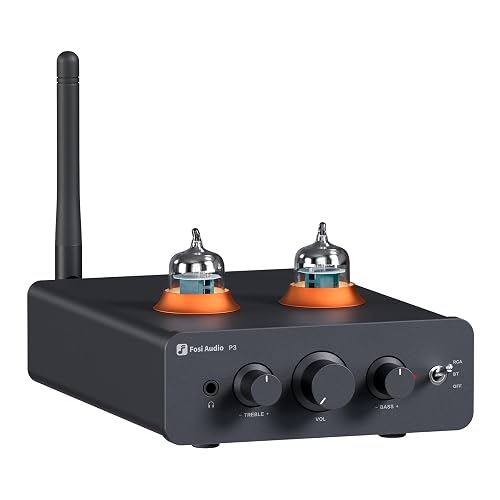
Fosi Audio P3 Tube Preamp Headphone Amplifier
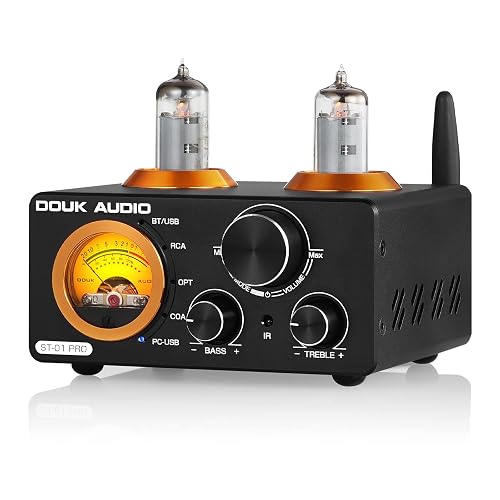
Douk Audio ST-01 PRO 200W Bluetooth Amplifier
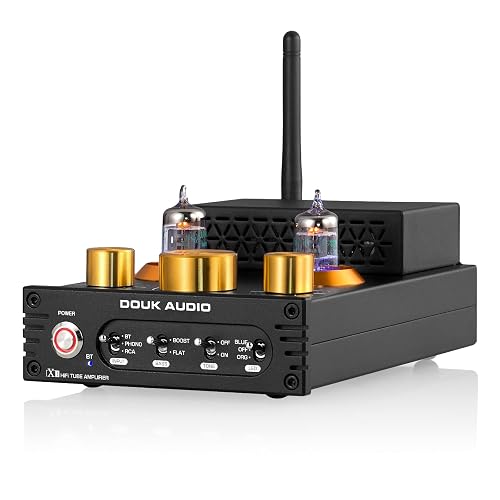
Douk Audio Tube Phono Amp Bluetooth Receiver

Fosi Audio MC331 Tube Integrated Amplifier with DAC
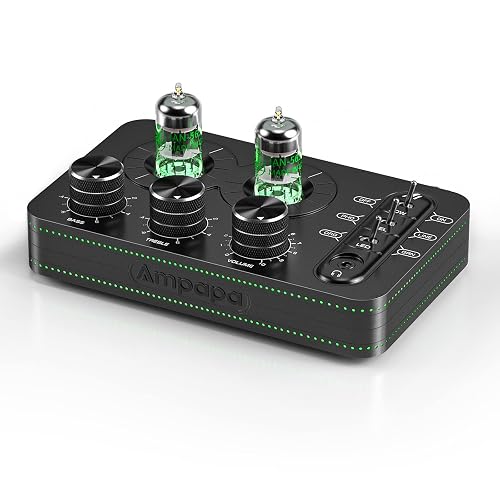
A1 Vacuum Tube Phono Preamp Headphone Amp
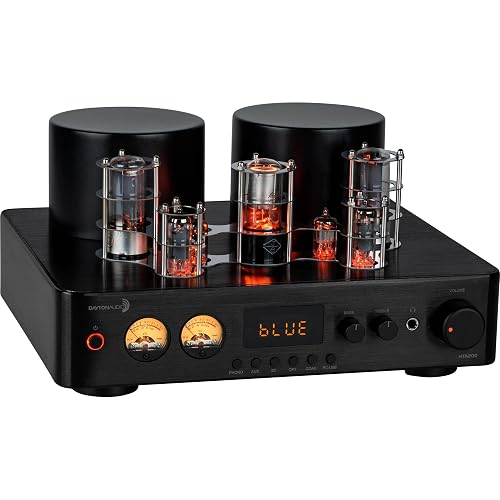
Dayton Audio HTA200 Integrated Stereo Hybrid Tube Amplifier
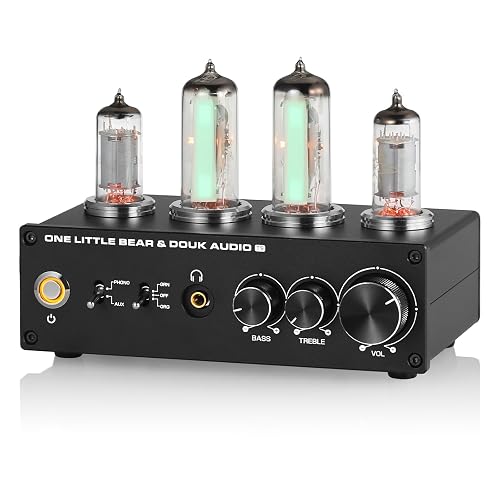
Douk Audio T9 Vacuum Tube Phono Preamp
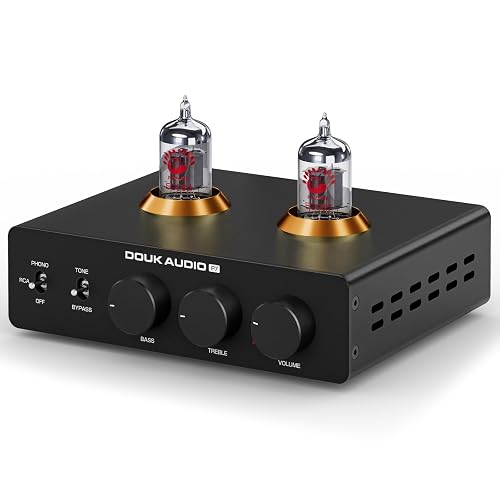
Douk Audio P7 Phono Preamp Balanced XLR Output
More Details On Our Top Picks
Small listening desks and powered-speaker systems benefit from a preamp that adds control without taking over the shelf. The P3 combines a tube preamp, headphone amplifier, RCA and AUX connections, and Bluetooth aptX LL HD, a wireless format designed for improved timing and audio quality.
Bass and treble controls let you adjust the presentation for bright speakers or a room with heavy furnishings. You may find the P3 more useful as the control center before active speakers than as a complete turntable amplifier, since it doesn’t provide the speaker-driving stage found in the larger integrated models.
Strong Points
- Its compact preamp format suits a desk, apartment shelf, or secondary listening corner.
- Headphone output supports quieter late-night vinyl sessions.
- RCA and AUX inputs make room for more than a turntable.
- Separate bass and treble adjustment helps you tailor mismatched speakers.
- Bluetooth aptX LL HD adds convenient wireless listening from compatible devices.
Things To Consider
- Tube installation needs care, and the supplied copper rings may need removal before fitting the tubes.
- As a preamp, it needs powered speakers or a separate power amplifier, unlike the Douk Audio ST-01 PRO.
Key Specs
Who It Suits Best
You’ll get the most from the P3 as a beginner-friendly control unit for a turntable, powered speakers, and headphones.
Consider Something Else When
Choose the Douk Audio Tube Phono Amp Bluetooth Receiver for a desktop system that needs a dedicated MM phono input and speaker amplification.
A mixed-source living-room system needs more than a phono connection, and the ST-01 PRO answers with Bluetooth, USB, coaxial, and optical inputs. A USB DAC, the circuit that converts digital audio into an analog signal, lets a computer or storage drive join the same amplifier as your turntable.
The two-channel design and 200W designation point toward passive stereo speakers rather than powered monitors. Its VU meter gives you a moving signal display, while treble and bass controls provide useful adjustment, although the compact chassis may feel busy beside minimalist equipment.
What We Like
- Multiple digital inputs reduce the need for separate source boxes.
- USB support accommodates lossless music files from a compatible storage device.
- Adjustable VU-meter sensitivity helps the display respond more naturally to different signals.
- Its two-channel amplifier format fits a conventional left-and-right speaker arrangement.
Trade Offs
- The visible meter and decorative trim may not suit a very restrained hi-fi rack.
- Tube hardware needs sensible ventilation and careful handling during setup and cleaning.
- Digital input flexibility matters less for a vinyl-only system.
Feature Snapshot
Made For
This suits you best when your turntable shares a passive-speaker system with computers, televisions, or digital music storage.
Not Your Match When
Fosi Audio P3 makes more sense for you when the system already uses powered speakers and you mainly need a small preamp.
For a desktop vinyl system, the useful detail here is the dedicated MM phono input. MM means moving magnet, a common cartridge type that sends a relatively low-level signal requiring phono equalization before ordinary amplification.
The JAN5725 tubes are pluggable, so you can replace them or explore compatible tube options over time. Bluetooth 5.0 with aptX and aptX-HD broadens the system beyond records, while the 160W x 2 TDA7498E amplifier rating gives it a distinctly different role from the preamp-only Fosi Audio P3.
Highlights
- Dedicated MM phono support simplifies connection from a compatible turntable.
- Pluggable tube sockets make future tube changes more manageable.
- Bluetooth aptX and aptX-HD support convenient wireless playback.
Minor Gripes
- MM cartridge support doesn’t cover systems built around an MC cartridge.
- The compact enclosure still needs open space around the tubes for routine dusting and heat management.
At A Glance
Right Fit For
You’re a strong match for this Douk Audio model when MM vinyl, Bluetooth streaming, and passive desktop speakers share one system.
Look Elsewhere When
Dayton Audio HTA200 suits you better for a larger listening room, several source types, and a full-size speaker pair.
Source-hopping becomes easier with an integrated design that combines a DAC, amplifier, preamp, and headphone amplifier. The MC331 adds Bluetooth, USB, optical, coaxial, and RCA connections, so your turntable can sit beside a computer, television, or wireless source without a stack of separate boxes.
A remote control handles source changes from your chair, while the VU meter and 5725W tubes bring a vintage visual touch. You may find the feature set more than you need for a dedicated record-only system, but it makes sense for a shared family room where headphones and digital audio matter too.
Upsides
- Four audio roles in one chassis help keep a mixed system tidy.
- USB, optical, coaxial, Bluetooth, and RCA inputs cover varied listening habits.
- Headphone support gives you a quieter option for evening listening.
- Remote source control is practical from a sofa or armchair.
- VU-meter styling adds visible character without requiring a separate display component.
Room For Improvement
- The broad feature list can make setup more involved than a basic phono preamp.
- Tube access means you’ll want a stable, ventilated location rather than a crowded cabinet.
Technical Sheet
Who Will Love This
You’ll appreciate the MC331 most in a modern living-room stereo that combines vinyl, digital sources, passive speakers, and headphones.
A Better Fit Elsewhere
Douk Audio P7 suits you more when your system already has an amplifier and needs a focused MM tube preamp with balanced output.
A compact MM turntable setup often needs two things: a phono stage to raise and equalize the cartridge signal, plus a way to listen through headphones. The Ampapa A1 combines those roles and adds bass and treble controls for a straightforward home stereo arrangement.
Its JAN5654 tubes support the tube-based signal stage, while the input flexibility accommodates sources such as a phone, tablet, PC, or CD player. The honest read is that this is a focused preamp and headphone choice, not a speaker power amplifier like the Dayton Audio HTA200.
Bright Spots
- MM phono support helps you connect a compatible record player directly.
- Headphone amplification suits apartment listening and late-night sessions.
- Tone controls let you make modest adjustments for different recordings.
Points To Note
- You’ll need powered speakers or a separate amplifier for room-filling passive-speaker playback.
- Tube openings can collect dust, so a clear shelf makes routine cleaning easier.
- Its MM focus is less suitable for an MC cartridge system.
Quick Facts
Built With In Mind
This is aimed at you when you’re building a compact MM vinyl station with headphones, active speakers, and a few everyday source devices.
Another Choice May Suit
Fosi Audio MC331 is a stronger fit for you when passive speakers, digital inputs, remote operation, and an integrated amplifier are priorities.
Full-size passive speakers need an amplifier with meaningful headroom, and the HTA200 is built around 100 watts RMS per channel, or continuous power per channel. Its hybrid design uses a tube preamp stage for character while the amplifier section handles speaker drive, giving you a different balance from the smaller Douk Audio desktop unit.
RCA, optical, Bluetooth, USB DAC, and phono preamp inputs cover records, televisions, computers, and wireless playback. For most living rooms, that range of connections can simplify the entire system, though the larger power-oriented format deserves a sturdy, ventilated shelf and speakers suited to its output.
Reasons To Buy
- 100W RMS per channel gives you substantial speaker-driving capacity.
- Built-in phono support avoids a separate MM phono box.
- Optical, USB DAC, RCA, and Bluetooth inputs support mixed-source listening.
- The hybrid tube design adds a tube preamp stage without making the entire signal path tube-based.
Small Caveats
- Its larger power capacity may be unnecessary for nearfield desktop speakers.
- Installation needs room for ventilation and careful cable organization.
- Tube character is part of the preamp stage, so expectations should stay realistic rather than suggesting every part of the amplifier uses tubes.
Feature Rundown
Whose Shelf It Belongs On
You’re the right match for the HTA200 when a main-room stereo uses passive speakers and several analog, digital, and wireless sources.
Swap It Out When
Douk Audio ST-01 PRO suits you better for a smaller chassis with a VU meter, USB storage playback, and a more compact stereo arrangement.
The T9 gives you a phono preamp with a strong visual identity, including two 6E2 signal displays and two 6A2 tubes. The displays provide changing light and level movement, while selectable green or orange backlighting lets you coordinate the unit with a listening room or media cabinet.
Support for MM and MC record players broadens cartridge compatibility beyond the Ampapa A1. Headphone output and treble-bass control make the T9 more self-contained for personal listening, although the display-focused design may appeal less to you when a quiet, plain component is the priority.
Standout Traits
- MM and MC support accommodates two major cartridge formats.
- Headphone output makes private listening straightforward.
- Treble and bass controls allow basic tonal adjustment.
- Selectable green or orange backlighting gives you visual control over the display.
- The signal-level display adds a clear vintage focal point to a shelf.
Honest Caveats
- The additional tubes and illuminated displays create more surfaces to keep dust-free.
- Its visual styling may dominate a minimalist desk.
Core Details
Who Should Grab It
This Douk Audio model suits you when you want MM/MC flexibility, headphones, tone controls, and a display that becomes part of the listening-room decor.
Reach For A Different Pick When
Ampapa A1 is a better fit for you when a smaller, simpler MM preamp with headphone support matters more than visual effects.
Longer cable runs and more advanced stereo systems can benefit from a balanced XLR connection, which sends audio through separate signal paths to help limit picked-up noise. The P7 includes that output alongside RCA, giving you a practical bridge between a turntable preamp and compatible amplifiers or active speakers.
Its MM phono and RCA input flexibility lets you use the unit with records and additional line-level sources. Bass and treble controls, a high-pass filter, and bypass mode provide more control than the simpler Ampapa A1, though those options add setup choices that casual vinyl listeners may not need.
Best Bits
- Balanced XLR output suits compatible amplifiers and active speakers.
- RCA connectivity keeps the unit usable with conventional stereo equipment.
- A high-pass filter can help manage unwanted low-frequency content in a carefully matched system.
- Bass and treble controls give you more adjustment than a fixed-output preamp.
- Bypass mode lets you compare the adjusted and unadjusted signal paths.
Areas To Watch
- XLR benefits depend on the rest of your system having compatible balanced inputs.
- More controls require closer attention during installation and source switching.
- The MM focus won’t suit an MC cartridge without a separate compatible stage.
Details At A Glance
The Right Fit
You’ll benefit most from the P7 in an MM vinyl system that already includes balanced equipment and rewards careful signal management.
Where A Sibling Pick Shines
Douk Audio T9 is better for you when MM/MC support, a headphone output, and an illuminated display matter more than XLR integration.
How To Choose The Right Tube Amps For Turntable
Start With The Signal Path
Begin by identifying the job you need the component to perform. A phono preamp raises the very small signal from a cartridge and applies the required equalization, while an integrated amplifier adds the power stage needed to drive passive speakers. A preamp such as Fosi Audio P3 works with powered speakers or a separate amplifier, whereas Dayton Audio HTA200 can sit directly between sources and passive speakers.
Match The Cartridge
MM and MC describe different cartridge designs, and the phono input must support the format installed on your turntable. The Ampapa A1 and Douk Audio P7 focus on MM, while Douk Audio T9 accommodates both MM and MC. Check your cartridge documentation before choosing, especially when you’re upgrading an existing record player rather than starting from scratch.
Count The Inputs You’ll Actually Use
A vinyl-only system may need little beyond phono and RCA. Shared living-room systems benefit from optical for a television, USB for a computer, Bluetooth for a phone, or coaxial for another digital source. Fosi Audio MC331 and Dayton Audio HTA200 make sense for source-heavy rooms, while a focused phono preamp can keep a small shelf less crowded.
Plan Around Speakers, Headphones, And Space
Passive speakers need amplifier power, while powered speakers already contain their own amplifier. Headphone output matters for apartment living, late-night listening, or a desk setup, but it doesn’t replace speaker amplification. Leave sensible ventilation around exposed tubes, keep cables easy to reach, and choose a shelf that can support the component without crowding its controls.
Things Worth Knowing First
Mistakes Worth Dodging
A common setup error involves connecting a turntable with a built-in phono stage to another phono input, which can create an overly strong or distorted signal. Use the correct line or phono connection for your turntable’s output mode, then keep the cartridge type aligned with the amplifier’s input.
You can also end up with the wrong system class by pairing a preamp with passive speakers and no power amplifier. Powered speakers suit compact preamps, while passive speakers need an integrated amplifier such as the Douk Audio ST-01 PRO or Dayton Audio HTA200.
Where The Extra Money Goes
Higher-tier tube components generally give you broader source support, more adjustment, stronger system integration, or connections such as balanced XLR. Those extras matter in a larger room, a mixed digital-and-vinyl system, or a setup that already uses compatible balanced equipment.
You don’t need every feature for a simple turntable and powered-speaker arrangement. Paying more makes sense when the added inputs, headphone stage, cartridge compatibility, or speaker power replaces separate components you would otherwise need.
Closing Remarks
Your best choice depends on the role you need filled. Fosi Audio P3 and Ampapa A1 suit compact preamp and headphone systems, while Douk Audio ST-01 PRO, Fosi Audio MC331, and Dayton Audio HTA200 serve passive-speaker setups with broader source needs. Douk Audio T9 adds MM/MC flexibility and a distinctive display, and Douk Audio P7 is the focused option for MM systems with balanced connections. Match the phono stage, speaker type, inputs, and available shelf space, then choose the model that fits your listening routine.
