
Speed matters most when your games reward quick reactions and clean motion. These seven screens cover that need from compact 23.8-inch panels to larger 27-inch options, with a clear split between value-minded 1080p picks and premium OLED territory. You get a practical range for esports, mixed work and play, and setups where desk space is tight but refresh rate still counts.
The mix also helps you match the panel to the room. Some options lean on simple IPS designs with wide compatibility, while others add height adjustment, stereo speakers, or OLED features for sharper contrast and deeper blacks.
Quick Look At The Shortlist

Acer Nitro XV272U W2bmiiprx 27in QHD 240Hz Gaming Monitor

Acer Nitro KG251Q Z1biip 24.5in FHD 280Hz Gaming Monitor

Dell SE2726HG 27 240Hz Gaming Monitor

Sceptre E255B-FWD240 24.5-inch Gaming Monitor 240Hz
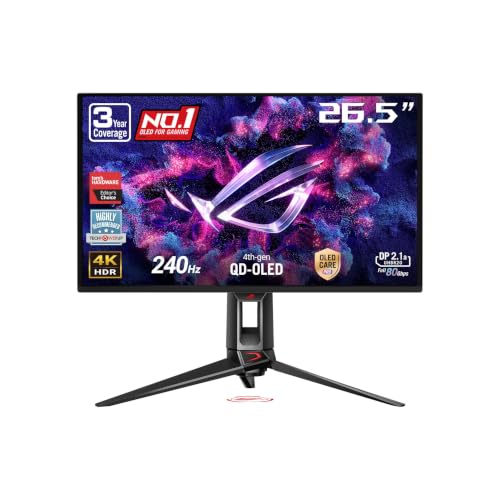
ASUS ROG PG27UCDM 27 Inch 4K 240Hz OLED Gaming Monitor

Dell SE2426HG 23.8-inch 240Hz Gaming Monitor

ASUS TUF Gaming Series 5 VG249QML5A 23.8-inch 1080P Monitor
More Details On Our Top Picks
QHD means 2560 by 1440, so this Acer gives you more desktop room and cleaner detail than the 1080p models below. That matters for you if you split time between fast shooters and everyday work, because text and HUD elements stay easier to read on a 27-inch panel.
The included ergonomic stand also helps the setup feel less temporary, which matters in a shared desk or bedroom rig. The trade-off is the usual one for this class, more pixels can ask more from your graphics card, so it suits a stronger system better than a bare-minimum machine.
Strong Points
- 240Hz refresh rate keeps motion smooth in fast games.
- IPS panel suits mixed use, including web work and gaming.
- sRGB 99% gives you a wider, cleaner color range for everyday content.
- DisplayPort and two HDMI inputs make console and PC switching simple.
- Ergo stand supports more comfortable desk positioning during long sessions.
Worth Noting
- QHD resolution asks more of the graphics card than 1080p.
- The built-in speakers are convenient, though external audio still makes more sense for most desks.
- 27 inches can feel large in a very shallow setup.
Feature Snapshot
Who It Suits Best
27-inch desk setups with a strong PC and a need for both speed and sharper-than-1080p detail suit this Acer best.
A Better Fit Elsewhere
Dell SE2726HG is the cleaner fit for you if you want a simpler 240Hz 1080p screen and care less about extra resolution.
That 280Hz refresh rate gives this Acer a little more headroom than the 240Hz crowd, and competitive players will notice the step up in motion smoothness. At 24.5 inches with 1080p resolution, it keeps the image dense enough for desk play without demanding a huge amount of GPU power.
Bluelight Filter and Flickerless Technology are useful additions for long evening sessions, especially in rooms where screen fatigue creeps in after hours of play. The honest read is that the panel leans hard into speed, so it makes the most sense for you if crisp motion matters more than bigger workspace or higher resolution.
Positives
- 280Hz refresh suits fast esports play and reduced motion blur.
- 24.5-inch size keeps the screen manageable on compact desks.
- IPS panel supports broad viewing consistency.
- AMD FreeSync Premium helps smooth frame matching on compatible systems.
- Bluelight Filter and Flickerless Technology are useful for long sessions at a desk.
Areas To Watch
- 1080p on 24.5 inches is all about speed, not extra workspace.
- You may want external speakers since audio hardware is not part of the listed feature set.
- The compact format can feel less immersive for story-heavy games.
Details At A Glance
Made For
Competitive players with a compact desk and a strong focus on frame rate will get the most from this Acer.
Swap It Out When
Acer Nitro XV272U W2bmiiprx suits you better if you want 27-inch QHD sharpness and a more balanced mixed-use layout.
Dell keeps this one plain and useful, which suits a lot of gaming desks better than a flashier design. The 27-inch IPS panel gives you enough size for comfortable viewing, while the 240Hz refresh rate keeps fast movement tidy for your daily play.
The tilt-only stand is the main limitation, so this fits best where height isn’t a problem or where you already use a monitor arm. In most home setups, that trade-off stays manageable, and the two HDMI ports plus DisplayPort 1.4 make source switching straightforward.
What We Like
- 27-inch size is comfortable for relaxed desk viewing.
- 240Hz refresh keeps motion responsive for shooters and racing games.
- IPS technology gives you steadier color and viewing angles than a basic TN panel.
- AMD FreeSync Premium helps reduce tearing on supported systems.
- DisplayPort 1.4 and dual HDMI inputs cover common gaming setups.
Softer Spots
- Tilt-only adjustment limits fine desk ergonomics.
- The 27-inch frame may feel broad on a very small desk.
- No built-in audio is listed, so many setups will still need external sound.
Core Details
Best Suited To
You should place this Dell on a straightforward gaming desk where a good-sized screen matters more than extra adjustment hardware.
Where A Sibling Pick Shines
ASUS TUF Gaming Series 5 VG249QML5A is a smarter fit for you if a smaller 23.8-inch footprint and height adjustment matter more.
This Sceptre makes a strong case for desks that need a lot of useful features without a bulky footprint. You get a 24.5-inch screen, 240Hz refresh, and built-in speakers, which keeps the setup simple for a dorm room, spare room, or a first gaming desk.
Two HDMI ports and two DisplayPort inputs also help when you juggle a console, PC, or streaming box. The trade-off is that the design leans practical rather than refined, so it suits function-first setups more than showpiece battlestations.
Highlights
- Built-in speakers reduce the need for immediate add-on audio.
- 240Hz and 1ms response target fast-paced play.
- Two HDMI and two DisplayPort inputs keep device switching easy.
- 100% sRGB is useful for color-conscious general use.
- 24.5-inch size works well on compact gaming desks.
Points To Note
- The styling is plain, so it is more practical than premium.
- Built-in speakers are handy, though many setups still benefit from separate audio.
- The feature set is broad, but the panel still sits in the 1080p class.
Feature Rundown
Perfect Match For
Function-first gaming desks, dorm setups, and mixed-use spaces are where this Sceptre makes the most sense.
Look Elsewhere When
Dell SE2726HG fits you better if you want a cleaner brand-built feel and prefer a larger 27-inch panel.
OLED means each pixel lights itself, which is why this ASUS can deliver the deep contrast and fast response that serious gaming setups chase. At 4K and 240Hz, it sits far above the plain 1080p crowd, so it makes sense for you only when both visual sharpness and speed matter.
DisplayPort 2.1, G-SYNC compatibility, and true 10-bit color widen its appeal beyond games, especially for high-end console and PC use in the same room. The catch is obvious enough, this is an expensive kind of flexibility, and it rewards a system that can keep up.
Best Bits
- QD-OLED panel gives you rich contrast and very fast pixel behavior.
- 4K resolution adds a lot of visible detail for games and media.
- 240Hz refresh keeps the panel firmly in high-speed territory.
- DisplayPort 2.1 is useful for modern high-bandwidth setups.
- OLED Care Pro and the proximity sensor show attention to panel management.
Room For Improvement
- 4K at 240Hz asks a lot from the rest of your system.
- The feature set is deep, but it pushes the budget way beyond basic 1080p models.
- OLED panels usually make sense most for users who value contrast and motion clarity over plain value.
Technical Sheet
Whose Shelf It Belongs On
High-end PC and console setups that need both premium contrast and very fast refresh belong here.
Another Choice May Suit
Acer Nitro KG251Q Z1biip is the better fit for you if you want a leaner 1080p screen built around pure speed and a smaller cost footprint.
This Dell trims the footprint even more than the 27-inch models above, which helps in tight rooms and on desks shared with school or work gear. At 23.8 inches and 240Hz, it keeps the layout efficient while still giving you the fast motion handling that matters in esports-style play.
The IPS panel and two HDMI ports make it easy to use with a console and a PC, while the tilt stand keeps the adjustment simple. One thing worth considering is that the smaller screen can feel less immersive for slower games, but for a narrow desk it’s a tidy fit.
Upsides
- 23.8-inch size fits small desks and close seating.
- 240Hz refresh supports smooth motion in fast games.
- IPS panel keeps viewing behavior predictable from normal seating positions.
- Two HDMI ports and DisplayPort 1.4 give you practical input flexibility.
- AMD FreeSync Premium helps supported systems feel steadier in action-heavy scenes.
Minor Gripes
- Smaller size gives you less screen space for multitasking.
- Tilt-only adjustment limits posture tuning.
- The compact format works best when your focus stays on gaming.
Key Specs
Right Fit
You’ll appreciate this Dell most in a small room, apartment corner, or office desk where space is tight but refresh rate still matters.
Reach For A Different Pick When
ASUS TUF Gaming Series 5 VG249QML5A is the smarter call if you want height adjustment and a slightly more feature-heavy 23.8-inch setup.
This ASUS lands in a very practical middle ground, especially for you if you want 1080p speed without giving up desk comfort features. Fast-IPS, 240Hz, and 0.3ms response time put it in serious gaming territory, while height adjustment keeps the screen easier to align with your setup.
DisplayWidget and Gaming AI round out the feature set, and 99% sRGB gives the panel some polish outside pure gaming. The trade-off is that the name brings a lot of extras, so it suits a user who wants a more fully equipped monitor rather than the simplest possible screen.
Reasons To Buy
- 240Hz refresh and 0.3ms response time aim squarely at fast play.
- Height adjustment improves daily desk comfort.
- 99% sRGB is useful for color-aware general use.
- G-SYNC Compatible and FreeSync Premium broaden device matching.
- DisplayWidget and Gaming AI add convenience for setup and fine-tuning.
Trade Offs
- The extra features are useful, though they make this feel less stripped-down than the simplest 1080p options.
- 23.8 inches is compact, so heavy multitaskers may want more room.
- The feature list is busy, which suits enthusiasts more than minimal setups.
Core Details
Built With In Mind
Serious 1080p gaming desks that also need better ergonomics and a fuller feature list suit this ASUS very well.
Skip It When
Sceptre E255B-FWD240 makes more sense if you want built-in speakers and a simpler budget-minded setup.
How To Choose The Right 1080p 240hz Monitors
Start With The Game Pace You Actually Play
Refresh rate matters most when your games move fast and your eyes track every frame. A 240Hz panel updates far more often than a standard office screen, so motion looks cleaner in shooters, racing games, and any title where quick camera movement can blur detail.
Resolution is the other half of the decision. A 24.5-inch 1080p panel usually feels dense and efficient, while a 27-inch 1080p screen gives you more physical size but less pixel density, which can look softer up close.
Match Panel Size To Your Desk, Not The Box
Desk depth changes everything. On a shallow desk, 23.8 to 24.5 inches keeps the panel comfortable without forcing you to sit too close, and that helps with both posture and visibility.
On a wider desk, 27 inches feels more relaxed for mixed gaming and everyday use. That larger frame also suits split-screen tasks better, though it can feel bulky in a cramped room.
Look At The Inputs And Stand Before You Commit
HDMI and DisplayPort matter because they decide how smoothly you move between a PC, console, or streaming device. Two HDMI ports are convenient for mixed setups, while DisplayPort often serves the main gaming connection on a desktop tower.
The stand matters just as much as the panel. Height adjustment, tilt, and VESA mounting support can turn a good screen into a comfortable daily setup, while a tilt-only base works better when you already plan to use an arm.
Choose Extras That Match Your Routine
Some of these models add built-in speakers, color coverage like sRGB 99%, or eye-comfort features such as flicker control and blue-light filtering. Those extras matter most when your monitor also handles schoolwork, browsing, or longer late-night sessions.
OLED and QHD models sit in a different lane altogether. They cost more because they bring deeper contrast, sharper detail, or both, so that upgrade makes sense only when your system and budget can support the jump.
Things Worth Knowing First
Common Shopping Slip Ups
Many people focus on refresh rate and ignore desk size, stand adjustment, and input layout. That leads to a screen that sounds right on paper but feels awkward once it sits on the desk.
Another common miss is treating 1080p and 27 inches as a universal match. That combo can work, but you’ll want to be comfortable with a softer image than you’d get from the smaller panels.
What The Higher Tier Buys
Money usually goes into panel quality, broader color handling, better response behavior, and more flexible stands. OLED and higher-resolution models also raise the cost because their image quality targets a different level of sharpness and contrast.
That upgrade makes sense when your monitor does more than game. Designers, streamers, and players who also watch a lot of video tend to notice the extra refinement more than someone who only wants a fast, practical 1080p screen.
Frequently Asked Questions
Is 240Hz worth it for 1080p gaming?
Yes, especially for fast games where motion clarity and quicker screen updates matter. It’s most useful when your PC can actually push high frame rates.
Do you need IPS for a 240Hz monitor?
No, but IPS is a strong all-around choice because it handles viewing angles and color more gracefully than basic speed-focused panels. That makes it easier to live with for gaming and daily use.
Is 24.5 inches better than 27 inches for 1080p?
For many desks, yes, because the smaller size keeps the image denser and the setup easier to manage. A 27-inch 1080p screen suits you more when size matters more than crispness.
Are speakers useful on gaming monitors?
They’re handy for basic setup and casual use. Separate speakers or headphones still make more sense for stronger sound and better immersion.
What matters more, refresh rate or response time?
Refresh rate drives how often the screen updates, while response time describes how quickly pixels shift between colors. For fast gaming, both matter, but refresh rate usually gets the bigger practical payoff first.
Final Verdict
Your best choice depends on whether you want speed, size, or a more premium image. The Acer Nitro XV272U W2bmiiprx gives you the most balanced step up, the Dell models keep things straightforward, and the ASUS ROG screen sits far above the rest for users ready to spend more. For a pure 1080p gaming desk, the ASUS TUF Gaming Series 5 and Acer Nitro KG251Q Z1biip make the strongest case. Match the screen to your desk and graphics power, and the right pick becomes obvious.
