
High-refresh 1080p monitors still make sense for you in 2026, especially for desk setups that need speed without drifting into expensive extras. A 240Hz panel can keep motion clearer in fast shooters, lighter competitive games, and everyday PC use that benefits from smooth scrolling. The seven picks below lean on size, panel type, connectivity, and ergonomics rather than marketing noise.
Quick Look At The Shortlist

Amazon Basics 27 Inch Monitor, FHD 1080P, 100Hz, IPS

Acer Nitro 24.5in FHD 1920×1080 280Hz Gaming Monitor KG251Q Z1biip

Dell 27 240Hz Gaming Monitor SE2726HG

Sceptre 24.5-inch Gaming Monitor 240Hz E255B-FWD240 Series
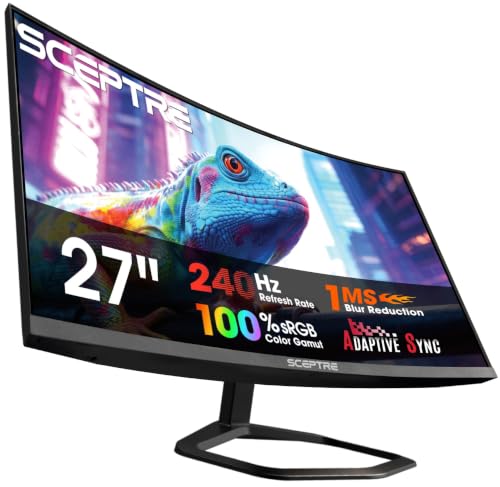
Sceptre 27-Inch Curved Gaming Monitor C275B-FWT240 Series

Dell 24 240Hz Gaming Monitor SE2426HG

Sceptre Curved 24.5-inch Gaming Monitor C255B-FWT240 Series
More Details On Our Top Picks
For a mixed-use desk, this Amazon Basics display keeps the pitch simple, a 27-inch IPS panel with 1080p resolution and 100Hz refresh. IPS, short for in-plane switching, usually means steadier color and wider viewing angles than older budget panels, which helps in a shared office or a family room setup.
The built-in speakers, VESA compatibility, and USB ports make it more practical than a bare-bones screen like the Dell gaming pair, though it gives up the higher refresh rates that matter for twitch play. The honest read is that this suits everyday work, streaming, and casual games better than serious competitive use.
Strong Points
- 27-inch panel gives you more room for split-screen work.
- IPS viewing keeps the image usable from off-center seats.
- Built-in speakers reduce desk clutter for basic media use.
- USB ports and VESA support improve setup flexibility.
Things To Consider
- 100Hz sits well below the 240Hz gaming crowd in this roundup.
- 27 inches at 1080p can look less crisp than smaller screens.
- Built-in speakers suit backup audio more than serious listening.
Feature Snapshot
Who It Suits Best
Home office users who want one screen for work, browsing, and light play will get the most from this layout.
A Better Fit Elsewhere
Dell 27 240Hz Gaming Monitor SE2726HG suits you better for esports or fast-action games, thanks to its 240Hz panel and gaming-first tuning.
The Acer Nitro pushes harder than the Amazon Basics screen, and that higher 280Hz ceiling is the story here. In fast shooters, a 24.5-inch 1080p panel keeps the image dense enough without asking your graphics card to carry unnecessary resolution overhead.
sRGB 99% coverage gives you broader color reach than many stripped-down gaming panels, while AMD FreeSync Premium helps smooth out mismatches between frame rate and refresh behavior. The trade-off is a more gaming-specific profile, so it makes less sense for general office work than the Dell 24 or Amazon Basics option.
What We Like
- 280Hz refresh gives fast-motion games a very fluid feel.
- 24.5-inch size keeps aiming distance comfortable on a desk.
- sRGB 99% helps color look fuller for content and play.
- Two HDMI ports and DisplayPort ease multi-device hookups.
- VESA mounting gives you more setup control.
Worth Noting
- The gaming-first spec mix can be overkill for spreadsheets and streaming.
- 1ms response claims help motion priority, but panel tuning still matters in practice.
- Bluelight filter and flickerless features are useful, though they do not replace good desk lighting.
Quick Facts
Who Will Love This
Competitive players who want a fast 24.5-inch display for a desk-based rig will get the strongest fit here.
Another Choice May Suit
Amazon Basics 27 Inch Monitor, FHD 1080P, 100Hz, IPS fits you better for mixed work and media use where refresh speed matters less than everyday comfort.
The Dell SE2726HG lands in a useful middle ground, with a 27-inch IPS panel and 240Hz refresh that feels built for fast play without shrinking the image. Compared with the Acer Nitro, you give up the higher ceiling, but you keep the same size class and a cleaner fit for a larger desk.
AMD FreeSync Premium handles uneven frame pacing, and the two HDMI ports plus DisplayPort 1.4 make console and PC pairing straightforward. The honest read is that the 27-inch size helps immersion, though some competitive players still prefer the tighter 24.5-inch format in the Acer and Sceptre models.
Upsides
- 240Hz keeps motion smooth for fast multiplayer games.
- 27-inch IPS panel gives you a spacious view without going ultrawide.
- DisplayPort 1.4 and dual HDMI simplify multi-system use.
- Tilt adjustment helps with desk ergonomics.
Room For Improvement
- 27 inches at 1080p can look less sharp than a smaller screen at the same resolution.
- Tilt only is simpler than a full ergonomic stand.
- Gaming tuning makes it less flexible for color-critical work.
At A Glance
Made For
You suit this model best if you want a larger 1080p gaming screen without moving into higher-resolution complexity.
Swap It Out When
Dell 24 240Hz Gaming Monitor SE2426HG fits smaller desks better, especially when you want the same refresh class in a tighter footprint.
This Sceptre model packs a lot into a 24.5-inch frame, and that shape usually works well on smaller desks where you want speed without panel sprawl. Relative to the Dell 27, it leans harder into compact gaming efficiency, while the 100% sRGB spec gives it broader color coverage than many simple esports monitors.
Built-in speakers, two HDMI ports, and dual DisplayPort inputs make the setup more adaptable for a console and PC mix. The trade-off is a more utilitarian feel, so you may find the styling straightforward rather than polished.
Best Bits
- 240Hz refresh keeps motion fast and fluid.
- 24.5-inch size suits compact desks and close viewing.
- 100% sRGB gives the panel stronger color coverage.
- Two HDMI and two DisplayPort connections add flexibility.
- Built-in speakers help when you want a simple all-in-one setup.
Points To Note
- Integrated speakers are handy, though they usually suit casual use more than immersive sound.
- The finish and naming feel more practical than premium.
- 24.5 inches gives less desktop space than the 27-inch Dell options.
Feature Card
The Right Fit
Desk gamers who want a compact 240Hz screen with plenty of inputs and built-in audio will get strong value from this one.
Where A Sibling Pick Shines
Acer Nitro 24.5in FHD 1920×1080 280Hz Gaming Monitor KG251Q Z1biip suits you better for the fastest motion-focused play, especially in esports-style sessions.
The curved 27-inch shape gives this Sceptre a different feel from the flatter Dell and Acer monitors, and that 1500R curve wraps the image more tightly around your field of view. For single-player games and laid-back sessions, that can make the screen feel more absorbing without needing a larger panel.
Built-in speakers and dual HDMI keep the setup practical, though the curve is a taste-driven choice rather than a universal advantage. In a busy room, the larger footprint also asks for more desk depth, so placement matters more here than on the 24.5-inch picks.
Positives
- 1500R curve adds a more enveloping view for gaming.
- 27-inch size gives you a roomy image without going huge.
- 240Hz refresh supports smooth motion in action-heavy games.
- Built-in speakers keep the setup simpler.
Small Caveats
- Curved screens suit some desks better than others.
- 27 inches at 1080p can soften fine text compared with smaller panels.
- Built-in audio stays basic, so external sound still makes sense for richer listening.
Details At A Glance
Whose Shelf It Belongs On
You fit this model best if you want a curved screen for games, media, and a desk that can handle a larger footprint.
Look Elsewhere When
Dell 24 240Hz Gaming Monitor SE2426HG is the cleaner call for smaller desks and a flatter, more compact setup.
The Dell SE2426HG trims the footprint without giving up the 240Hz class, and that smaller 23.8-inch IPS panel feels well matched to tighter desks or closer seating. Compared with the Dell 27, you get the same core gaming speed in a shape that can sit more comfortably beside a keyboard, mic arm, or second display.
AMD FreeSync Premium and DisplayPort 1.4 keep the gaming side straightforward, while the two HDMI inputs help with a console or laptop mix. One thing worth considering is that the compact design works best for you when desktop space matters more than a large, cinematic panel.
Highlights
- 23.8-inch size fits tight desks and smaller setups.
- 240Hz refresh supports very smooth game motion.
- IPS panel keeps colors and angles more stable.
- Two HDMI ports and DisplayPort 1.4 add flexibility.
- Tilt adjustment helps with simple ergonomic tuning.
Softer Spots
- The screen size feels modest next to the 27-inch Dell SE2726HG.
- Tilt-only adjustment leaves less room for fine positioning.
- The compact format is great for space savings, but less dramatic for media viewing.
Core Details
Built With In Mind
You suit this pick best if your desk is short on depth but you still want 240Hz gaming speed.
Skip It When
Sceptre 27-Inch Curved Gaming Monitor C275B-FWT240 Series makes more sense for you if you want a larger, curved viewing field.
This Sceptre lands close to the earlier curved 27-inch model, but the 24.5-inch size and R1500 curve make it easier to place on a more modest desk. The smaller footprint matters in real homes where you still want fast motion and a shape that keeps the image centered in your field of view.
Eye Care branding and the dual HDMI plus dual DisplayPort layout make it feel practical for long sessions with a console, PC, or both. The trade-off is simple enough: you get flexibility and a curved fit, but the built-in speakers and general feature mix lean toward practical use rather than a premium finish.
Reasons To Buy
- Curved 24.5-inch layout fits compact gaming stations well.
- Up to 240Hz supports smooth action across fast titles.
- R1500 curvature gives the panel a more wrapped-in feel.
- Two HDMI and two DisplayPort inputs keep connections easy.
- Eye Care branding suits longer desk sessions.
Areas To Watch
- The style is useful first, polished second.
- Built-in speakers cover basics, though external audio still improves depth.
- Curved format works best at a sensible viewing distance.
Feature Rundown
Perfect Match For
Gamers with a smaller desk who still want a curved 240Hz setup will get the cleanest fit here.
Reach For A Different Pick When
Acer Nitro 24.5in FHD 1920×1080 280Hz Gaming Monitor KG251Q Z1biip suits you better when maximum refresh speed matters more than curvature.
How To Choose The Right 1080p Monitor 240hz
Panel Size And Desk Depth
A 24.5-inch screen usually suits competitive gaming because it keeps your eyes moving less between corners, and that can feel steadier during fast matches. A 27-inch screen gives more room for split-screen work and casual media, but at 1080p it can look less sharp from a closer seat. For a narrow desk, the smaller format is easier to place without crowding your keyboard and mouse.
Curve matters too. A 1500R or R1500 panel can feel more enveloping, yet it also asks for a viewing position that lines up with the curve instead of fighting it. Flat panels stay simpler for mixed work, which is why the Dell options read cleaner for general desktop use.
Refresh Rate Versus Real Need
240Hz and 280Hz both live in the fast lane, but the practical jump depends on how steady your frame rate stays. A display like the Acer Nitro makes the most sense for esports-style play, while the Dell 27 and Dell 24 give you a strong 240Hz baseline without chasing the very top number.
For casual gaming, the difference between 100Hz and 240Hz is obvious in motion, but only 240Hz-class panels belong in this roundup. That’s why the Amazon Basics monitor serves as the non-gaming outlier, useful for work and streaming, not for serious fast-action play.
Inputs, Mounting, And Everyday Setup
Dual HDMI and DisplayPort support matter more than they sound. They let you keep a PC, console, or laptop connected without constant cable swapping, which becomes a real convenience on a shared desk or in a bedroom setup.
VESA mount support adds another layer of flexibility, especially for arm mounts and wall setups. Built-in speakers can reduce clutter, though they rarely replace a soundbar or headset for richer audio.
Color, Comfort, And Longer Sessions
Panel type shapes the whole experience. IPS screens usually hold up better for color consistency and wider viewing angles, which helps when you move around your desk or share the screen.
Features such as FreeSync Premium, flickerless backlighting, and blue-light filters help round out the experience, but they do different jobs. FreeSync aims at smoother frame delivery, while the comfort features are about easing long sessions, especially for you who spends more time at the desk than in front of a couch setup.
A Quick Reality Check
Where Shoppers Go Wrong
The most common slip is pairing 27 inches with 1080p and expecting razor-sharp text at close range. That size can still work, but you need to accept the trade-off in pixel density.
Another mistake is treating high refresh as the only spec that matters. Connectivity, stand adjustment, and panel type shape the day-to-day experience just as much.
What The Higher Tier Buys
More expensive models usually spend the extra on faster refresh, better color reach, stronger stand tuning, or more flexible ports. In this category, those upgrades matter most for esports players, dual-device setups, and desks that need a cleaner ergonomic fit.
That extra spend makes less sense for basic office work. For mixed use, a midrange 240Hz IPS panel often covers the important parts without adding much noise.
Frequently Asked Questions
Is 240Hz worth it for 1080p gaming?
Yes, especially for fast shooters and other motion-heavy games where smoother updates are easy to notice. The value drops when your games are slower paced or your frame rate stays well under that range.
Does 27 inches make 1080p look soft?
It can, especially at close viewing distance. A 24.5-inch screen usually looks a bit tighter at the same resolution.
Do IPS panels help for gaming?
IPS panels help with viewing angles and color stability, which is useful for desk setups and mixed use. They do not automatically make a monitor faster, so refresh rate still matters.
Are built-in speakers enough?
They’re fine for system sounds, light video, and basic use. For games or music, external audio usually gives you more depth.
What ports matter most on this kind of monitor?
DisplayPort and HDMI cover most PC and console setups. Two inputs or more save you from constant cable swapping.
Closing Thoughts
A strong 1080p 240Hz monitor gives you a clean path into fast, responsive gaming without pushing your desk into a more complicated setup. The best fit depends on how much space you have, whether you want a flat or curved panel, and how much you care about extras like speakers, USB ports, or broader color coverage. For your desk, the right choice is the one that matches your room and your game pace, not the one with the longest feature list.
