
Fast refresh is no longer just for hard-core gaming setups. A 120Hz monitor can make daily scrolling, casual play, and long work sessions feel steadier, especially when you also care about panel type, stand flexibility, and port selection. This roundup focuses on seven models that cover small desks, mixed-use homes, and more serious gaming rigs. You’ll see where a 4K office display makes sense, where a compact 22-inch screen fits better, and where 240Hz models step beyond the core brief.
The Shortlist At A Glance

Dell 27 Monitor S2725QS 4K UHD IPS 120Hz
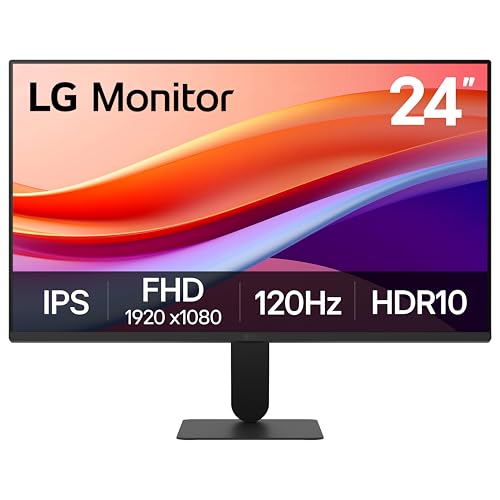
LG 24U411A-B 24-inch Full HD IPS Monitor 120Hz

KTC 27 Inch 240Hz Gaming Monitor H27F7 Fast IPS

LG 24G411A-B 24-inch Ultragear Full HD IPS Gaming Monitor 144Hz

AOC 22 Inch Computer Monitor 22B35HM23 FHD 120Hz Overclocked VA

Dell 27 240Hz Gaming Monitor SE2726HG 27-inch FHD IPS

Dell 24 Monitor SE2426H 23.8-inch FHD 144Hz 1ms IPS
More Details On Our Top Picks
A 27-inch 4K IPS screen with 120Hz refresh fits neatly into a desk that has to do double duty. The 350 cd/m2 brightness, 1,500:1 contrast, and 99% sRGB coverage point to a clean, color-aware panel that suits office work, light content editing, and calmer gaming nights.
The USB-C port matters for laptop users who want a simpler cable routine, while HDMI and DisplayPort keep desktop rigs in play. You also get a height-adjustable stand with swivel and pivot, so portrait reading or stacked windows feel more natural. The honest trade-off is plain: 4K clarity asks more from your graphics hardware than a 1080p screen like the LG 24U411A-B.
Strong Points
- 4K resolution gives text and interface elements a crisp edge on a 27-inch panel.
- 120Hz smooths cursor movement and scrolling, which feels steady during long desktop sessions.
- USB-C can reduce cable clutter for a laptop-based setup.
- Height, swivel, and pivot adjustments help you fit the screen to your desk posture.
Things To Consider
- 4K needs more graphics power than the 1080p options in this roundup.
- The feature set leans practical rather than flashy, so it may feel plain next to gaming-first models.
Feature Snapshot
Who It Suits Best
Office-heavy users who still want smoother motion and more premium connectivity will get the most from this Dell.
A Better Fit Elsewhere
LG 24U411A-B 24-inch Full HD IPS Monitor 120Hz suits a smaller desk and lighter system demands more cleanly.
This LG keeps the formula simple: a 24-inch Full HD IPS panel with 120Hz, which is a tidy match for dorm desks, home offices, and shared spaces. HDR10 gives the panel a wider video-processing range on paper, while Reader Mode and Flicker Safe speak to long stretches of document work and late-night browsing.
It feels more practical than the Dell 27 S2725QS because it stays at 1080p, so your system has a lighter workload. The slim stand base also helps on crowded desks, though the narrower footprint means you give up some adjustment drama and premium presence.
Highlights
- 24-inch size fits tight desks without taking over the surface.
- 120Hz adds smoother motion for scrolling, casual gaming, and daily navigation.
- Reader Mode and Flicker Safe suit long screen sessions.
- IPS panel keeps colors and angles more consistent than a basic TN-style screen.
Points To Note
- Full HD on 24 inches is sensible, but it is not as crisp as the 4K Dell.
- The slim stand saves room, yet it leaves less room for extra ergonomic flexibility.
Core Details
Who Should Grab It
Students and home-office users who want a modest-size screen with smoother motion will find the shape and feature set easy to live with.
Skip It When
Dell 27 Monitor S2725QS 4K UHD IPS 120Hz fits better for anyone who wants sharper text and a more upscale desk setup.
The KTC H27F7 steps beyond the 120Hz group and targets speed first. A 27-inch Full HD Fast IPS panel, Adaptive Sync, HDR, and the height-pivot-tilt stand make it a clear fit for competitive play, especially on a desk where you want motion smoothness more than pixel density.
That 240Hz ceiling is the headline, but the rest of the package matters too: VESA mounting gives you a cleaner desk setup, and HDMI plus DisplayPort keep it flexible. Compared with the Dell 24G411A-B, this one pushes refresh higher but keeps the same 1080p class, so the trade-off leans toward raw motion rather than sharper text.
Upsides
- 240Hz refresh suits fast shooters and other quick-motion games.
- Fast IPS keeps the panel from feeling sluggish in everyday navigation.
- Height, pivot, and tilt adjustment help you dial in the seat-to-screen angle.
- VESA support lets you move the screen onto an arm or wall mount.
- HDR support adds a little extra video flexibility for mixed use.
Areas To Watch
- Full HD at 27 inches can look less dense than smaller 1080p screens.
- The speed-first layout makes more sense for gaming than for detailed text work.
Quick Facts
Made For
Competitive PC gamers who value motion handling above everything else should look here first.
Where A Sibling Pick Shines
LG 24G411A-B 24-inch Ultragear Full HD IPS Gaming Monitor 144Hz fits better for you if you want a smaller, simpler desk footprint.
Some desks need a monitor that moves fast without turning the room into a shrine to gaming hardware, and this LG fits that mood. The 24-inch Full HD IPS panel with 144Hz overclocking, 1ms MBR, G-Sync compatibility, FreeSync, and HDR10 gives you a step up in motion handling while staying easy to place.
Owners typically end up valuing the smaller footprint and the familiar 1080p workload more than any single flashy trait. The trade-off is that you lose the extra sharpness of the Dell 27 S2725QS and the raw pace of the KTC H27F7, so this lands in the middle by design.
Best Bits
- 144Hz overclocked refresh gives you a faster-feeling desktop and game view.
- 1ms MBR helps motion look cleaner during quick camera movement.
- G-Sync Compatible and FreeSync widen compatibility with different gaming rigs.
- The 24-inch format keeps desk planning straightforward.
Softer Spots
- Overclocked refresh is a step above 120Hz, but it still lives in Full HD territory.
- The slim stand looks tidy, though it leaves the screen on the minimal side for adjustment range.
Feature Rundown
Best Suited To
Entry-level gaming setups and mixed-use desks fit this LG well, especially where space is tight.
Look Elsewhere When
Dell 27 240Hz Gaming Monitor SE2726HG 27-inch FHD IPS fits better for you if higher refresh matters more than desk simplicity.
A 22-inch monitor like this AOC makes sense when desk space is tight and you still want smoother motion than a standard 60Hz panel. The VA panel type, HDR support, HDMI 1.4, VGA, and VESA mount give it a practical mix for older desktops, simple setups, and secondary-screen duty.
The 60Hz native rate with 120Hz overclocking is the key detail to understand, because that means the higher setting is an extra mode rather than the base state. That keeps it flexible, but it also makes it less straightforward than the Dell 24U411A-B or LG 24G411A-B, both of which stay closer to a simpler, faster-use story.
Positives
- 22-inch size stays out of the way on narrow desks.
- 120Hz overclocking gives you a smoother feel than a basic 60Hz screen.
- VESA support helps with mounting and desk cleanup.
- HDMI and VGA broaden compatibility with older and newer gear.
Room For Improvement
- Native 60Hz means the 120Hz mode is not the panel’s baseline.
- VA panels can feel less airy than IPS for side-angle viewing.
Details At A Glance
The Right Fit
Budget-conscious setups, dorm rooms, and older PC stations suit this AOC especially well.
Swap It Out When
LG 24U411A-B 24-inch Full HD IPS Monitor 120Hz is the cleaner choice for a little more size and a more straightforward native 120Hz experience.
This Dell is for the gamer who wants speed without giving up the familiar 27-inch IPS format. The 240Hz display, AMD FreeSync Premium, DisplayPort 1.4, two HDMI inputs, and tilt-only stand keep the hardware side focused and easy to understand.
TÜV 3-Star and IPS tech make it feel less aggressively specialized than some fast panels, which helps during mixed play and general desktop use. The trade-off is posture control, since tilt alone is simpler than the height and swivel options on the Dell 27 S2725QS or the KTC H27F7.
Reasons To Buy
- 240Hz refresh is built for fast, responsive game motion.
- IPS panel keeps the image stable across a larger seat range.
- Two HDMI ports plus DisplayPort make source switching easier.
- FreeSync Premium helps smooth variable-frame gameplay.
Small Caveats
- Tilt-only adjustment is simpler than the stands on some of the other Dell and LG picks.
- Full HD on 27 inches leaves less density for fine text than a 4K screen.
Feature Card
Who Will Love This
PC gamers who want a larger fast-refresh screen and simple input flexibility will get the most from it.
Reach For A Different Pick When
Dell 27 Monitor S2725QS 4K UHD IPS 120Hz makes more sense for mixed work and play where sharper text matters more than extreme frame pace.
At 23.8 inches, this Dell lands in the sweet spot for a mixed-use desk that needs speed without extra bulk. The 144Hz IPS panel with 1ms response time, AMD FreeSync, TÜV 3-Star, and dual HDMI ports gives you a clean, no-drama setup for work by day and gaming later.
It’s the simplest Dell in this lineup, and that’s part of the appeal. You give up the USB-C convenience of the Dell 27 S2725QS and the broader input control of the SE2726HG, but you get an easy-to-place screen that feels familiar right away.
Best Bits
- 23.8-inch size sits comfortably on small to medium desks.
- 144Hz refresh offers a clear step up from standard 120Hz panels.
- 1ms response time helps motion feel snappier in games.
- Two HDMI ports make it simple to keep more than one source connected.
Honest Caveats
- Tilt-only adjustment keeps the stand basic.
- Full HD is sensible here, though it won’t match the crispness of the 4K Dell 27 S2725QS.
Core Details
Whose Shelf It Belongs On
Household users who want a compact, straightforward fast monitor will appreciate the balance here.
Another Choice May Suit
LG 24G411A-B 24-inch Ultragear Full HD IPS Gaming Monitor 144Hz is the smarter match for you if gaming branding and sync support matter more.
How To Choose The Right 120hz Monitors
Start With Screen Size And Resolution
Size and sharpness shape the whole experience. A 24-inch Full HD monitor like the LG 24U411A-B keeps desktop scaling simple, while a 27-inch 4K panel such as the Dell S2725QS gives you more room and finer text detail.
That trade-off matters more than the refresh number for many desks. Bigger screens help with split windows and timeline work, but they also need stronger graphics hardware and more desk depth.
Match The Panel To Your Use Pattern
IPS panels are the common sweet spot here because they keep color and angles steady across a desk. VA, like the AOC 22B35HM23, can serve compact setups well, but it changes the look and feel enough to matter.
For mixed work and play, IPS usually feels safer. For a secondary screen, a basic VA option can make sense when space and cost sensitivity matter more than visual finesse.
Look Past Refresh Rate Alone
120Hz is a useful baseline, but the supporting details define whether the monitor fits your life. Response time, motion blur features, Adaptive Sync, FreeSync, and G-Sync compatibility all shape how steady the screen feels during play.
A 240Hz model like the KTC H27F7 or Dell SE2726HG makes sense for fast action, yet a well-balanced 120Hz screen can be the better everyday call. The quiet win is usually the one that stays comfortable after the novelty wears off.
Check Stand, Ports, And Desk Fit
Height adjustment, swivel, pivot, and tilt matter more than many shoppers expect. A monitor that can move with your posture tends to feel better during long sessions than a fixed stand with only tilt.
Ports matter too, especially for laptop docking and dual-device setups. USB-C on the Dell S2725QS helps one-cable convenience, while HDMI-only or dual-HDMI models keep things simpler for consoles and standard PCs.
Things Worth Knowing First
Mistakes Worth Dodging
A common miss is buying on refresh rate alone and forgetting resolution. A 27-inch Full HD panel can feel soft compared with a 27-inch 4K screen, especially for text-heavy work.
Another slip is ignoring stand adjustability. On a desk you use every day, a better stand often matters more than a small spec bump on paper.
The Upgrade Payoff
Higher-tier models usually cost more because of sharper panels, stronger color coverage, better motion handling, and more flexible stands. USB-C, premium sync support, and more complete ergonomic adjustment also push a monitor upward.
That extra spend makes sense when your desk is both a work station and a gaming spot. It matters less for a simple secondary display or a compact room where basic function wins.
Frequently Asked Questions
Is 120Hz noticeable outside gaming?
Yes, scrolling and pointer movement often feel smoother than on a 60Hz screen. The difference is clearest during long desktop sessions.
Is IPS better than VA for 120Hz monitors?
IPS usually gives you steadier colors and wider viewing angles. VA can still work well in compact setups, especially when contrast is more important than side-angle consistency.
Does 4K make sense on a 27-inch 120Hz monitor?
It makes sense for text clarity and desktop space. The trade-off is higher demand on your graphics hardware.
Do you need 240Hz instead of 120Hz?
Not for general use. 240Hz fits fast-paced gaming better, while 120Hz already feels smooth for most everyday tasks.
What ports matter most on a 120Hz monitor?
HDMI covers many simple setups, while DisplayPort helps with desktop gaming rigs. USB-C is valuable for cleaner laptop connections.
Final Verdict
The right 120Hz monitor depends less on a single spec and more on how your desk actually works. The Dell S2725QS stands out for mixed work and play, the LG 24U411A-B keeps things compact, and the KTC H27F7 pushes speed hard for gaming-first setups. You also have smaller, simpler choices like the AOC 22B35HM23 and straightforward fast options from Dell and LG. Match the screen to your space, your source devices, and how sharply you want text to look.
