
A 32-inch QHD monitor makes sense when you want room to work and enough speed for after-hours gaming. You get sharper text than 1080p and more desktop space than a smaller panel, which helps in a home office, a shared setup, or a console corner. The trade-off is simple: panel type, stand adjustment, and refresh rate matter more once the screen gets this large.
Quick Shortlist For Spacious Desks

KTC 32 Inch 2K Computer Monitor H32D6 (White)

Samsung Odyssey G5 (G50F) 32” QHD Gaming Monitor

AOC 32 Inch Curved Gaming Monitor CQ32G4VE
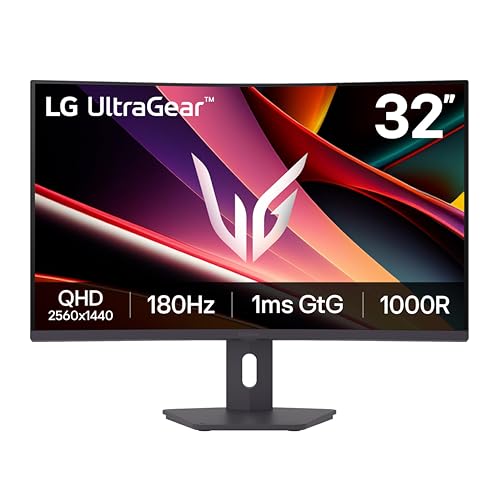
LG 32G600A-B Ultragear QHD Curved Gaming Monitor

32 Inch Curved Gaming Monitor QHD 1440P 165Hz

Hikers 27 Inch Curved Gaming Monitor G27H1Q Pro

LG 32G403B-B Ultragear Full HD Gaming Monitor
More Details On Our Top Picks
White 32-inch monitors usually live on desks where appearance matters as much as screen size, and this KTC model leans into that with a clean finish and IPS panel. IPS, or in-plane switching, usually gives you steadier color and wider viewing angles than basic VA office panels, which helps for spreadsheets, browsing, and casual gaming.
The 120Hz refresh rate sits below the gaming-focused 180Hz models later in this list, but it still feels more fluid than standard 60Hz panels. The tilt-adjustable stand and VESA support make placement easier in tight workspaces, though the overall setup will feel more basic than the LG options with broader ergonomic stands.
Strong Points
- IPS panel suits mixed desk use without the narrow-angle color shift you get on many budget VA screens.
- 120Hz gives everyday motion a smoother feel, so window movement and scrolling look less choppy.
- White finish stands out in lighter office setups and creative desks.
- HDMI and DisplayPort give you straightforward connection options for a PC and a console.
Things To Consider
- 120Hz trails the faster gaming picks here, so twitch-heavy play has less headroom.
- Tilt-only adjustment means you may want a VESA arm for finer positioning.
- The white finish can show dust faster than the darker models in this roundup.
Feature Snapshot
Who It Suits Best
You benefit most here if you want a tidy all-purpose monitor for office work, light gaming, and a bright desktop setup.
Where A Sibling Pick Shines
Samsung Odyssey G5 (G50F) 32” QHD Gaming Monitor suits you better if gaming speed matters more than a softer everyday look.
This Samsung leans hard into motion clarity, and the 180Hz refresh rate gives it a clear edge over the KTC above for fast PC play. Fast IPS aims to combine quicker transitions with the wider viewing angles of IPS, so your desktop work does not feel like a compromise.
HDR10 can add better range between dark and bright areas, though the real-world impact depends on the content you use. The adjustable stand helps with fit on a desk, and the G-Sync compatibility plus FreeSync support make this a sensible match for mixed GPU setups.
What We Like
- 180Hz gives fast games a notably smoother feel than 120Hz models.
- Fast IPS keeps the panel versatile for work, not just play.
- G-Sync compatibility and FreeSync support broaden system matching.
- HDR10 support adds more contrast range in supported content.
- Adjustable stand helps with desk height and viewing angle.
Softer Spots
- The premium gaming feature set makes this less direct than the simpler KTC for basic office use.
- HDR results vary by source content, so the effect is not uniform across everything you view.
- Owners who want a very minimal desk footprint may still prefer a more compact 27-inch screen.
Details At A Glance
Built With In Mind
You suit this best if your desk time splits between competitive gaming and daily computer use.
Skip It When
LG 32G600A-B Ultragear QHD Curved Gaming Monitor is the better fit for you if ergonomic stand range matters more than Samsung’s speed-first tuning.
The AOC takes a more curved, game-first route than the Samsung and KTC models, with a VA panel tuned for contrast rather than off-angle color consistency. VA, or vertical alignment, usually gives deeper dark tones, which suits dark scenes and late-night play in a dim room.
A 0.5ms listed response time and 180Hz refresh rate make it look built for quick motion, while the earphone output and console-ready setup add practical flexibility. The 3-year zero-bright-dot coverage mentioned by the brand is another useful detail for peace of mind, although the curved shape will not suit every desk user.
Best Bits
- 180Hz and the low response spec support fast on-screen motion.
- Curved 32-inch layout helps keep the screen feeling immersive.
- VA panel depth works well for dark scenes and richer contrast.
- DP 1.4 and HDMI 2.0 keep connection options practical.
- Earphone out is handy for simple desktop audio routing.
Points To Note
- VA contrast can look excellent, but side-angle color consistency usually trails IPS.
- The curve may feel more natural for gaming than for long spreadsheet sessions.
- Closed-back or desk-mounted audio setups may reduce the value of the earphone jack.
Core Details
Whose Shelf It Belongs On
You fit this best if your monitor time leans toward games, especially in darker rooms where contrast stands out.
Another Choice May Suit
LG 32G600A-B Ultragear QHD Curved Gaming Monitor is the better call for you if a more adjustable stand matters as much as the picture.
LG gives this model a strong ergonomic edge, and that matters more than many spec sheets admit. A tilt, height, and swivel adjustable stand helps you line up the panel properly for long sessions, which is useful in a work-heavy setup that still needs gaming speed after hours.
The 1000R curve is tighter than the more relaxed curved designs elsewhere in this roundup, so the screen wraps around your field of view in a way that feels very immersive. HDR10, up to 99% sRGB coverage, 180Hz, and 1ms response add a balanced mix of speed and color, although the curve may feel aggressive for anyone who mainly edits documents.
Upsides
- Tilt, height, and swivel adjustment make setup easier for long desk sessions.
- 180Hz and 1ms response suit fast motion and responsive play.
- 1000R curvature creates a wraparound feel that helps immersion.
- Up to 99% sRGB coverage supports cleaner-looking everyday color.
- HDMI and DisplayPort keep it easy to connect to common systems.
Room For Improvement
- The tighter curve can feel less natural for some office tasks.
- Glossy or bright rooms may make curved panels more reflective in practice.
- LG’s stronger stand range adds flexibility, but it also takes more desk depth than a simpler tilt-only base.
Feature Rundown
Best Suited To
You match this well if you want a curved display that can switch between work, entertainment, and gaming without feeling stripped down.
Look Elsewhere When
KTC 32 Inch 2K Computer Monitor H32D6 (White) suits you better if you want a simpler, lighter-looking desk setup with less curve.
DJiEX goes hard on contrast and color density, which makes this model feel more cinematic than the flatter KTC or Samsung choices. A 1500R curve is gentler than LG’s 1000R design, so the screen still wraps around you without feeling as tight.
The 3500:1 contrast ratio, 98% sRGB coverage, and HDR10 support point to a panel aimed at richer-looking images, especially in games and streaming. The 165Hz refresh rate sits between the 120Hz and 180Hz picks above, so it remains fast enough for most gaming while staying slightly less demanding on system performance than the faster models.
Positives
- 3500:1 contrast ratio gives darker scenes more depth.
- 1500R curvature feels immersive without the tighter wrap of some gaming curves.
- 165Hz offers a strong middle ground for smooth motion.
- 98% sRGB coverage helps color look fuller for general use.
Minor Gripes
- 165Hz sits below the 180Hz panels in this list, so the headroom is a touch lower.
- VA viewing behavior usually rewards centered seating more than side seating.
- Frameless styling looks neat, though it can collect fingerprints around the edges during setup.
Core Details
Who Should Grab It
You fit this best if you want a gaming-first curved monitor with stronger contrast than most flat IPS choices.
Where A Sibling Pick Shines
LG 32G600A-B Ultragear QHD Curved Gaming Monitor suits you better if you want more stand movement and a sharper ergonomic setup.
Hikers takes a different route from the 32-inch models above by shrinking the panel to 27 inches and pushing refresh rate far higher. That makes it a strong fit for competitive play, though the smaller size means it does not serve the spacious-desk, split-window use case that defines the main keyword here.
The 280Hz and 240Hz figures, HDMI 2.1 inputs, DP 1.4 support, and included HDMI 2.1 cable make this feel geared toward players who want fast input paths from the start. Fast VA with a 5000:1 contrast ratio and 134% sRGB coverage gives it a vivid profile, but the 27-inch format is more focused than the 32-inch screens in this list.
Reasons To Buy
- Very high refresh support suits competitive motion-heavy play.
- HDMI 2.1 inputs give you modern console and PC connection flexibility.
- 5000:1 contrast ratio points to strong dark-scene depth.
- 134% sRGB coverage suggests a vivid presentation for games and media.
- Included HDMI 2.1 cable saves a step during setup.
Areas To Watch
- The 27-inch size sits outside the main 32-inch brief for this roundup.
- Very high refresh rates matter most with hardware that can keep up.
- The more aggressive gaming focus leaves less room for a broad work-first layout.
Technical Sheet
Made For
You suit this best if fast competitive gaming matters more to you than a large, desk-filling monitor.
Reach For A Different Pick When
LG 32G600A-B Ultragear QHD Curved Gaming Monitor is the better match for you if you want a full 32-inch workspace with more room for multitasking.
This LG sits apart from the rest because it drops to Full HD rather than QHD, so it asks less from your graphics hardware. For a casual setup, that can be a practical trade, especially on a 32-inch screen where you may care more about smooth play and simple setup than maximum text sharpness.
144Hz, 1ms response, FreeSync, and HDR10 give it the familiar gaming basics, while the built-in speaker and Reader Mode add everyday convenience. It feels less ambitious than the QHD models above, but it also asks less from the rest of your system, which helps in a budget-conscious room or a secondary desk.
Bright Spots
- 144Hz still gives you smoother motion than standard 60Hz panels.
- Built-in speaker keeps the setup simple for basic use.
- Reader Mode is handy for long document sessions and browsing.
- Height and tilt adjustment help it fit a variety of desks.
Worth Noting
- Full HD on 32 inches looks less sharp than the QHD models in this roundup.
- The lower resolution makes it less appealing for text-heavy work.
- Owners who want a richer desktop layout will likely prefer a 2560 x 1440 panel.
At A Glance
The Right Fit
You suit this best if you want a straightforward gaming monitor for secondary setups, casual play, or lighter hardware.
Swap It Out When
KTC 32 Inch 2K Computer Monitor H32D6 (White) is the better choice if you want sharper QHD detail for mixed work and play.
How To Choose The Right 1440p 144hz 32 Inch Monitors
Start With Panel Type And Contrast
IPS panels suit you when color consistency matters across the desk, especially for mixed work and gaming. VA panels usually deliver deeper dark tones and stronger contrast, which makes them attractive for films and darker games. Curved VA screens can feel more immersive, but they give up some off-angle consistency.
That trade-off matters in real rooms, not just spec sheets. A bright office desk, a couch setup, or a second monitor on the side can change which panel feels right. For most multitaskers, IPS is the safer all-round choice, while VA rewards a more centered viewing position.
Match Refresh Rate To Your Hardware
144Hz is the baseline many people want for smoother motion, and 165Hz to 180Hz gives a little more headroom for fast games. Higher refresh rates only pay off when your graphics card can push enough frames, so speed alone should not drive the choice. A 32-inch QHD panel can look excellent at 120Hz too, especially for work-first desks.
That makes the Samsung and LG 180Hz options strong for faster play, while the KTC feels more balanced for everyday use. A 32-inch screen can feel like a wide stage, but the motion settings still need to match the rest of your system. Otherwise, you pay for speed you rarely see.
Think About Desk Depth And Ergonomics
Large curved panels ask for space, and the stand matters almost as much as the panel itself. Height, tilt, and swivel adjustability help you keep the top edge at a comfortable level, especially during long office sessions. VESA compatibility matters too, since a monitor arm can rescue a desk that feels crowded.
The LG 32G600A-B stands out here because it gives you the full adjustment trio, while simpler bases feel more static. If your desk sits close to a wall, a tighter curve can also change how far back you want to sit. That physical fit often matters more than the headline refresh rate.
Pick Resolution For Your Daily Work
QHD, or 2560 x 1440, is the sweet spot for a 32-inch monitor in this roundup because it keeps text and UI elements sharp without overwhelming your graphics card. Full HD on a 32-inch panel, like the LG 32G403B-B, saves system strain but looks less detailed for office work. For spreadsheets, coding, and browser-heavy use, QHD is the safer call.
The right choice comes down to what fills your screen most often. Gaming-heavy setups can live with more contrast and faster panels, while work-heavy desks benefit from clarity and ergonomic flexibility. Think about your main seat, your desk depth, and how often you split windows side by side.
A Quick Reality Check
Mistakes Worth Dodging
A 32-inch monitor can look impressive and still feel wrong on a shallow desk. Measure the space behind the stand, then check whether tilt-only adjustment is enough for your posture.
Another common misstep is chasing refresh rate without checking your system. A 180Hz panel only helps when your PC can keep pace, and that matters more than a flashy number on the box.
The Upgrade Payoff
Higher-tier models usually spend more on stronger stands, faster panel tuning, wider color coverage, and more polished motion handling. You also pay for extras such as better curve geometry, broader input options, and more thoughtful ergonomics.
That spending makes sense when you use the monitor daily for both work and gaming. For a secondary setup, the simpler KTC or LG 32G403B-B may cover the basics without asking for the same investment in features.
Frequently Asked Questions
Is 1440p a good match for a 32-inch monitor?
Yes, QHD gives you a strong balance of sharpness and usable screen space at this size. It usually feels much clearer than 1080p on a 32-inch panel.
Does 180Hz matter for everyday use?
It helps scrolling and window movement feel smoother, even outside games. The real payoff is strongest for fast-paced titles and high frame-rate systems.
Are curved 32-inch monitors better than flat ones?
Curved models can feel more immersive and comfortable for centered viewing. Flat panels usually suit shared desks and mixed office use a little better.
What panel type should you focus on first?
IPS is usually the safer all-round choice for color consistency and broad viewing angles. VA is worth a look when contrast and darker scenes matter more.
Do you need height adjustment on a monitor this size?
Height adjustment helps a lot on a 32-inch screen because it makes alignment easier. Tilt-only stands work, but they ask more from your desk and chair setup.
Closing Thoughts
You have more than one good path here, but the right monitor depends on how your desk actually gets used. For mixed work and gaming, the KTC and Samsung models are easy to defend, while the LG 32G600A-B gives you the strongest stand flexibility. If contrast and curvature matter most, the AOC and DJiEX picks have a clear point of view. For simpler setups, the LG 32G403B-B keeps the price of entry lower in feature terms, and that can be enough.
