
These 1440p OLED monitors suit you when fast motion, deep contrast, and a sharp 27-inch desktop footprint matter more than sheer screen size. They fit competitive gaming setups, mixed-use rooms, and console desks where HDMI 2.1, DisplayPort, and adaptive sync support all carry real weight. The right panel here can feel like a well-tuned lens, especially when you split time between shooters, RPGs, and everyday work.
Quick Look at the Shortlist

ASUS ROG XG27AQDMG 27 Inch 1440p 240Hz Glossy OLED Gaming Monitor

LG 27GX704A-B 27-inch Ultragear QHD OLED Gaming Monitor 240Hz
Samsung 27” Odyssey OLED G5 (G50SF) Series QHD & QD-OLED Gaming Monitor
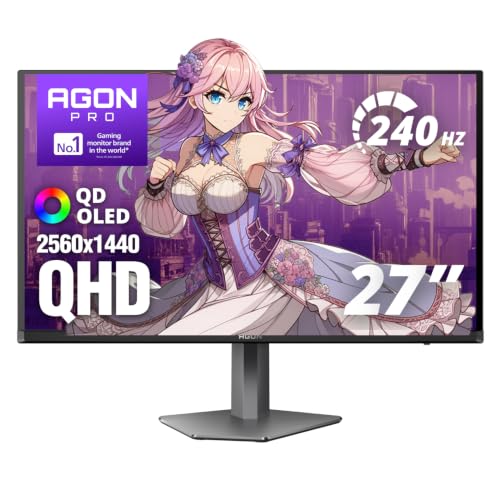
AOC Agon Pro 27 Inch Gaming Monitor QD OLED 240Hz, AG276QZD2

ASUS ROG Strix 26.5” 1440P QD-OLED Gaming Monitor (XG27ACDNG)

LG 27GS93QE 27-inch Ultragear OLED Gaming Monitor QHD 1440p 240Hz

ASUS ROG PG27AQDP 27 Inch 1440p 480Hz OLED Gaming Monitor
More Details On Our Top Picks
The glossy finish gives this ASUS a different character from the matte-coated crowd, and that matters in a room with controlled lighting. You also get a 240Hz refresh rate, a 0.03ms response time, and G-SYNC compatibility, which suits you when fast camera pans and quick aim changes are part of the routine.
The trade-off is the reflective surface, so bright windows can be distracting in daylight-heavy setups. For PS5 and Xbox desks, the 27-inch size and 1440p resolution land in a comfortable middle ground, though you still need a tidy cable plan to keep the clean look intact.
Strong Points
- Glossy OLED finish adds strong perceived contrast in darker rooms.
- 240Hz and 0.03ms suit twitchy games and high-frame PC rigs.
- Uniform Brightness helps steady the image during mixed desktop use.
- 99% DCI-P3 coverage supports wide-color content and vibrant game art.
- Custom heatsink design gives you a more composed thermal setup on paper.
Things To Consider
- The glossy surface can mirror lamps and windows.
- 240Hz is excellent, though far more than casual console play needs.
- Outdoor-light setups usually need more care with placement.
Feature Snapshot
Who It Suits Best
You fit this pick well if you game in a darker room and want saturated contrast without moving up to a much larger panel.
Where A Sibling Pick Shines
LG 27GX704A-B suits you better for a more balanced feature set and a less reflective screen finish.
This LG sits in the middle of the list for good reason, because it mixes the core gaming pieces without drifting into excess. You get 240Hz, 0.03ms response, NVIDIA G-Sync compatibility, AMD FreeSync Premium Pro, HDMI 2.1, and DisplayPort, which makes it easy to place on a PC desk that also sees console time.
HDR TrueBlack 400 helps frame the OLED story by giving you stronger contrast language than a plain SDR panel. The honest read is that it feels like a sensible all-rounder, though the black finish is more about restraint than flair, so it suits straightforward setups better than showpiece battlestations.
What We Like
- HDMI 2.1 and DisplayPort make source switching straightforward.
- 240Hz pairs well with high-frame PC play.
- FreeSync Premium Pro and G-SYNC support broaden system compatibility.
- HDR TrueBlack 400 gives you a strong contrast-oriented spec.
Softer Spots
- The feature set leans practical, not flashy.
- Black chassis styling keeps the look understated.
- For bright office rooms, you may still prefer a lighter bias toward reflection control.
Core Details
Who Should Grab It
You suit this model best if you want one monitor to cover PC gaming, console sessions, and general desktop work without a lot of fuss.
Another Choice May Suit
ASUS ROG XG27AQDMG fits you better if you want a glossy finish and stronger visual pop in a controlled-light room.
Samsung takes a simpler route here, and that can work well for a desk that values speed over a long feature list. The 180Hz refresh rate and 0.03ms GtG response time are still quick by normal gaming standards, while QD-OLED brings the color character that makes this category attractive in the first place.
Compared with the 240Hz LG and ASUS options above, this one gives up some ceiling speed in exchange for a less crowded spec sheet. That trade feels reasonable for a lot of setups, especially when you mostly want clean motion, adaptive sync support, and a monitor that stays focused on the essentials.
Highlights
- 180Hz keeps frame delivery comfortably fast.
- QD-OLED technology gives you rich contrast and vivid image depth.
- G-SYNC Compatible and FreeSync support cover common gaming systems.
- The spec list stays lean, which suits no-nonsense desks.
Areas To Watch
- It trails the 240Hz and 360Hz options in sheer speed.
- The source details leave less guidance on extra physical features.
- Owners who like more ergonomic adjustability may prefer a different pick.
At A Glance
Built With In Mind
You fit this monitor best if you want a fast gaming screen and do not need the highest refresh ceiling in the set.
Look Elsewhere When
ASUS ROG Strix XG27ACDNG makes more sense for competitive players who want 360Hz and a more aggressive spec ceiling.
The AOC stands out because it mixes gaming basics with desk-friendly extras, and that combination is easy to appreciate in a shared room or a compact setup. Height adjustment, VESA mount support, and built-in speakers give you more ways to place it, which helps when the monitor has to fit around speakers, consoles, or a low shelf.
It also keeps pace with the category at 240Hz and 0.03ms, so the practical extras do not come at the expense of speed. The catch is that built-in speakers usually stay a convenience feature rather than a full audio solution, so headphones or external speakers still make more sense for most gaming desks.
Best Bits
- Height adjustment helps with cleaner ergonomics.
- VESA mounting opens up arm and wall setups.
- Built-in speakers add a useful backup audio path.
- 240Hz and 0.03ms keep it firmly in gaming territory.
Minor Gripes
- Speaker quality on monitors rarely replaces dedicated audio gear.
- The added features make sense, but they do not shrink the 27-inch footprint.
- For a minimalist desk, some of the extras may feel unnecessary.
Details At A Glance
Whose Shelf It Belongs On
You suit this model best if you want a gaming monitor that also makes desk setup easier through stand and mount flexibility.
Swap It Out When
LG 27GS93QE is the neater fit for someone who wants a more straightforward monitor with fewer extra pieces to think about.
This ASUS is the obvious speed-first choice in the group, and the 360Hz ceiling says exactly who it serves. Competitive players who care about motion precision will notice the difference in how much temporal headroom the panel offers, while the 26.5-inch size keeps the desk footprint close to the classic 27-inch zone.
OLED Care+, the custom heatsink, DisplayWidget, AI gaming tools, and 99% DCI-P3 coverage give it more polish than a bare-bones esports screen. That said, the feature stack is aimed at people who will use it, because the value drops quickly once your play style settles into slower single-player sessions or console use.
Reasons To Buy
- 360Hz gives competitive play a very high motion ceiling.
- 0.03ms response time supports sharp pacing in fast games.
- OLED Care+ adds maintenance-minded screen support.
- DisplayWidget and AI gaming tools give you extra control.
- 99% DCI-P3 suits saturated game art and media.
Points To Note
- 360Hz makes the most sense for high-frame PC gaming.
- The extra software features matter more to enthusiasts than casual users.
- Console-first setups may not use the full speed ceiling.
Quick Facts
Perfect Match For
You suit this monitor best if your desk is built around competitive PC gaming and you care more about speed than minimalism.
Reach For A Different Pick When
LG 27GX704A-B makes more sense for a mixed-use setup where you want strong features without chasing a 360Hz ceiling.
LG keeps this one straightforward, and that simplicity helps in real homes where the monitor has to do a bit of everything. You still get 240Hz, 0.03ms, DisplayHDR True Black 400, FreeSync Premium Pro, NVIDIA G-Sync support, HDMI 2.1, DisplayPort, and a stand with tilt, height, and pivot adjustment, so the actual package is far from bare.
Compared with the AOC, this LG feels less geared toward extras like speakers or mounting flexibility and more toward a clean all-purpose desk monitor. The pivot stand is useful for vertical work or tighter layouts, though the trade-off is that you are paying attention to the stand rather than accessory-heavy features.
Positives
- Tilt, height, and pivot adjustment help with ergonomic setup.
- 240Hz and 0.03ms make it fit fast games comfortably.
- True Black 400 supports strong contrast framing.
- HDMI 2.1 and DisplayPort give you flexible source connections.
Small Caveats
- The design stays functional rather than showy.
- Pivot stands help versatility, though they take more desk planning than fixed bases.
- Owners who want built-in speakers or VESA-first flexibility may prefer the AOC.
Feature Rundown
The Right Fit
You suit this model if you want a dependable everyday gaming monitor with enough adjustability to feel right on a normal desk.
Another Choice May Suit
AOC Agon Pro AG276QZD2 is a better fit for you if built-in speakers and VESA mount support matter more than a pivot stand.
Nothing else in this group reaches the same 480Hz ceiling, so this ASUS is squarely for the person chasing maximum motion headroom. The WOLED panel, 0.03ms response time, G-SYNC compatibility, DisplayHDR 400, AI Assistant, true 10-bit support, and 99% DCI-P3 coverage give it a serious spec profile for fast PC play.
That level of speed is impressive on paper and well matched to esports-heavy habits, but it is also easy to overshoot what most setups need. For PS5 and Xbox use, the extra refresh capacity matters less than it does on a capable PC, so this is a true enthusiast step-up rather than a universal answer.
Upsides
- 480Hz places it at the far end of the speed spectrum.
- WOLED helps keep the panel rooted in OLED strengths.
- True 10-bit support broadens tone detail for compatible content.
- AI Assistant and DisplayHDR 400 add feature depth.
- 99% DCI-P3 gives you wide color coverage.
Worth Noting
- 480Hz mainly serves high-frame competitive PC gaming.
- The feature set makes the most sense at the premium end of the category.
- Console play usually won’t exploit the full refresh ceiling.
Quick Facts
Who Will Love This
You fit this monitor best if you want a premium competitive display and already know your system can keep up.
Where A Sibling Pick Shines
ASUS ROG Strix XG27ACDNG is the smarter match for you if 360Hz feels ample and you want a more restrained step down.
How To Choose The Right 1440p Oled Monitors
Refresh Rate And Response Time
Refresh rate tells you how many times per second the screen can redraw the image, and higher numbers usually feel smoother during fast movement. Response time is the speed at which pixels change state, so lower figures help reduce blur and smeared edges in sudden camera turns. For a desk full of shooters or racing games, 240Hz and above makes obvious sense, while 180Hz still covers a lot of practical use.
You should match that speed to your actual hardware, because a very high refresh panel only shines when your PC or console can feed it well. The 480Hz ASUS ROG PG27AQDP belongs with a strong competitive rig, while the Samsung Odyssey OLED G5 feels more relaxed and still plenty quick for most people. That gap matters more than most spec sheets admit.
OLED Type, Contrast, And Room Lighting
QD-OLED and WOLED are both OLED families, but they can feel different in how color and brightness present on the desk. QD-OLED panels often lean into saturated color, while WOLED models can appeal to you when you want the classic OLED contrast style with a slightly different visual character. The ASUS XG27AQDMG’s glossy surface is a good example of how finish changes the experience as much as raw resolution does.
Room lighting changes everything. Bright windows and overhead lamps can make glossy panels more distracting, while darker spaces let OLED contrast do the heavy lifting. For mixed-use rooms, a more restrained finish or careful placement often matters more than chasing another spec bump.
Stand Adjustability And Desk Fit
At 27 inches, these monitors fit a lot of desks, but the stand can decide whether the setup feels tidy or cramped. Height, tilt, and pivot support help you line up the panel with your eyes and leave room for keyboard clearance, while VESA mount support opens the door to arms and wall mounts. The AOC Agon Pro and LG 27GS93QE show how much comfort can come from practical stand design.
Desk depth still matters. A 27-inch OLED sits best when you can keep a sensible viewing distance, because that lets you see the edges without constant head movement. If your workspace is shallow, a monitor with flexible adjustment often saves more hassle than a more flashy feature list.
Ports, Console Support, And Daily Use
HDMI 2.1 and DisplayPort are the connections worth checking first, since they shape how easily you can swap between PC and console. G-SYNC Compatible and FreeSync support help smooth frame delivery on supported systems, which matters far more than decorative software names. The LG 27GX704A-B feels especially practical here because it keeps the port story simple and modern.
Daily use also includes the small things, like cleaning the panel carefully and keeping cables organized so the desk doesn’t turn messy around a premium screen. OLED monitors reward neat habits, because a clean setup tends to make their contrast and color stand out even more. That part is less glamorous than refresh rate, but it pays off every day.
Things Worth Knowing First
Mistakes Worth Dodging
A lot of shoppers fixate on refresh rate and ignore finish, stand range, and connection layout. That usually leads to a monitor that looks strong on paper but feels awkward on the desk, especially in a room with bright lighting.
Another common miss is buying more speed than your system can actually feed. A 480Hz panel makes sense for a high-end competitive rig, but it can be wasted on slower hardware or casual console play.
What The Higher Tier Buys
Higher-tier models in this category usually pay for faster refresh ceilings, more refined panel tuning, and extra feature layers like OLED care tools or richer control software. You also see better stand flexibility, broader port selection, and wider color coverage once you move up the stack.
The upgrade is worth it for you when your use is intense and specific, especially competitive PC gaming or a dual-purpose desk that doubles as a media station. A simpler panel still covers a lot of ground, though, and that is the honest place to stop for many setups.
Frequently Asked Questions
What makes 1440p a strong match for OLED gaming monitors?
1440p gives you a sharp image without demanding as much from your graphics hardware as 4K. That balance works well at 27 inches, where OLED contrast and motion clarity can stand out without needing a huge chassis.
Do 240Hz and 360Hz matter for everyday use?
They matter most in fast gaming, where smoother motion is easy to notice. For general desktop work, the benefit is smaller, though scrolling and window movement can still feel cleaner.
Is QD-OLED different from WOLED in practice?
QD-OLED often leans toward vivid color, while WOLED keeps a different OLED image character. The right choice depends on your room lighting, your taste, and how much you care about the panel’s visual personality.
Are HDMI 2.1 and DisplayPort both worth having?
Yes, because they make switching between PCs and consoles much easier. You also avoid a lot of input juggling when the monitor sits in a mixed-use setup.
What should you check before placing one on your desk?
Check stand height, tilt, and whether the monitor supports VESA mounting. A 27-inch OLED feels far better when the screen height and viewing distance match your chair and desk depth.
Closing Thoughts
For you, the best 1440p OLED monitor comes down to how hard you game and how tidy you want the desk to feel. ASUS and LG cover the broad middle well, Samsung keeps things lean, and the 480Hz ASUS ROG PG27AQDP is the step up for serious competitive play. AOC is the practical desk helper, while the ASUS XG27AQDMG stands out in brighter image style. Match the panel to your room and hardware, and the choice gets much easier.
