
Fast 240Hz panels used to mean giving up on detail, but that trade-off has narrowed. You’re looking at a very specific class of screens here: sharp enough for desktop work, quick enough for competitive play, and varied enough to suit everything from a compact desk to a living-room console setup. The six picks below focus on the parts that matter most, panel quality, stand flexibility, connection options, and whether the design makes sense in real daily use. That mix matters more than the marketing label.
Quick Look At Our Shortlist
ZZA 34 Curved Computer Monitor 240Hz Ultrawide Gaming Monitor 1500R

Acer Nitro 27in QHD IPS 240Hz Gaming XV272U W2bmiiprx

LG 27GR83Q-B 27-inch Ultragear QHD IPS Gaming Monitor 240Hz

INNOCN 24.5″ 1440P 240Hz Gaming Monitor 25G2S

AOC 27″ Gaming Monitor QHD 260Hz Overclocked IPS Q27G41ZE
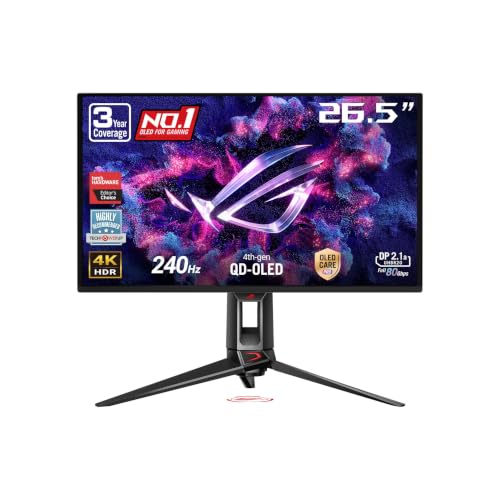
ASUS ROG PG27UCDM 27 Inch 4K 240Hz OLED Gaming Monitor
More Details On Our Top Picks
A 34-inch curved ultrawide changes the feel of a desk fast, especially for racing, open-world games, or a workday split between multiple windows. The 1500R curve wraps more gently than a tight esports panel, so you get a wide field without the screen feeling flat and distant.
The spec mix leans hard into motion and color, with 240Hz refresh, 1ms MPRT, HDR400, and 95% DCI-P3 coverage. The trade-off is obvious though, because an ultrawide setup asks for more desk space and a system that can push that many pixels comfortably.
Strong Points
- 34-inch ultrawide shape gives you room for side-by-side windows and a broader game view.
- 240Hz refresh suits fast motion, so scrolling and camera movement feel cleaner in high-speed games.
- 95% DCI-P3 points to strong color range for games, creative work, and streamed video.
- VESA 100 x 100 support helps with arm mounting in compact or dual-screen setups.
- FreeSync Premium and G-Sync compatibility make it easier to match the panel to different graphics cards.
Points To Note
- The ultrawide format needs a wider desk than a standard 27-inch display.
- HDR400 is a baseline HDR tier, so you should expect a modest step up rather than dramatic contrast.
- That 34-inch panel rewards strong GPU output, especially in fast-paced titles.
Core Details
Who It Suits Best
Competitive gamers and multitaskers with a wide desk will get the most out of this layout.
A Better Fit Elsewhere
LG 27GR83Q-B 27-inch Ultragear QHD IPS Gaming Monitor 240Hz suits you better if you want a flatter, simpler 27-inch setup for a tighter desk.
This Acer sits in the middle of the pack in a useful way, because it keeps the familiar 27-inch QHD formula and adds a fast IPS panel with 240Hz refresh. That size makes it easy to live with on a normal desk, and the included Ergo Stand matters more than most spec sheets admit.
It also brings speaker support, two HDMI ports, DisplayPort, and VESA mounting, so the setup path stays flexible for a gaming PC or a second machine. The honest read is that it’s less flashy than the ultrawide ZZA, yet it looks like the simpler choice for someone who wants a monitor to fit into everyday life without drama.
What We Like
- 27-inch QHD resolution keeps text and game detail sharp without overwhelming the desk.
- Ergo Stand gives you adjustment room for height and viewing comfort.
- Two HDMI ports plus DisplayPort make console and PC switching more practical.
- VESA mounting adds another placement option for small workstations.
Areas To Watch
- Built-in speakers are handy, but most setups will still benefit from separate audio gear.
- The 27-inch format offers less screen width than the ZZA ultrawide above.
- QHD is the right match here, so you are not getting 4K sharpness.
Feature Snapshot
Made For
Gamers who want a straightforward 27-inch display with strong ergonomics and flexible inputs fit this Acer well.
Another Choice May Suit
INNOCN 24.5″ 1440P 240Hz Gaming Monitor 25G2S is a smarter call for compact desks or console-first setups.
LG’s 27GR83Q-B keeps the 27-inch QHD format, but it shifts the emphasis toward polished gaming support. HDMI 2.1, DisplayHDR 400, G-Sync compatibility, and FreeSync Premium together make it a tidy fit for mixed-console and PC households.
Compared with the Acer Nitro above, this one feels more focused on gaming inputs and responsiveness than on extra convenience features. You also get a stand with tilt, height, and pivot adjustment, which helps in a home office that doubles as a play space, though the lack of built-in speakers may matter to some setups.
Highlights
- HDMI 2.1 gives modern console users a cleaner connection path.
- Tilt, height, and pivot adjustment support more exact positioning at the desk.
- 1ms response time target helps reduce blur in fast action scenes.
- DisplayHDR 400 and IPS combine for a bright, crisp presentation in everyday use.
Minor Gripes
- Built-in speakers are absent, so external audio becomes part of the setup.
- Like the Acer, this is still QHD rather than 4K.
- The more gaming-first focus gives up some of the all-around convenience found on the Nitro.
Details At A Glance
Whose Shelf It Belongs On
PC and console players who want a refined 27-inch gaming monitor with strong stand adjustment will get a lot from this one.
Swap It Out When
AOC 27″ Gaming Monitor QHD 260Hz Overclocked IPS Q27G41ZE makes more sense for shoppers chasing extra refresh headroom over the LG’s broader feature mix.
The smaller 24.5-inch footprint makes this INNOCN easier to place than the 27-inch screens above, and that matters on crowded desks or console setups. Fast IPS, HDMI 2.1, and DisplayPort keep it from feeling like a cut-down model, which is the main reason it belongs in this group.
Support for both FreeSync and G-SYNC compatibility broadens its fit across hardware, while the claimed 0.5ms response target leans into competitive gaming. The trade-off is simple: you give up some screen real estate, but the monitor rewards you with a cleaner fit in small spaces and a more direct view distance.
Reasons To Buy
- 24.5-inch size takes less desk depth than the 27-inch and ultrawide options.
- HDMI 2.1 and DisplayPort give you modern connectivity in a compact frame.
- FreeSync and G-SYNC compatibility reduce friction across different graphics setups.
- Speaker support helps keep the desk simpler for casual use.
Softer Spots
- The compact format offers less room for side-by-side work than the larger picks.
- You may find the 24.5-inch panel a touch small for long desktop sessions.
- As with many gaming monitors, cable management still depends on your stand layout.
Quick Facts
The Right Fit
Small-room gamers and console users who want a compact high-refresh display should find this INNOCN easy to place.
Where A Sibling Pick Shines
ZZA 34 Curved Computer Monitor 240Hz Ultrawide Gaming Monitor 1500R suits you better if you need broad screen space for work and gaming together.
The AOC leans into speed harder than the other 27-inch QHD options here, because its native 240Hz panel can be overclocked to 260Hz. That gap is small on paper, but competitive players who notice incremental motion changes tend to care about every extra frame window.
Its 0.3ms response claim, HDR support, DP 1.4, HDMI 2.0, audio out, and G-SYNC compatibility make it a strong fit for a stripped-down performance desk. The trade-off is that it sounds more specialized than the Acer Nitro or LG, so you’re giving up some everyday flexibility for extra pace.
Best Bits
- Native 240Hz with 260Hz overclocking gives you a little extra speed headroom.
- 0.3ms response target suits twitch-heavy gaming.
- Audio out helps route sound to external gear more neatly.
- 3-year zero bright dot coverage stands out as a practical quality promise from the listing.
Room For Improvement
- HDMI 2.0 is less future-facing than the HDMI 2.1 found on the LG and INNOCN.
- The feature set stays focused on speed, so it feels less versatile than the Acer Nitro.
- Overclock mode is useful, but many setups will still run the panel at native 240Hz.
Core Details
Who Should Grab It
Esports-minded PC gamers who want the fastest-feeling QHD option in this list are the clearest fit.
Look Elsewhere When
LG 27GR83Q-B 27-inch Ultragear QHD IPS Gaming Monitor 240Hz is the better route for a broader mix of console and desk use.
This ASUS is the closest thing here to a flagship mixed-use screen, because it combines 4K resolution with 240Hz and QD-OLED panel tech. QD-OLED means quantum-dot organic light-emitting diode, a display type known for deep contrast and very fast pixel response, which matters when you want both crisp text and high-speed motion on the same desk.
Compared with the QHD models above, it aims higher on clarity and panel behavior, and the DisplayPort 2.1 support makes sense for a premium build. The catch is that premium displays often ask more from the rest of your setup, and the maintenance features here, like OLED Care Pro and the proximity sensor, show that the panel is built with long-term ownership in mind.
Plus Points
- 4K resolution brings a much denser image than the QHD options in this roundup.
- 240Hz on an OLED panel is a strong combination for motion and detail.
- Custom heatsink and OLED Care Pro suggest a more deliberate design around panel management.
- Neo proximity sensing adds a smart usability touch for desk-based ownership.
- True 10-bit color support is useful for demanding visual work and richer gradients.
Small Caveats
- The premium feature set makes this the most demanding choice in the group.
- OLED panels reward regular care, so it suits deliberate ownership more than casual setup-and-forget use.
- DisplayPort 2.1 is forward-looking, but it also signals a more complex high-end ecosystem.
Technical Sheet
Who Will Love This
High-end gamers and mixed-use desktop owners who want 4K clarity without giving up speed will get the most from this ASUS.
Not Your Match When
INNOCN 24.5″ 1440P 240Hz Gaming Monitor 25G2S is the simpler pick for smaller desks and a leaner setup.
How To Choose The Right 240hz 4k Monitors
Start With Resolution And Desk Distance
4K at 27 inches brings a much denser image than QHD, so text, HUD elements, and detailed game assets look cleaner at normal desk distance. That clarity matters most for you if the monitor doubles as a work screen, because sharper fonts reduce the slightly fuzzy look that can show up on lower-resolution panels.
QHD still makes sense for players who value easier GPU demands and faster frame delivery. The choice comes down to whether you want maximum image density or a friendlier load on your graphics card.
Match The Panel To Your Use Pattern
OLED and QD-OLED bring richer contrast and faster pixel response, while IPS tends to stay more forgiving for mixed use. The trade-off is straightforward, OLED looks stunning and responsive, but IPS often feels easier for long desk sessions and less involved care.
For daily gaming plus work, a strong IPS model like the LG or Acer can feel like the sensible middle path. For a showcase setup, the ASUS sits in a different tier because its panel tech asks for more and gives more back.
Check Refresh, Response, And Input Support
240Hz is the sweet spot in this list, but the details around it matter just as much. Response time, especially the 0.3ms and 0.5ms claims on some models, gives you a clue about how aggressively each screen is tuned for fast motion.
HDMI 2.1 becomes more important for modern consoles and future-facing connections, while DisplayPort remains the safer choice for many PCs. That’s where you sort a true all-rounder from a monitor that is really built for a single gaming lane.
Pick Size For The Desk, Not Just The Spec Sheet
A 34-inch ultrawide changes the room layout in a way a 27-inch panel never will. It gives you more horizontal space, but it also demands a deeper, wider desk and a more intentional cable setup.
Smaller 24.5-inch screens can feel cleaner in apartments, dorm desks, or console corners. The right size is the one that fits your furniture first, then your graphics goals.
Things Worth Knowing First
Hidden Buying Traps
Shoppers often chase refresh rate alone and ignore panel size or resolution balance. A 240Hz monitor only feels right when your GPU and desk layout can keep up with it.
Another common miss is ignoring ports, especially for console use or multi-device desks. HDMI 2.1, DisplayPort, and VESA support can matter more over a year of ownership than a small spec bump.
The Upgrade Payoff
Higher-tier models cost more because they stack harder panel tech, better color handling, more advanced stands, and premium connection options. OLED, 4K, and DisplayPort 2.1 all push the build farther than a basic 27-inch IPS screen.
The upgrade makes sense for mixed work and play, or for a desk where visual polish matters every day. For a straightforward gaming station, a strong QHD IPS monitor can still feel like the smart spend.
Frequently Asked Questions
Is 240Hz worth it for 4K gaming?
It makes the most sense for players who want very smooth motion and own strong hardware. On lighter systems, the refresh headroom may go unused.
Do you need HDMI 2.1 for these monitors?
No, but HDMI 2.1 helps with newer consoles and more flexible high-bandwidth connections. DisplayPort still remains the main path for many PC setups.
Is QHD still a good choice in this category?
Yes, especially if you want faster frame delivery and less pressure on your graphics card. QHD can be the more practical fit for many desks.
What size works best for a 240Hz 4K monitor?
27 inches is the safest all-around starting point for most desks. Ultrawide works better only when your space is broad enough to support it.
Are OLED models hard to live with?
They need more thoughtful care than IPS screens, especially for long daily use. In return, they offer the richest contrast and very fast pixel behavior.
Final Thoughts
The right 240Hz monitor depends less on the headline number and more on how you use your desk. The Acer and LG make sense for balanced gaming, the AOC leans harder into speed, the INNOCN fits smaller spaces, the ZZA stretches out for ultrawide work and play, and the ASUS brings the clearest premium leap. Choose the one that matches your room, your graphics setup, and how much panel polish you actually want to live with every day.
