
You want fast motion, strong contrast, and a screen that still looks clean in everyday use. That matters for competitive play, but it also helps in long work sessions, single-player nights, and couch gaming where image quality stays in front of you. The seven picks below cover glossy OLED, QD-OLED, IPS, and larger ultrawide setups, so you can match the panel to your desk, your console, and your habits. Some lean premium, some stay practical, and one or two make more sense if you’d rather keep things simple.
The Shortlist At A Glance

ASUS ROG XG27AQDMG 27 Inch 1440p 240Hz Glossy OLED Gaming Monitor

KTC 27 Inch 240Hz Gaming Monitor H27F7

LG 27GX704A-B Ultragear QHD OLED Gaming Monitor
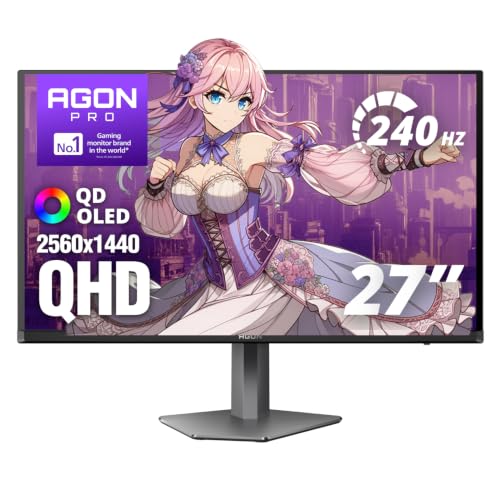
AOC Agon Pro 27 Inch Gaming Monitor AG276QZD2

LG 27GS93QE Ultragear OLED Gaming Monitor

Alienware 34 AW3425DW Curved Gaming Monitor

Dell 27 240Hz Gaming Monitor SE2726HG
More Details On Our Top Picks
Glossy OLED gives this ASUS a crisp, high-contrast look that suits dark rooms and fast games. The 27-inch 1440p layout keeps text manageable on a normal desk, while the 240Hz refresh rate and 0.03ms response time point to very quick motion handling. The custom heatsink and uniform brightness feature add practical value for long sessions, though the glossy finish can reflect room lights.
You benefit most here if you want a compact premium panel for PC or console use, especially with PS5 or Xbox in the mix. G-SYNC compatibility and 99% DCI-P3 coverage make it more flexible than the simpler IPS models below, but the trade-off is that the shiny surface asks for cleaner ambient lighting. In a busy gaming corner, it feels like a polished tool rather than a flashy ornament.
Strong Points
- Glossy OLED contrast gives games and films deep blacks with strong separation.
- 1440p on 27 inches keeps sharp detail without demanding extreme GPU overhead.
- 240Hz and 0.03ms response suit fast shooters and high-motion action.
- Custom heatsink and anti-flicker features support longer sessions more comfortably.
- Wide color coverage helps creative work and vivid media playback.
Things To Consider
- The glossy front can pick up window glare in bright rooms.
- OLED panels reward sensible desktop habits, including basic care with static UI elements.
- At this tier, you pay for image quality rather than extra desk extras.
Core Details
Who It Suits Best
PC and console gamers who want a compact OLED with premium motion handling will get the most from it.
Where A Sibling Pick Shines
LG 27GS93QE Ultragear OLED Gaming Monitor fits you better if you want similar size and speed with a more understated surface.
The KTC takes a more practical route than the OLED models above, starting with 1080p and a Fast IPS panel. That keeps it approachable for everyday gaming rigs, especially when you want 240Hz without stepping into a more expensive display category. The 1ms MPRT spec targets motion clarity, though the lower resolution is the trade-off you notice first on a 27-inch screen.
Its stand adjusts for tilt, pivot, and height, and VESA support gives you an easier path to mounting. The vertical orientation support is handy for desktop work or side-by-side chat windows, which makes it more flexible than the more gaming-focused ASUS. For a first high-refresh monitor, that balance is hard to ignore.
What We Like
- 240Hz refresh brings smooth movement without forcing an OLED budget.
- Fast IPS panel keeps colors and viewing angles more stable than bargain TN-style panels.
- Tilt, pivot, and height adjustment help you line up the screen properly.
- VESA support makes wall or arm mounting straightforward.
Room For Improvement
- 1080p on 27 inches looks less dense than the 1440p picks here.
- It gives up the deep contrast and pixel-level glow of OLED.
- The design is practical rather than premium, which is fair at this level.
Feature Snapshot
Built With In Mind
Gamers setting up a first high-refresh desk on a tighter budget will find the KTC easy to place and easy to live with.
Where A Sibling Pick Shines
Dell 27 240Hz Gaming Monitor SE2726HG fits you better if you want a simpler name-brand IPS option with a similarly straightforward layout.
This LG leans into the classic sweet spot for 240Hz OLED: 27 inches and 1440p. The result is a sharp desktop image with the speed profile you want for shooters, MOBAs, and fast action games. HDMI 2.1 gives console owners a useful connection path, while G-Sync compatibility and FreeSync Premium Pro help it fit a wide range of gaming PCs.
Compared with the ASUS, this one feels more about broad compatibility than glossy presentation, and that distinction matters on bright desks. The 99% DCI-P3-grade color coverage is a strong sign for vivid media and creative side work, though OLED still asks for thoughtful screen habits over time. For many gaming setups, this is the clean middle ground.
Highlights
- 1440p at 27 inches hits a strong balance of sharpness and load.
- 240Hz and 0.03ms suit fast competitive play.
- HDMI 2.1 broadens console and PC connection options.
- Both major sync systems are supported, which helps with mixed hardware.
- Wide color coverage supports vivid films and content work.
Softer Spots
- OLED care habits still matter, especially with static desktop elements.
- It gives you less of the built-in accessory set found on the AOC.
- The panel focus is speed and image quality, not desk extras.
At A Glance
Perfect Match For
PC gamers who want a sharp 27-inch OLED with broad sync support and console-friendly inputs will get the best fit here.
Swap It Out When
ASUS ROG XG27AQDMG makes more sense for you if glossy finish and a custom heatsink matter more than connection breadth.
The AOC Agon Pro takes the same 27-inch, 1440p, 240Hz formula and adds a few desk-friendly extras. Built-in speakers and height adjustment make it easier to set up in a spare room or smaller gaming nook, and the QD-OLED panel should appeal to anyone who wants strong color output. It feels more like a fully equipped station piece than the leaner LG above.
That convenience comes with a familiar trade-off, though, because built-in speakers rarely replace dedicated audio. Still, the VESA mount support keeps your options open, and HDR TrueBlack 400 gives it a more serious spec sheet than the budget IPS alternatives. For mixed gaming and general desk use, it lands in a sensible middle lane.
Best Bits
- QD-OLED brings the contrast and color character many players want.
- Height adjustment helps you set an easier viewing position.
- Built-in speakers add basic sound without extra gear.
- 1440p and 240Hz remain a strong match for current gaming PCs.
Minor Gripes
- Speakers are handy, but most setups will still want separate audio.
- Like other OLED options, it rewards careful desk habits.
- It sits in a more premium tier than the KTC or Dell models.
Quick Facts
Whose Shelf It Belongs On
Gamers who want OLED image quality plus a few built-in conveniences will appreciate how complete this setup feels.
Look Elsewhere When
LG 27GX704A-B Ultragear QHD OLED Gaming Monitor suits you better if you want a slightly leaner panel with broader connectivity emphasis.
This LG keeps the 27-inch, 1440p, 240Hz formula but packages it as a balanced all-rounder. DisplayHDR True Black 400 is useful shorthand here, because it points to the deeper OLED-style contrast that helps dark scenes stay readable without washing out highlights. The tilt, height, and pivot stand also makes it friendlier for mixed desk work than a fixed, gaming-only layout.
Compared with the AOC, you give up built-in speakers, yet you gain a cleaner focus on the panel itself. HDMI 2.1 and DisplayPort make it easy to slot into a PC and console setup, and FreeSync Premium Pro plus G-SYNC support keep compatibility wide. In a multi-use room, that combination feels steady and sensible.
Positives
- Strong contrast helps both games and streamed video look more defined.
- Stand adjustment across tilt, height, and pivot supports ergonomic setup.
- HDMI 2.1 and DisplayPort cover current gaming connections well.
- Both major sync systems improve flexibility with different hardware.
Areas To Watch
- It skips the built-in speaker convenience found on the AOC.
- OLED care habits still matter in static-heavy desktop use.
- The feature set is sensible, not flashy, which suits many desks.
Details At A Glance
The Right Fit
Gamers who split time between play, video, and regular desktop use will find this LG easy to live with.
Another Choice May Suit
AOC Agon Pro 27 Inch Gaming Monitor AG276QZD2 suits you better if built-in speakers matter and you want a little more convenience at the desk.
The Alienware moves away from the 27-inch format and goes ultrawide, which changes the whole feel of the desk. At 34.2 inches with a 1800R curve, it wraps more of the image around you, which helps in racing games, immersive RPGs, and split-window work. For a long gaming session, that wider canvas can feel almost cinematic, though it obviously takes more room than the compact picks above.
Its QD-OLED panel, 240Hz refresh, and 0.03ms response point to a serious motion-focused display. FreeSync Premium Pro, VESA AdaptiveSync, and DisplayHDR TrueBlack 400 round out a spec sheet that suits a high-end PC setup, while the 3440 x 1440 resolution gives you extra horizontal space for timelines, chat, or creative tools. The trade-off is desk size and price tier, both of which are part of the ultrawide story.
Reasons To Buy
- Ultrawide format gives games and multitasking more horizontal room.
- 1800R curvature helps the screen fill your field of view more naturally.
- QD-OLED contrast supports rich dark scenes and clean highlights.
- 3440 x 1440 resolution works well for a premium desktop setup.
Small Caveats
- It needs more desk width than the 27-inch options.
- Ultrawide support can vary by game and app layout.
- The premium form factor makes it a more committed setup choice.
Spec Overview
Built For In Mind
Sim racers, immersion-focused gamers, and multitaskers with enough desk depth will get the most from this ultrawide.
Reach For A Different Pick When
LG 27GX704A-B Ultragear QHD OLED Gaming Monitor makes more sense if you want a smaller screen that’s easier to place.
The Dell is the plain-spoken choice in this group, and that can be a strength. Its 27-inch IPS panel, 1080p resolution, and 240Hz refresh rate keep the pitch simple for someone who wants high-speed gaming without stepping into OLED territory. Two HDMI ports and DisplayPort 1.4 also make it easy to hook into a basic desk setup or a console corner.
Compared with the KTC, this Dell leans on a mainstream brand path and adds TÜV 3-Star eye comfort labeling, which may matter for long office-and-play days. The tilt-only stand is the main compromise, since it offers less adjustment than the KTC or LG monitors above. For an uncluttered first high-refresh monitor, though, it stays easy to understand.
Bright Spots
- Simple 240Hz IPS setup keeps the focus on speed and ease.
- Two HDMI ports and DisplayPort 1.4 cover common connections.
- 27 inches suits small to medium desks well.
- TÜV 3-Star labeling may matter for longer desk sessions.
Points To Note
- 1080p is the least detailed resolution in this lineup.
- The tilt-only stand gives you less fit adjustment.
- It lacks the contrast depth of the OLED and QD-OLED picks.
Feature Rundown
Whose Shelf It Belongs On
Desk gamers who want a straightforward 240Hz screen without OLED complexity will find the Dell easy to settle into.
Skip It When
KTC 27 Inch 240Hz Gaming Monitor H27F7 is the better call if you want more stand adjustment and a lower-commitment budget route.
How To Choose The Right 240hz Oled Monitors
Panel Type Sets The Tone
OLED and QD-OLED give you the deepest contrast in this group, so dark scenes stay cleaner and highlights stand out. IPS is easier on the budget and often simpler to live with, but it cannot match the same black level or punchy image depth.
Resolution Should Match Your Setup
1440p on 27 inches is the sweet spot for most gaming desks, since it looks sharper than 1080p without becoming a heavy GPU burden. Ultrawide 3440 x 1440 changes the formula, giving you more side space for racing, multitasking, or creative work.
Refresh Rate Is Only Part Of Motion
240Hz matters, but response time and panel behavior matter too. A 0.03ms OLED can feel more responsive in fast motion than a slower IPS panel, even when both carry the same refresh label.
Desk Space And Adjustment Matter More Than People Think
A fixed stand can turn a great panel into a poor fit, especially on a shallow desk or in a shared room. Height, tilt, pivot, VESA support, and curve all shape daily comfort, so the right monitor depends as much on placement as on panel tech.
What To Weigh Before You Click
Common Shopping Slip Ups
A lot of people focus on refresh rate and ignore resolution, which can leave a 27-inch 1080p panel looking softer than expected. Another frequent miss is standing-room: a glossy OLED in a bright room can be harder to live with than an IPS monitor with a matte finish.
Where The Extra Money Goes
Higher-tier OLED models usually pay for panel quality, wider color, better motion handling, and stronger stand hardware. Ultrawide designs also add cost because you get more screen area and a more specialized shape, which suits certain games and desks better.
Frequently Asked Questions
Is 240Hz Overkill For Casual Gaming?
Not really, because it still makes fast motion feel smoother and more controlled. The bigger question is whether you want OLED contrast or a simpler IPS panel to match your room and budget.
Does OLED Need More Care Than IPS?
OLED does benefit from sensible use habits, especially with static desktop elements. That said, the image quality trade-off can be worth it for you if gaming is the main job.
Is 1440p Better Than 1080p At 27 Inches?
Yes, most people will notice cleaner text and sharper detail at 1440p. 1080p remains easier to run, but it looks less refined on a 27-inch screen.
Are Ultrawide Monitors Good For Competitive Play?
They can be, but compatibility varies from game to game. They shine more in racing, adventure games, and multitasking than in every esports setup.
Which Pick Makes Sense For A Mixed Desk?
LG 27GS93QE Ultragear OLED Gaming Monitor is the most balanced route for many mixed-use desks. It keeps the 27-inch 1440p format, strong motion specs, and broad input support without going oversized.
Final Thoughts
You’ve got seven very different ways to approach 240Hz, and the right one depends on how your desk actually works. For the cleanest image, the ASUS and LG OLED models stand out. For a simpler setup, the Dell and KTC keep things straightforward. The Alienware is the largest commitment, while the AOC and LG 27GS93QE sit neatly in the middle. Choose the panel that matches your room and your habits, and the rest gets much easier.
