
Shopping for a 2k QD OLED monitor usually means you want deep contrast, crisp 1440p detail, and motion that keeps up with fast games without looking smeared. The field below focuses on 27-inch class models that suit desk setups, console rigs, and PC battlestations with different priorities, from refresh rate to stand flexibility. You’ll also see where each pick gives up a little, because no panel does everything equally well.
Quick Shortlist For Fast 1440p OLED Displays
Samsung Odyssey OLED G5 (G50SF) 27-Inch QHD QD-OLED

Alienware AW2725DF OLED Gaming Monitor 26.7-Inch
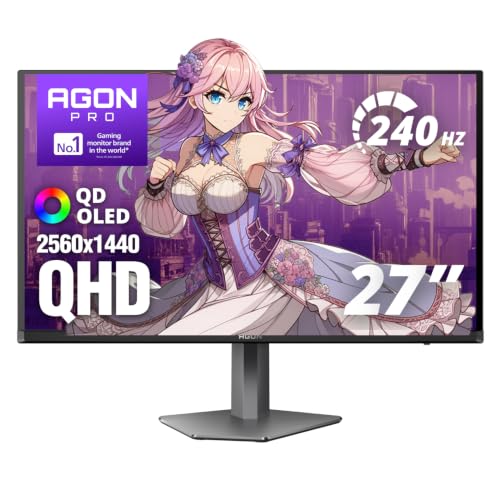
AOC Agon Pro AG276QZD2 27-Inch QD OLED

ASUS ROG Strix XG27ACDNG 26.5-Inch QD-OLED

msi MAG 271QPX QD-OLED 27-Inch Gaming Monitor

msi MAG 271QPX QD-OLED E2 27-Inch 2K Monitor

AOC Q27GAZD 27-Inch QHD QD OLED Monitor
More Details On Our Top Picks
Samsung’s 27-inch G50SF sits in the useful middle ground for anyone who wants QD-OLED contrast without jumping straight to the most aggressive esports spec sheet. The 180Hz ceiling keeps it quick enough for fast action, while 0.03ms gray-to-gray response time matters most when motion blur gets distracting during rapid camera turns.
The trade-off is simple, it leans more balanced than extreme, so pure competitive players may want more headroom elsewhere. For a daily desk that handles work, single-player sessions, and the occasional ranked night, that calmer tuning is easy to live with.
What We Like
- QD-OLED panel contrast gives dark scenes strong separation, which helps in dim rooms.
- 180Hz suits fast play without pushing your PC as hard as the highest-refresh options here.
- 0.03ms response time supports sharp motion during flicks, strafes, and quick menu transitions.
- G-Sync compatibility and FreeSync support make it easier to pair with a range of graphics setups.
Things To Consider
- It does not chase the 240Hz or 360Hz ceiling that several rivals offer.
- Owners who prefer tall ergonomic travel may want to confirm the stand adjustment range before buying.
Feature Snapshot
Who It Suits Best
PC gamers who want a balanced QD-OLED panel for mixed use will get the most out of this one.
A Better Fit Elsewhere
Alienware AW2725DF OLED Gaming Monitor 26.7-Inch suits you better if you want higher refresh headroom for faster competitive play.
Alienware takes the speed-first route here, and the 360Hz refresh rate is the headline feature for anyone chasing the cleanest possible motion on a 1440p panel. The 26.7-inch size keeps the pixel density tight enough for desktop work, while the height, tilt, swivel, and pivot adjustments help the screen fit a more precise seated position.
That flexibility matters in a room where the monitor doubles as both a game display and an everyday work screen. The honest read is that this model asks for a stronger graphics setup to make the most of its ceiling, so casual use won’t show its full value.
Upsides
- 360Hz gives you generous motion headroom for fast shooters and aim trainers.
- Height, tilt, swivel, and pivot movement make fine positioning easier on a small or busy desk.
- AMD FreeSync Premium Pro support adds another layer of smoothness for compatible systems.
- HDMI, DisplayPort, and USB 3.2 Gen 1 support make it easier to connect several devices.
Room For Improvement
- The highest refresh rate on this list can feel like overkill outside competitive play.
- More moving parts in the stand mean more setup time than simpler fixed designs.
- The 26.7-inch panel is compact, but you may prefer a larger frame for mixed entertainment use.
Core Details
Who Will Love This
Competitive PC gamers who care about motion clarity and stand flexibility are the natural match here.
Where A Sibling Pick Shines
Samsung Odyssey OLED G5 (G50SF) 27-Inch QHD QD-OLED fits you better if you want a calmer refresh rate and a more balanced daily setup.
This AOC lands as the most all-around package in the group, because it combines 240Hz speed with height adjustment, built-in speakers, and VESA mounting. For a desk that has to do a little bit of everything, that mix reduces the need for add-ons right away.
The HDR TrueBlack 400 rating also gives you a more structured way to think about contrast handling, though picture tuning still matters in any OLED setup. Compared with the Alienware, it gives up some refresh ceiling, but many setups will never feel that gap in daily use.
Highlights
- 240Hz offers quick motion without the more demanding jump to 360Hz.
- Height adjustment makes it easier to line the screen up with your seating position.
- Built-in speakers help in a pinch when you don’t want extra desktop hardware.
- VESA support gives you cleaner mounting options for a wall or arm setup.
Small Caveats
- Built-in speakers are handy, but most desks still benefit from separate audio gear.
- 240Hz is fast, though some rival picks here stretch higher for esports-first use.
- OLED care habits still matter, so static desktop layouts deserve some rotation over time.
Details At A Glance
Made For
You’ll appreciate this most in a mixed-use setup where gaming and desk cleanup both matter.
Another Choice May Suit
msi MAG 271QPX QD-OLED fits you better if you want a similarly fast panel with more emphasis on high-end desk performance.
ASUS leans hard into panel care with a custom heatsink and OLED Care+, which makes this pick stand out for long gaming sessions and heavy desktop use. The 360Hz refresh rate keeps it in the fast lane with Alienware, but the rest of the feature list shows more attention to image maintenance and console pairing.
That makes sense for PS5 and Xbox setups, especially where HDMI 2.1 matters alongside G-SYNC compatibility and 99% DCI-P3 color coverage. The trade-off is a denser feature set that can feel a bit more involved than the simpler Samsung or MSI options.
Reasons To Buy
- Custom heatsink support adds confidence for long screen-on sessions.
- OLED Care+ helps reduce the burden of keeping the panel in shape over time.
- 360Hz keeps motion handling in the same high-speed tier as the Alienware.
- HDMI 2.1 and console support make it a stronger fit for living-room style gaming setups.
Points To Note
- Feature depth brings more menuing and setup work than basic models.
- The advanced package is strongest when you’ll actually use the console and color features.
- For a simple PC-only desk, the AOC AG276QZD2 may feel easier to live with.
Technical Sheet
Best Suited To
Enthusiast gamers who want panel-care tools and console support in one screen will get the most from it.
Swap It Out When
msi MAG 271QPX QD-OLED E2 27-Inch 2K Monitor fits you better if you want a simpler 240Hz setup with less feature overhead.
This MSI model makes a clean case for itself by pairing 360Hz with USB Type C, HDMI, DisplayPort, and both tilt and height adjustment. In most gaming rooms, that means fewer compromises between a fast panel, flexible hookups, and a stand that can be set to a more natural eye line.
Compared with the ASUS Strix, it skips the thermal branding and broader feature list, so the setup feels more straightforward. That’s not a weakness for everyone, and for desk-first gamers who want speed without too much menu wrangling, it lands well.
Best Bits
- 360Hz is a strong fit for fast-response PC gaming.
- USB Type C adds a convenient modern connection path.
- Tilt and height adjustment help you tune the viewing angle quickly.
- True Black HDR 400 gives the display a more structured HDR reference point.
Worth Noting
- It is tuned more for speed than for feature breadth.
- USB Type C is useful, though some desks still need dedicated hub gear.
- For a simpler 240Hz alternative, the MSI MAG 271QPX QD-OLED E2 is easier to justify.
Feature Rundown
The Right Fit
Desk-focused gamers who want a high-speed OLED panel with modern connectivity will get the most from this model.
Look Elsewhere When
AOC Agon Pro AG276QZD2 27-Inch QD OLED suits you better if built-in speakers and VESA mounting matter more.
The E2 version is the more measured MSI option, and that lower 240Hz ceiling makes it easier to match with a wider range of gaming PCs. It still keeps the QD-OLED panel, True Black HDR 400, and the same 0.03ms response time, so the core picture and motion story stays strong.
That balance is useful for someone who wants a 2K OLED desk monitor without chasing the most demanding refresh tier. The honest trade-off is that it leaves performance headroom on the table compared with the 360Hz models above it.
Positives
- 240Hz is plenty fast for most action games and general PC use.
- The QHD resolution keeps text and interface detail sharp on a 27-inch panel.
- Tilt and height adjustment make daily positioning simple.
- True Black HDR 400 gives you a solid reference point for HDR-capable content.
Areas To Watch
- Speed-focused shoppers may still prefer the 360Hz Alienware or MSI sibling.
- Like other OLED screens, a static desktop can call for mindful use habits.
- The cleaner feature set is good for simplicity, but not especially flashy.
Quick Facts
Whose Shelf It Belongs On
Budget-minded gamers who still want OLED contrast and a quick panel should look here first.
Where A Sibling Pick Shines
Alienware AW2725DF OLED Gaming Monitor 26.7-Inch is the stronger fit for you if 360Hz is the main reason you’re shopping.
AOC closes the list with a screen that feels aimed at mixed setups, thanks to QHD resolution, 240Hz, G-SYNC compatibility, and console-ready connections. The inclusion of DP 1.4, HDMI 2.0, earphone output, and VESA mounting makes it easier to fit into a living room desk or a compact game station.
Compared with the AG276QZD2, this one is more about straightforward connectivity than built-in audio or height-adjustment extras. That keeps the shape clean, and for a console-forward setup, that can be the better trade.
Bright Spots
- 240Hz gives you quick motion without the power draw and hardware demands of 360Hz.
- G-SYNC compatibility helps smooth out frame pacing on supported systems.
- VESA support and earphone output make it easier to build a tidy desk.
- Console-ready input options widen the range of setups this monitor can handle.
Softer Spots
- HDMI 2.0 is fine for many setups, but it is not the broadest modern input mix.
- You’ll want to think about external audio since the focus here is on display and connectivity.
- For more ergonomic stand travel, the MSI MAG 271QPX QD-OLED E2 gives you a simpler alternative.
Core Details
Built With In Mind
Console players who still want a sharp QD-OLED panel and a simple desk footprint should find this one appealing.
Look Elsewhere When
AOC Agon Pro AG276QZD2 27-Inch QD OLED suits you better if you want built-in speakers and height adjustment in the same package.
How To Choose The Right 2k Qd Oled Monitors
Refresh Rate Versus Real Use
Refresh rate tells you how many times the image updates each second, so 240Hz or 360Hz can matter a lot in shooters and fast action titles. For single-player games, that extra headroom still feels nice, but it matters less than picture quality, desk comfort, and how strong your graphics card is.
That’s why the 180Hz Samsung sits differently from the 360Hz Alienware and ASUS models. Your setup decides the value, not the number alone.
Panel Size, Resolution, And Desk Fit
A 27-inch 2560 x 1440 panel is the common sweet spot here because it keeps text readable without overwhelming a normal desk. It also lands in the 2K class many gamers want for a sharper image than 1080p without the load of 4K.
Smaller frames like the 26.5-inch ASUS and 26.7-inch Alienware feel tidy in tighter rooms. If you keep a keyboard, mouse, controller, and speakers on the same surface, those half-inch differences can still matter.
Stand Adjustments And Connection Mix
Height, tilt, swivel, and pivot are not decorative extras, they shape how long you can sit before the screen starts feeling wrong. Simple stands are fine for fixed desks, but adjustable ones help if you share the setup or switch between gaming and work.
Connection variety matters too. HDMI, DisplayPort, USB Type C, earphone out, and VESA mounting each solve a different problem, from console use to cleaner cable routing to arm mounting.
OLED Care And Long-Term Use
QD-OLED gives you rich contrast and fast response, but the trade-off is that static desktop habits deserve attention. Menus, taskbars, and long idle screens are part of normal ownership, so panel care features and sensible screen habits are worth considering.
That is where models like the ASUS with OLED Care+ or the AOC and MSI options with more restrained setups can feel reassuring. You’re not just choosing picture quality, you’re choosing how much routine maintenance fits your day.
Things Worth Knowing Before You Commit
Hidden Buying Traps
Shoppers often focus on refresh rate and ignore ergonomics, which is how a great panel ends up feeling awkward on the desk. Another common miss is overlooking port layout, especially for console setups or laptops that need USB Type C.
Size and stand travel deserve a look too. A monitor that looks perfect in photos can feel cramped or too tall once it’s sitting behind your keyboard.
The Upgrade Payoff
Higher-tier models in this category usually cost more because they pair faster refresh rates with better stands, richer connection options, and more panel-care support. You’re paying for convenience, not just raw motion speed.
The upgrade makes the most sense when you play fast titles often, use a strong PC, or want the screen to serve as both a gaming display and a daily work panel. For lighter use, the middle-of-the-pack picks here already cover a lot of ground.
Frequently Asked Questions
Do 2K QD-OLED monitors work well for both games and desktop use?
Yes, 27-inch QHD QD-OLED panels handle that mix well because they keep text sharp while still delivering fast motion. The main trade-off is that OLED ownership asks for more mindful screen habits than a basic LCD.
Is 240Hz enough for competitive gaming?
For many setups, 240Hz is already very fast and feels responsive in shooters and action games. A 360Hz panel only becomes the smarter choice when your PC can regularly push frame rates that high.
Why do some monitors include height, tilt, swivel, and pivot?
Those adjustments help you place the screen at a comfortable angle and match different chairs or desk heights. They matter most in shared spaces or rooms where your seating position changes often.
What’s the main advantage of a QD-OLED panel over a standard panel?
QD-OLED combines OLED-style contrast with a color-focused layer that can make images feel richer. The trade-off is that you should think more carefully about panel maintenance than you would with a basic office display.
Which port matters most for console setups?
HDMI usually matters most for consoles, since that is the connection most people use first. If you also want cleaner desk cable management or laptop compatibility, USB Type C and VESA mounting become more useful.
Closing Thoughts
Your best choice depends on how you balance speed, desk space, and feature depth. The Alienware and ASUS picks lean hardest into high-refresh play, while the Samsung and MSI E2 options feel easier to live with every day. AOC’s models sit in the middle with useful extras that make setup less fussy. Pick the one that matches how you actually sit, play, and connect your gear, and the rest falls into place.
