
These 4k 240hz OLED monitors suit you when sharp motion, deep contrast, and console-friendly flexibility matter more than flashy extras. The list spans 32-inch UHD options, 27-inch fast-response models, and a 49-inch ultrawide, so your desk size and game habits matter. Some picks lean hard into premium panel care and input options, while others keep the focus on value and simpler setup. You’ll see the trade-offs clearly, especially around size, resolution, and how much desk space each screen asks for.
The Shortlist At A Glance

ASUS ROG PG32UCDM 32 Inch 4K 240Hz OLED Gaming Monitor
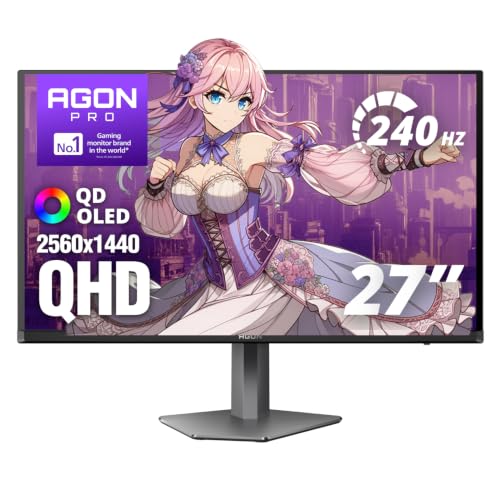
AOC Agon Pro 27 Inch Gaming Monitor QD OLED 240Hz 0.03ms, AG276QZD2

ASUS ROG PG32UCDP 32 Inch 4K 240Hz OLED Gaming Monitor
SAMSUNG 27-inch Odyssey QD-OLED G8 (G81SF)

Samsung 49″ Odyssey (G93SC) Series QD-OLED Curved Gaming Monitor
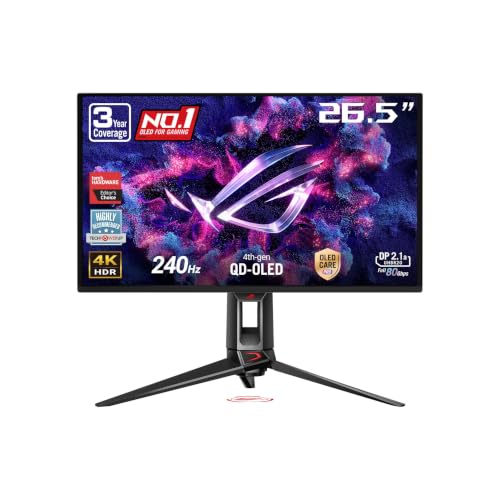
ASUS ROG PG27UCDM 27 Inch 4K 240Hz OLED Gaming Monitor

AOC 27″ Gaming Monitor QHD 240Hz QD OLED G-SYNC Compatible 0.03ms, Q27GAZD
More Details On Our Top Picks
32-inch 4K at 240Hz puts this ASUS squarely in the group that suits you when both desktop sharpness and fast motion matter. The custom heatsink and graphene film point to thermal control, while USB-C with 90W output helps a laptop dock into a cleaner one-cable setup.
The honest read is that this size asks for a deeper desk than a 27-inch panel, and that’s the trade-off for the extra screen space. PS5 and Xbox support gives it a broad console profile, but the premium feature set makes the case strongest for PC gamers and mixed-use setups.
Strong Points
- 32-inch UHD space suits detailed HUDs and dense desktop work.
- 240Hz refresh pairs with 0.03ms response for very fast motion.
- USB-C with 90W can simplify a laptop workstation.
- Custom heatsink and graphene film suggest better thermal headroom.
Things To Consider
- The larger footprint needs more desk depth than a 27-inch option.
- That feature set pushes it toward enthusiasts rather than casual setup.
- Owners who keep a minimal desk may want a lighter stand profile.
Key Specs
Who It Suits Best
PC and console gamers who want a large, sharp OLED panel with strong connectivity fit this screen best.
A Better Fit Elsewhere
ASUS ROG PG27UCDM suits you better when you want the same 4K 240Hz class in a smaller 27-inch footprint.
This AOC takes a more desk-friendly route than the bigger ASUS screens, and that’s useful for apartments or compact gaming stations. The 2560 x 1440 resolution keeps the load lighter than 4K, while the height-adjustable stand and VESA mount support easier positioning.
Built-in speakers and HDR TrueBlack 400 round out the package for everyday use, though the 27-inch size means you’re giving up the extra desktop room of a 32-inch panel. For most people who want OLED speed without the space demands of UHD, it lands in a sensible middle ground.
What We Like
- 27-inch size fits tighter desks without feeling cramped.
- 1440p resolution is easier to drive than 4K for many rigs.
- Height adjustment helps you line up the panel neatly.
- VESA support makes arm mounting straightforward.
- Built-in speakers cover basic audio without extra hardware.
Room For Improvement
- You give up the native detail of a 4K panel.
- Built-in speakers suit casual use more than rich desktop audio.
- Owners who want a huge workspace will likely want a larger screen.
Feature Snapshot
Who Will Love This
Gamers who want a compact OLED monitor for a smaller desk or a second setup will feel at home here.
Swap It Out When
AOC 27″ Gaming Monitor QHD 240Hz QD OLED G-SYNC Compatible 0.03ms, Q27GAZD suits you better if you want console-ready inputs in a similar 27-inch class.
Dual-mode operation gives this ASUS a clear edge in flexibility, since it can switch from 4K 240Hz to FHD 480Hz. That matters for competitive titles where raw frame pacing takes priority, while the 32-inch size still gives you the room to use it as a daily desktop display.
The built-in custom heatsink points to thermal discipline, and the 0.03ms response time keeps it in the same speed class as the other premium picks. The trade-off is obvious though, because dual-mode screens tend to suit enthusiasts who actually plan to use both modes rather than just keep one setting forever.
Highlights
- Dual-mode switching adds a rare speed option for esports play.
- 32-inch 4K size still works well for productivity and single-player games.
- Custom heatsink helps support sustained performance.
- 0.03ms response time fits fast motion and rapid inputs.
- G-SYNC Compatible support can smooth out variable frame output.
Points To Note
- Dual-mode features make more sense for committed gamers than casual use.
- The larger panel needs the same desk space as other 32-inch options.
- You may spend time changing modes depending on game type.
Core Details
Best Suited To
Competitive players who still want a large 4K desktop panel will get the most out of this one.
Look Elsewhere When
ASUS ROG PG32UCDM suits you better if you want the simpler 4K 240Hz experience without the dual-mode layer.
Samsung’s 27-inch G8 keeps the footprint compact, which helps on desks that already carry a keyboard, speakers, and a console. DisplayHDR True Black 400 and AMD FreeSync Premium Pro give it a clean gaming profile, while the ergonomic stand adds practical adjustability.
Compared with the larger ASUS 32-inch screens, this one feels easier to place, but the smaller panel also means less desktop room for side-by-side windows. The dedicated support line and repair coverage read like a comfort feature for owners who want less friction after purchase, though the real payoff is mostly peace of mind rather than glamour.
Upsides
- 27-inch size is easier to fit into compact gaming corners.
- Ergonomic stand helps you tune height and angle.
- FreeSync Premium Pro support suits compatible gaming PCs and consoles.
- DisplayHDR True Black 400 supports deep contrast tuning.
- 0.03ms response time keeps animation trails tight.
Softer Spots
- Small size limits the amount of workspace you get.
- The premium feature mix makes it more suited to enthusiasts.
- Some setups will still benefit from external speakers or headphones.
Details At A Glance
Whose Shelf It Belongs On
Desk-conscious gamers who want a compact OLED with strong adjustment options will find this an easy fit.
Where A Sibling Pick Shines
AOC Agon Pro 27 Inch Gaming Monitor QD OLED 240Hz 0.03ms, AG276QZD2 suits you better if you want a simpler 1440p option with a lighter graphics load.
The 49-inch curved format changes the whole desk rhythm, because you get broad horizontal space instead of the usual 16:9 shape. DQHD brings a much wider canvas for racing sims, timeline work, and split-screen multitasking, while 240Hz keeps the motion profile in the fast lane.
That size is the catch, naturally, since it needs a serious desk and a setup that can actually make use of the width. In a home office by day and a game station by night, it feels like a living workstation, though the scale can be too much for a tight room.
Best Bits
- 49-inch width gives you a very broad view.
- Curved shape helps the edges stay more natural in view.
- DQHD suits split windows, racing games, and timeline work.
- 240Hz supports quick motion for games that benefit from speed.
- Adjustable stand helps with height and viewing angle.
Areas To Watch
- The footprint is large and needs room to breathe.
- Some desks will feel crowded before the monitor even powers on.
- Text size and scaling take a little setup care in desktop use.
Feature Rundown
Right Fit
Sim racers, streamers, and multitaskers who have space for an ultrawide setup will get the most from this panel.
Reach For A Different Pick When
ASUS ROG PG32UCDM suits you better if you want a more conventional 32-inch 4K layout with less desk demand.
This 27-inch ASUS keeps the same high-refresh 4K idea as the larger PG32UCDM, but the smaller panel can be easier to place on a crowded desk. OLED Care Pro and the Neo Proximity Sensor point to a screen that pays attention to panel use, which matters in mixed work-and-play routines.
DisplayPort 2.1 gives it a more future-facing connection path, and that helps if you want the monitor to stay relevant through a few hardware upgrades. The trade-off is simple: the 27-inch format gives you less space than the 32-inch ASUS, even though the feature stack is arguably even more watchful.
Positives
- 27-inch size fits more cleanly in smaller setups.
- OLED Care Pro adds a practical panel-management angle.
- Neo Proximity Sensor helps tailor display behavior around use.
- DisplayPort 2.1 suits newer graphics hardware paths.
- True 10-bit support is useful for smoother color gradation.
Softer Spots
- The 27-inch canvas is tighter for side-by-side desktop work.
- Care features help, but screen habits still matter over time.
- Some desks will feel better served by the larger 32-inch ASUS.
Quick Facts
Built With In Mind
Desk-limited enthusiasts who still want strong connectivity and panel-care features should look here first.
Another Choice May Suit
ASUS ROG PG32UCDM suits you better if you want a larger 32-inch workspace with the same 4K 240Hz idea.
This AOC is the more stripped-back 27-inch option in the group, and that makes it easy to place beside a console or on a secondary desk. QHD at 240Hz gives you a lighter graphics load than 4K, while G-SYNC Compatible support and the 0.03ms response time keep it in the fast-motion conversation.
DP 1.4, HDMI 2.0, earphone out, and VESA mount support make the connections practical rather than fancy. The trade-off is clear, because you lose the extra sharpness of 4K, but you get a cleaner entry point for smaller rooms or console-focused setups.
What We Like
- 27-inch footprint stays manageable on modest desks.
- QHD resolution is easier to drive than 4K.
- G-SYNC Compatible support fits compatible gaming systems.
- HDMI 2.0 and DP 1.4 cover common hookup needs.
- Earphone output keeps audio routing simple.
Minor Gripes
- QHD gives up the fine detail of the 4K monitors above.
- Large desktop multitasking feels less roomy than on a 32-inch screen.
- Console-focused users still need to match their own input needs carefully.
Core Details
Made For
Console players and desktop gamers who want a simpler 27-inch OLED with practical ports will get along with this one.
Where Shoppers Go Wrong
ASUS ROG PG27UCDM suits you better if you want more advanced panel-care features and newer connection support.
How To Choose The Right 4k 240hz Oled Monitors
Screen Size Shapes The Whole Setup
Size matters more than most people expect. A 27-inch screen fits tighter desks and keeps your eyes closer to the action, while a 32-inch panel gives you more room for HUDs, side panels, and desktop work. A 49-inch ultrawide goes further still, but it asks for a broad desk and a setup that can actually use the width well.
Think about distance, too. A 32-inch 4K display can feel right at arm’s length, but it needs a little more space than a 27-inch model to avoid crowding your field of view.
Resolution And Refresh Rate Need To Match Your Hardware
4K gives you the sharper image, while 240Hz helps motion stay smooth in fast games. That combination is demanding, so your graphics hardware has to keep up, especially in modern titles with high visual detail.
QHD at 240Hz is easier to drive and still looks sharp on a 27-inch screen. For many setups, that trade-off makes more sense than pushing 4K when your system would rather focus on frame consistency.
OLED Features Can Matter As Much As Raw Specs
QD-OLED blends OLED contrast with quantum dot color tuning, which is why these panels often look vivid without feeling harsh. Features like custom heatsinks, proximity sensors, and care software matter because they shape long-term ownership, not just launch-day appeal.
USB-C power delivery, DisplayPort 2.1, VESA mounting, and ergonomic stands also affect daily life. A screen that docks your laptop or adjusts cleanly can save more hassle than a small bump in resolution ever will.
Console And Desk Use Change The Priority List
Console players usually benefit from clear HDMI support, strong HDR handling, and a screen size that suits the sofa or desk distance. PC gamers, especially those who switch between work and play, may value USB-C, broader color depth, and a stand that moves easily.
For mixed use, the safest route is a model that stays comfortable during long desktop sessions and still responds quickly in games. That’s where the 27-inch ASUS and Samsung options differ from the larger 32-inch and 49-inch picks.
Before You Click Buy
Common Shopping Slip Ups
Many people fixate on 240Hz and forget the desk itself. A large 32-inch or 49-inch panel can feel awkward in a shallow space, and a premium refresh rate does little good if the setup is cramped.
Another common miss is treating 4K as mandatory. In a smaller room or on midrange hardware, QHD can be the cleaner choice because it keeps image quality high without pushing the system as hard.
What The Higher Tier Buys
More expensive models usually bring better connection options, more careful thermal design, and extra panel-management features. Those details matter most when you use the monitor every day, not just for weekend gaming.
Higher-end screens also tend to pair better with newer graphics cards and mixed PC-console use. You’re paying for flexibility and smoother ownership, not just a higher spec line on paper.
Frequently Asked Questions
Do you really need 4K for a 240Hz OLED monitor?
No, but 4K gives you sharper detail on 27-inch and 32-inch screens. QHD can still be a smart choice when your hardware or desk space calls for something lighter.
Is 27 inches too small for 4K gaming?
Not necessarily, though it depends on how far you sit from the screen. A 27-inch 4K panel looks crisp, but a 32-inch model gives you more room for side-by-side windows.
Does a 240Hz OLED matter for console use?
It can, especially for fast motion and future-proof flexibility. The more important question is whether the monitor’s input support fits your console setup.
What makes QD-OLED different from standard OLED?
QD-OLED uses quantum dots to help with color output, so the image can look vivid and lively. It’s still OLED at heart, so deep contrast remains part of the appeal.
Which size works best for mixed gaming and work?
A 32-inch 4K screen usually strikes the most balanced compromise. It gives you room for productivity without the bulk of a 49-inch ultrawide.
Closing Thoughts
You have a very clear split here, 27-inch models for tighter desks, 32-inch options for a fuller desktop, and the 49-inch ultrawide for sheer immersion. ASUS brings the richest feature stacks, AOC keeps things leaner and easier to place, and Samsung sits in the middle with polished ergonomics and strong gaming support. Pick the size that matches your room first, then match the resolution to your hardware. That order keeps the choice practical instead of aspirational.
