
Video editing puts a monitor under real pressure. You need clean 4K detail, steady color, enough screen space for timelines, and a stand that won’t make long sessions awkward.
This shortlist focuses on that workflow first. Some picks lean toward color work, some toward extra width, and some toward smoother motion for mixed use, so you can match the panel to your desk instead of forcing the desk to fit the panel.
Quick Look At The Shortlist

Samsung 32″ Flat Computer Monitor LS32B304NWNXGO
ASUS ROG XG27UCG 27 Inch 4K 160Hz USB-C G-SYNC Gaming Monitor

Dell U-Series 38″ 4K UHD 1600p Ultra Wide Screen LED-Lit Monitor U3818DW

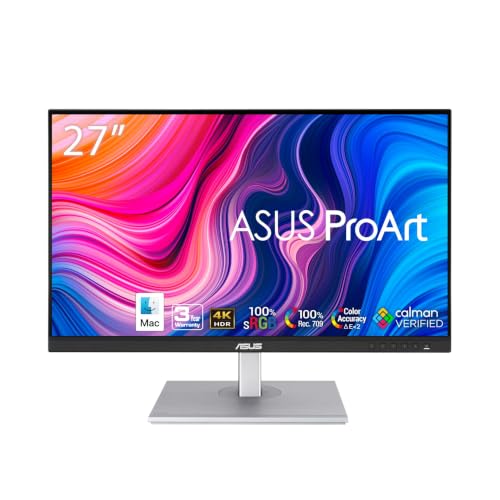
ASUS ProArt PA279CRV 27 Inch 4K UHD USB-C HDR Professional Monitor for Mac

Dell 32 Monitor S3225QS, 4K UHD VA, 120Hz, FreeSync Premium, Eye Comfort

LG 27US500-W Ultrafine Monitor 27-Inch 4K UHD HDR10 IPS Borderless Design

ViewSonic VP2756-4K 27 Inch 4K ColorPro Monitor
More Details On Our Top Picks
A 32-inch flat panel gives you room to park a timeline, preview window, and tool panels without feeling cramped. The borderless look also keeps a multi-monitor desk visually tidy, which matters more than it sounds after a long edit session.
75Hz means the screen refreshes more often than a standard 60Hz office display, so movement feels a touch smoother as you scrub through footage or switch windows. The trade-off is that this model leans more toward general editing comfort than color-managed work, so it suits mixed-use desks better than grading stations.
Strong Points
- The 32-inch size gives you generous screen real estate for timelines and bins.
- Borderless styling helps a dual-display setup feel cleaner on a crowded desk.
- HDMI and DisplayPort support make desktop hookup more flexible.
- AMD FreeSync can smooth out motion in mixed work and light gaming use.
Things To Consider
- Color-focused editors may want a panel with stronger out-of-box color targets.
- The larger footprint needs more desk depth than a 27-inch screen.
- Eye-care features help comfort, but they do not replace careful room lighting.
Core Details
Who It Suits Best
Desk editors who want a spacious screen for cuts, notes, and reference footage without moving into ultra-wide territory will get the most from this layout.
A Better Fit Elsewhere
ASUS ProArt PA279CRV 27 Inch 4K UHD USB-C HDR Professional Monitor for Mac suits color-sensitive work more closely, especially for creators who value calibration features over sheer size.
This ASUS leans hard into speed, then adds USB-C so a modern laptop can stay cleaner on the desk. For hybrid creators who edit, game, and connect a portable machine at the same station, that mix is hard to ignore.
The dual-mode approach is the real twist, since you can keep 4K for detail work or switch to a faster Full HD mode for motion-heavy sessions. That flexibility comes with a price in focus, though, because pure color-first shoppers will likely prefer a ProArt-style panel.
What We Like
- 4K resolution keeps fine timelines and text sharp.
- USB-C can simplify single-cable laptop connections.
- Dual-mode operation gives you a fast fallback for motion-heavy use.
- G-SYNC and FreeSync Premium support help compatible content look smoother.
- 99% DCI-P3 coverage points to a broad creative color range.
Worth Noting
- The gaming-first tuning makes it less focused on color workflow than the ProArt or ViewSonic picks.
- Advanced features can raise setup complexity for users who want a simple plug-in-and-edit screen.
Feature Rundown
Built With In Mind
Hybrid creators who want a single monitor for editing by day and fast-motion use after hours will find the balance appealing.
Where A Sibling Pick Shines
ASUS ProArt PA279CRV 27 Inch 4K UHD USB-C HDR Professional Monitor for Mac is the cleaner match for color-critical editing and more serious studio work.
Ultrawide workspace changes the editing rhythm more than a lot of shoppers expect. On a long timeline, that extra horizontal span can keep your source, preview, and tools spread out in a way that feels natural rather than stacked.
It’s not the most compact choice here, and that’s the honest trade-off. You get an expansive canvas, but you also need enough desk width and a workflow that benefits from lateral space more than tall UI panels.
Highlights
- The ultrawide shape gives you a broad view of timelines and stacked tracks.
- It can reduce the need to constantly tab between panels.
- The large format suits side-by-side reference viewing.
- Black finish keeps the design straightforward on a studio desk.
Areas To Watch
- The footprint asks for a wide desk and a strong monitor arm or stand plan.
- Some editing layouts feel more natural on a traditional 27-inch or 32-inch display.
- The older design language is more practical than flashy.
Details At A Glance
Whose Shelf It Belongs On
Multi-panel editors and timeline-heavy creators who want a single sweeping workspace will get the most out of this format.
Swap It Out When
Dell 32 Monitor S3225QS is the cleaner fit for you if you want a more standard shape with stronger contrast and a simpler desk layout.
This ProArt model speaks directly to color-sensitive editing, especially on a Mac desk where USB-C and a cleaner cable run matter. The 27-inch size keeps it manageable, but the serious part sits in the panel tuning and the broader creative gamut support.
Calman verification means the monitor has been measured against a calibration standard, and Delta E below 2 points to very tight color error targets. That matters in a grading-heavy workflow, though the trade-off is plain enough, since this is less about gaming flair and more about controlled, studio-style output.
Upsides
- Calman Verified tuning supports careful color work.
- Delta E under 2 targets very small color shifts.
- USB-C power delivery at 96W can keep a laptop connected and charged from one cable.
- Daisy chain support helps tidy multi-monitor setups.
- 99% DCI-P3 and 99% Adobe RGB give you broad creative color coverage.
Small Caveats
- The focus on studio color means it’s not the most playful or gaming-leaning screen in the group.
- Professional features can feel overkill for casual cutting and basic home edits.
Spec Overview
Right Fit For
Color-sensitive editors, photographers who also cut video, and Mac-based desks benefit most from this monitor’s pro-first approach.
Another Choice May Suit
LG 27US500-W Ultrafine Monitor 27-Inch 4K UHD HDR10 IPS Borderless Design is the simpler pick for you if you want a lighter-featured screen for general desktop editing.
This Dell lands in a useful middle ground: large enough for serious editing, but not so specialized that it only makes sense in a color suite. The VA panel, with its 3000:1 contrast ratio, is the part that stands out most for mixed desktop work, since dark scenes and interface depth tend to look fuller on that kind of panel.
At 120Hz, it also moves more smoothly than a standard 60Hz display, which helps when you jump between timelines, apps, and some motion work. The trade-off is that its broad usefulness matters more than niche professional calibration, so it’s strong for many desks, not every studio.
Bright Spots
- The 31.5-inch size gives you a roomy workspace without going ultra-wide.
- 120Hz makes everyday navigation feel notably smoother.
- High contrast suits darker UI themes and video content with shadow detail.
- 99% sRGB coverage supports general content creation well.
- Anti-glare treatment helps in bright rooms with mixed light.
Room For Improvement
- It doesn’t lean as hard into pro calibration features as the ProArt or ViewSonic options.
- VA panels can feel different from IPS screens in side-by-side studio comparisons.
- The larger body takes more room than a 27-inch model.
Feature Snapshot
Made For
Editors who split their time between content work, general desktop use, and occasional gaming will get a balanced mix here.
Look Elsewhere When
ASUS ProArt PA279CRV 27 Inch 4K UHD USB-C HDR Professional Monitor for Mac is the stronger match for you if color accuracy matters more than contrast and size.
LG keeps this one clean and straightforward, which is exactly what some editing desks need. The 27-inch size, borderless frame, and IPS panel make it a sensible match for creators who want sharp 4K detail without a lot of visual clutter.
Reader Mode and Flicker Safe are comfort-focused touches, and the included OnScreen Control app can make it easier to split workspaces or nudge monitor settings from the desktop. The honest trade-off is that this model is more about polished basics than deep pro color tooling, so it fits straightforward editing more naturally than color-critical grading.
Best Bits
- 27-inch sizing works well on smaller desks.
- IPS panel technology brings wide viewing angles, useful when you shift posture during long sessions.
- HDR10 support adds flexibility for compatible video content.
- OnScreen Control can speed up basic layout changes.
- The included HDMI and DisplayPort inputs keep setup simple.
Softer Spots
- It is less specialized for professional calibration than the ProArt and ViewSonic picks.
- The clean, no-frills design may feel too plain for a feature-hungry workstation.
- Comfort tools help, but lighting around the desk still matters a lot.
Core Details
The Right Fit
You will get the best match here on a compact editing desk where simple setup and clean lines matter more than specialized studio tuning.
Where Shoppers Go Wrong
ViewSonic VP2756-4K 27 Inch 4K ColorPro Monitor is the stronger step up for color-sensitive work, especially if you want validated color support alongside a more pro-minded feature set.
ViewSonic takes the color-focused lane and stays in it. Pantone validation, 100% sRGB, and USB-C with 60W power delivery make this a natural fit for editors who also handle photo work and want the desk to stay orderly.
The stand ergonomics matter too, especially on a desk where you sit for long passes and need the screen to line up cleanly with your eyes. The trade-off is that this model is more purpose-built than casual, so the extra color tooling is best used by people who will actually lean on it.
Positives
- Pantone validation supports a more controlled color workflow.
- 100% sRGB matches well with web and general creative output.
- USB-C with 60W power delivery helps reduce cable clutter.
- Advanced ergonomics make desk positioning easier.
- IPS panel support is helpful for shared viewing and angle changes.
Trade Offs
- It is tuned more for color work than motion-heavy editing.
- The creative feature set may be more than basic home editors need.
- USB-C power delivery is useful, but it does not replace a dedicated dock for every setup.
Feature Card
Who Should Grab It
Photo and video creators who care about color consistency and want a tidy USB-C workstation will feel at home here.
Reach For A Different Pick When
Samsung 32″ Flat Computer Monitor LS32B304NWNXGO is the more relaxed choice for you if you want a larger, simpler screen for general editing and everyday desk use.
How To Choose The Right 4k Computer Monitors For Video Editing
Match The Panel To The Work You Actually Do
Video editing is not one job. Timeline cutting, color work, motion graphics, and general office tasks all pull a monitor in different directions, so you need to decide which part of the workflow matters most.
IPS panels usually suit creators who want consistent viewing angles and dependable color behavior, while VA panels often bring stronger contrast for darker footage and general desktop use. An ultrawide shape helps with long timelines, but a standard 27-inch or 32-inch 4K panel is easier to place on a normal desk.
Look Past Resolution Alone
4K helps because text, thumbnails, and footage details look crisp, yet resolution by itself does not make a strong editing screen. Refresh rate, color gamut, and panel tuning matter too, especially once you start scrubbing footage or comparing shots side by side.
Color coverage tells you how much of a color space a monitor can display, with sRGB being common for web work and DCI-P3 mattering more for wider creative output. A calibrated or validated screen is usually the safer route for grading work, while a gaming-tuned model makes more sense for hybrid desks.
Think About Desk Shape And Connections
USB-C can simplify a laptop setup by carrying video and power through one cable, which keeps a small studio tidier. HDMI and DisplayPort still matter for desktop towers, capture rigs, and older machines, so a flexible port mix saves headaches later.
Stand adjustment also deserves attention. Height, tilt, and swivel make a bigger difference during long edits than many shoppers expect, because a screen that sits at the wrong eye line turns into a slow annoyance.
Choose For Your Editing Style, Not Just The Spec Sheet
If your work is mostly YouTube cuts, client reviews, and everyday desktop editing, a well-balanced 4K monitor with solid brightness, good contrast, and decent ergonomics usually covers the brief. Colorists and print-minded creators should lean toward tighter color validation and broader gamut support instead.
That’s why the Dell and Samsung picks make sense for broad use, while the ASUS ProArt and ViewSonic models lean harder into studio behavior. The right choice is the one that fits your workflow without forcing extra adapters, awkward desk rearranging, or color guesswork.
Before You Click Buy
Common Shopping Slip Ups
Plenty of shoppers focus on resolution and forget the rest. A 4K panel with weak ergonomics, poor port choices, or the wrong panel type can feel mismatched as soon as the project gets longer.
Another common miss is buying a screen that is too specialized for the work. A color-grade heavy monitor can be excellent, but it may be more than you need for casual cuts, which makes a simpler model easier to live with.
What The Higher Tier Buys
More expensive models usually spend the extra money on panel tuning, wider gamut coverage, better stand hardware, and stronger connectivity. You are paying for less compromise in the desk setup, not just a larger number on the box.
That upgrade makes sense for color-sensitive creators, multi-device desks, and long editing sessions where comfort and consistency matter. For basic home edits, a midrange screen often leaves more room in the budget for storage, audio, or lighting.
Frequently Asked Questions
Is 27 Inches Enough For 4K Video Editing?
Yes, 27 inches works well for many editing desks because 4K stays sharp at that size. It also leaves more room for speakers, a tablet, or a notebook nearby.
Do You Need USB-C On A Video Editing Monitor?
No, but USB-C makes a laptop workstation simpler by reducing cable clutter. It matters most for portable creators who dock and undock often.
Is An Ultrawide Better Than A Standard 4K Screen?
Ultrawide helps with long timelines and side-by-side panels. A standard 4K display is easier to fit into smaller studios and usually feels more universal.
What Panel Type Suits Editing Best?
IPS is usually the safest all-around choice because it keeps the image stable from different angles. VA can work well too, especially when contrast matters more than absolute color consistency.
Does High Refresh Rate Matter For Editing?
It helps the desk feel smoother during window changes and timeline scrubbing. Color accuracy and panel quality still matter more for the actual edit.
Final Thoughts
You have a clear spread here, from simple all-purpose screens to monitors built for color-sensitive work. Samsung and Dell give you roomy, flexible editing spaces, ASUS ProArt and ViewSonic lean into serious color handling, and the LG and ASUS ROG picks cover simpler desktops or hybrid setups with their own strengths. Match the monitor to the kind of edits you do most, and the rest of the setup becomes easier to live with day after day.
