
You’re looking at 4k Gaming Monitors for a setup that has to do more than look good in a product shot. A serious screen changes how your games feel, how your desktop handles work, and how much desk space you give up to stand shape, ports, and size.
This roundup leans on panel type, refresh rate, contrast, connectivity, and practical ergonomics. That matters whether you sit through long sessions, split time between gaming and work, or want a display that doesn’t make you compromise on motion or clarity.
Quick Look At The Shortlist

Dell 27 Monitor S2725QS 4K UHD IPS 120Hz

KTC 27 Inch 240Hz Gaming Monitor H27F7

ZZA 27 Inch 4K Gaming Monitor UHD 144Hz

ASUS ROG XG27UCG 27 Inch 4K 160Hz USB-C

Samsung 27 Odyssey G5 G51F Series QHD Monitor LS27FG512ENXZA
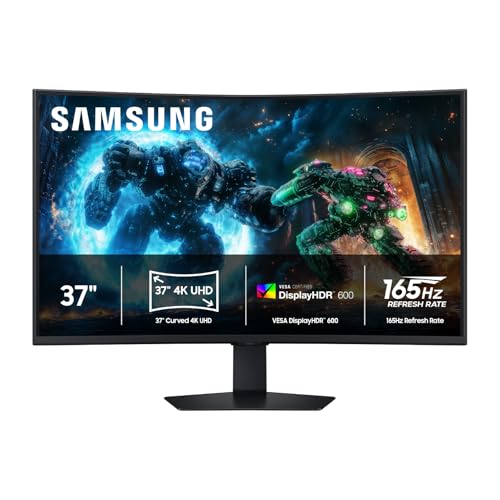
Samsung 37 Odyssey G7 G75F Series 4K UHD Curved Monitor LS37FG75DENXZA

ASUS TUF Gaming 27 4K HDR Monitor VG27UQ1A
More Details On Our Top Picks
This Dell lands in the middle of the pack in a useful way: 4K clarity, a 120Hz refresh rate, and an IPS panel usually fit the person who splits time between games, browser tabs, and office apps. The 350 cd/m2 brightness and anti-glare finish help in a bright room, while 99% sRGB points it toward solid color coverage for general content work.
The height, swivel, and pivot adjustments make it easier to dial in posture on a compact desk, and USB-C adds cleaner laptop pairing than the KTC or Samsung G5. The trade-off is simple, it’s a 27-inch display without the extreme speed or giant canvas of the ASUS ROG or Samsung G7, so motion-focused enthusiasts may want more headroom.
What We Like
- 4K resolution gives you crisp desktop text and sharp game detail.
- 120Hz keeps motion smoother than standard 60Hz office displays.
- USB-C simplifies a laptop-and-monitor desk setup.
- Height, swivel, and pivot adjustments help the screen fit your posture.
- IPS and 99% sRGB suit mixed use with a clean, even image.
Things To Consider
- 27 inches can feel restrained beside the Samsung 37 Odyssey G7 if you want a larger play space.
- It targets balanced use, not the blistering refresh headroom of the KTC or ASUS dual-mode option.
- Gloss-free, anti-glare panels are easier to live with, but they still need regular dusting to stay clean.
Feature Snapshot
Who It Suits Best
It fits you best if you want one screen for gaming after work and regular desktop use without a steep setup learning curve.
A Better Fit Elsewhere
The ASUS ROG XG27UCG suits you better if you want a more aggressive feature set, especially dual-mode speed and USB-C in a more enthusiast-leaning package.
This KTC takes a different path from the Dell, trading 4K resolution for a 240Hz 1080p panel that puts motion first. Fast IPS means the screen aims for quicker pixel response than older IPS designs, so it makes sense for fast shooters, esports practice, and anyone who values fluidity over sheer detail.
The height, pivot, and tilt adjustments plus VESA mount support make it easy to fit into a stand or arm setup. The honest read is that the 1080p resolution is the compromise, so you gain speed but give up the sharper desktop workspace that the Dell and ZZA deliver.
Upsides
- 240Hz suits fast mouse movement and quick on-screen changes.
- Fast IPS is a good match for action-heavy play.
- Height, pivot, and tilt adjustments help on a desk or arm.
- VESA mounting opens the door to cleaner cable routing and more usable desk space.
Worth Noting
- 1080p is a clear trade-off beside the 4K models in this roundup.
- It makes more sense for speed than for detailed single-player visuals or text-heavy work.
- Wall or arm mounting adds flexibility, but the extra hardware takes a little more planning.
Core Details
Made For
It fits you best if your main priority is competitive motion and you’d rather spend pixels on speed than desktop sharpness.
Where A Sibling Pick Shines
The Dell 27 Monitor S2725QS is the better fit for mixed gaming and everyday computer use because its 4K panel gives you more room for work and media.
The ZZA sits close to the Dell in purpose, but it pushes refresh rate up to 144Hz while staying on a 4K, 27-inch flat panel. That makes it a strong fit for you if you want sharper image detail than the KTC and a little more motion headroom than the Dell.
HDMI 2.1 and DisplayPort 1.4 give the panel modern input flexibility, and tilt adjustment plus wall-mount support help it slot into tighter rooms. The catch is that a flat 27-inch panel can feel plain beside the curved Samsung G7, though some desks are easier to live with when the screen stays simple.
Highlights
- 4K resolution and 144Hz create a strong mix of clarity and motion.
- HDMI 2.1 and DisplayPort 1.4 work well with current gaming gear.
- Tilt adjustment makes it easier to aim the panel at your seat.
- Wall-mount support helps save desk depth in smaller rooms.
Small Caveats
- Flat design is practical, but it has less wraparound feel than curved options.
- At 27 inches, the screen still favors a compact desk over a couch-distance setup.
- Wall mounting gives flexibility, though it also means more planning for cable placement.
Details At A Glance
Right Fit For
It suits you best if you want 4K sharpness and a faster 144Hz ceiling without moving into a premium-sized chassis.
Look Elsewhere When
The Samsung 37 Odyssey G7 fits better for a larger immersive setup, especially when a curved panel and bigger frame matter more than desk simplicity.
This ASUS takes the Dell and ZZA formula and pushes harder on speed and flexibility, with 160Hz at 4K plus a dual-mode path to FHD at 320Hz. That gives you a screen that can serve both visually rich single-player games and sharper competitive sessions, depending on what you launch that night.
USB-C is the useful extra here, especially on a desk where a laptop, handheld, or compact PC shares space with the monitor. The compromise is complexity, because a dual-mode panel with sync features and extra gamer tools asks for a little more setup attention than the Dell’s cleaner all-purpose approach.
Reasons To Buy
- 4K at 160Hz gives you a high ceiling for both detail and motion.
- Dual mode lets you switch to FHD 320Hz for faster play.
- USB-C reduces cable clutter on modern desks.
- ELMB Sync and G-SYNC support suit fast-motion gaming setups.
- Tripod socket adds an unusual mounting option for accessories.
Areas To Watch
- Dual-mode flexibility brings more menu choices and setup decisions.
- The feature set feels more specialized than the Dell or Samsung G5.
- Premium extras are useful, but they also make the screen less bare-bones.
Feature Rundown
Whose Shelf It Belongs On
It suits you best if you want a high-spec desk monitor with enough flexibility to cover both visual quality and fast-game sessions.
Swap It Out When
The Dell 27 Monitor S2725QS fits better for a simpler mixed-use desk, because it keeps the formula cleaner and easier to live with day to day.
The Samsung G5 drops the resolution down to QHD, which sits between 1080p and 4K and often feels like the middle ground for gaming on a 27-inch panel. At 180Hz with 1ms response time, it leans toward speed, but the 1440p sharpness still gives you a cleaner desktop than a full-HD monitor like the KTC.
Black Equalizer and Virtual Aim Point are aimed at players who like extra visibility cues in darker scenes, and Auto Source Switch+ helps when you juggle a console and a PC. The trade-off is that this model is more focused than the Dell or ASUS, so it makes less sense as a one-screen answer for content work and broad desktop use.
Best Bits
- QHD gives you a useful middle ground between sharpness and frame demand.
- 180Hz and 1ms suit responsive gaming.
- Height adjustment helps the panel sit comfortably in front of you.
- Auto Source Switch+ is handy in mixed-console setups.
- Black Equalizer and Virtual Aim Point add practical in-game tools.
Points To Note
- QHD is a compromise for you if you came in expecting 4K clarity.
- The feature mix centers on gaming, not broad productivity extras.
- Specialized gaming functions help, though they may stay unused in quieter setups.
Core Details
Best Suited To
It suits you best if you want faster motion than a typical 4K panel and still prefer more clarity than 1080p.
Another Choice May Suit
The ZZA 27 Inch 4K Gaming Monitor fits better for anyone who wants the sharper 4K desktop and a little more all-purpose versatility.
The Samsung G7 is the biggest screen here, and that 37-inch curved frame changes the feel of a desk fast. Compared with the 27-inch Dell, ZZA, and ASUS screens, this one gives you more physical presence for open-world games, cockpit sims, and sprawling desktop layouts.
165Hz, 1ms response time, and DisplayHDR 600 make the spec sheet feel more premium, especially for rooms where you want the image to carry across a larger field of view. The trade-off is obvious: it asks for more desk depth, more visual attention, and more room to justify its size, so small desks may feel crowded.
Plus Points
- 37 inches gives you a much larger canvas than the 27-inch options.
- Curved shape helps the screen feel more enveloping at desk distance.
- 165Hz and 1ms suit motion-heavy games.
- DisplayHDR 600 gives you a stronger HDR class than the lower-tier displays here.
- AMD FreeSync Premium Pro helps keep the gaming side of the spec sheet current.
Honest Caveats
- The size is a real commitment, so your desk width matters more here.
- Curved panels work best when your seating position is centered.
- Cleaning and cable management take a bit more effort around a larger shell.
Technical Sheet
Built With In Mind
It suits you best if your setup has room to spare and you want a large, cinematic monitor for gaming and wide desktop work.
Where A Sibling Pick Shines
The ASUS TUF Gaming 27 4K HDR Monitor fits better for a smaller desk, because it keeps the footprint easier to manage while still delivering high refresh and 4K detail.
This ASUS TUF model lands as a cleaner, slightly more restrained alternative to the ROG XG27UCG, with 4K at 160Hz, ELMB Sync, and sync support across both major GPU camps. It gives you high refresh without the dual-mode complexity of the ROG, so the setup feels easier to understand while still looking serious on a desk.
95% DCI-P3 points to a wide color gamut, which is the range of colors a screen can display, and that matters for games and media that lean on vivid scenes. DisplayWidget adds a software control layer, and the three-year coverage line gives a sense of longer planning, though the setup still asks you to balance enthusiast features against a fairly standard 27-inch frame.
Standout Traits
- 4K at 160Hz gives you a strong mix of detail and fluidity.
- ELMB Sync helps motion stay cleaner in fast scenes.
- NVIDIA G-SYNC Compatible and FreeSync Premium broaden system pairing.
- 95% DCI-P3 points toward rich color coverage.
- DisplayWidget adds useful control over screen behavior.
Room For Improvement
- The 27-inch size keeps the footprint easy, but it won’t feel as expansive as the Samsung G7.
- It’s more focused than the ROG dual-mode option.
- Software features help day to day, though some users will barely touch them after setup.
Feature Card
Who Should Grab It
It suits you best if you want a 27-inch 4K monitor with a polished feature set that still feels straightforward to live with.
Reach For A Different Pick When
The ASUS ROG XG27UCG makes more sense for you if dual-mode FHD 320Hz matters and you want the extra tuning options to match.
How To Choose The Right 4k Gaming Monitors
Panel Type, Resolution, And Desk Distance
Start with the image itself. IPS panels, like the Dell and ASUS picks here, usually give you steadier color and wider viewing angles, while a curved screen such as the Samsung G7 changes how the image fills your field of view. On a 27-inch desk setup, 4K reads very sharp and suits text-heavy use as much as game detail.
Size matters just as much as resolution. A 27-inch 4K display gives you dense detail without eating the whole desk, while a 37-inch curved screen asks for more room and benefits from a centered seat. The right match depends on how far you sit and whether the screen also has to handle email, spreadsheets, or streaming.
Refresh Rate And Motion Behavior
Refresh rate tells you how many times per second the screen updates, and it changes how smooth motion feels. A 120Hz panel like the Dell is already a clear step up from basic office displays, while 144Hz, 160Hz, 165Hz, 180Hz, and 240Hz move you closer to fast-game responsiveness.
That extra speed helps most in shooters, racing games, and quick camera pans. The trade-off is that higher refresh rate often costs more, and not every game or console can take full advantage of it all the time. You get the most value when the rest of your setup can push frames comfortably.
Ports, Sync Support, And System Fit
Ports shape daily convenience more than most shoppers expect. USB-C on the Dell and ASUS ROG is handy for modern laptops, while HDMI and DisplayPort remain the backbone for desktops and consoles, especially on the ZZA and KTC.
Sync support also matters because it helps the screen and graphics output stay in step. AMD FreeSync, FreeSync Premium, G-SYNC Compatible support, and similar labels make more sense when you want to reduce stutter and screen tearing in real use, though the value depends on the graphics hardware you already own.
Ergonomics And Long-Term Comfort
Height, swivel, tilt, and pivot sound minor until you spend several hours at the desk. Adjustable stands make it easier to line up the screen with your posture, and VESA mount support opens the door to arms or wall setups when desk space is tight.
For long sessions, comfort beats flashy extras. A monitor that fits your body, leaves room for your keyboard, and lets you keep cables under control tends to feel better than a spec-heavy panel that fights your desk layout.
Things Worth Knowing First
Mistakes Worth Dodging
A common miss is chasing resolution alone. A 4K panel looks excellent, but a slow stand, poor port mix, or the wrong screen size can make daily use feel less smooth than a more balanced monitor.
Another easy trap is ignoring your hardware. A 240Hz display makes sense for speed-focused play, yet the rest of your setup has to keep up, and a smaller room may suit a 27-inch panel better than a large curved screen.
The Upgrade Payoff
Higher-tier models cost more because they usually combine faster refresh rates, better panel tuning, richer color ranges, and extra connectivity. You also pay for sturdier stands, software controls, and broader sync support that make the screen easier to live with.
That upgrade is worth it when your monitor is the center of a serious gaming desk. For a mixed-use room, a more modest option can save money without feeling bare, especially when 4K detail and a sensible stand already cover the basics well.
Frequently Asked Questions
Is 4K worth it on a 27-inch gaming monitor?
Yes, because text and game detail look very sharp at that size. The trade-off is that you’ll need a stronger graphics setup to keep frame rates high.
Is 144Hz enough for gaming?
It’s enough for many players, especially for mixed gaming and desktop use. Faster options help more in competitive play, but they’re not necessary for everyone.
Do curved monitors help with gaming?
Curved panels can feel more immersive on larger screens, especially at desk distance. They matter less on compact 27-inch displays, where flat panels stay simpler.
Why does USB-C matter on a monitor?
USB-C can reduce cable clutter when you connect a laptop or compact system. It also makes desk setups feel cleaner and easier to switch.
What matters more, response time or refresh rate?
Both matter, but they affect motion in different ways. Refresh rate shapes how often the image updates, while response time affects how quickly pixels change between frames.
Closing Thoughts
You have seven strong paths here, and the right one depends on how you use your desk. The Dell S2725QS gives you the cleanest all-around balance, the ASUS ROG XG27UCG brings the richest feature mix, and the Samsung G7 is the big-screen play. The honest move is to match the monitor to your room, your hardware, and how often work shares the same space as games.
