
You want a screen that keeps up with fast games without turning text, menus, and dark scenes into a mess. The 7 picks below cover different room sizes, desk setups, and play styles, from compact 27-inch panels to an ultrawide and a massive 49-inch curve.
Some are built for straight-up speed, others lean into desk ergonomics or more flexible use across work and play. That mix matters, because the right monitor can feel like it was made for your setup instead of forcing you to adapt.
The Shortlist At A Glance

ASUS ROG PG32UCDM 32 Inch 4K 240Hz OLED Gaming Monitor QD-OLED | UHD, Custom Heatsink
Samsung 27” Odyssey OLED G5 (G50SF) Series QHD & QD-OLED Gaming Monitor

Alienware 34 240Hz QD-OLED Curved Gaming Monitor – AW3425DW

NB Gaming Monitor Arm for Screen up to 60 inches, Holds 44 lbs(20 kg)

ASUS ROG PG32UCDP 32 Inch 4K 240Hz OLED Gaming Monitor

Samsung 49′ Odyssey (G93SC) Series QD-OLED Curved Gaming Monitor | 240Hz, 0.03ms, DQHD
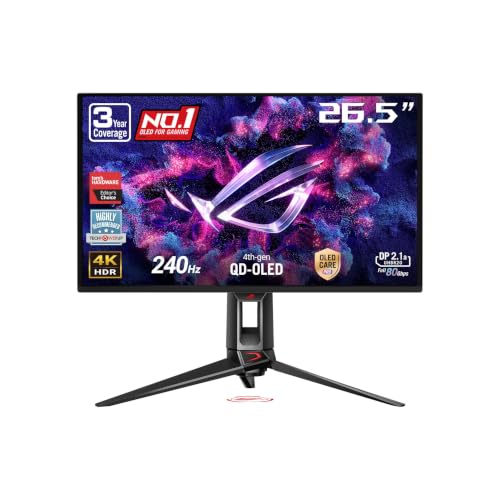
ASUS ROG PG27UCDM 27 Inch 4K 240Hz OLED Gaming Monitor QD-OLED
More Details On Our Top Picks
The 32-inch size gives this ASUS room to breathe, so fast games and desktop work both feel properly spread out. The 4K panel pairs well with the 240Hz refresh rate, which matters for you if you want sharp detail without giving up motion clarity.
The custom heatsink is the part that makes this feel more serious than a plain spec sheet trophy, especially for long evening sessions at a gaming desk. You also get USB-C with 90W power delivery, so a laptop setup can stay tidier, though the real appeal here is still the crisp QD-OLED image and broad color support.
Strong Points
- 32 inches gives you a roomy desktop without jumping to ultrawide proportions.
- 240Hz at 4K suits fast play and makes the panel feel very responsive.
- USB-C with 90W can simplify a laptop-and-monitor setup.
- True 10-bit color and 99% DCI-P3 coverage help the image look rich in games and media.
- The custom heatsink is a reassuring detail for long sessions.
Things To Consider
- At 32 inches, it needs real desk depth to avoid feeling overpowering at close range.
- Like most OLED panels, it rewards sensible desktop habits and some care with static UI elements.
- USB-C power delivery helps with laptops, but desktop rigs may care more about the video input layout than that extra port.
Key Specs
Who It Suits Best
Serious desk gamers who want a large 4K OLED with fast motion handling will get the most from this one.
A Better Fit Elsewhere
ASUS ROG PG27UCDM makes more sense for you if your desk is tighter and you still want the same speed-first ASUS feel.
This Samsung keeps the footprint modest at 27 inches, which helps on a smaller desk or in a setup that also handles work. The QD-OLED panel and 180Hz refresh rate make it feel tuned for quick play, though it does ask you to accept QHD instead of 4K.
The honest read is that it suits everyday gaming spaces better than showpiece battlestations. You get the speed and contrast many people want from OLED, plus FreeSync and G-SYNC compatibility support for smoother variable refresh use.
Highlights
- 27-inch sizing keeps the desk manageable.
- 180Hz is a strong match for competitive play at QHD.
- QD-OLED should give you the inky contrast and color pop people expect from this panel type.
- Adaptive sync support helps reduce tearing with compatible systems.
Worth Noting
- QHD is a step down from the 4K panels in this roundup.
- The smaller screen gives you less room for multitasking or wide cinematic games.
- Like any glossy OLED-style display, placement relative to windows and lamps matters.
Feature Snapshot
Who Should Grab It
Competitive gamers with limited desk space and a preference for a smaller screen will feel at home here.
Where A Sibling Pick Shines
ASUS ROG PG32UCDM suits you better if you want 4K detail and a larger panel for mixed gaming and desktop work.
Ultrawide fans usually know what they want, and this Alienware leans hard into that use case. The 34.2-inch curved panel spreads games across your field of view, which helps racing, flight, and open-world titles feel more enveloping than a standard 16:9 screen.
The 1800R curve is gentler than some dramatic wraps, so it should feel natural on a desk without making everyday windows awkward. WQHD keeps the workload lighter than 4K, and that trade-off suits you if you care more about immersion than raw pixel density.
Upsides
- The ultrawide shape works well for cinematic games and split-window productivity.
- 240Hz gives the panel serious speed for a screen this wide.
- QD-OLED color and contrast should help dark scenes and bright effects stand apart cleanly.
- The 1800R curve supports a more natural viewing sweep across the panel.
Room For Improvement
- Ultrawide support still depends on the game and app, so some titles will feel more at home than others.
- The wider footprint needs a deeper desk than a 27-inch model.
- WQHD is easier to drive than 4K, but it is still not the same level of detail as the ASUS 4K options above.
Technical Sheet
Best Suited To
Gamers who spend a lot of time in cinematic single-player titles or sim rigs will get the strongest payoff here.
Skip It When
ASUS ROG PG32UCDM is the cleaner route for you if 4K sharpness and a more traditional screen shape matter more than ultrawide immersion.
Big OLED panels eat desk space fast, and this arm is the kind of accessory that can make the whole setup feel calmer. It supports screens up to 60 inches, so it pairs naturally with a heavy ultrawide or a large 32-inch monitor that needs better positioning.
The aluminum build and VESA 75/100 support matter because they keep compatibility clear and the mounting plan straightforward. You also get RGB lighting, which is more of a style choice than a necessity, though some gaming desks do benefit from a little visual structure.
Bright Spots
- Wide size support makes it suitable for larger gaming displays.
- 44 lb capacity gives you room for substantial monitor weight.
- VESA 75×75 and 100×100 support covers common mounting patterns.
- The arm can help clear desktop clutter and free up mouse space.
- Height and angle adjustment make it easier to line up the screen with your seat.
Points To Note
- Monitor arms need careful installation, especially on thinner desks or with unusual cutouts.
- RGB lighting is decorative, so it should not be the main reason you choose it.
- Large panels can feel heavy to position at first, even with a sturdy arm.
Core Details
Whose Shelf It Belongs On
Desk builders who want better positioning and cleaner cable-friendly layouts will get the most from this arm.
Another Choice May Suit
ASUS ROG PG32UCDM is the better fit if you want a monitor rather than a mounting solution for your OLED setup.
This one is for you if you keep bouncing between story games and fast shooters. The dual-mode setup lets it switch from 4K at 240Hz to FHD at 480Hz, so you can favor detail or speed depending on what you’re playing.
That flexibility is the point, and it makes this ASUS feel more adaptable than the PG32UCDM above. The custom heatsink and AI gaming features round out the package, although the real trade-off is simple: you pay for a monitor that tries to cover two different styles of play well.
What We Like
- Dual-mode operation gives you a choice between sharp detail and extreme frame rate support.
- 32-inch sizing works nicely for mixed gaming and desktop use.
- The 240Hz 4K mode keeps motion smooth without giving up high resolution.
- USB-C with 90W can tidy up laptop connections.
- AI gaming features and G-SYNC compatibility add flexibility across setups.
Softer Spots
- The mode switching is useful, but it also means you’re paying for features you may not use every day.
- A 32-inch panel still wants a fairly deep desk.
- Like most OLED models, it pays to keep static desktop elements from sitting on screen all day.
Feature Rundown
Built With In Mind
Versatile gamers who want one screen for both high-detail single-player titles and fast esports sessions will appreciate this most.
Look Elsewhere When
ASUS ROG PG32UCDM makes more sense if you want the simpler route and do not care about switching into a second speed mode.
At 49 inches, this Samsung behaves more like a workspace and game display combined than a normal monitor. DQHD gives you a huge horizontal spread, which is a major advantage for racing setups, timelines, spreadsheets, and anything that benefits from side-by-side windows.
The curve helps keep that breadth manageable, and the 240Hz refresh rate means the size does not come at the expense of speed. The catch is obvious: you need space, patience for setup, and a desk that can properly support a screen this wide.
Reasons To Buy
- 49 inches turns one screen into a serious multitasking station.
- DQHD provides a wide, immersive layout for games and work.
- 240Hz keeps movement smooth despite the huge panel size.
- FreeSync Premium Pro and G-SYNC compatibility help with variable refresh use.
- The adjustable stand gives you some room to dial in the fit.
Areas To Watch
- This size is not a casual desk choice, and setup usually takes more planning than a 27-inch monitor.
- Not every game or app handles super-wide layouts gracefully.
- Cleaning and cable routing take a bit more effort on such a large frame.
Details At A Glance
Right Fit For
Sim racers, multitaskers, and anyone building a large immersive battlestation will get the strongest value from this display.
Swap It Out When
Alienware 34 240Hz QD-OLED Curved Gaming Monitor – AW3425DW is the more manageable choice if you want an ultrawide screen without going all the way to 49 inches.
The 27-inch size makes this ASUS easier to place than the larger 32-inch models, but it still carries the same 4K and 240Hz combination. That gives you the crispness you want for text and desktop use without asking your desk to support a bigger shell.
OLED Care Pro and the Neo Proximity Sensor are the details that push it toward users who leave their screen on for long stretches. In plain terms, the monitor can react when nobody is sitting in front of it, which adds a little peace of mind for heavy daily use.
Best Bits
- 27 inches is easier to fit on smaller desks than the 32-inch ASUS models.
- 4K at 240Hz keeps it both sharp and very fast.
- DisplayPort 2.1 gives you a modern wired connection path.
- OLED Care Pro and the proximity sensor suit long sessions and mixed-use setups.
- True 10-bit support and G-SYNC compatibility round out a premium gaming profile.
Small Caveats
- The 27-inch format is less cinematic than the larger or ultrawide picks above.
- Some people will still prefer the extra breathing room of a 32-inch panel.
- Long-term screen care habits still matter with OLED, especially on a desktop that shows static bars and launchers.
Feature Card
The Right Fit
Desk-conscious gamers who still want a premium 4K OLED speed display will get the best match here.
Reach For A Different Pick When
ASUS ROG PG32UCDM is the better fit if you want the same class of performance in a larger 32-inch shape.
How To Choose The Right 4k Oled Gaming Monitors
Start With Size, Not Hype
A 27-inch panel fits tighter desks and keeps everything within easy reach. A 32-inch screen feels more open for games and desktop work, while 34-inch and 49-inch ultrawides change the whole shape of your workspace.
That size choice affects more than comfort. It changes how far you sit back, how much of the screen you can scan at once, and how easily you can keep the monitor balanced on the desk or an arm.
Match Resolution To Your Gaming Style
4K gives you the cleanest desktop text and a very sharp image for slower, more cinematic games. QHD and WQHD reduce the strain on your system and can make higher refresh rates easier to hold, which is useful for competitive play.
Dual-mode screens matter for a different reason, because they let you swing between visual detail and raw speed. That flexibility is useful for you if your library jumps between shooters, racing games, and single-player releases.
Look Closely At Motion And Sync Support
Refresh rate tells you how often the screen updates each second, so higher numbers generally suit fast action and mouse-heavy play. Response time, measured in milliseconds, shows how fast pixels change color, which matters for keeping motion from smearing.
Adaptive sync support, such as G-SYNC Compatible, FreeSync, or VESA AdaptiveSync, helps the monitor match your frame output more smoothly. That is especially helpful on systems that do not hold a perfectly steady frame rate.
Don’t Ignore Desk Fit And Long-Term Use
OLED panels look great, but they reward careful use, especially on desktops that keep static taskbars, launchers, or game menus on screen for hours. Features such as custom heatsinks, OLED care systems, and proximity sensors are worth attention because they help the monitor handle long sessions more gracefully.
Mounting and ergonomics matter too. A heavy ultrawide or 49-inch model may need an arm, a deeper desk, or a better stand angle so the whole setup feels stable instead of cramped.
What To Weigh Before You Commit
Common Shopping Slip Ups
A lot of people fixate on refresh rate and ignore size, which can leave them with a panel that feels awkward on the desk. Another common miss is choosing ultrawide without checking whether the games you play handle that format cleanly.
It also helps to think past the box and into daily use. A big OLED can look great on day one, but placement, cable routing, and how often your screen shows static elements matter just as much.
The Case For Spending More
Higher-tier monitors usually cost more because you’re paying for a sharper panel, better motion handling, and more refined protection features. Extra size, wider color support, modern ports, and stronger cooling all add to the bill.
The upgrade pays off most for long-session gamers, sim setups, and mixed work-play desks. In those cases, the better panel can feel less like a luxury and more like the part that makes the rest of the setup work properly.
Frequently Asked Questions
Are 4k Oled Gaming Monitors good for both games and desktop work?
Yes, they can be very strong for both, especially if you want crisp text and deep contrast. The larger 27-inch and 32-inch options usually feel the most balanced for mixed use.
Is 240Hz worth it on a 4K OLED screen?
It matters most for fast games and high-frame-rate systems. If your setup rarely pushes high frame rates, a lower refresh monitor may make more sense.
Do ultrawide OLED gaming monitors work with every game?
No, some games handle ultrawide support better than others. That format shines most in titles built for broad views, sim play, and cinematic single-player sessions.
Should you use a monitor arm with a large OLED panel?
A monitor arm can help a lot with desk space and height adjustment. It also makes larger screens easier to position, as long as the arm matches the monitor’s weight and VESA pattern.
What size is easiest to live with on a normal desk?
A 27-inch model is usually the simplest fit. A 32-inch screen gives you more room for gaming and work, but it asks for more depth and a bit more planning.
