
Photo editing gets easier when the screen stops fighting you. You want clean detail, steady color, sensible ergonomics, and ports that fit your desk instead of crowding it. That matters just as much in a home studio as it does beside a laptop on a long desk.
The seven monitors below lean toward color work, comfortable daily use, or a mix of both. Some favor wide-gamut accuracy for print-minded editing, while others give you more screen space, stronger contrast, or smoother motion for mixed creative and casual work.
The Shortlist At A Glance
ASUS ROG XG27UCG 27 Inch 4K 160Hz USB-C G-SYNC Gaming Monitor

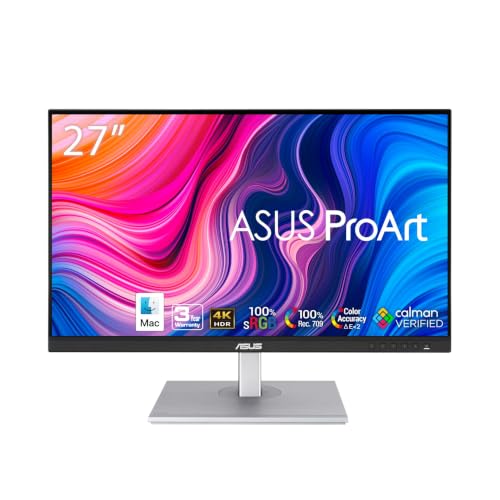
ASUS ProArt PA279CRV 27 Inch 4K UHD USB-C HDR Professional Monitor for Mac

Dell 32 Monitor S3225QS, 4K UHD VA, 120Hz, FreeSync Premium, Eye Comfort

LG 27US500-W Ultrafine Monitor 27-Inch 4K UHD HDR10 IPS Borderless Design

ViewSonic VP2756-4K 27 Inch 4K ColorPro Monitor

LG 27UP650K-W 27-inch Ultrafine 4K UHD IPS Computer Monitor

BenQ MA270U 27” 4K 3840×2160 Monitor for MacBook Pro/Air
That 160Hz panel makes this ASUS feel unusually flexible for a photo desk, because you get 4K detail without giving up speed for scrolling, timelines, or light gaming after work. The USB-C connection keeps a laptop setup tidy, and the 99% DCI-P3 coverage speaks to a wide color range that matters when you want edits to hold up across bright portraits and rich product shots.
The trade-off is that the feature set leans sporty, so this makes more sense for mixed creative use than for a stripped-back color station. Still, if you edit during the day and game at night, the dual-mode behavior gives you a lot of usefulness in one panel, which is better than owning a screen that feels sleepy once the files are closed.
Strong Points
- 4K resolution keeps fine details visible in crops, masks, and texture work.
- USB-C can simplify a laptop desk with fewer cables in view.
- Wide DCI-P3 coverage helps images hold richer tones while you grade.
- 160Hz refresh can make long editing sessions feel smoother during fast cursor movement.
Things To Consider
- The gaming-forward design makes it a little less focused than a pure studio monitor.
- You may find the extra speed less useful than color controls for strict print work.
- Keeping the display calibrated over time still depends on your own workflow tools.
Feature Snapshot
Who Will Love This
Creative multitaskers who edit photos, then jump into games or other fast motion tasks, will get the most from it.
Where A Sibling Pick Shines
ASUS ProArt PA279CRV is the tighter fit for color-first editing and a calmer studio layout.
This ProArt model reads like a monitor built for controlled editing sessions, especially beside a Mac where USB-C and a clean desk matter. The factory tuning to Delta E under 2, meaning a small color error target, gives you a stronger starting point than a general-purpose display, and the 99% DCI-P3 plus 99% Adobe RGB coverage helps serve both digital and print-minded work.
The 96W USB-C power delivery is handy for a laptop studio because one cable can handle display, data, and charging. The trade-off is simple, it’s aimed squarely at color work and calm productivity, so it feels less playful than the ASUS ROG model above and less lounge-friendly than the Dell 32.
What We Like
- Factory calibration gives you a more trustworthy starting point for color-sensitive edits.
- Adobe RGB coverage helps with print-oriented files and wider archival workflows.
- USB-C with 96W power delivery simplifies a MacBook desk setup.
- Daisy chain support can help a dual-monitor arrangement feel less cluttered.
- Height adjustment makes it easier to line up the screen with your seat.
Room For Improvement
- The focus on professional color work leaves less appeal for entertainment-first use.
- Like most studio monitors, it rewards proper calibration habits over casual plug-and-play use.
- Its strengths show most clearly in a dedicated desk, not a shifting shared space.
Core Details
Perfect Match For
Mac-based photo editors who want a color-aware screen with tidy cabling will feel right at home here.
Another Choice May Suit
ViewSonic VP2756-4K fits better for editors who want a more display-agnostic studio monitor with a softer price posture.
The 31.5-inch size changes the feel right away, giving you more breathing room for toolbars, image tabs, and side-by-side comparisons. Compared with the ASUS ProArt, this Dell leans less toward exacting color work and more toward a big, comfortable workspace with strong contrast from its VA panel, which is the sort of thing you notice during long editing sessions.
The 120Hz refresh rate and FreeSync Premium are nice extras for people who split time between editing, movies, and games. One thing worth considering is that a larger VA screen can feel a bit less reference-like than an IPS studio panel, but for mixed use on a single desk, it has a calm, immersive presence.
Highlights
- 31.5 inches gives you lots of room for side-by-side creative work.
- 3000:1 contrast can help darker images feel deeper and more layered.
- 120Hz motion feels smooth during scrolling and general desktop movement.
- Anti-glare coating suits bright rooms and windowed offices.
Softer Spots
- Its larger footprint asks for a deeper desk than a 27-inch panel.
- VA panels often feel less uniform than color-first IPS choices for precision grading.
- The comfort features are useful, but they don’t replace a dedicated calibration routine.
Details At A Glance
Built With In Mind
Editors who want a larger, comfortable 4K workspace for mixed tasks will get the most out of this Dell.
Look Elsewhere When
ASUS ProArt PA279CRV is the better call for tighter color accuracy and a more studio-like editing setup.
The LG 27US500-W sits in that comfortable middle ground where photo work, office tasks, and casual viewing can share the same desk without much fuss. Its 4K panel with HDR10 support and 90% DCI-P3 coverage gives you useful color range for everyday creative work, while the borderless white design keeps the setup looking light rather than bulky.
OnScreen Control and the tilt-adjustable stand make day-to-day use feel less rigid, which matters more than people expect during long file sessions. The honest read is that this is not the most specialized choice here, but it’s easy to live with, especially for someone who wants a clean monitor that does a lot without asking for much attention.
Plus Points
- 4K clarity gives you room to inspect details without zooming constantly.
- HDR10 and wide color support help images look more dimensional.
- OnScreen Control can speed up split-screen work and basic adjustments.
- The white borderless look suits bright desks and minimalist setups.
Small Caveats
- It feels more general-purpose than the ASUS ProArt or ViewSonic choices.
- The tilt-only stand leaves less physical adjustment than some rivals.
- Software control is convenient, but it still depends on installing the app.
Core Details
The Right Fit
Anyone building a tidy, everyday 4K desk for light editing and mixed work will appreciate how easy this monitor is to live with.
Swap It Out When
ViewSonic VP2756-4K is the better match for a more deliberate photo-editing setup with stronger color workflow focus.
The ViewSonic VP2756-4K is aimed squarely at people who want their desktop display to behave like a work tool, not a living-room screen. Its 100% sRGB coverage and Pantone validation make it a sensible fit for photo editing in spaces where you want predictable color and a more serious workflow than the LG 27US500-W offers.
The 60W USB-C connection is practical for a laptop studio, and the 3-sided frameless design helps a multi-monitor setup feel cleaner. The catch is that this is a quieter, more methodical monitor than the ASUS ROG or Dell 32, so it rewards color discipline rather than flashy specs.
Best Bits
- 100% sRGB supports web-focused editing with familiar color boundaries.
- Pantone validation gives you added confidence for color-managed work.
- USB-C with 60W power delivery helps keep a laptop desk simpler.
- The slim border design works nicely in dual-monitor layouts.
Areas To Watch
- The 60W power delivery suits many laptops, but heavier machines may still need their own charger.
- It is more studio-oriented than entertainment-oriented.
- Color accuracy still depends on keeping your own workflow steady over time.
Feature Rundown
Best Suited To
Photo editors who want a straightforward, color-aware monitor for a desk-centered workflow will like this one most.
Reach For A Different Pick When
ASUS ProArt PA279CRV is the stronger choice for wider-gamut color work and a more Mac-focused setup.
This LG is the easygoing option in the group, the kind of monitor that fits a shared office, a bedroom desk, or a first photo-editing station without drama. The 4K IPS panel and DisplayHDR 400 support give you a solid base for image work, while the tilt, height, and pivot stand means you can rotate between portrait and landscape tasks more comfortably than with the simpler LG 27US500-W.
Reader Mode and Flicker Safe are useful during long sessions because they help the screen feel less tiring in day-to-day use. The trade-off is that the 60Hz refresh and 5ms response keep it in the practical lane rather than the fast lane, which is fine for editing but not the draw for motion-heavy work.
Positives
- IPS panel behavior suits general photo editing and office work.
- Height, tilt, and pivot adjustments give you more mounting flexibility.
- DisplayHDR 400 adds a little more range for compatible content.
- Reader Mode is handy for long file review sessions.
Worth Noting
- The 60Hz ceiling keeps it more practical than speedy.
- It feels more utilitarian than the ProArt and ViewSonic picks.
- Pivot mode helps, but desk depth still matters for a comfortable rotation.
At A Glance
Whose Shelf It Belongs On
This monitor suits someone who wants a flexible 4K desk display for photo work, reading, and general computer use.
Another Choice May Suit
Dell 32 Monitor S3225QS is the better fit for a larger, more immersive screen with a stronger media-friendly feel.
BenQ built this one around Mac users, and that focus shows in the color tuning, keyboard-based brightness and volume control, and dual USB-C layout. For a MacBook Pro or Air desk, it can feel as tidy as a well-organized toolbox, because the monitor, hub, and charging path all point toward a single-laptop workflow.
The 90W power delivery is strong enough for many MacBook setups, and the P3 gamut support fits the wider color space common in Apple-oriented creative work. The catch is that some of the appeal is specific to the Mac ecosystem, so Windows-first editors may get more universal value from the ASUS ProArt or ViewSonic instead.
Reasons To Buy
- Mac color tuning helps the screen feel aligned with a MacBook setup.
- Dual USB-C ports make cable management simpler on a crowded desk.
- 90W power delivery can cover many laptop charging needs.
- Built-in hub functions reduce the need for extra desk accessories.
- Height and tilt adjustment help you set a comfortable posture.
Minor Gripes
- Mac-specific tuning matters most when your desktop is already in the Apple world.
- The feature mix is practical rather than flashy.
- Keyboard-based control is handy, but only for compatible workflows.
Technical Sheet
Made For
MacBook users who want a tidy 4K editing desk with integrated charging and monitor control will appreciate this most.
Where Shoppers Go Wrong
LG 27UP650K-W is a better fit for someone who wants a more general-purpose 4K monitor without Mac-specific tuning.
How To Choose The Right 4k Photo Editing Monitors
Panel Type And Color Range
IPS panels stay popular for photo editing because they usually hold color and contrast more evenly across a normal sitting position. VA panels can bring deeper black levels and stronger contrast, which helps with darker images, but they are less often the first call for strict color work.
Color coverage matters just as much. sRGB is the safe baseline for web work, while DCI-P3 and Adobe RGB speak to broader color spaces that help when your files need more headroom for print or wider digital output.
Resolution, Size, And Desk Distance
4K on 27 inches gives you sharp detail without making interface elements feel tiny for most desks. A 32-inch panel, like the Dell here, gives you more room for palettes and side-by-side windows, but it also asks for more depth and more eye movement.
That balance matters in real use. Smaller desks usually pair better with a 27-inch screen, while deeper creative stations can handle a larger panel that makes comparing crops and layers feel less cramped.
Ports, Charging, And Cable Control
USB-C is useful because it can carry video and data through one connection, and some models also charge a laptop at the same time. That keeps the desk cleaner, which helps more than people expect once you start adding a tablet, card reader, or external drive.
Dual USB-C, HDMI, and DisplayPort give you more flexibility, especially if you swap between a laptop and a desktop tower. Mac-focused control features are helpful for Apple setups, while a simpler port layout can be fine for a single workstation.
Ergonomics And Long Sessions
A monitor stand with height, tilt, and pivot adjustment makes a bigger difference than the spec sheet may suggest. It helps you keep the panel at the right eye line, and that matters during long retouching sessions where a bad posture adds up fast.
Reader modes, flicker reduction, and anti-glare coatings can also make a desktop feel easier on the eyes in everyday use. They do not replace careful lighting, but they can make a full workday feel less tiring.
Things Worth Knowing First
Mistakes Worth Dodging
Many shoppers fixate on refresh rate and forget about color coverage. For photo editing, a fast panel is nice, but broad and well-managed color usually matters more than motion speed.
Another common miss is buying a large screen for a shallow desk. A 32-inch display can feel great, yet it quickly becomes awkward when your keyboard, notebook, and tablet all need room too.
The Upgrade Payoff
Higher-tier monitors often spend their money on wider gamuts, factory calibration, sturdier stands, and USB-C power delivery. Those upgrades reduce setup friction and usually make the screen more dependable for serious editing work.
The jump is worth it when you work on client images, print projects, or a daily laptop workstation that needs to stay clean and consistent. Casual editing can live happily on a simpler model, but color-sensitive work usually benefits from the extra polish.
Frequently Asked Questions
Is 4K enough for photo editing?
Yes, 4K gives you crisp detail and more room for tools than a lower-resolution screen. On a 27-inch panel, that balance usually feels especially practical.
Does IPS matter more than refresh rate?
For photo work, IPS usually matters more because color stability is part of accurate viewing. A high refresh rate is still nice, but it is not the first thing to chase.
Is USB-C worth prioritizing?
USB-C helps keep a desk neat by combining display and data into one cable. It matters most for laptop setups and compact editing spaces.
Should you choose 27 inches or 32 inches?
Twenty-seven inches suits most desks and keeps details easy to manage. Thirty-two inches feels more expansive, but it needs more space and eye movement.
Do you need wide color gamut for web photos?
Wide gamut support is still useful because it gives you more room to edit before you export. For web-only work, sRGB coverage is often the practical baseline.
