
A 5K 27-inch display makes sense when you want crisp text, roomy layouts, and fewer compromises on a desk that does double duty. You might be editing photos in the morning, jumping into video calls after lunch, or keeping a MacBook on one cable and one screen without clutter. The six picks below lean into different strengths, from color accuracy to smoother motion to simpler desk setup.
Quick Look At Our Top Picks


LG 27MD5KL-B Ultrafine Monitor 27″ 5K

LG 27UP650K-W 27-inch Ultrafine 4K UHD Monitor
ASUS ProArt PA27JCV 27 Inch 5K USB-C Professional Monitor

Apple Studio Display Standard Glass
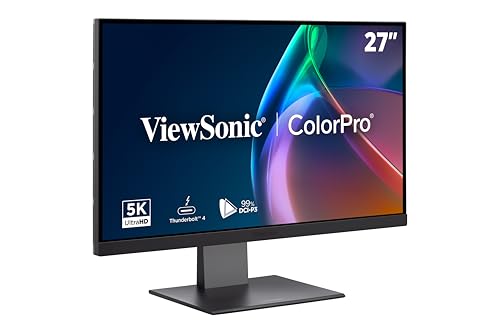
ViewSonic VP2788-5K 27 Inch 5K Mac Ready Monitor
More Details On Our Top Picks
Dell’s S2725QS sits in the sweet spot for someone who wants a cleaner desk without giving up speed. The 120Hz refresh rate, FreeSync Premium support, and USB-C input make it easier to move between work and casual gaming, while the height, swivel, and pivot adjustments help you dial in a comfortable posture.
The honest read is that it feels less specialized than the creator-focused picks later in the list, but that’s also its strength. You get a 4K IPS panel with anti-glare treatment, 350 cd/m2 brightness, and 99% sRGB coverage, which suits day-to-day office work, streaming, and light content editing in a home setup.
What We Like
- 120Hz helps motion feel smoother than a standard 60Hz office display.
- USB-C keeps a laptop setup tidier with one cable for video and data.
- Height, swivel, and pivot movement make shared desks easier to live with.
- IPS viewing angles help the image stay consistent across a wider seat position.
- 99% sRGB coverage suits normal creative work and everyday color-sensitive tasks.
Points To Note
- It does not target the ultra-high color accuracy crowd the ASUS ProArt aims for.
- 5ms response time is fine for most use, but motion-focused users may want more headroom.
- External cable routing takes a little care because the stand is highly adjustable.
Feature Rundown
Who It Suits Best
Daily laptop users who want one screen for work, video, and occasional gaming will get the most from this Dell.
A Better Fit Elsewhere
ASUS ProArt PA27JCV 27 Inch 5K USB-C Professional Monitor suits color-focused creators more closely, especially for photo work and Mac-based editing.
LG’s UltraFine 5K is built around the kind of clarity that makes text and interface details feel unusually crisp on a 27-inch panel. For Mac desks in particular, the Thunderbolt 3 connection and three USB-C ports keep the setup neat, and the 500-nit brightness gives the screen more presence in brighter rooms.
Compared with the Dell above, this one leans much harder into Mac compatibility and sheer pixel density rather than mixed-use speed. The trade-off is straightforward, you’re paying for a highly specific experience, so Windows-only shoppers or gamers may not get the same payoff.
Reasons To Buy
- 5K resolution delivers very fine text and detailed UI elements.
- Mac compatibility makes it a natural fit for a MacBook desk.
- Three USB-C ports reduce the need for extra adapters on a clean setup.
- 500-nit brightness helps the panel hold its own in brighter spaces.
- IPS technology supports wide viewing angles for shared or angled viewing.
Areas To Watch
- The feature set feels tuned to one platform more than broad mixed-device use.
- Thunderbolt 3 is solid, but it is not the newest connection standard.
- The monitor makes the most sense for users who truly value 5K sharpness.
Details At A Glance
Who Should Grab It
Mac users who want sharp text, simple cabling, and a display built around that ecosystem will feel right at home here.
Where A Sibling Pick Shines
ViewSonic VP2788-5K 27 Inch 5K Mac Ready Monitor is a better fit for desks that need more connection variety and broader device handling.
This LG is the calmer, simpler option in the group. The 4K IPS panel, Reader Mode, and Flicker Safe features point toward long sessions at a desk, especially for writing, browsing, and spreadsheets where eye comfort matters more than motion speed.
Compared with the Dell S2725QS, it gives up refresh-rate headroom and USB-C convenience, but it also keeps the setup straightforward. In most home offices, that trade feels sensible, especially when you want a white finish and an adjustable stand without moving into creator-grade pricing territory.
Upsides
- 4K resolution gives you plenty of workspace for documents and browser tabs.
- Reader Mode is a practical touch for long writing or research sessions.
- Flicker Safe support can make extended desk time feel easier on the eyes.
- The tilt, height, and pivot stand adds useful positioning flexibility.
Small Caveats
- 60Hz is fine for office use, but it is less lively than the Dell’s 120Hz panel.
- DisplayPort and HDMI are useful, yet the connection mix is more basic than USB-C heavy options.
- The white finish may show dust more clearly than darker cabinets.
Quick Facts
Whose Shelf It Belongs On
Home-office users who want a steady, uncluttered 4K monitor for writing, spreadsheets, and streaming will get along with this one.
Another Choice May Suit
ASUS ProArt PA27JCV 27 Inch 5K USB-C Professional Monitor is a smarter step for color-critical creative work and Mac editing.
ASUS built this ProArt model for people who care about color enough to notice small shifts right away. Calman Verified calibration, Delta E<2 tuning, and broad gamut support make it a serious fit for editing, grading, and design work where consistency matters from one window to the next.
Compared with the LG UltraFine 5K, this one adds more creator-oriented control and a clearer professional angle for mixed Mac and PC desks. The LuxPixel AGLR surface and Auto KVM are practical touches, though the real draw is still the color discipline and USB-C PD 96W support for a single-cable laptop setup.
Bright Spots
- Delta E<2 tuning points toward tighter color consistency for visual work.
- Calman Verified status helps signal a more serious color-management approach.
- USB-C PD 96W keeps compatible laptops charged through the display cable.
- Auto KVM makes switching between two connected systems less awkward.
- Height adjustment supports more comfortable long sessions at a desk.
Worth Noting
- The feature set makes the most sense for work that truly depends on color accuracy.
- People who only need a general office screen may be paying for more than they use.
- The matte-style LuxPixel surface may feel different from glossier panels, depending on your taste.
Core Details
Built With In Mind
Photo editors, designers, and Mac users who want trustworthy color and neat cabling will get the most from this monitor.
Swap It Out When
LG 27UP650K-W 27-inch Ultrafine 4K UHD Monitor is the easier choice for everyday desk use that does not need pro-level color control.
This Apple display is for people who want a desk centerpiece that feels tightly tied to the Mac world. The standard glass panel, tilt-adjustable stand, and built-in service support structure make it feel polished, and the broader package is clearly aimed at users who keep their computer setup simple and integrated.
Compared with the ASUS ProArt, it trades creator-spec messaging for Apple-first convenience and a more streamlined feel. The trade-off is that the experience makes the most sense inside a Mac-heavy workspace, so mixed-platform desks may not get the same value from it.
Positives
- 5K Retina resolution brings very fine detail to text and imagery.
- Standard glass keeps the look clean and familiar on a desk.
- Tilt-adjustable stand gives you a simple way to set viewing angle.
- Apple repair support and service access are built into the ownership story.
- Onsite service or courier pickup can simplify long-term maintenance logistics.
Trade Offs
- The display makes the most sense for people already deep in Apple hardware.
- It feels more like an integrated system piece than a flexible general-purpose monitor.
- Shoppers who want a wider range of display controls may prefer ASUS or ViewSonic.
Feature Card
The Right Fit
Mac users who want a polished, tightly integrated screen for office work, calls, and content viewing will appreciate this most.
Look Elsewhere When
ViewSonic VP2788-5K 27 Inch 5K Mac Ready Monitor fits better for people who want more input options and a more versatile desk hub.
ViewSonic takes a practical route here, packing in Thunderbolt 4, USB-C, HDMI, DisplayPort, and 100W power delivery on a single 27-inch 5K panel. For people who juggle a MacBook, a desktop, and maybe a second source, that spread of ports can make the monitor feel like the center of the desk instead of just a screen.
It sits between the Mac-first LG and the more creator-leaning ASUS, which gives it a useful middle ground. The Pantone Validated color callout, 99% DCI-P3 support, and adjustable stand point toward design work, though the real draw is the connection flexibility and daisy-chain-friendly setup style.
Highlights
- Thunderbolt 4 and DisplayPort make multi-device desk setups easier to manage.
- 100W power delivery supports a cleaner single-cable laptop connection.
- 99% DCI-P3 and sRGB coverage suit color-aware work and media viewing.
- Pantone Validated status gives it a more professional creative profile.
- Adjustable stand helps you line up the screen for longer work sessions.
Ongoing Considerations
- All that connectivity makes sense only if you actually use multiple sources.
- The feature list is broad, so casual office shoppers may not need every part of it.
- Desk cable planning still matters, since more ports can also mean more routing choices.
Spec Overview
Perfect Match For
People who want one display to anchor several devices, especially in a Mac-friendly creative space, will get a lot of value here.
Reach For A Different Pick When
LG 27MD5KL-B Ultrafine Monitor 27″ 5K suits a more focused Mac desktop, while the ASUS ProArt PA27JCV fits stricter color-sensitive work.
How To Choose The Right 5k 27 Inch Displays
Resolution And Pixel Density Matter First
A 27-inch panel shows the value of 5K quickly because text gets cleaner and interface elements stop looking coarse. That matters most for coding, photo work, and long stretches at a desk where you want less eye strain from jagged edges. A 4K screen can still look excellent, but 5K gives you more room for detail at this size.
Match The Monitor To Your Computer
Mac users often get the easiest experience from displays built around USB-C or Thunderbolt links, especially when one cable handles both signal and charging. Windows desks can still use these monitors well, but you should look closely at HDMI, DisplayPort, and USB hub support before you commit. The wrong connection mix can turn a neat setup into a tangle of adapters.
Color Accuracy Beats Marketing Talk
For editing photos, layout work, or design review, color coverage and factory calibration matter more than flashy panel claims. Terms like sRGB and DCI-P3 describe color spaces, which are the ranges a screen can show, and higher coverage usually means more faithful color handling in supported work. Casual office use does not need that same level of precision, so you can save money if your desk is mostly documents and video calls.
Motion, Ergonomics, And Desk Space
A 120Hz panel feels smoother for scrolling and light gaming than a 60Hz model, even on a sharp 27-inch display. Height, tilt, swivel, and pivot adjustments also matter more than many people expect, because a screen that sits at the wrong angle gets annoying fast. Keep an eye on stand footprint too, since a big base can crowd a keyboard or tablet stand.
A Quick Reality Check Before You Click
Mistakes Worth Dodging
A common slip is paying for creator-grade color control when your main job is email, spreadsheets, and streaming. Another is overlooking connection types, then finding out your laptop needs an extra adapter or dock. Dust and cable clutter also show up fast on a premium desk setup, so a tidy plan matters as much as panel quality.
The Upgrade Payoff
Higher-tier models often cost more because they add tighter calibration, better color control, stronger port selection, and more polished materials. That extra spend makes sense for photo editors, Mac-heavy desks, and anyone who wants one screen to anchor several devices. For basic office work, a simpler 4K screen can do the job without extra layers you’ll never use.
Frequently Asked Questions
Is 5K Worth It On A 27-Inch Screen?
Yes, it can be, especially for text-heavy work and detailed visual tasks. You get a denser image that feels cleaner than standard 4K at this size.
Which Pick Works Best For MacBooks?
The LG 27MD5KL-B Ultrafine Monitor 27″ 5K and the ViewSonic VP2788-5K 27 Inch 5K Mac Ready Monitor are the easiest places to start. Both lean into Mac-friendly connectivity and tidy desk use.
Do You Need A 5K Display For Office Work?
Not always, because many office tasks run perfectly well on 4K. A 5K screen still gives you sharper text and a more spacious feel, so it suits long work sessions well.
Which Model Is Best For Color-Sensitive Editing?
ASUS ProArt PA27JCV 27 Inch 5K USB-C Professional Monitor stands out for that role. Its calibration and color-focused feature set make more sense than a general-purpose display.
What Connection Should You Look For First?
USB-C and Thunderbolt are the easiest starting points for cleaner laptop setups. HDMI and DisplayPort still matter, especially for desktop towers and mixed-device desks.
