
Trying to choose a 27-inch monitor without overpaying usually means sorting through a lot of near-identical listings. Your real question is simpler: which screen gives you the right mix of size, sharpness, motion handling, and desk-friendly extras for your day-to-day work or downtime?
This roundup focuses on that practical fit. You’ll see plain office-friendly picks, faster panels for gaming, and a few models that make sense for mixed use, especially on desks where one screen has to do a lot of jobs.
The Shortlist At A Glance

HP Series 3 27 inch FHD Monitor 327se

Amazon Basics 27 Inch Monitor 100Hz

KTC 27M1 27 Inch Gaming Monitor 210Hz

AOC 27 Inch Computer Monitor 27B35H3

Dell 27 240Hz Gaming Monitor SE2726HG
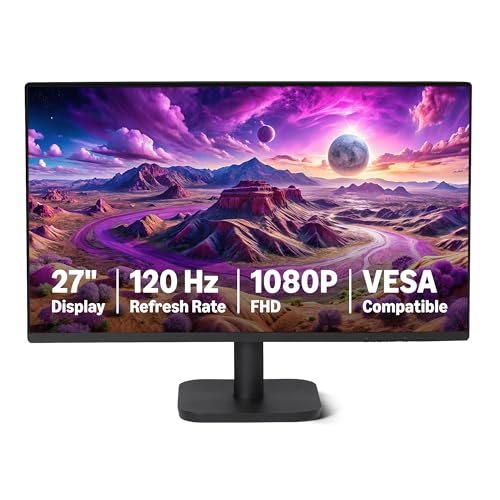
Amazon Basics 27-inch Computer Monitor 120 Hz

Sceptre New 27-inch Prime Monitor E275W-19203R
More Details On Our Top Picks
The HP Series 3 feels like the easy-going office pick in this group, with a 27-inch IPS panel and Full HD resolution that suit spreadsheets, browsing, and long stretches of document work. The 250 nits of brightness and 1300:1 contrast ratio matter because they help the image stay readable without pushing the screen too hard.
Eye Ease with Eyesafe certification is a practical touch for daily desk time, especially in rooms where you stare at a screen for hours and want a less harsh feel. The trade-off is simple: this is built more for comfort and general use than for fast-motion gaming, so the KTC and Dell models make more sense for speed-first setups.
Strong Points
- 27-inch size gives you roomy side-by-side windows without crowding a modest desk.
- IPS viewing angles help the picture stay consistent when you lean back or shift position.
- 250-nit brightness is enough for ordinary indoor work in most home offices.
- Eye-focused tuning suits long writing sessions and everyday admin tasks.
Points To Note
- Full HD on 27 inches is fine for office use, though very text-heavy work can look softer than on sharper QHD panels like the KTC.
- Nothing here points to high-refresh gaming, so motion fans should look elsewhere in this list.
Feature Snapshot
Who It Suits Best
Desk workers, students, and general home users who want a plain, comfortable 27-inch screen should feel right at home here.
Where A Sibling Pick Shines
Amazon Basics 27-inch Computer Monitor 120 Hz suits you better for a simpler setup with smoother motion and a slightly livelier refresh rate.
This one stands out for desk convenience more than flash, with built-in speakers, VESA compatibility, and four USB ports helping reduce the tangle around your setup. The 100Hz ceiling also gives the screen a smoother feel than a basic 60Hz office panel, which you’ll notice in window dragging and lighter gaming.
That said, its appeal is mostly practical. If you care about clean cable routing and easy plug-in access for peripherals, this is an easy fit, while the HP model feels a bit more comfort-focused and the Dell steps up harder for gaming speed.
What We Like
- Four USB ports make it easier to keep a keyboard, mouse, and small accessories connected.
- Built-in speakers trim down desk clutter for casual workspaces.
- 100Hz refresh adds a smoother feel for everyday scrolling and light play.
- VESA support lets you mount it and reclaim desk space.
Small Caveats
- Owners who want richer audio usually still pair monitors like this with separate speakers or headphones.
- The panel is aimed at convenience, so image enthusiasts may prefer the more color-forward KTC or Dell options.
Details At A Glance
Who Should Grab It
Home office users who want a tidy all-rounder with a few convenience extras should get the most out of it.
Look Elsewhere When
KTC 27M1 27 Inch Gaming Monitor 210Hz suits gamers who care far more about motion clarity than USB convenience.
The KTC 27M1 is the speed-first outlier in this group, and the jump to 2560 x 1440 QHD is a real step up in sharpness over the FHD models above. That extra detail matters in games, but it also helps with dense timelines, code, and creative apps that benefit from more screen information.
You also get a fast IPS panel, a 1ms MPRT response figure, and a shielding hood that can cut down glare in a brighter room. The trade-off is that it asks more of your graphics hardware than the 1080p picks, so it fits better on a gaming desk than on a bare-bones office PC.
Highlights
- QHD resolution gives you noticeably tighter detail than the 1080p monitors in this roundup.
- 200Hz with overclocking to 210Hz suits fast-moving games and very fluid desktop motion.
- Tilt, swivel, pivot, and height adjustment make it easier to set the screen at a sensible eye line.
- Built-in speakers reduce the need for extra desk hardware.
- VESA mounting opens the door to arms and wall brackets.
Trade Offs
- QHD gaming usually makes the most sense with a stronger graphics card than the 1080p picks need.
- Its feature set is tuned for speed and flexibility, so casual users may find it more monitor than they need.
Core Details
Built With In Mind
Gamers who want a sharper 27-inch screen and care about fast response should feel drawn to this one first.
A Better Fit Elsewhere
Dell 27 240Hz Gaming Monitor SE2726HG suits competitive players who want even higher refresh on a 1080p panel.
The AOC 27B35H3 sits in a nice middle lane, with 120Hz, Fast IPS, and HDR-ready support giving it a bit more polish than plain 60Hz office screens. That combination is handy for mixed use, because it keeps desktop work steady while also making casual gaming and video feel less sluggish.
Its HDMI 1.4, VGA, and VESA support add practical flexibility, and the tilt adjust helps with basic ergonomics. The honest read is that this is less about extras and more about a balanced set of core traits, which makes it a smart fit for someone who wants one screen to do a lot without fuss.
Bright Spots
- 120Hz gives motion a cleaner, more modern feel than standard office panels.
- Fast IPS is a strong fit for mixed work and entertainment.
- HDMI and VGA support can help in older or mixed hardware setups.
- VESA compatibility keeps arm-mount options open.
- Flicker-free and low blue light features suit long desk sessions.
Worth Noting
- VGA is useful for compatibility, though most newer setups will lean on HDMI instead.
- It does not aim at the ultra-fast gaming crowd the way the Dell and KTC models do.
Quick Facts
Right Fit For
Home users who want a balanced screen for work, streaming, and lighter gaming should feel comfortable with it.
Swap It Out When
Amazon Basics 27-inch Computer Monitor 120 Hz suits you better if USB and DisplayPort matter more than VGA support.
Speed is the whole point here, and Dell leans into it with a 240Hz panel, fast IPS tech, and a 0.5ms response figure that suits players who care about motion clarity above all else. FreeSync Premium and HDMI VRR also help keep console and PC play smoother by reducing visible tearing.
The TÜV 3-star eye comfort rating makes it feel better rounded than some pure gaming displays, especially for long evening sessions. Still, the 1080p resolution is the price of that speed, so the KTC gives you more detail while this Dell focuses more tightly on fast competitive play.
Upsides
- 240Hz refresh is a strong match for fast shooters and esports-style play.
- 0.5ms response time helps keep motion crisp.
- FreeSync Premium and HDMI VRR support smoother variable-rate gameplay.
- IPS tech preserves familiar color behavior across a desk setup.
- Two HDMI ports and DisplayPort 1.4 make source switching easier.
Softer Spots
- To get the most from 240Hz, your PC or console setup needs the horsepower to match.
- The FHD resolution is fine at 27 inches, though it does not deliver the extra crispness of the KTC’s QHD panel.
Feature Rundown
Who Will Love This
Competitive gamers who value smooth response and keep their desk focused on play will get the most from it.
Another Choice May Suit
AOC 27 Inch Computer Monitor 27B35H3 fits better for mixed use where you want a calmer balance of speed and day-to-day flexibility.
This Amazon Basics model keeps the formula straightforward, with IPS, 120Hz, HDMI, DisplayPort, and VESA support giving it a very usable mix for ordinary desk life. The 99% sRGB figure and 1500:1 contrast ratio make it sound a bit more color-aware than the plain office crowd, which helps if your work includes images or presentation slides.
It’s the kind of monitor that slots into a home office without drawing attention, and that’s part of the appeal. Compared with the HP Series 3, it offers a smoother refresh; compared with the Dell, it stays far more restrained and less gaming-heavy.
Best Bits
- 120Hz makes scrolling and cursor movement feel more fluid than standard office screens.
- DisplayPort and HDMI give you useful connection flexibility.
- VESA support helps with arm mounting or a tighter desk layout.
- 99% sRGB coverage is useful for color-aware everyday work.
Areas To Watch
- Some setups need the correct cable and graphics settings to reach the full 120Hz.
- Its design is plain, so style-focused desks may want something more distinctive.
Feature Card
The Right Fit
Home office users who want a no-drama display with a little more motion smoothness should feel well served.
Skip It When
Dell 27 240Hz Gaming Monitor SE2726HG is the better call for fast-paced gaming and a more aggressive refresh target.
Sceptre’s E275W-19203R keeps the feature list useful without getting fussy, and that makes it appealing for a budget-conscious desk. The 100Hz refresh rate, built-in speakers, 99% sRGB coverage, and eye-care focus give it enough range for work, media, and light play.
It also brings two HDMI inputs and VGA, which matters more than people expect in mixed-gear homes or small offices with older hardware. The catch is that it doesn’t chase the faster, sharper end of the category, so the Dell and KTC models still make more sense for gaming-heavy setups.
Reasons To Buy
- 100Hz is a solid step above entry-level office refresh rates.
- Two HDMI ports help when you juggle more than one source.
- Built-in speakers save desk space for lighter setups.
- 99% sRGB coverage supports everyday color work better than bare-bones panels.
Minor Gripes
- VGA is useful for old gear, though many newer setups won’t need it.
- The built-in speakers are convenient, yet separate audio can still sound fuller.
Core Details
Whose Shelf It Belongs On
Budget-minded home users who want a usable mix of work, video, and basic gaming will get the most from it.
Reach For A Different Pick When
Amazon Basics 27-inch Computer Monitor 120 Hz suits you better if DisplayPort, VESA support, and a more subdued look matter more.
How To Choose The Right Affordable 27 Inch Monitors
Resolution, Refresh Rate, And Daily Comfort
Size alone doesn’t tell you much at 27 inches. Full HD is still fine for office work and streaming, but sharper text and denser layouts are easier to live with on QHD, which is why the KTC stands apart from the rest of this group.
Refresh rate matters just as much as resolution. A 100Hz or 120Hz screen feels smoother for scrolling, window dragging, and light gaming, while 240Hz and 210Hz matter more when fast motion and response time are the point.
Connections And Desk Layout
Ports shape how painless the monitor feels after setup. HDMI works for most use cases, but DisplayPort, USB ports, and VESA mounting can save you from a cluttered desk and awkward cable runs.
Built-in speakers can help in a spare room or a simple workstation, though they usually serve convenience more than rich sound. For a lot of people, that trade is worth it because it trims one more device from the desk.
Match The Screen To The Work You Actually Do
Office users benefit from IPS panels, gentle ergonomics, and steady brightness more than raw speed. That’s where the HP Series 3 and Amazon Basics 120Hz model make sense, especially for long email, spreadsheet, or browser sessions.
Gamers should think differently. A Dell 240Hz or KTC 210Hz setup gives you faster motion handling, but it also asks for stronger hardware and a budget that stretches beyond a basic office screen.
Where Spending More Starts To Matter
Higher-tier monitors usually buy you a better panel, faster refresh, more adjustment, and a cleaner port mix. You feel that difference most on a mixed-use desk or in a gaming corner where every frame and every ergonomic tweak matters.
For simple browsing and office work, the midrange picks already cover the basics well. Spend up only when your daily use actually needs the extra speed, sharper resolution, or more flexible stand.
A Quick Reality Check
Mistakes Worth Dodging
Do not buy on screen size alone. A 27-inch monitor can feel great for multitasking, but without the right resolution and refresh rate, it can look soft or feel sluggish.
Connection choice matters too. Some setups need DisplayPort or a better HDMI cable to reach the monitor’s full refresh, so check your PC and console ports before you settle on a model.
The Upgrade Payoff
More expensive models usually cost more because of speed, adjustment range, and panel quality. That extra spend shows up in smoother motion, better ergonomics, and a screen that feels easier to live with for hours at a time.
For gamers, creative work, or shared desks, the upgrade can make daily use noticeably nicer. For simple office duty, a restrained 100Hz or 120Hz monitor often gives you enough without stretching the budget.
Frequently Asked Questions
Is Full HD enough on a 27-inch monitor?
For office work, streaming, and casual use, Full HD still does the job. Text-heavy work looks sharper on QHD, so your comfort level depends on how closely you sit and how much detail you need.
Do higher refresh rates matter outside gaming?
Yes, because scrolling and window movement feel smoother on a 100Hz or 120Hz screen. The jump is most obvious on the desktop, even before you open a game.
Are built-in speakers worth it?
They’re handy for simple setups and help keep your desk cleaner. Separate speakers or headphones usually sound fuller, so built-ins are best treated as a convenience feature.
What panel type should you look for first?
IPS is a sensible starting point because it keeps viewing angles and color behavior steady across a normal desk setup. That makes it a strong match for work, browsing, and mixed use.
Do VESA mounts matter on a 27-inch monitor?
Yes, especially in small spaces where an arm mount can free up room. It also makes it easier to fine-tune height and viewing position than a basic stand alone.
