
Building a desktop gets easier when the case already includes fans, clear cable space, and enough room for your graphics card and radiator. That matters most for you if you want fewer extra purchases, cleaner assembly, and a case that keeps pace with a gaming rig, work tower, or showcase build. The shortlist below focuses on airflow, glass-panel styling, and the practical details that affect daily ownership. Some picks lean bold and roomy, others keep the footprint more restrained.
Quick Look at the Shortlist

HYXN H2 (2026) ATX PC Case 8 ARGB Fans
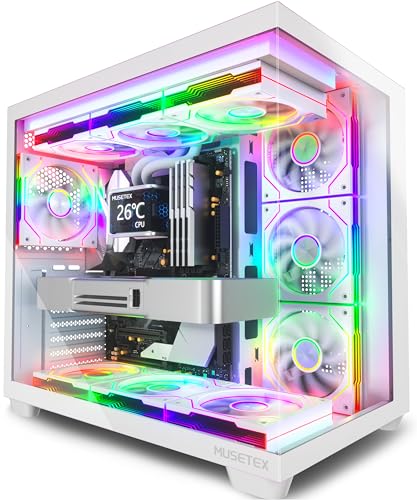
MUSETEX Y6 PC Case 7 Infinity Mirror Fans

MONTECH XR Panoramic ATX PC Case 3 ARGB Fans

MUSETEX Y6 PC Case 4 Non-LED Fans

DARKROCK EC2 ATX Mid Tower Gaming PC Case

Lian Li V100 ATX Mid-Tower PC Case V100RX

CORSAIR 3500X RS ARGB Panoramic Mid-Tower PC Case

Thermaltake View 270 Plus TG ARGB Black Mid Tower E-ATX Case
More Details On Our Top Picks
The HYXN H2 makes sense for a high-wattage gaming tower that runs warm and needs real airflow straight out of the box. Eight pre-installed fans, including six 140mm units and two 120mm units, point toward a case that wants to move air without making you fill every mount yourself. The dual-chamber layout should help keep cables and power gear out of the main view, which is handy in a clean desk setup.
The trade-off is obvious: a case this large asks for more desk space and a more deliberate build plan. Its 420mm radiator support also opens the door for a substantial liquid-cooling setup, so you get flexibility, but you may not need all that room for a modest office PC. Compared with the CORSAIR 3500X, this one feels more about brute capacity than polished restraint.
Strong Points
- Eight included fans save you from piecing together airflow later.
- Six 140mm fans can move air with less fuss in a busy gaming chassis.
- The dual-chamber design helps keep cable clutter away from the main hardware bay.
- 420mm radiator support gives you room for a large cooling setup.
- Type-C 3.2 on the front panel suits newer accessories and faster external drives.
Things To Consider
- The footprint is better suited to a roomy desk or floor placement.
- Eight fans can mean more dusting over time, especially in open rooms.
- The scale may be more case than you need for a basic office build.
Feature Snapshot
Who It Suits Best
You should look at this one for a high-airflow gaming build with room for larger cooling hardware and a tidy, hidden-cable look.
A Better Fit Elsewhere
The MONTECH XR Panoramic High Airflow ATX PC Case is easier to live with for a slightly simpler build that still wants strong cooling and a more restrained parts list.
MUSETEX leans hard into display value, and the 270-degree tempered-glass view gives a wide look at the hardware inside. Seven infinity mirror PWM ARGB fans add motion and lighting that suit a showpiece build on a shelf or desk. For a gaming room with the lights down, that kind of visual energy can look sharp without needing extra strips or accessories.
The flip side is that this case is aimed more at presentation than understatement, so it will feel busy to anyone who likes a plain black box. PWM means pulse-width modulation, which lets the fans adjust speed more intelligently, and that is useful in everyday use, though the visual focus still does most of the talking. Compared with the HYXN H2, this one feels less about raw bulk and more about the front-facing look.
What We Like
- The 270-degree tempered glass view makes components easy to show off.
- Seven included fans mean you start with a strong cooling base.
- PWM fan control can help the system stay calmer during lighter workloads.
- Type-C support fits modern desktop peripherals and storage accessories.
Room For Improvement
- The mirrored-fan look is bold, which may not suit a quiet office setup.
- Glass panels need regular wiping to keep fingerprints in check.
- The design asks for thoughtful cable routing so the view stays clean.
Details At A Glance
Built With In Mind
You should look here for a showcase gaming build where lighting and glass matter as much as airflow.
Where A Sibling Pick Shines
The Lian Li V100-ATX Mid-Tower PC Case-Black-V100RX suits you better when you want a more composed lighting package with four fans instead of seven.
The MONTECH XR sits in a sweet middle ground for builders who want strong airflow without turning the case into a wall of lighting. Three ARGB PWM fans give you an easy starting point, while the support for a 420mm graphics card and 360mm radiator leaves room for high-end parts. Reverse blade fans are a practical touch, since they can improve the look of intake-heavy setups.
Magnetic dust filters matter more than they sound, especially for a PC that sits on the floor or runs in a room with pets. Compared with the MUSETEX Y6, this one feels less theatrical and more focused on cooling, which makes it easier to live with day to day. The honest read is that it suits builders who want a showy case, but not one that shouts at you.
Upsides
- The panoramic front and side glass gives the build a wide view.
- 420mm graphics card support leaves room for large modern cards.
- 360mm radiator support helps with stronger cooling plans.
- Magnetic dust filters simplify routine cleaning.
- Up to nine fan positions give you room to scale airflow later.
Softer Spots
- The panoramic layout can show cable work more clearly than a closed-panel case.
- Three included fans are solid, though some larger builds may want more cooling later.
- The glass-heavy style is less subtle than a plain steel enclosure.
Core Details
Who Will Love This
You fit this case best when you want a clean-looking airflow build with room for a big GPU and future cooling upgrades.
Look Elsewhere When
The DARKROCK EC2 suits you better when the goal is a simpler, more restrained case with fewer visual accents.
This MUSETEX Y6 keeps the same broad glass-heavy shape as the other Y6 version, but the tone is much calmer with four non-LED fans. That makes it easier to slot into a shared living room, a modest office, or a gaming desk where you want airflow without a bright light show. The 270-degree tempered-glass view still gives the build a display feel, just with less visual noise.
Non-LED fans are a straightforward choice for anyone who likes a cleaner desktop after the PC is powered on. Compared with the seven-fan Y6 above, this one asks for less visual commitment and usually feels easier to live with long term. The catch is that you give up some of the dramatic lighting effect in exchange for a quieter look.
Highlights
- Four included fans give you a practical cooling start.
- Non-LED fans keep the appearance simple and less busy.
- 270-degree tempered glass still lets the build stand out.
- Type-C support fits current desktop accessories.
Points To Note
- The understated fan style may feel too plain for a flashy RGB build.
- Glass surfaces still ask for regular cleaning.
- The airflow setup is less ambitious than the seven-fan Y6.
Feature Rundown
The Right Fit
You should grab this version when you want a clean-looking mid-tower with some included airflow and no bright fan lighting.
Swap It Out When
The MUSETEX Y6 with 7 Infinity Mirror PWM ARGB Fans suits you better if your build is meant to be the room’s visual centerpiece.
DARKROCK’s EC2 feels built for someone who wants a straightforward enclosure with room to grow. The tempered-glass side panel keeps the hardware visible, while support for 50-series graphics cards points toward a case that should suit newer, larger boards. That matters for a future-focused gaming setup, especially one that may change GPUs before the rest of the system does.
One pre-installed fan is modest rather than flashy, so you get a starting point instead of a fully loaded airflow package. Compared with the MONTECH XR, this one is more of a blank canvas, which is useful for builders who want to choose their own cooling path. The honest read is that it suits practical builders better than showcase-focused ones.
Best Bits
- Type-C readiness brings the front panel up to modern standards.
- Support for 50-series graphics cards gives the case future-friendly room.
- Up to eight 120mm fans leaves room for later airflow expansion.
- The 360mm radiator support helps with stronger cooling plans.
Worth Noting
- Only one fan is included, so you may need to build out airflow yourself.
- The cleaner shell is less showy than the glass-heavy cases above.
- Owners who want a ready-made lighting setup may need to add more parts.
Technical Sheet
Best Suited To
You fit this case best when you want a simple ATX tower with upgrade room and do not mind adding more fans later.
Another Choice May Suit
The HYXN H2 (2026) ATX PC Case 8 ARGB Fans makes more sense for you when you want a fully loaded airflow layout right away.
The Lian Li V100RX brings together a fan array, a light strip, and a display platform, so the case feels built for a polished desktop rather than a plain utility box. Four 120mm ARGB PWM fans give you the cooling baseline, and the RGB strip adds a subtle line of light that can frame the glass panel well. That mix works nicely in a room where the PC sits in view most of the day.
The display platform is the detail that pushes it beyond the usual mid-tower formula, since it invites you to treat the interior as part of the room’s decor. Compared with the DARKROCK EC2, this is more about presentation from the start, though you still get a practical fan setup. You may find it a better fit for an organized desk where tidy styling matters.
Standout Traits
- Four pre-installed ARGB PWM fans provide an immediate airflow base.
- The LED RGB strip adds a clean accent without crowding the interior.
- The display platform is useful for decorative parts or small hardware accents.
- Tempered glass helps the build feel more finished on a desk.
Areas To Watch
- Lighting features add visual appeal, but they also make cable cleanup more important.
- The showcase approach may feel busy to someone who prefers a muted tower.
- Glass and lighting both call for regular dusting to keep the look crisp.
Feature Card
Whose Shelf It Belongs On
You should choose this one for a style-led gaming or creator desk where visual presentation matters as much as component fit.
Where A Sibling Pick Shines
The MUSETEX Y6 PC Case 4 Non-LED Fans works better for a more restrained desktop that still wants glass and basic airflow.
The CORSAIR 3500X RS ARGB feels like the polished choice for a builder who wants space, airflow, and a clean panoramic look in one shell. Three pre-installed fans keep the starting point sensible, while the spacious interior matters when you are routing thicker cables or working around a larger graphics card. GPU anti-sag support is a smart inclusion, since heavy cards can stress the slot area over time.
Reverse connection motherboard compatibility is a more specialized note, but it matters for modern show builds where the cable side needs to stay tidy. Compared with the MONTECH XR, this one leans a little more premium in presentation and structure. The catch is that you are paying for that refined layout, so it makes the most sense for a showcase build rather than a plain office machine.
Positives
- The panoramic layout suits a clean, side-on view of the hardware.
- Three included fans give you a practical airflow base.
- The roomy interior helps during assembly and future upgrades.
- GPU anti-sag support is helpful for heavier graphics cards.
- Reverse connection motherboard compatibility fits tidy cable-forward builds.
Small Caveats
- The premium structure makes the case feel more specialized than basic mid-towers.
- Panoramic glass usually means more frequent cleaning to keep fingerprints down.
- It makes the most sense when your parts list already leans higher end.
Core Details
Perfect Match For
You should choose this case for a polished showcase build where cable routing, GPU support, and a spacious interior all matter.
Reach For A Different Pick When
The Thermaltake View 270 Plus TG ARGB Black Mid Tower E-ATX Case is the better fit for you when you want a larger display-style tower with a broader format.
The Thermaltake View 270 Plus TG ARGB is the broad, display-forward case in this group, and the front-and-side tempered glass makes that clear right away. Three included 120mm ARGB fans and support for a 360mm radiator give you a practical cooling baseline for a mid-to-upper-tier desktop. That combination suits a setup you want to show off without giving up real cooling room.
Its E-ATX support adds flexibility for larger boards, which is useful in enthusiast builds where the motherboard size pushes beyond standard ATX. Compared with the CORSAIR 3500X, this one feels a bit more expansive and a touch more open in its visual design. The 3-year warranty note may also matter to shoppers who value a longer stated coverage period on paper.
Strong Points
- Front and side tempered glass create a wide view of the build.
- Three included ARGB fans provide a ready-made cooling base.
- 360mm radiator support gives you flexibility for larger cooling hardware.
- E-ATX support opens the door to bigger motherboard formats.
- The model is a good fit for a polished display build on a desk.
Trade Offs
- The glass-heavy design asks for a bit more cleaning attention.
- Its size is better suited to a full desktop setup than a tight nook.
- The visual style will feel open and bright rather than understated.
Feature Rundown
Who Should Grab It
You should choose this case for a larger, display-oriented desktop where E-ATX support and radiator room both matter.
Not Your Match When
The MUSETEX Y6 PC Case 4 Non-LED Fans is the cleaner fit when you want a more restrained look and less emphasis on the display side.
How To Choose The Right Atx Pc Cases With Fans
Start With the Hardware You Already Own
The first decision is simple, match the case to your graphics card, motherboard, and cooling plan. Large cards and 360mm or 420mm radiators need physical room, not just a good-looking front panel. A roomy case like the HYXN H2 or Thermaltake View 270 Plus TG ARGB gives you more flexibility, while the DARKROCK EC2 works better for a more modest path. Cable space matters too, especially in glass-heavy cases where every bundle shows.
Match Fan Count To Your Real Use
More fans are useful, but only when your setup actually needs them. A system that sits under load for long stretches, like a gaming PC or creator workstation, benefits from the HYXN H2’s eight-fan layout or the MUSETEX Y6’s seven-fan array. A simpler desktop can live happily with the DARKROCK EC2 or the four-fan Lian Li V100RX, since you can always expand later. The sweet spot is usually enough airflow for your parts, not the biggest fan count on the page.
Think About Glass, Lighting, and Maintenance
Glass panels and ARGB lighting look sharp, but they add upkeep. Fingerprints, dust, and cable clutter stand out more in panoramic cases like the MUSETEX Y6 and CORSAIR 3500X RS ARGB. If you want a calmer setup, the MUSETEX Y6 with non-LED fans or the DARKROCK EC2 keeps the visual load lighter. For a desk that doubles as part of the room decor, the polished look can be worth the extra wiping.
Pick For The Build Style You Plan To Keep
Some cases are about easy assembly, others are about presentation, and a few sit between those two ideas. The MONTECH XR makes sense for airflow-first builders who still want a broad glass view, while the Lian Li V100RX leans into accents and display-friendly styling. A case is easier to enjoy long term when its shape matches how you actually use the machine. That sounds obvious, yet it saves a lot of regret later.
What To Weigh Before You Decide
Common Shopping Slip Ups
A lot of shoppers focus on the number of fans and miss the dimensions. A case can still fall short on GPU length, radiator clearance, or motherboard size even when the fan count looks strong. The safer move is to match the case to the parts you already plan to install, then check whether the cooling layout leaves room to breathe. That order prevents the usual mismatch headache.
What The Higher Tier Buys
More expensive cases usually spend money on the shell, layout, and finishing touches. Better cable management space, more tempered glass, stronger support for large graphics cards, and more thoughtful fan placement all take engineering time and material cost. That upgrade pays off most when you want a clean showcase build or plan to rebuild the system over time. For a plain office tower, a simpler case often makes more sense.
Frequently Asked Questions
Do ATX cases with fans still need extra cooling?
Sometimes they do, especially with hotter GPUs or a radiator-heavy build. Included fans give you a starting point, but case layout and part choice still shape temperatures.
Is more fan count always better?
No, because airflow design matters as much as raw count. A well-placed set of three or four fans can work better than a crowded layout with weak cable planning.
Are glass-panel cases hard to maintain?
They ask for more wiping because fingerprints and dust show sooner. A microfiber cloth and a simple cleaning routine usually keep them looking presentable.
What front ports matter most?
Type-C is the most useful modern addition here for many desktop setups. It helps with newer drives, docks, and accessories that benefit from that connector.
Which case style suits a first build?
A mid-tower with roomier cable space and a sensible fan layout is usually easiest. The DARKROCK EC2 and MONTECH XR are practical starting points for that kind of build.
Closing Thoughts
You have a strong set of options here, whether you want a quiet-looking tower, a glass-heavy showcase, or a roomy airflow-first shell. The HYXN H2 and Thermaltake View 270 Plus TG ARGB suit larger builds, while the MONTECH XR and DARKROCK EC2 stay easier to live with for more straightforward systems. The best match is the case that fits your parts without forcing extra compromises, because a good build feels easier every time you open the side panel.
