
Choosing an ATX case is less about glamour and more about fit, airflow, and how much cable wrangling you want to do behind the tray. You’re likely here because your current tower runs hot, feels cramped, or just makes upgrades annoying. The right shell can make a gaming build calmer to live with, especially in a busy desk setup where dust, glass, and fan noise all matter.
Quick Look At Our Shortlist

HYXN ATX PC Case 8-Fan Dual-Chamber

FOIFKIN F300 (2025) PC Case 270° Glass
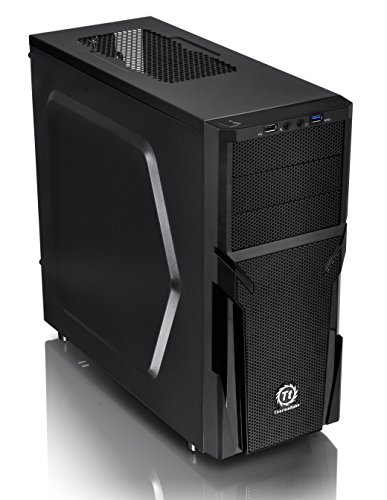
Thermaltake Versa H21 SPCC ATX Mid Tower

DARKROCK EC2 ATX Mid Tower Gaming Case

Lian Li V100-ATX Mid-Tower PC Case Black
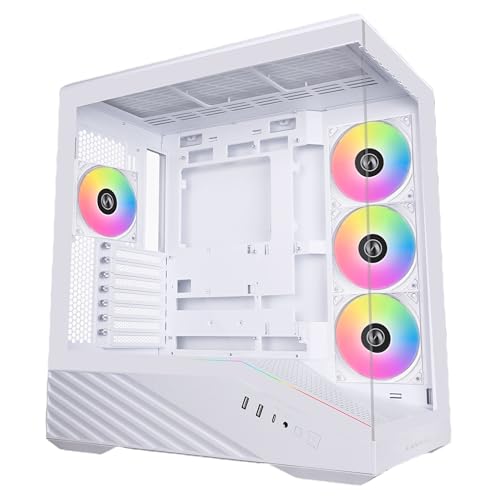
Lian Li V100-ATX Mid-Tower PC Case White

darkFlash ATX Mid-Tower PC Case DS900
More Details On Our Top Picks
Eight pre-installed fans make this HYXN case feel built for hardware that runs warm, especially a gaming tower sitting under a desk. A dual-chamber layout keeps the cable side separated from the main compartment, so the inside should stay easier to manage than a plain single-box shell.
The 420mm radiator support points toward custom cooling plans or large all-in-one liquid coolers, while the USB-C 3.2 front connection suits newer boards and fast peripherals. The trade-off is size, since dual-chamber cases usually eat more desk space and reward people who actually want room to work.
Strong Points
- Eight fans give you a strong airflow base right out of the box.
- The separated chamber layout can make cable routing feel less cramped.
- 420mm radiator support leaves room for larger cooling hardware.
- USB-C 3.2 on the front panel suits newer accessories and quick file transfers.
- Best suited to full gaming builds that need breathing room.
Things To Consider
- The larger footprint asks for a wider desk or tower stand.
- Eight fans can add more dusting work over time.
- The layout makes more sense for builders than for ultra-simple office PCs.
Feature Snapshot
Built With In Mind
You’re a good match for a high-airflow gaming build or a custom setup that needs room for cooling hardware and cleaner cable management.
A Better Fit Elsewhere
Thermaltake Versa H21 makes more sense for a simpler, lower-key tower that doesn’t need the bulk or fan count of the HYXN case.
The FOIFKIN F300 leans hard into presentation, with a 270-degree panoramic glass layout that gives a build a near-display-cabinet look. It suits a desk where your case sits out in the open, and the included four fans give the interior a head start on airflow without crowding the frame.
Compared with the HYXN case, this one is less about raw cooling count and more about showing off the parts you paid for. The honest read is that it makes sense for tidy builders, because glass-heavy cases tend to reward clean cable work and punish rushed assembly.
What We Like
- The 270-degree glass treatment puts your hardware on display.
- Four pre-installed fans help reduce the setup work.
- The ATX mid-tower size keeps it usable on many desks.
- USB-C support suits newer peripherals and front-panel convenience.
Points To Note
- Glass-heavy designs show fingerprints and dust more readily.
- The look matters more here than bare-bones practicality.
- Cable routing needs more care to keep the showcase effect intact.
Core Details
Who It Suits Best
You’ll like this most if your case sits where people can see it and your build has tidy cabling, neat lighting, and parts worth showing off.
Another Choice May Suit
Lian Li V100-ATX Mid-Tower PC Case Black suits anyone who wants a more polished display look with a stronger branded finish and a different visual mood.
The Versa H21 takes the plain, practical route, and that can be exactly right for a first-time ATX build or an older system that just needs a fresh shell. SPCC steel, which means a common cold-rolled sheet-steel case body, usually points to a straightforward structure rather than a flashy showcase.
Compared with the glass-heavy picks above, this one feels like a workbench case you keep because it gets out of the way. It’s a sensible match for office towers, light gaming machines, and anyone who prefers function over ornament.
Upsides
- The simple ATX mid-tower shape keeps the layout familiar.
- SPCC steel construction suggests a no-nonsense chassis feel.
- It suits basic upgrades without demanding a special desk setup.
- The low-key black finish blends into home or office spaces.
Room For Improvement
- You won’t get the showpiece look of the glass-fronted cases.
- Accessory space and cooling flair are more restrained than on newer gaming models.
- It feels best for straightforward builds, not elaborate showcase rigs.
Quick Facts
The Right Fit
You’re the best match here if you want a basic ATX shell for a home office PC, a family tower, or a starter gaming rig.
Where A Sibling Pick Shines
DARKROCK EC2 makes more sense for a newer gaming build that needs Type-C readiness and stronger cooling headroom.
Type-C readiness, tempered glass, and room for a large cooling stack make the DARKROCK EC2 feel tuned for a modern gaming desk. The single pre-installed fan is modest, though the case clearly expects you to build around it rather than treat it as a finished airflow package.
Compared with the Thermaltake Versa H21, this model asks for a larger parts budget but gives you a much more current feature set. You may find it especially useful in a fresh build that needs a clean front panel, room for newer graphics cards, and a more showy side view.
Highlights
- Type-C front support fits newer accessories well.
- Tempered glass adds a cleaner view of internal parts.
- Support for up to eight 120mm fans leaves a lot of cooling room.
- 360mm radiator support helps with larger liquid cooling plans.
- Compatibility with newer graphics-card sizes helps future-focused builds.
Softer Spots
- One included fan means you’ll likely add more for a full thermal setup.
- The glass panel asks for a little extra care during cleaning and handling.
- It leans more toward custom builds than quick drop-in upgrades.
Details At A Glance
Whose Shelf It Belongs On
This one suits a gamer who wants a current-looking case with strong upgrade room and doesn’t mind adding fans later.
Swap It Out When
HYXN ATX PC Case 8-Fan Dual-Chamber is the smarter move for anyone who wants much more cooling hardware already in place.
The black V100 is about presence, with four ARGB PWM fans, an LED strip, and a display platform that makes the chassis feel designed for visible parts. ARGB means addressable RGB lighting, so the individual lights can be controlled in finer patterns than a simple always-on glow, which suits a desk build that doubles as a display.
Compared with the DARKROCK EC2, this Lian Li leans harder into finished presentation and coordinated lighting. The trade-off is obvious, since a flashy chassis asks more from cable organization and room lighting, but that’s part of the appeal for someone building around aesthetics.
Best Bits
- Four ARGB PWM fans arrive already installed.
- The LED strip and display platform create a strong showpiece feel.
- Tempered glass helps the build look more polished from the side.
- PWM, or pulse-width modulation, lets fans adjust speed more precisely.
- It suits a carefully arranged desk build that deserves attention.
Minor Gripes
- Showcase lighting works best with neat cable routing.
- Glass and lighting surfaces need regular dusting to stay clean.
- The styling is less subtle than plain utility cases.
Core Details
Who Should Grab It
You’re a strong match here if your PC sits on top of the desk and you want lighting, glass, and a more styled finish.
Look Elsewhere When
Thermaltake Versa H21 is the calmer choice for anyone who wants a plain tower that doesn’t ask for much attention.
The white V100 keeps the same fan, lighting, and display-platform formula as the black version, but the lighter shell changes the whole feel of the build. In a bright room, that can make the case look cleaner and more open, especially beside white peripherals or a light desk.
Compared with the black V100, this one is more about visual brightness than contrast. The practical note is the same, though, since glass and lighting still reward tidy cable work and routine dusting, especially on a case that sits out in the open.
Positives
- The white finish suits light-themed desktop setups.
- Four pre-installed ARGB PWM fans help with both looks and airflow.
- The LED strip and display platform give the case a showpiece edge.
- Tempered glass keeps the internal hardware visible.
Areas To Watch
- White surfaces can ask for a little more upkeep to stay crisp.
- The styling is better for visible desk placement than hidden floor use.
- Lighting and glass expose messy cabling more quickly.
Technical Sheet
Made For
You’ll get the most from this case in a bright setup where the tower is part of the room’s visual style.
Right Fit For
darkFlash ATX Mid-Tower PC Case DS900 suits someone who wants a similarly showcase-friendly layout with a different lighting and glass arrangement.
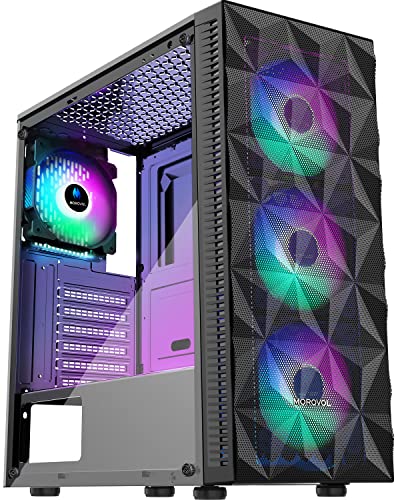
The MOROVOL case leans on a diamond-shaped mesh front, which usually means the design is chasing steady intake airflow rather than a sealed showpiece look. Four RGB fans and tempered glass give it enough visual flair for a gaming corner without pushing the price of attention too high.
Compared with the white V100, this one is more practical and less polished, and that’s not a bad thing for an entry gaming tower. You may find it easier to live with in a room where dust control matters, since mesh fronts often behave better than closed fronts in daily use.
Reasons To Buy
- The mesh front supports airflow-focused builds.
- Four pre-installed RGB fans reduce setup work.
- Tempered glass gives the side a cleaner finish.
- USB 3.0 front connectivity fits common desktop accessories.
Small Caveats
- Mesh fronts usually ask for occasional cleaning to keep intake open.
- The styling is more functional than premium-looking.
- It suits mainstream gaming parts more naturally than very elaborate builds.
Feature Rundown
Best Suited To
You’re looking at a good match for a starter gaming PC that needs airflow, simple lighting, and a sensible layout.
Reach For A Different Pick When
Lian Li V100-ATX Mid-Tower PC Case Black is the stronger move for a more polished lighting-focused showcase build.
The DS900 goes for a full-view look with dual tempered glass and four pre-installed PWM ARGB fans, so it suits a setup where the case itself is part of the show. That visual focus feels more deliberate than the MOROVOL case, while still keeping enough cooling hardware included to make the build feel ready.
That said, glass on both sides means you’ll notice cables, dust, and internal layout decisions more than you would on a plain steel tower. For a showcase desk with a modern cooling plan, this is a smart middle ground, especially with 360mm radiator support on tap.
Plus Points
- Dual tempered glass creates a broad view of the interior.
- Four PWM ARGB fans provide a strong starting point.
- Type-C support suits newer front-panel expectations.
- 360mm radiator support gives liquid cooling room to grow.
- It works well in a visible, style-conscious desktop setup.
Worth Noting
- Both glass panels make cable discipline more important.
- Cleaning fingerprints and dust becomes part of regular upkeep.
- The look is tuned for display, not low-profile simplicity.
At A Glance
Who Will Love This
You’re the right fit here if you want a showcase-style ATX case that still leaves room for a serious cooling setup.
Where Shoppers Go Wrong
HYXN ATX PC Case 8-Fan Dual-Chamber is the better fit for anyone who wants more cooling hardware included from the start.
How To Choose The Right Atx Pc Cases
Airflow, Cooling, And Dust Control
Airflow matters most in gaming towers, compact desks, and rooms that run warm in summer. A mesh front usually helps intake air more directly, while a glass-heavy front puts more weight on the fan layout inside the case.
You also want to think about dust habits. More open fronts can breathe well, but they often ask for cleaner filters and more regular upkeep, especially around pets or carpeted floors.
Layout, Cable Space, And Build Comfort
Dual-chamber cases and wide mid-towers give you more room behind the motherboard tray, which makes power leads and fan cables easier to hide. That matters during assembly and later, when you swap a graphics card or add storage.
A tighter chassis can still work, but it rewards patience. Builders who dislike wrestling with cable slack usually feel happier in a case that leaves breathing room around the back side.
Glass, Lighting, And Visual Style
Tempered glass helps a system look finished, but it also exposes every untidy cable run. That’s useful on a showcase desk and less useful in a corner where you want the tower to disappear.
ARGB lighting, which means individually addressable lighting zones, adds flexibility for color and motion. It looks strongest in rooms with lower ambient light, while plain steel cases make more sense for people who want the PC to stay out of the spotlight.
Match The Case To Your Parts
A large radiator support number only helps when your cooling plan actually uses that space. The same goes for front USB-C, which is handy only when your board and accessories make use of it.
Think in terms of your actual build, not just the spec sheet. A strong case for a 4090-style gaming tower can be overkill for a basic office machine, and a simple chassis can feel cramped once you start adding bigger cooling hardware.
A Quick Reality Check
Common Shopping Slip Ups
Shoppers often focus on lighting and forget clearance for the graphics card or radiator. Another common miss is ignoring how much room a case needs on the desk, especially with dual-chamber designs and wide glass panels.
A smarter move is to map your parts first, then check the case around them. That keeps you from ending up with a beautiful shell that fights the build from day one.
The Upgrade Payoff
Higher-tier cases usually cost more because they bundle more fans, thicker glass, better-looking panels, and extra internal room. Those details don’t just improve the look, they can also make assembly easier and daily upkeep less frustrating.
Spending up makes the most sense for a visible gaming desk, a custom liquid-cooled build, or a system you plan to keep and upgrade over time. For a plain office PC, the extra money often brings style you won’t fully use.
Frequently Asked Questions
What Makes An ATX Case Different From Smaller Cases?
An ATX case is built around the standard ATX motherboard size, so it usually gives you more room for parts and cable routing. You also tend to get easier access for bigger coolers and graphics cards.
Do More Fans Always Mean Better Cooling?
More fans can help, but airflow path matters just as much. A case with poor intake or cluttered cables can underperform a simpler design with cleaner airflow.
Is Tempered Glass Hard To Maintain?
It usually needs more wiping than steel or mesh because fingerprints and dust show quickly. That’s manageable, but it suits someone who doesn’t mind regular cleaning.
Do I Need Front USB-C On A New Case?
Not always, but it’s handy for newer accessories and faster external drives. It makes the front panel feel more current, especially in a fresh gaming build.
Which Case Style Works Best For A First Build?
A simple mid-tower with a familiar layout is usually easiest for a first build. A flashy glass case can still work, though it asks for more patience with cable management.
Final Thoughts
You’ve got eight solid directions here, and the right one depends on how visible your tower will be, how much heat your parts produce, and how much build time you want to spend behind the panel. HYXN and darkFlash lean toward stronger cooling and modern features, while the Thermaltake Versa H21 stays pleasantly straightforward. Lian Li’s two V100 versions are better for a desk that showcases the machine, and the MOROVOL and FOIFKIN picks sit in the middle with clear style goals. Choose the case that fits your parts and your space, and the whole build feels easier from the start.
