
You’re looking at a category that matters most once cables start multiplying and shelves start wobbling. The right audio rack equipment keeps gear organized, improves access to rear ports, and makes a room feel finished instead of improvised. For home theaters, compact studios, AV corners, and network closets, that difference shows up every day.
Quick Look At Our Top Picks

VEVOR 12U Open Frame Server Rack 23-40 in Adjustable Depth
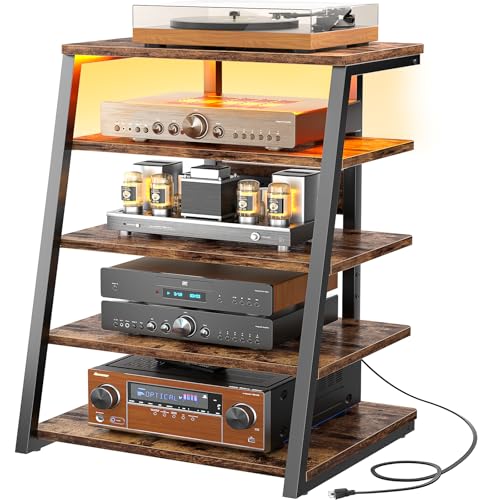
Armocity AV Media Stand 5Tier Rustic Brown

Armocity AV Media Stand 4 Tier White

Armocity AV Media Stand 4 Tier Rustic Brown

Pangea Audio Vulcan Four Shelf Audio Rack 4 Shelf Rosenut Red

Pangea Audio Vulcan Five Shelf Audio Rack 5 Shelf Black

Pangea Audio Vulcan Five Shelf Audio Rack 5 Shelf Carbon

Sound Town Enhanced 1/2″ Plywood 10U PA DJ Pro Audio Rack STMR-10UW
More Details On Our Top Picks
The VEVOR rack fits the kind of setup that keeps growing, then keeps asking for another shelf. Its 23 to 40 inch adjustable depth gives you room for deeper AV gear, network hardware, and the cable bends that always seem to need more space than planned.
Open-frame access helps a lot in a closet, studio corner, or garage-style install, because ports stay reachable from several sides. The trade-off is simple, you get visibility and airflow, not enclosure, so it suits organized gear stacks more than a polished living-room display.
Strong Points
- Adjustable depth gives you flexibility for mixed gear depths.
- Open sides make cabling and port access easier.
- Works as a floor unit or wall-mounted setup.
- Casters help the rack move during installation or rearranging.
- Useful for routers, modems, and AV components in one place.
Points To Note
- Open construction leaves gear exposed to dust and bumps.
- The utilitarian look suits utility spaces more than living rooms.
- Moving parts and cabling still need tidy planning for a clean finish.
Feature Rundown
Who It Suits Best
You benefit most from this rack if you’re building a practical AV or network corner and want access more than decoration.
A Better Fit Elsewhere
Sound Town STMR-10UW suits mobile DJs and rack-toting event setups better, because its enclosed road-case style handles transport more naturally.
This Armocity stand leans more toward a compact entertainment center than a bare-bones rack. The five-tier layout gives you room for a receiver, console, streamer, and the small extras that usually end up stacked beside the main unit.
The built-in power strip and LED lighting shift it closer to a ready-to-place media tower, which is handy in a bedroom, apartment living room, or gaming setup. The honest read is that the extras add convenience, yet they also make the look a little busier than Pangea’s cleaner furniture-style shelves.
What We Like
- Five tiers help separate gear instead of piling it together.
- Power strip support reduces the need for a separate outlet strip.
- LED lighting adds a finished feel in dim rooms.
- Corner-friendly shape helps make use of awkward room space.
- Useful for media gear, not just audio components.
Small Caveats
- The extra features may feel busy in a minimalist room.
- Lighted furniture-style pieces usually need a bit more cable tidying to stay neat.
- It suits smaller component stacks better than a deep pro rack.
Core Details
Who Will Love This
You’re a strong match for this stand if you want a media tower that blends storage with a few convenience touches.
Another Choice May Suit
Armocity AV Media Stand 4 Tier White is the cleaner option for smaller rooms where you want the same family of layout with a lighter visual footprint.
The white finish changes the feel right away, making this one easier to place in brighter rooms or against lighter walls. Compared with the five-tier Armocity stand, you give up a shelf, but you also get a simpler footprint that feels less crowded.
That trade-off matters in apartments, small offices, and spare rooms where floor space is tight. You’ll likely appreciate it most when your gear list is modest and you want the setup to look tidy without dominating the corner.
Highlights
- Four shelves fit modest audio and media setups.
- The white finish keeps the look light and airy.
- Corner-friendly proportions help in tight layouts.
- Works well for a receiver, streaming box, and accessories.
Areas To Watch
- Four tiers leave less vertical room than the five-tier version.
- Light finishes can show dust more readily, so simple upkeep matters.
- The design suits smaller systems more than expanding stacks.
Feature Snapshot
The Right Fit
This is a good match for compact home setups where space matters as much as storage.
Where A Sibling Pick Shines
Armocity AV Media Stand 5Tier Rustic Brown suits you better when you need one more shelf and prefer a warmer, furniture-like look.
The rustic brown version keeps the same small-space logic as the white Armocity model, but it shifts the mood toward warmer furniture. That makes sense in living rooms where the rack sits in view, not tucked away in a back room.
Compared with the VEVOR open-frame rack, this one is much more about blending in than exposing every cable and bracket. The trade-off is less technical flexibility, yet for casual music and TV gear, that softer look is often the point.
Upsides
- Warm finish works well in visible living spaces.
- Four-tier format keeps the footprint manageable.
- Corner placement helps use space that might otherwise sit empty.
- Good match for mixed media gear and audio components.
Room For Improvement
- It does not offer the open-access flexibility of a pro frame rack.
- Smaller systems suit it better than a large stack of components.
- Visible finishes still need simple dusting to stay neat.
Details At A Glance
Whose Shelf It Belongs On
This suits you best when the rack needs to look like part of the room, not a utility fixture.
Look Elsewhere When
Pangea Audio Vulcan Four Shelf Audio Rack fits better for a more dedicated hi-fi room where the furniture quality feel matters more than corner flexibility.
The Pangea Vulcan Four Shelf leans into a more polished hi-fi look, and the Rosenut Red finish gives it a furniture-first personality. For a listening room, that matters, because the rack is part of the visual field every time you sit down with a record or amplifier stack.
Compared with Armocity’s corner stands, this model feels more purposeful for audio gear than for casual TV storage. The honest read is that it asks for a bit more commitment to the space, but that commitment pays off in a cleaner, more composed setup.
Best Bits
- Four shelves suit a focused component stack.
- Rosenut Red finish brings a warm, furniture-like tone.
- Feels more tailored to serious listening spaces than multipurpose corners.
- Good choice for gear you want displayed neatly.
- Works well in a dedicated room rather than a catch-all area.
Things To Consider
- It takes up a more deliberate footprint than the compact Armocity stands.
- The look is strongest in rooms where the rack stays visible.
- Four shelves may feel limiting for larger home theater chains.
Feature Card
Made For
You fit this rack well if your setup lives in a dedicated listening room and you care about how the stand looks as much as how it holds gear.
Skip It When
Pangea Audio Vulcan Five Shelf Audio Rack makes more sense for growing systems that need an extra layer without changing the overall family look.
Adding a fifth shelf makes this Vulcan version easier to grow into, especially for home theater stacks that keep collecting boxes. That extra tier matters most when you want breathing room between components instead of a crowded tower.
Compared with the four-shelf Pangea, this one gives you more vertical organization without changing the brand’s clean, furniture-like tone. It’s a sensible middle ground for people who expect the system to expand a little over time.
Reasons To Buy
- Five shelves offer more room for a larger stack.
- Black finish keeps the look restrained and easy to pair.
- Works well for receivers, streamers, and source components.
- The extra shelf can help separate heat-producing gear more comfortably.
Areas To Watch
- It needs more vertical space than the four-shelf version.
- The darker finish can show dust, so routine wipe-downs help.
- In a small room, five shelves may feel more dominant than needed.
Quick Facts
Built With In Mind
This is a strong fit for you if the component list is still growing and you want a rack that can keep pace.
Reach For A Different Pick When
VEVOR 12U Open Frame Server Rack suits you better when rear access and adjustable depth matter more than a furniture-style profile.
The Carbon finish gives this Vulcan a more subdued, modern presence than the black version, and that can be a real plus in a listening room with dark walls or equipment. It still keeps the five-shelf layout, so you’re not giving up capacity to get the cleaner look.
For most dedicated hi-fi spaces, that balance lands well. The trade-off is mainly visual, since you’re paying more attention to finish character than to a major shift in function, but that’s often exactly what style-focused setups need.
Bright Spots
- Five shelves provide flexible component organization.
- Carbon finish brings a sleek, understated look.
- Works especially well in darker, design-conscious rooms.
- Same broad layout as the black model, with a different visual tone.
Minor Gripes
- The finish difference matters most to style-minded setups.
- Five shelves still ask for a fair amount of floor space.
- Dark surfaces generally benefit from regular dusting.
Feature Card
Perfect Match For
You’ll appreciate this version most if your room already leans dark and you want the rack to look intentional rather than loud.
Swap It Out When
Pangea Audio Vulcan Five Shelf Audio Rack 5 Shelf Black makes more sense when you want the same shelf count with a simpler, more conventional dark finish.
This Sound Town case sits in a different lane from the shelf-style racks above, because it’s built for transport and stage use. The 12 mm plywood shell, 10U rack space, and 11U slant top are the kind of details that matter for a DJ rig or small PA setup that gets packed, rolled, and unpacked.
The casters help a lot here, especially in rehearsal spaces or event rooms where gear moves more than it sits still. The trade-off is bulk, since a road case naturally feels more substantial than a home rack, but that’s the point for portable systems.
Positives
- Plywood construction suits transport-focused use.
- 10U rack space gives you structured gear mounting.
- Slant top makes mixer access more comfortable.
- Casters make movement easier in event spaces.
- Useful for mobile DJ and small PA setups.
Softer Spots
- It takes up more space than a home audio shelf rack.
- The road-case style is practical, not decorative.
- Portable gear cases still need careful handling around corners and stairs.
Core Details
Who Should Grab It
You’re the right match for this case if your setup travels to rehearsals, gigs, or mobile events and needs more protection than an open rack can offer.
A Better Fit Elsewhere
VEVOR 12U Open Frame Server Rack makes more sense for a fixed AV closet or equipment corner where open access matters more than transport protection.
How To Choose The Right Audio Rack Equipment
Match The Rack To The Room
Start with placement, because the room decides more than the marketing copy does. A corner media stand works well in a living room or bedroom, while an open-frame server rack makes more sense in a closet, studio nook, or utility area. The right shape keeps your gear reachable without turning the room into a cable maze.
Depth matters just as much as height. Deeper components, thick power cords, and rear connectors all need breathing room, so adjustable depth is a big plus for mixed setups. Narrow shelves can work, but they ask you to plan cable routing more carefully.
Think About The Gear Itself
Not every rack is meant for the same kind of hardware. A hi-fi stack with a receiver, streamer, and DAC usually fits best on furniture-style shelves, while a DJ mixer and rack units often belong in a road case or a pro rack with rackable depth. The case or stand should match the way you use the system, not just the number of boxes on the list.
Ventilation is worth attention too. Open sides help equipment stay accessible and easier to cool naturally, while enclosed or furniture-like builds look cleaner but can feel tighter around warm components. That trade-off is fine for modest home setups, but larger stacks deserve more space around them.
Weigh Looks Against Practical Use
A rack that disappears into the room can be a smart choice, especially in shared living areas. Rustic finishes and carbon or black coatings help gear blend in, while open metal frames lean utility-first and show every connection. Neither approach is wrong, but you should pick the one that fits how visible the setup will be.
Mobility also changes the experience. Casters are useful during setup and for periodic cleaning, yet they add size and can make a rack feel less settled in a finished room. Stationary furniture-style stands look calmer, while wheeled racks are easier to reposition.
A Quick Reality Check Before You Order
Wrong Turns To Avoid
A common mistake is overbuying shelf count without thinking about footprint. Five tiers sound generous, but they can overwhelm a small room fast, and you may end up with more height than you need. Another slip is choosing a decorative stand for gear that really belongs in a deeper, more open frame.
Cable access gets ignored too often. Rear ports, power bricks, and wall outlets need space, so a rack that looks fine from the front can still be awkward in daily use. Measure the actual gear stack, not just the visible face of the components.
The Upgrade Payoff
Higher-tier racks usually spend the extra money on materials, better fit, deeper support, or a finish that feels more at home in a real living space. That matters most when the rack stays visible, carries heavier gear, or needs to survive frequent moving. In those cases, the upgrade shows up in steadier placement and a cleaner final look.
Portable use is where the premium jump can feel easiest to justify. A road case, plywood shell, or more substantial frame brings handling confidence that lighter furniture-style stands can’t match. For a fixed home system, the extra spend makes sense only when the finish, capacity, or access really improves your day-to-day routine.
Frequently Asked Questions
What size rack suits a home audio setup?
A compact four-shelf stand usually handles a modest receiver-and-source stack well. Larger systems or extra accessories push you toward five shelves or an open frame with more flexibility.
Do open-frame racks work in living rooms?
They can, but they suit utility spaces more naturally. In a visible room, a furniture-style stand usually looks calmer and hides less of the gear chaos.
Why choose a rack with casters?
Casters help when you need to move a loaded stand during setup or cleaning. They also make a heavy rack easier to reposition without dragging it across the floor.
Is a road case useful for home use?
A road case makes more sense for mobile DJ work, rehearsal rooms, or gear that travels. For a stationary living room stack, it usually feels bulkier than necessary.
What finish works best with dark components?
Black or carbon finishes blend nicely with most dark electronics. Warm wood tones suit rooms where the rack is part of the decor rather than a hidden utility piece.
Closing Thoughts
The best audio rack equipment is the one that fits your room, your gear depth, and how often you move things around. Open frames suit utility installs, furniture-style stands work nicely in living spaces, and road cases make sense for travel-heavy rigs. Once you match those three pieces, the rest gets much easier. Choose the shape that makes your setup easier to live with, and the whole room feels more settled.
