
Budget airflow cases are the kind of choice that quietly shapes your whole build. You feel it during long gaming sessions, in a cramped desk setup, or on a warm afternoon when cable clutter and heat start working against each other. The right case gives you easier cooling, cleaner routing, and less guesswork on parts clearance. The wrong one turns assembly into a chore and leaves you wishing for more fan space later.
Quick Look at the Shortlist

HYXN H2 (2026) ATX PC Case

MONTECH XR Panoramic High Airflow ATX PC Case

MUSETEX Y6 PC Case

DARKROCK EC2 ATX Mid Tower Gaming Computer PC Case

Lian Li V100-ATX Mid-Tower PC Case Black V100RX

CORSAIR 3500X RS ARGB Panoramic Mid-Tower PC Case
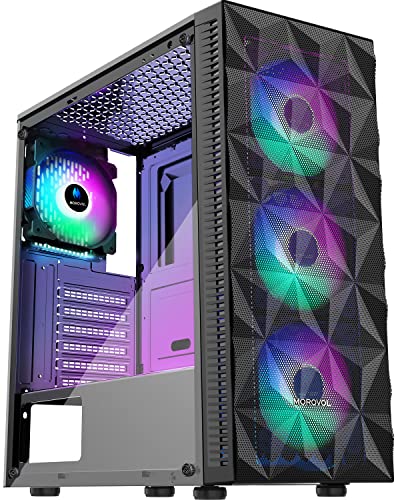
MOROVOL PC Case Pre-Install 4 RGB Fans
TGDGAMER MATX Micro ATX Case
More Details On Our Top Picks
The HYXN H2 leans hard into cooling headroom, and that makes sense for a build that runs hot parts or sits on a desk with limited room to breathe. With six 140 mm fans and two 120 mm fans already included, you start with a lot of airflow instead of adding it piece by piece.
The dual-chamber layout helps keep the cable side out of the main chamber, so the inside can stay cleaner looking and easier to work in. In a gaming setup with a large graphics card and a thick radiator, that extra space usually matters more than flashy styling, and the 420 mm radiator support gives you room to plan ahead.
Strong Points
- Eight included fans give you a strong base without immediate add-ons.
- Dual-chamber layout helps separate cabling from the main airflow path.
- 420 mm radiator support suits larger cooling loops and future upgrades.
- Type-C 3.2 support makes the front panel more current for modern peripherals.
- Good fit for large graphics cards and higher-wattage gaming builds.
Things To Consider
- The fan-heavy layout may feel like more case than a light office build needs.
- Cleaning several fans and filters takes a little more routine attention.
- The size makes it less convenient for narrow desks or small shelves.
Feature Rundown
Who It Suits Best
Cool-running gaming rigs, especially builds that use a large GPU and a sizable radiator, fit this case well.
Where A Sibling Pick Shines
MONTECH XR Panoramic High Airflow ATX PC Case suits you better when you want a more glass-forward look with a smaller fan count to start.
MONTECH gives you the showpiece look without giving up the airflow-first brief. The dual tempered glass panels, reverse blade fans, and magnetic dust filters make it feel more polished than a plain utility tower, and the included ARGB PWM fans add some visual movement right away.
The catch is that the aesthetic focus comes with more parts to keep tidy, especially around the glass and filters. For someone building a showcase PC that still needs to stay cool under a large GPU, the balance is appealing, and the support for up to nine fans leaves room to tune the setup later.
What We Like
- Panoramic glass gives the build a clean display-friendly look.
- Three included ARGB PWM fans help start the airflow setup.
- 420 mm GPU support helps accommodate longer graphics cards.
- 360 mm radiator support leaves room for a substantial cooler.
- Magnetic dust filters make routine cleaning less awkward.
- Up to nine fans offers flexible expansion for hotter parts.
Areas To Watch
- More glass means fingerprints and dust become more visible.
- The showpiece styling can feel like extra effort for plain office use.
- Fan tuning may take a little more attention for quieter operation.
Core Details
Who Should Grab It
Style-conscious builders who still want solid thermal headroom will get the most from this case.
Another Choice May Suit
HYXN H2 (2026) ATX PC Case is a better fit for you if the priority is maximum included fan coverage rather than a glass-heavy presentation.
The MUSETEX Y6 keeps the formula simpler than the HYXN and MONTECH cases, which can be a plus for a first-time builder who wants a clean, straightforward mid-tower. Four non-LED fans give you cooling out of the box without turning the machine into a light show.
The 270-degree tempered-glass view is the part that makes this case feel more open than a standard side-window tower. In a room where the PC sits in plain sight, that wide panel helps the build look finished, though the trade-off is that the interior layout asks for neat cable work to look its best.
Highlights
- Four included fans create a solid starting point for airflow.
- Non-LED fan design keeps the look clean and understated.
- 270-degree full-view glass suits display-oriented desk setups.
- Type-C support gives the front panel better modern-day usefulness.
- ATX mid-tower sizing keeps compatibility broad without going oversized.
Small Caveats
- The glass-heavy look works best with tidy cable routing.
- Non-LED fans may feel plain for someone who wants a brighter build.
- Four fans are respectable, though not as aggressive as the HYXN layout.
Technical Sheet
Perfect Match For
You’ll like this case most for a tidy everyday gaming build or a display PC that doesn’t need extra lighting.
Look Elsewhere When
Lian Li V100-ATX Mid-Tower PC Case Black V100RX suits you better when you want built-in lighting and a more decorative front-side presentation.
DARKROCK keeps the pitch direct: a Type-C-ready ATX case with room for bigger graphics cards and enough fan and radiator support to grow into. That makes it a sensible starting point for a budget gaming rig that you do not want to outgrow too quickly.
Compared with the more showy MONTECH XR, this one feels more straightforward and less focused on visual theater. The tempered glass side panel still gives you a view of the build, but the real appeal is the upgrade path, especially for a system you expect to change over time.
Reasons To Buy
- Supports 50-series graphics cards, which helps with newer build planning.
- Up to eight 120 mm fans gives you useful cooling headroom.
- 360 mm radiator support leaves space for stronger thermal setups.
- Type-C readiness makes the front panel more current for everyday use.
- Tempered glass side panel keeps the finished build visible.
Points To Note
- Only one fan comes pre-installed, so cooling expansion is part of the plan.
- The single-fan start may ask for extra attention on first assembly.
- Plain styling may feel understated beside the glassier cases in this list.
Feature Snapshot
Built With In Mind
This suits budget builders who want a case that leaves room for future upgrades without overcomplicating the first build.
Where A Sibling Pick Shines
HYXN H2 (2026) ATX PC Case is the better fit for you when you want a much fuller fan package from day one.
The Lian Li V100 pushes harder on presentation than the darker, more utilitarian cases earlier in the list. Four ARGB PWM fans, an RGB strip, and a display platform give it a layered look that suits a desk where the PC is part of the room decor.
That visual polish is the upside, though it also means you will care more about neat routing and dust upkeep than you would with a simpler steel box. For a showcase build or a bedroom gaming setup, the honest read is that the style is the main attraction, and the tempered glass helps it land well.
Upsides
- Four pre-installed ARGB PWM fans help the build look finished quickly.
- RGB strip adds extra light without needing add-on strips.
- Display platform gives you a place for hardware or small accents.
- Tempered glass helps the interior lighting stand out.
- Mid-tower format keeps it easier to place than larger dual-chamber cases.
Room For Improvement
- The display-first style asks for more cable tidiness.
- Lighting-heavy builds usually need more dust attention over time.
- The look may be more than you need for a plain work setup.
Details At A Glance
Whose Shelf It Belongs On
This fits you best when your PC sits in plain sight and the build aesthetic matters just as much as cooling.
Swap It Out When
MUSETEX Y6 PC Case is the better fit for you if you want a quieter visual style with fewer lighting parts to manage.
CORSAIR takes the polished route here, with a panoramic frame, three included fans, and a roomy interior that feels built for cleaner high-end-looking assemblies. The GPU anti-sag feature is useful in real builds, because heavier graphics cards can put a lot of strain on the slot over time.
Reverse connection motherboard compatibility is the kind of detail that matters to organized builders who want cleaner front-facing presentation and neater cable paths. Compared with the MOROVOL and DARKROCK cases, this one feels more refined and more ready for a showcase build that still needs sensible cooling.
Best Bits
- Panoramic design makes the finished system easy to admire.
- Three pre-installed fans help you start cooling without delay.
- Spacious interior gives more room for assembly and cable routing.
- GPU anti-sag support is helpful for heavier cards.
- Reverse connection motherboard compatibility suits cleaner layout planning.
Worth Noting
- The premium feel comes with a stronger need for careful cable management.
- Panoramic styling means dust and fingerprints tend to show more clearly.
- The larger interior may be more case than a minimal office build needs.
Core Details
Who Will Love This
Builders who want a cleaner premium look with practical structure for heavier parts will get the most out of this case.
Reach For A Different Pick When
HYXN H2 (2026) ATX PC Case suits you better when the priority is a much denser fan setup rather than a more refined shell.
MOROVOL is the straightforward airflow option in this group, with a diamond-shaped mesh front and four RGB fans doing the heavy lifting. That kind of front panel tends to make sense in a warmer room or a gaming setup where intake matters more than a glass-heavy look.
The tempered glass side panel keeps it from feeling too plain, though the design is still more about function than showmanship. For most budget gaming builds, that balance is a sensible one, especially when you want visible lighting without spending the budget on decorative extras.
Bright Spots
- Diamond-shaped mesh front supports strong intake airflow.
- Four pre-installed RGB fans give you a lively starting setup.
- Tempered glass side panel keeps the interior visible.
- USB 3.0 front connectivity helps with everyday accessories.
- ATX gaming format leaves good room for mainstream parts.
Softer Spots
- The styling is less polished than the premium glass-heavy options.
- RGB focus may feel busy for a quiet office desk.
- Mesh fronts usually reward more regular dust cleaning.
Spec Overview
The Right Fit
This is a smart match for gaming setups that need a practical airflow front without becoming overly expensive-looking.
Skip It When
MONTECH XR Panoramic High Airflow ATX PC Case fits you better when you want a more polished glass showcase with broader fan expansion.
The TGDGAMER case is the smallest-feeling option in this group, which makes it useful for tight desks, office corners, or a secondary gaming machine. The slim frame keeps the footprint modest, and the included 80 mm fan gives you a basic cooling starting point.
Compatibility with mini-ITX and ATX power adds flexibility, though the trade-off is obvious: you are working with a more compact shell, so expansion room is naturally tighter than in the ATX mid-towers above. For someone who values a smaller chassis more than headroom, that compromise is easy to understand.
Standout Traits
- Slim shape fits small desks and tighter placements.
- High-airflow wording matches the case’s cooling-first intent.
- Included 80 mm fan gives you a basic starter setup.
- Mini-ITX and ATX power compatibility adds some flexibility.
- USB 3.0 front port keeps it useful for daily use.
Points To Note
- The compact shell leaves less room for larger parts.
- One 80 mm fan is a modest starting point for hotter builds.
- Smaller cases usually demand neater cable planning.
Feature Card
Built With In Mind
This suits you best for a compact office rig or a smaller gaming setup where desk space matters as much as cooling.
Another Choice May Suit
DARKROCK EC2 ATX Mid Tower Gaming Computer PC Case is a stronger fit for you if you want a roomier chassis with more expansion breathing space.
How To Choose The Right Budget Airflow Pc Cases
Size, Layout, And Desk Reality
Start with the footprint, not the fan count. An ATX mid-tower like the HYXN H2 or CORSAIR 3500X gives you more elbow room for a large graphics card, a thicker radiator, and cleaner cable bends, while a compact model like the TGDGAMER makes more sense for a small desk.
Dual-chamber layouts hide cables better and often improve the look of the main compartment. The trade-off is size, because those cases tend to ask for more space under or beside the desk.
Cooling Hardware You Actually Need
Pre-installed fans matter because they lower the cost and hassle of getting started. A case with eight included fans, like the HYXN, gives you a much hotter-build cushion than a tower that starts with one or three fans.
Fan type matters too. PWM fans can adjust speed more precisely, which helps you tune noise and cooling for daily work, gaming, or long rendering sessions.
Glass, Mesh, And The Look You Can Keep Clean
Mesh fronts usually favor intake airflow and are friendlier in warmer rooms. Glass-heavy cases look polished, but they show dust and fingerprints sooner, so they ask for more upkeep.
That choice comes down to how you want the PC to live in the room. A showcase build can justify more glass, while a plain gaming tower often benefits more from a mesh front and simpler surfaces.
Connections And Upgrade Headroom
Type-C on the front panel is useful because it keeps newer accessories easy to plug in. Radiator support, GPU clearance, and fan capacity matter just as much, since those details decide whether the case grows with the rest of the build.
For most people, the safer move is to buy the case that fits the next two upgrade steps, not only the parts on hand today. That way you avoid repainting the whole plan after the first hardware swap.
What To Weigh Before You Build
Mistakes Worth Dodging
Many compact cases look appealing until the graphics card, power supply, and cable bundle all move in at once. The result is a cramped build that runs warmer and takes longer to assemble.
Another common miss is treating aesthetics as the only goal. Glass and lighting are nice, but a front panel that lets air move well usually matters more in a warm room or a gaming desk setup.
The Upgrade Payoff
Higher-tier cases usually spend more on thicker materials, cleaner panel fit, better fan control, and larger internal volume. Those touches help with assembly, cable management, and the long-term feel of the system.
You also tend to get more built-in flexibility, such as larger radiator support, stronger GPU support features, or more refined front I/O. That matters most for heavier gaming builds, upgrade plans, or a PC that stays visible in a main room.
Frequently Asked Questions
What makes an airflow case different from a regular PC case?
An airflow case is designed with more open intake and exhaust paths, often through mesh or fan-friendly panel design. That usually helps warm air move through the system more easily.
How many fans do you really need?
For many everyday gaming builds, three to four fans are a solid starting point. Larger cases or hotter parts often benefit from more fan positions, especially when paired with a big graphics card.
Is tempered glass bad for cooling?
Tempered glass is not the problem by itself, but it can limit direct airflow if the front design is too closed. A glass side panel works well when the intake path is handled by the front or bottom.
Should you choose mesh or glass for a budget build?
Mesh usually makes more sense when airflow matters most and maintenance needs to stay simple. Glass suits you better when the PC sits in view and appearance matters just as much as temperature control.
What matters more, radiator support or fan count?
That depends on the rest of your build. Radiator support matters for liquid-cooling plans, while fan count matters more for simple air-cooled systems that need broad airflow coverage.
Closing Thoughts
Your best choice depends on how your PC will live day to day. A big, fan-heavy case like the HYXN suits a hotter gaming setup, while the MONTECH XR or Lian Li V100 makes more sense for a build that needs to look polished on the desk. Compact options still have a place, especially in smaller rooms where every inch counts. Pick the case that matches your space, your parts, and the amount of upkeep you want to handle.
