
You’re probably shopping for a case that keeps costs sane without turning cable management into a headache. The right budget desktop case helps you fit the parts you already own, keep airflow moving, and avoid the cramped, rattly feel that makes a build annoying to live with. That matters just as much in a dorm desk as it does beside a gaming station or a home-office tower.
Quick Look At The Shortlist

Lian Li V100-ATX Mid-Tower PC Case
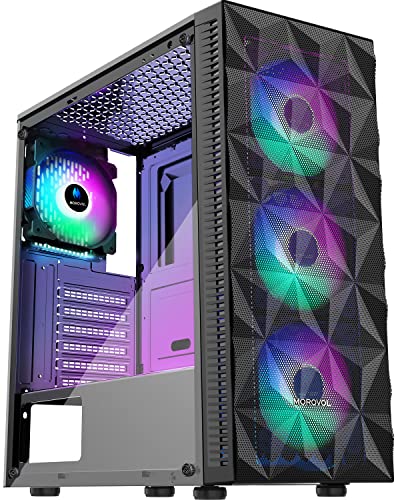
MOROVOL PC Case Pre-Install 4 RGB Fans
TGDGAMER MATX Micro ATX Case


JOYJOM Micro ATX Case PC Case

MOROVOL MATX PC Case 270° Panoramic Glass

Zalman T8 ATX Mid-Tower Desktop Computer Gaming PC Case

Zalman S4 ATX Mid-Tower Desktop Computer PC Case
More Details On Our Top Picks
The V100-ATX feels aimed at a build that should look finished right out of the box. Four 120mm ARGB PWM fans, an LED strip, and a tempered-glass side panel give you a ready-made visual package, so you’re not piecing together the lighting later.
That setup suits a gaming desk or a showpiece office tower, especially when you want airflow and presentation in the same shell. The trade-off is simple, more visual hardware usually means more cable work, so neat routing matters here more than it does in a plain black box like the Zalman S4.
Strong Points
- Four pre-installed 120mm ARGB PWM fans cut down on early upgrades.
- Tempered glass helps the interior feel polished on a visible desktop.
- The LED strip adds front-facing style without extra accessory hunting.
- PWM fan control helps you balance noise and cooling as the load changes.
- Well suited to a room where the case sits in plain sight.
Things To Consider
- ARGB cabling can add clutter behind the motherboard tray.
- Glass panels need a little more care to stay fingerprint-free.
- The visual focus leaves less room for people who want a plain workhorse tower.
Feature Rundown
Who It Suits Best
It suits you best if you want a mid-tower that looks dressed up without extra shopping for fans.
A Better Fit Elsewhere
MOROVOL PC Case Pre-Install 4 RGB Fans makes more sense for you when you want a mesh-front airflow focus rather than the Lian Li V100-ATX’s more display-forward style.
This MOROVOL case leans into a familiar mid-tower formula, but the diamond-shaped mesh front gives it a more breathable face than the glass-heavy Lian Li above. Four pre-installed RGB fans and a tempered-glass side panel make it easy to land on a build that feels lively without needing a pile of extra parts.
For most gaming desks, that balance is the appeal, because you get the look people want and the airflow front panels are meant to support. It’s a sensible fit for someone assembling a mainstream ATX system and wanting a case that doesn’t ask for immediate add-ons.
Highlights
- Mesh fronting supports better intake than a fully sealed face.
- Four included RGB fans reduce the need for early upgrades.
- Tempered glass side styling keeps the build visible.
- USB 3.0 on the front I/O helps for fast everyday accessory use.
Small Caveats
- The lighting-heavy style may not suit a plain office setup.
- Mesh fronts usually collect dust more quickly than closed designs.
- Glass needs regular wiping to keep fingerprints from standing out.
Core Details
Who Should Grab It
You’re the best match for this case if you want a mainstream ATX tower with airflow-first styling and built-in lights.
Where A Sibling Pick Shines
Lian Li V100-ATX Mid-Tower PC Case-Black-V100RX suits you better when your priority is a more dressed-up display look than a mesh-forward front.
The TGDGAMER case makes more sense in a tight room than the larger ATX towers above it. The slim body, single 80mm fan, and USB 3.0 front port point toward a no-nonsense build for an office corner or a smaller gaming station.
You may find the compact shape easier to place on or under a desk, though that smaller footprint usually asks you to be more deliberate about part choice and cable routing. It’s the kind of case that rewards straightforward builds rather than packed, high-heat hardware stacks.
Upsides
- Compact form helps in tight desk setups.
- USB 3.0 front I/O keeps daily access simple.
- Supports mini-ITX and ATX power, which broadens build planning.
- The slim chassis is easier to place in small rooms.
Areas To Watch
- A single 80mm fan gives you a modest cooling starting point.
- Smaller interiors usually take more patience during assembly.
- High-heat parts demand careful attention in a slim enclosure.
Feature Snapshot
Built With In Mind
This suits you best when the desk space is tight and the build stays simple.
Another Choice May Suit
Zalman S4 ATX Mid-Tower Desktop Computer PC Case fits you better when you want a roomier ATX shell with more fan capacity and a calmer long-term setup.
The KEDIERS case is built for someone who wants the desk to feel a little more theatrical. Seven 120mm Infinity Mirror ARGB PWM fans, plus tempered glass, create a high-visual setup that goes well beyond the more restrained Zalman T8.
That much lighting can look great in a room with controlled space and cleaner cable routing, but it also means you’re signing up for more setup time. The honest read is that it suits showcase builds better than quiet, hidden work PCs.
Bright Spots
- Seven included 120mm fans give you a large cooling base.
- Infinity Mirror styling creates a strong visual effect.
- Tempered glass lets the lighting work as part of the design.
- PWM control helps the fan curve stay more adjustable.
- Well suited to a showcase gaming desk.
Worth Noting
- Seven fans mean more wiring and more room for cable cleanup.
- The showy look may feel busy in a plain office.
- Glass and lighting surfaces need regular dusting.
Details At A Glance
Whose Shelf It Belongs On
You’ll appreciate this most if your tower sits where people can see it and you want the lighting to be part of the room.
Skip It When
Zalman T8 ATX Mid-Tower Desktop Computer Gaming PC Case makes more sense when you want a simpler, less wired-up tower with a more traditional front.
JOYJOM takes a flexible route for small builds, because it supports Micro ATX, MATX, DTX, and ITX layouts while still keeping USB 3.0 on the front. That broader fit can be handy for a spare parts build, especially when you’re trying to make sensible use of older hardware.
The mention of a 3.5-inch hard drive slot is also useful for anyone keeping bulk storage in a budget tower. Compared with the TGDGAMER slim case, this one feels more like a compact utility box than a space-saving slice.
Plus Points
- Broad board support gives you more build-path flexibility.
- USB 3.0 front access makes daily use more convenient.
- 3.5-inch HDD support helps with larger local storage needs.
- Compact form still keeps the desktop footprint controlled.
Minor Gripes
- Smaller cases usually ask for tidier cable planning.
- Storage and airflow priorities can compete in compact interiors.
- Assembly can feel tighter than in a full mid-tower.
Quick Facts
Right Fit For
You’re in the sweet spot here if you want a compact case with useful storage support and flexible board compatibility.
Reach For A Different Pick When
Micro ATX Case PC Case: MATX Case Mini PC ITX Desktop Computer Case Support Micro ATX MATX DTX ITX Mini PC with USB3.0 suits you better when you want the simplest small-form layout and don’t need the broader socket flexibility.
This MOROVOL model is all about the viewing angle. A 270-degree panoramic tempered-glass panel gives the interior a wraparound look, and the three pre-installed fans help keep the appeal from being purely cosmetic.
For a desk where the tower sits on display, that wide glass treatment feels more polished than the JOYJOM case, which is built more for plain utility. It’s a natural fit for a micro-ATX build that should look neat from several angles.
What We Like
- The panoramic glass makes the system easy to show off.
- Three included fans add useful out-of-box cooling.
- USB 3.0 keeps front-panel convenience in reach.
- Micro-ATX sizing keeps the footprint manageable.
Softer Spots
- Large glass surfaces usually need more frequent cleaning.
- The visual-first design may not suit every office.
- Panoramic styling can be less forgiving of messy cabling.
At A Glance
Who Will Love This
You’ll like this most if your desk setup leans visual and you want a compact case with a more finished display feel.
Swap It Out When
Lian Li V100-ATX Mid-Tower PC Case-Black-V100RX is the better pick when you want a larger ATX shell with a more conventional single-sided showcase style.
The Zalman T8 takes a more traditional route, and that can be a relief in a budget tower. You get 5.25-inch optical-drive support, an RGB lighting strip with a control button, a rear 120mm fan, and USB 3.0, which makes it practical for older gear and simple office use.
That mix feels especially comfortable for someone who still wants room for legacy hardware or a straightforward gaming build. Compared with the KEDIERS and MOROVOL options above, it’s less about spectacle and more about everyday usefulness.
Best Bits
- 5.25-inch bay support helps older optical hardware stay usable.
- Control-button lighting keeps the front panel simple to operate.
- Rear fan placement gives the case a basic cooling start.
- USB 3.0 front access supports everyday device hookups.
Room For Improvement
- The rear-fan-only setup may invite later cooling upgrades.
- Legacy drive support can take space from newer layouts.
- The styling is more practical than flashy.
Spec Overview
Made For
You’re the best fit here if you want a straightforward ATX tower that still leaves room for older hardware.
Look Elsewhere When
JYOJOM Micro ATX Case PC Case makes more sense if you want a smaller footprint and don’t need the Zalman T8’s legacy drive support.
The Zalman S4 closes the list with a calmer, more balanced ATX layout. Two 120mm quiet fans, a tinted side panel, and support for a 315mm graphics card plus a 240mm liquid-cooling radiator give it a more flexible shape than the T8, while keeping the look restrained.
That makes it an easy case to recommend for a daily desktop build that still leaves room for later hardware changes. You’ll feel the appeal most in a home setup where you want the tower to work hard without becoming the center of attention.
Positives
- Two quiet fans give the case a usable cooling base.
- 315mm graphics-card support leaves room for many mainstream GPUs.
- 240mm radiator support helps liquid-cooling planning.
- The tinted side panel keeps the appearance understated.
Points To Note
- The muted look may feel plain next to RGB-heavy cases.
- Quiet-fan designs still depend on good internal airflow planning.
- As with most tinted panels, fingerprints can show under bright light.
Core Details
Built With In Mind
This is a strong fit for you if you want a quiet-leaning ATX tower with room for a mainstream graphics card and later cooling upgrades.
Where A Sibling Pick Shines
Zalman T8 ATX Mid-Tower Desktop Computer Gaming PC Case makes more sense when you care more about older optical-drive support than the S4’s quieter, cleaner layout.
How To Choose The Right Budget Desktop Cases
Match The Case To Your Parts
Start with motherboard size, because ATX, Micro ATX, MATX, DTX, and ITX are not interchangeable without consequences. A larger case such as the Lian Li V100-ATX or Zalman S4 gives you more room for cable routing and future swaps, while compact picks like the TGDGAMER or JOYJOM keep the footprint smaller.
Graphics-card length, radiator support, and drive bays matter just as much. The Zalman S4’s 315mm GPU room and 240mm radiator support make it friendlier to upgrades than a tiny enclosure, while the Zalman T8 still keeps 5.25-inch support for older gear.
Think About Airflow Before Lighting
Fans are not just decoration, they shape how the whole system behaves under load. A mesh front like the MOROVOL PC Case Pre-Install 4 RGB Fans usually favors intake more than a glass-heavy front, while cases with multiple included fans, such as the KEDIERS model, arrive with a stronger cooling base.
That said, more fans usually mean more cabling and more surfaces to dust. A simpler tower like the Zalman T8 asks less from the cable route, while a showier case rewards patience and tidy assembly.
Choose The Right Size For The Room
Desk space changes the answer fast. A slim micro-ATX case suits a cramped office or dorm room, while a mid-tower feels easier to work in, especially for first-time builders who want enough elbow room for front-panel connectors and drive cages.
Quiet living rooms and shared workspaces also favor understated cases with tinted panels or fewer lighting elements. In a visible gaming setup, though, tempered glass and ARGB can make the tower feel like part of the room instead of a black box under the desk.
Look Past The Front Panel
Front USB 3.0 is worth caring about because it keeps drives, headsets, and adapters easy to reach. Optical-drive bays, as seen on the Zalman T8, matter less for most modern builds, but they still help anyone who uses older media or legacy hardware.
Storage support is the last piece people often overlook. The JOYJOM case’s 3.5-inch HDD support is useful for local files, while panoramic glass cases favor appearance over extra drive hardware, so your priority should stay clear from the start.
What To Weigh Before You Click
Common Shopping Slip Ups
People often chase lighting first and forget about fit, which leads to cramped installs or too little room for the parts already on hand. Cooling also gets underplayed, and that’s where a mesh front or multiple pre-installed fans can matter more than a flashy side panel.
Another common miss is ignoring storage and front-panel needs. A compact case with no room for a 3.5-inch drive or legacy bay support can feel limiting much sooner than expected.
The Upgrade Payoff
Higher-tier cases usually spend more on fan count, panel materials, and layout flexibility. Tempered glass, panoramic panels, PWM fan control, and room for larger radiators or longer graphics cards all push the cost up because they make the chassis easier to live with over time.
That upgrade makes sense when the tower sits in a visible spot or when you plan to change hardware later. For a plain office machine, though, a simpler case like the Zalman T8 or TGDGAMER can cover the basics without extra bulk.
Frequently Asked Questions
What Size Case Works Best For A Budget Build?
Micro ATX and MATX cases work well for smaller desks, while ATX mid-towers suit broader part choices. The right size depends on how much room you want for cable routing, storage, and future upgrades.
Do More Fans Always Mean Better Cooling?
More fans usually help move air, but the front design matters too. A mesh front or good internal layout can matter just as much as raw fan count.
Is Tempered Glass A Must?
No, it’s mostly a style choice with practical trade-offs. Glass looks cleaner for showcase builds, but it asks for more wiping and usually gives you less acoustic cushioning than a plain panel.
Should You Care About USB 3.0 On The Front?
Yes, especially for daily use with flash drives, controllers, and external storage. Front USB 3.0 saves you from reaching behind the tower every time.
Are Legacy Drive Bays Still Useful?
They still matter for anyone using older optical media or hardware. Most modern setups do not need them, so they’re a niche perk rather than a default requirement.
Final Thoughts
You have plenty of workable choices here, and the best one depends on how much space, cooling, and visual polish you want from a budget case. The Lian Li and KEDIERS options lean into presentation, while the Zalman S4 and TGDGAMER keep things calmer and easier to place. For a smaller build, JOYJOM and the MOROVOL MATX case give you compact paths with different trade-offs. Match the case to your parts and your room, and you’ll land on something that feels right for years of everyday use.
