
Budget OLED monitors can make a desk feel much more polished without forcing you into a giant, expensive setup. You get deep contrast for games and movies, faster response for twitchy play, and enough color quality to make everyday work look cleaner too.
The tricky part is sorting out which panel size, refresh rate, and port mix fits your space. Some of these are better for console setups, some for competitive PC gaming, and some for mixed use where you want the screen to do a little of everything.
Quick Look At The Shortlist

Dell 27 Monitor S2725QS 4K UHD IPS 120Hz

Alienware AW3423DWF Curved QD-OLED Gaming Monitor 34-inch

ASUS ROG PG32UCDM 32 Inch 4K 240Hz OLED Gaming Monitor QD-OLED

LG 27GX704A-B 27-inch Ultragear QHD OLED Gaming Monitor 240Hz
Samsung 27” Odyssey OLED G5 G50SF Series QHD QD-OLED Gaming Monitor
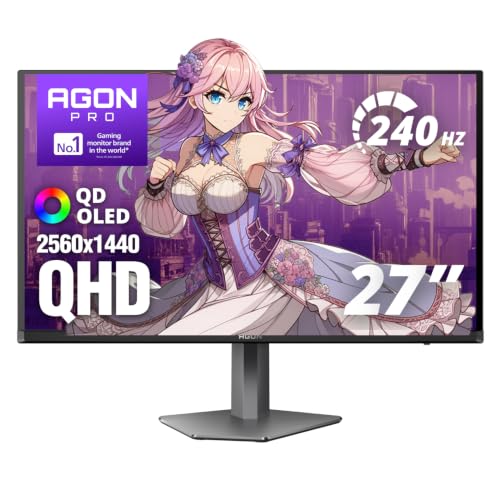
AOC Agon Pro 27 Inch Gaming Monitor QD OLED 240Hz 0.03ms AG276QZD2

Samsung 27” Odyssey OLED G6 G60SD Series Gaming Monitor QHD QD-OLED 360Hz
More Details On Our Top Picks
Dell’s 27-inch 4K panel makes sense for anyone who wants crisp desktop text and enough speed for evening gaming. The IPS screen, which means wide viewing angles and steady color from the side, keeps the setup easy to live with at a normal desk.
The height, swivel, and pivot adjustments help in a shared office or a tight home workspace, and the anti-glare finish keeps reflections from taking over a bright room. It’s not the flashiest monitor here, but for mixed work and play, it feels like the calm, practical option.
Strong Points
- 4K resolution gives you cleaner text and sharper detail for spreadsheets, editing, and long browsing sessions.
- 120Hz refresh keeps motion smoother than a typical 60Hz panel, which matters during fast game menus and camera pans.
- USB-C, HDMI, and DisplayPort make it easier to match laptops, desktops, and game consoles without a dongle pile.
- Height, swivel, and pivot adjustments help you fit the screen to your desk instead of reshaping your desk around the screen.
Things To Consider
- It uses IPS rather than OLED, so contrast will not have that same inky depth you get from the darker picks later in the list.
- The 27-inch size is comfortable, but some gamers may want a larger canvas for cinematic play.
- Anti-glare coatings can soften reflections, yet they also slightly change the glassy look some people expect from a glossy panel.
Feature Snapshot
Who It Suits Best
It suits office-first users who still want a smooth panel for casual gaming after work.
A Better Fit Elsewhere
ASUS ROG PG32UCDM 32 Inch 4K 240Hz OLED Gaming Monitor QD-OLED fits you better if you want deeper contrast and a more premium game-focused screen.
The curved 34-inch format changes the feel right away, especially on a desk where the screen sits close to your hands and keyboard. Compared with Dell’s more traditional 27-inch shape, this Alienware leans into immersion, so games and movies can feel wider and more enveloping.
The QD-OLED panel, which blends quantum-dot color tuning with OLED-style contrast, is the part most people notice first. That said, ultrawide sizing asks for desk depth, and it makes sense most for you if your setup can actually give it room to breathe.
What We Like
- 34-inch ultrawide shape gives games and films a broader field of view.
- QD-OLED contrast makes dark scenes and bright highlights stand apart with real punch.
- 165Hz refresh suits fast action without pushing you into the more extreme 240Hz or 360Hz tier.
- Factory color tuning with Delta E under 2 is a strong sign for people who want accurate-looking output right away.
- Its color range and HDR support make it a strong match for cinematic content as well as gaming.
Areas To Watch
- Ultrawide dimensions can crowd a shallow desk, especially beside a large keyboard or studio speakers.
- The curved format is great for immersion, but not everyone likes curve-heavy geometry for office tasks.
- It sits in a more premium lane than the simpler 27-inch picks, so it makes the most sense when ultrawide actually matters.
Details At A Glance
Made For
It fits immersive game setups and media desks where ultrawide space is part of the plan.
Where Another Pick Suits Better
LG 27GX704A-B 27-inch Ultragear QHD OLED Gaming Monitor 240Hz suits you better if you want a smaller footprint with a tighter, more conventional desktop layout.
This ASUS model leans hard into high-end gaming, but it still makes sense for mixed use because the 32-inch 4K panel leaves room for work windows beside games. The custom heatsink and graphene film are the kind of internal touches that matter quietly, since cooling is part of what keeps an OLED display feeling dependable over long sessions.
You also get USB-C with 90W power delivery, which can help a laptop setup stay cleaner with one cable doing more of the lifting. Compared with Alienware’s ultrawide approach, this one stays in a more traditional 16:9 shape, so it suits you better if you prefer standard-screen proportions.
Highlights
- 240Hz refresh pairs with 0.03ms response for very fast motion handling.
- 4K resolution on 32 inches gives you a dense, polished image for work and play.
- USB-C 90W can simplify a laptop desk by reducing cable clutter.
- True 10-bit color and 99% DCI-P3 help the screen handle rich color gradients smoothly.
- Console-friendly support for PS5 and Xbox makes it easier to share the display across devices.
Small Caveats
- The feature set is loaded, so it belongs more to an enthusiast setup than a casual desk.
- Thirty-two inches is spacious, but it still needs some room so the 4K detail feels comfortable at normal viewing distance.
- OLED care matters in everyday use, so static desktop layouts deserve a little common sense over time.
Technical Sheet
Built With In Mind
It suits enthusiasts who want a premium 4K gaming screen that still pulls double duty for desk work.
Where A Sibling Pick Shines
AOC Agon Pro 27 Inch Gaming Monitor QD OLED 240Hz 0.03ms AG276QZD2 works better for you if you want a less expensive-feeling 27-inch layout with a strong esports tilt.
LG keeps this one focused: 27 inches, QHD resolution, and a 240Hz OLED panel that suits quick-moving games very well. Compared with the Dell pick, you trade some office-first flexibility for a screen that feels more tuned to play, especially in fast matches and action-heavy titles.
The glossy finish is part of the appeal, because it can make the image feel vivid and clean in a controlled room. The honest read is that it works best in spaces where you can manage reflections, since bright lamps or windows can compete with a glossy surface.
Bright Spots
- 240Hz refresh and 0.03ms response create a very snappy feel in fast games.
- QHD resolution on 27 inches keeps the image sharp without demanding as much GPU power as 4K.
- NVIDIA G-Sync Compatible and AMD FreeSync Premium Pro support help smooth out tearing with the right hardware.
- HDMI 2.1 and DisplayPort give you strong connection options for modern consoles and PCs.
Worth Noting
- The glossy finish looks rich, but it asks for a more controlled lighting setup.
- It favors gaming more clearly than the Dell, so office-heavy users may not need this much speed.
- At 27 inches, it feels compact compared with the ASUS 32-inch screen or the Alienware ultrawide.
Core Details
Right Fit For
It suits gamers who want a compact OLED panel with serious motion clarity on a normal desk.
Swap It Out When
Samsung 27” Odyssey OLED G6 G60SD Series Gaming Monitor QHD QD-OLED 360Hz is the stronger match for pure competitive play and higher motion headroom.
This Samsung keeps the 27-inch format but trims the speed a bit compared with LG’s 240Hz panel, landing at 180Hz instead. That still feels quick for most gaming sessions, and it may be the more sensible middle ground if you want OLED quality without chasing the most aggressive refresh figures in the group.
The monitor also includes dedicated onboarding and troubleshooting support starting from day one, which is useful for anyone setting up a new desk and trying to get console or PC input right the first time. The trade-off is simple: you give up some speed, but the overall package feels easier to justify for a wider range of setups.
Upsides
- 180Hz is still a strong refresh rate for smooth gaming.
- QD-OLED contrast gives movies and dark game scenes a richer look.
- FreeSync and G-Sync compatibility help broaden device matching.
- The 27-inch footprint works well on desks that can’t handle a giant panel.
Points To Note
- It is not as fast as the 240Hz and 360Hz models in this list.
- Samsung’s service-first extras are useful, but they do not change the screen’s core gaming focus.
- Like most OLED setups, desktop users should keep an eye on static interface habits over time.
Quick Facts
Whose Shelf It Belongs On
It belongs on the desk of a gamer who wants OLED color and good speed without moving into the more expensive-feeling high-refresh tier.
Look Elsewhere When
ASUS ROG PG32UCDM 32 Inch 4K 240Hz OLED Gaming Monitor QD-OLED makes more sense if you want a larger premium display with higher refresh headroom.
AOC gives you a 27-inch QD-OLED panel with the kind of speed that suits competitive play, but it also adds details that matter in a real desk setup. The height adjustment, VESA mount support, and built-in speakers make it easier to build a tidy corner without stacking extra accessories everywhere.
That mix puts it between the pure gaming focus of Samsung’s G6 and the more office-friendly Dell. You may find it especially useful in a room where the monitor has to handle both gaming and general media without demanding a bunch of add-ons.
Best Bits
- 240Hz refresh and 0.03ms response suit fast shooters and other reaction-heavy games.
- Height adjustment helps with posture and screen placement on different desks.
- VESA mount support gives you more layout options than fixed-foot designs.
- Built-in speakers can cover casual audio without separate desktop hardware.
Softer Spots
- The included speakers are handy, though most gaming desks will still sound better with separate audio gear.
- At 27 inches, it stays compact, so some people may want more screen space for multitasking.
- The mount-friendly design helps, but it also means you’ll want to plan your desk layout before placing it.
Feature Rundown
Perfect Match For
It suits gamers who want a flexible 27-inch setup with mounting options and built-in audio convenience.
Another Choice May Suit
LG 27GX704A-B 27-inch Ultragear QHD OLED Gaming Monitor 240Hz is a better fit if you prefer a more mainstream gaming brand feel and HDMI 2.1 support.
Samsung pushes this one into the fastest corner of the list, and the 360Hz refresh rate is the headline for competitive players who notice every small motion change. Compared with the G5, it feels like the more aggressive upgrade, especially for people who live in fast shooters or want the most responsive feel possible from this group.
The anti-glare finish and cooling system are practical touches, not just spec-sheet flair, because both help the monitor fit into a long daily routine. A 3-year warranty is also worth noting for a premium gaming screen, since it makes the overall package easier to think about as a longer-term desk piece.
Reasons To Buy
- 360Hz refresh is the fastest option in this roundup.
- 0.03ms response supports extremely clean motion in rapid action games.
- Anti-glare coating helps the screen stay usable in brighter rooms.
- The cooling system is a sensible touch for an OLED gaming display.
- HDMI 2.1 and DisplayPort support modern console and PC connection needs.
Room For Improvement
- The speed focus is excellent, but it is more monitor than many casual players need.
- It makes the most sense when your PC can actually feed a high-refresh panel well.
- The premium feature stack puts it above the simpler 27-inch choices in this list.
Core Details
Who Should Grab It
It suits competitive PC gamers who want the quickest-feeling 27-inch OLED screen in the group.
Skip It When
Samsung 27” Odyssey OLED G5 G50SF Series QHD QD-OLED Gaming Monitor is the better fit if you want a less aggressive and easier-to-justify gaming setup.
How To Choose The Right Budget Oled Monitors
Panel Size And Desk Fit
A 27-inch OLED monitor usually works best on a normal desk because it keeps text readable without taking over the whole surface. A 32-inch screen, like the ASUS PG32UCDM, gives you more room for windows and a larger game view, but it also asks for more space and a better viewing distance.
Ultrawide panels, such as the Alienware AW3423DWF, change the equation again. You get more horizontal space for timelines, racing games, and cinematic play, but the footprint can feel unwieldy in a shallow setup.
Refresh Rate And Response Time
Refresh rate tells you how many times per second the image can update, so higher numbers matter in motion-heavy games. A 120Hz screen like the Dell already feels smoother than a standard office panel, while 240Hz and 360Hz models are aimed at people who want snappier motion and less blur.
Response time, usually shown in milliseconds, describes how fast pixels change. The 0.03ms figures on several picks are especially relevant for fast shooters, though the real-world payoff shows up most clearly when your PC or console can keep frame pacing steady.
Color, Contrast, And Panel Type
OLED panels earn their appeal through contrast, since individual pixels can go dark in a way backlit screens cannot match. QD-OLED, short for quantum-dot OLED, adds another layer of color richness, which is why the Alienware, ASUS, and Samsung models feel especially suited to games and films with strong visual depth.
IPS panels, like the Dell’s, still make sense for mixed work because they usually offer stable viewing angles and a more familiar desktop feel. The trade-off is contrast, so your decision comes down to whether you want office flexibility or that richer OLED look.
Ports, Ergonomics, And Everyday Setup
Ports matter more than most people expect, especially with laptops, game consoles, and desktops all competing for one screen. USB-C with power delivery helps cut cable clutter, while HDMI 2.1 and DisplayPort cover modern gaming and PC connections more comfortably.
Ergonomic adjustments matter too. Height, swivel, pivot, and VESA mount support turn a good panel into an easier daily setup, and that matters most in shared spaces, home offices, or bedrooms where the monitor has to do double duty.
Things Worth Knowing First
Common Shopping Slip Ups
A lot of people fixate on refresh rate and forget the desk itself. A 34-inch ultrawide or a 32-inch 4K panel can feel awkward in a narrow setup, even when the screen quality is excellent.
Another common miss is lighting. Glossy OLED models can look stunning, but bright lamps and windows can make reflections harder to ignore, so room placement matters more than many shoppers expect.
Where The Extra Money Goes
Higher-tier OLED monitors usually spend more on faster panels, better cooling, and richer connectivity. The ASUS PG32UCDM and Samsung G6 sit in that lane because they add premium speed, careful thermal design, and stronger feature depth.
That extra cost makes sense for competitive players, desk minimalists, and anyone who wants a display to handle both work and play without feeling trimmed back. For casual gaming, though, a more modest 27-inch model often covers the ground just fine.
Frequently Asked Questions
Are Budget OLED Monitors Good For Work?
Yes, especially for clean text, dark interfaces, and long daily use at a desk. An IPS model like the Dell still has an edge for straight office work, though, because OLED is more about contrast than pure business-first comfort.
Is 27 Inches The Sweet Spot?
For many desks, yes, because 27 inches keeps the screen large enough for gaming while staying manageable in a smaller room. Larger models make sense when you have deeper furniture or want a more cinematic layout.
Do I Need 240Hz Or Higher?
You only need that kind of speed if you play fast games and notice motion clarity clearly. If you mostly play slower titles or split time with work, 120Hz or 180Hz may already feel very smooth.
What Does QD-OLED Mean?
QD-OLED combines OLED contrast with quantum-dot color tuning. The result is often rich color and strong depth, which helps games and movies look more vivid.
Is Burn-In A Real Concern?
OLED panels can be affected by long-term static images, so desktop use benefits from a little common sense. Varying content, using screen timeout settings, and avoiding long idle taskbars all help keep daily use sensible.
