
You’re probably here because you want a display that fits a project without eating the whole budget. These picks cover tiny status screens, Raspberry Pi touch panels, and a couple of more versatile monitors, so you can match the screen to the job instead of forcing one panel to do everything.
The list leans toward hobby benches, travel-friendly setups, and simple desktop add-ons. That means you’ll see very small OLED modules alongside larger touch screens, with trade-offs explained in plain language.
Quick Look At The Shortlist

Hosyond 0.96-Inch OLED I2C Display Module, 5-Pack

Hosyond 7-Inch IPS LCD Touch Screen Panel 1024×600

ELECROW 5-Inch Mini Touchscreen Monitor, 800×480
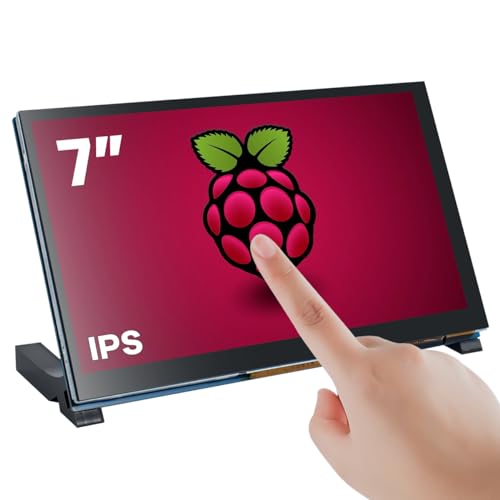
Hosyond 7-Inch IPS DSI Touchscreen, 800×480

Hosyond 3.5-Inch TFT SPI Touch Screen 480×320

ELEGOO 0.96-Inch OLED Display Module, 3-Pack

Hosyond 2.8-Inch ESP32 Touch Screen, 240×320
This tiny OLED module fits projects where a full panel would feel like overkill. With 128 by 64 pixels, I2C wiring, and support for 3.3V to 5V DC, it suits status readouts, sensor dashboards, and small bench rigs that need a clear, low-power screen.
The 5-pack format makes sense for tinkerers who keep several builds moving at once, or for a classroom bench with repeated prototypes. The honest trade-off is obvious: the 0.96-inch size is excellent for tight spaces, but it’s not meant for long text or rich menus.
Strong Points
- Self-lit pixels give you strong contrast without a backlight layer stealing space.
- I2C communication keeps wiring simple, which helps in cramped enclosures.
- Wide viewing angle support is useful on a workbench where you don’t sit perfectly centered.
- Low power draw suits battery-backed or always-on status projects.
- Five units in the set make it easier to standardize multiple builds.
Things To Consider
- The very small panel size limits how much information stays readable at once.
- You’ll still need a little care with wiring and mounting, since tiny modules can feel fiddly.
Feature Snapshot
Who Will Love This
You’re the right match for compact Arduino or Raspberry Pi projects that only need a clean status window.
Where A Sibling Pick Shines
Hosyond 7-Inch IPS LCD Touch Screen Panel 1024×600 fits better for dashboard-style use where you want menus, touch input, and a much larger workspace.
This 7-inch panel is the most flexible of the larger screens here. The IPS LCD layout gives you a standard 1024 x 600 hardware resolution, and the capacitive touch layer supports up to five touch points, which suits kiosk-style projects and desktop add-ons.
It also works as a general HDMI monitor, so you’re not boxed into a single board family. The trade-off is that it’s physically larger and more desk-bound than the 5-inch ELECROW option, but that extra canvas makes menus and split views easier to live with.
What We Like
- IPS panel tech gives you steadier color and viewing angles than a basic TN screen.
- Five-point capacitive touch supports smoother interaction for app menus and control panels.
- HDMI use broadens the screen’s role beyond Raspberry Pi builds.
- Backlight control can help you cut power use in standby-heavy setups.
- The larger surface makes text, icons, and control buttons easier to space out.
Small Caveats
- The 7-inch size is less comfortable for ultra-compact enclosures.
- Touch and display use are a better fit for projects with a little extra room behind the panel.
Details At A Glance
Made For
You’re the best match for a Raspberry Pi desktop, control hub, or small bench monitor that needs both touch and size.
Swap It Out When
ELECROW 5-Inch Mini Touchscreen Monitor, 800×480 fits better for portable demos or tighter spaces where a smaller panel keeps the build cleaner.
For beginners who want a straightforward screen, this one keeps the setup story uncomplicated. The package centers on a 5-inch TN display with 800 x 480 resolution, a capacitive touch layer, and HDMI plus USB cabling for power and display, so it suits quick project demos and small desktop companions.
The driver-free angle matters more than it sounds, especially for classroom work or a weekend bench where you want less setup friction. Compared with the Hosyond 7-inch IPS panel, this ELECROW unit is smaller and simpler, though the TN panel will not feel as wide-view friendly as IPS.
Highlights
- Plug-and-play wiring lowers the setup burden for first-time projects.
- The 5-inch size lands in a useful middle ground between tiny modules and desk-heavy panels.
- Capacitive touch makes tapping and menu selection feel more natural than resistive screens.
- HDMI plus USB support gives you a familiar connection path.
Areas To Watch
- TN panel behavior is usually more angle-sensitive than IPS, so off-center viewing is less forgiving.
- The screen is still small enough that dense dashboards can feel crowded.
- USB power and cable management matter a bit more on portable builds.
Core Details
The Right Fit
You’ll appreciate this most for beginner Raspberry Pi work, coding lessons, or a compact monitor that gets running fast.
A Better Fit Elsewhere
Hosyond 7-Inch IPS LCD Touch Screen Panel 1024×600 suits you better for wider dashboards or multitasking on a Pi desktop.
This Hosyond panel takes a more direct route than the HDMI screens above. It connects through the Raspberry Pi’s MIPI DSI interface, which means fewer loose ends in a Pi-centric build and a cleaner install for a fixed setup.
The 7-inch size and 800 x 480 resolution make it comfortable for touch controls, menu work, and basic dashboards. The main limitation is simple, it’s built for Raspberry Pi boards rather than general-purpose HDMI use, so flexibility is narrower than the 7-inch IPS LCD pick.
Upsides
- DSI connection keeps the wiring path tidy in Pi-specific projects.
- Capacitive touch suits menus, sliders, and light control use.
- IPS screen behavior supports better side viewing than a basic TN panel.
- The 7-inch size gives you enough working space for control layouts.
Worth Noting
- The panel is tied to Raspberry Pi use, so it’s not the broadest option here.
- It’s less flexible than the HDMI-based Hosyond 7-inch screen for mixed-device work.
Feature Rundown
Built With In Mind
You’re the right fit for Raspberry Pi owners who want a neater, board-specific touchscreen instead of a general HDMI monitor.
Look Elsewhere When
Hosyond 7-Inch IPS LCD Touch Screen Panel 1024×600 suits better for anyone who wants HDMI compatibility with PCs and several mini PC boards.
This 3.5-inch screen is the space-saver in the group. The 480 x 320 TFT LCD format and resistive touch layer make it useful for compact Pi builds, especially where you want stylus input or a straightforward panel without a lot of bulk.
Because it plugs directly into several Raspberry Pi boards, it suits fixed installations like small controllers, compact status stations, or simple enclosures. Compared with the ELECROW 5-inch monitor, it gives you a tighter footprint, but the resistive touch style is less finger-friendly than capacitive options.
Best Bits
- The small footprint fits projects where every centimeter counts.
- Resistive touch works well with a stylus or gloved input.
- Direct Pi compatibility makes it appealing for simple, board-mounted builds.
- Lower screen size can help keep the enclosure design tidy.
Room For Improvement
- The smaller panel leaves less room for readable menus.
- Resistive touch feels less fluid than capacitive touch for casual tapping.
- Driver installation adds a step that some shoppers will want to budget time for.
Quick Facts
Whose Shelf It Belongs On
You’re a good match for compact Raspberry Pi builds where space matters more than touch finesse.
Where A Sibling Pick Shines
ELECROW 5-Inch Mini Touchscreen Monitor, 800×480 works better for a beginner who wants capacitive touch and a more forgiving setup path.
This ELEGOO set makes a strong case for small utility screens across several projects. You get three 0.96-inch OLED modules with the SSD1306 driver, I2C support, 128 x 64 resolution, and 3.3V to 5V power compatibility, which covers a lot of the classic microcontroller use cases.
Compared with the Hosyond 5-pack, this set trims the count to three units but adds included Dupont wires, which can save time on a bench that keeps changing. That makes it a smart kit for mixed Arduino or Raspberry Pi experiments, though the tiny panel size still keeps it in status-display territory.
Positives
- Three matched modules help you standardize multiple small projects.
- Included wires make first wiring sessions less awkward.
- Self-luminous pixels support crisp contrast without a separate backlight layer.
- I2C communication keeps wiring simpler than many fuller display setups.
Honest Caveats
- The screen size is still very small, so it works best for short messages and numbers.
- You may need to plan your mounting carefully in compact cases, since tiny modules can be easy to lose track of during assembly.
Technical Sheet
Best Suited To
You’re the best match for hobbyists who keep several small Arduino or Pi projects active at once.
Another Choice May Suit
Hosyond 0.96-Inch OLED I2C Display Module, 5-Pack fits better for tinkerers who want more modules in one set.
This 2.8-inch module is aimed at ESP32 work, and that focus shows in the feature mix. You get a 240 x 320 color display, resistive touch, a TF card slot, and built-in WiFi plus Bluetooth support, so it’s a tidy fit for interactive microcontroller projects.
The factory-loaded sample program and Arduino resources matter for developers who want to move quickly from wiring to a working prototype. The trade-off is that this screen is more specialized than the general Pi panels above, so it makes the most sense for ESP32-based builds rather than mixed-device use.
Reasons To Buy
- WiFi and Bluetooth support make it useful for connected microcontroller projects.
- The TF card slot opens up simple storage expansion.
- Included sample software can shorten the path from unboxed to usable.
- Color output gives you more room for visual interfaces than the tiny OLED picks.
Softer Spots
- Resistive touch is less fluid than capacitive touch for everyday tapping.
- The 2.8-inch size still limits how much data you can show at once.
- It’s more specialized than the broader Raspberry Pi screens in this roundup.
Feature Card
Who Should Grab It
You’re the right fit for ESP32 developers who want a compact touch display with wireless features built in.
Reach For A Different Pick When
Hosyond 7-Inch IPS LCD Touch Screen Panel 1024×600 suits better for a broader monitor-style setup with more screen room.
How To Choose The Right Cheap Displays
Match The Screen To The Job
Small OLED modules are best for status, numbers, and short labels. Larger touch panels make more sense for menus, dashboards, and anything you plan to tap often.
That size jump is the biggest fork in the road. A 0.96-inch panel disappears into a project box, while a 7-inch screen starts behaving more like a control surface.
Watch The Connection Type
I2C keeps wiring simple and suits quick microcontroller builds. SPI gives you a direct path for compact Pi setups, while HDMI and DSI work better for fuller-screen projects.
The catch is compatibility. A versatile HDMI display can move between devices, but a Pi-specific DSI panel usually gives you a cleaner install inside one system.
Pick Touch Style With Your Use Case In Mind
Capacitive touch feels easier for finger input and menu taps. Resistive touch fits stylus use and can be handy in tighter industrial-style builds.
That choice matters more than many shoppers expect. For a home dashboard, capacitive usually feels friendlier, while resistive can still make sense on a bench where precision matters more than a light tap.
Think About Resolution And Viewing Angle
Lower resolutions work fine for simple text and readouts. Higher resolutions give you more room for windows, icons, and cleaner layout spacing.
IPS panels usually keep the image more consistent from the side than TN panels, which helps if the screen sits above a desk or inside a shared work area. For small OLEDs, contrast matters more than pixel count, since they’re built for quick-glance information.
Things Worth Knowing First
Wrong Turns To Avoid
Don’t buy a screen just because the size looks appealing. A tiny module can be excellent for a project bench and frustrating for a menu-heavy interface.
Another common miss is ignoring the connection standard. HDMI, DSI, SPI, and I2C all fit different kinds of builds, and the wrong match can make setup feel harder than it should.
The Upgrade Payoff
Higher-tier screens usually cost more because they add touch quality, better panel tech, broader compatibility, or cleaner integration. That extra money tends to buy you less fiddling and a more polished day-to-day experience.
Paying up makes sense for a living-room Pi dashboard, a shared demo station, or any build that gets used often. For a simple sensor readout, a tiny OLED module is usually enough.
Frequently Asked Questions
What’s The Best Cheap Display For A Raspberry Pi Desktop?
The Hosyond 7-Inch IPS LCD Touch Screen Panel 1024×600 is the most flexible fit here. It gives you a larger workspace and touch input for a desktop-style layout.
Are OLED Displays Better Than LCD For Small Projects?
OLED works well for compact status screens because the contrast is strong and the modules stay small. LCD makes more sense once you want a larger surface or touch-friendly controls.
Do Capacitive Touch Screens Feel Easier To Use?
Yes, capacitive touch usually feels smoother for finger input and everyday menu use. Resistive touch can still be useful for stylus work or more deliberate control.
Can You Use These Screens With More Than One Board Type?
Some can, especially HDMI and I2C models with broad compatibility. Board-specific DSI and SPI options are more limited, so the product page details matter a lot.
Which Option Works Best For Tight Spaces?
The Hosyond 3.5-Inch TFT SPI Touch Screen 480×320 is the tight-space pick here. The Hosyond 0.96-Inch OLED I2C Display Module also works well when you only need a small readout.
