
Cheap monitors can still make a desk feel calmer, sharper, and easier to live with. You get the most value from this list when you want a simple screen for office work, homework, streaming, or light gaming without paying for extras you won’t use. The seven picks below focus on panel quality, refresh rate, port selection, and stand design, so you can match the monitor to your space instead of guessing. That keeps the purchase grounded in real use, not marketing noise.
Quick Look At The Shortlist

Amazon Basics 24-inch Full HD IPS Monitor

AOPEN by Acer 21.5in FHD 100Hz Office Monitor 22SA2Q EBI

19-inch Full HD 75Hz Small Thin Monitor
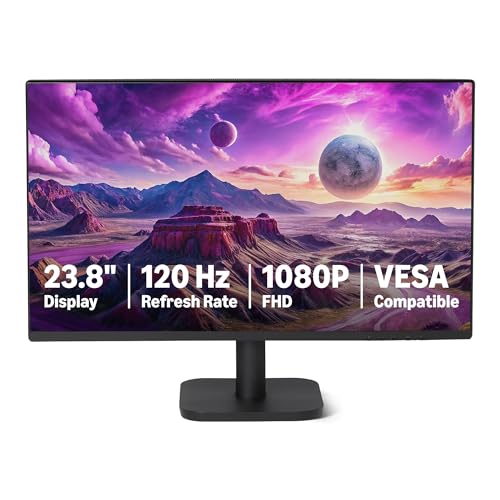
Amazon Basics 23.8-inch 1080P Computer Monitor

Acer 21.5in FHD 100Hz Office Monitor KB220Q H2bi

Dell 24 Monitor SE2426H 23.8-inch FHD 144Hz

AOPEN by Acer 21.5in FHD 100Hz Office Monitor 22SA2Q Hbi
More Details On Our Top Picks
Daily office work fits this 24-inch screen nicely, especially on a desk where a full-size panel still needs to leave room for a keyboard and notebook. The IPS panel, meaning in-plane switching for wider viewing angles and steadier color from the side, helps the image hold together better than many basic TN-style displays.
The 75Hz refresh rate is modest, but it still feels a touch smoother than a standard 60Hz office monitor during scrolling and window movement. Compared with the smaller AOPEN pick later in the list, this one gives you more room to spread out spreadsheets, and the adjustable stand plus VESA compatibility make placement easier in a home office.
Strong Points
- 24-inch size gives you enough room for documents, side-by-side apps, and a browser without feeling cramped.
- IPS panel supports more consistent color and viewing angles for shared workspaces.
- HDMI, DisplayPort, and VGA inputs cover newer laptops and older desktops.
- Adjustable stand and VESA support make desk setup less awkward.
Things To Consider
- 75Hz is fine for office use, but fast-motion gamers will want more headroom.
- Built-in speakers are useful in a pinch, though many desk setups still sound better with separate audio.
- The finish and stand are practical rather than premium, so expect a straightforward look.
Feature Snapshot
Who It Suits Best
You get the most from this one in a home office, dorm, or shared work setup where you want a dependable screen without extra fuss.
Where A Sibling Pick Shines
Amazon Basics 23.8-inch 1080P Computer Monitor makes more sense for you if higher refresh matters more than an adjustable stand.
This AOPEN model feels aimed at small desks that still need a quick, responsive screen. The 21.5-inch size keeps it compact, while the 100Hz panel and 1ms response time, meaning how fast pixels change color, help reduce blur in fast-moving windows and lighter gaming sessions.
AMD FreeSync is the kind of detail that matters more once you start pairing the monitor with a graphics card that can vary frame output, because it helps motion look less ragged. Compared with the Amazon Basics 24-inch option, you give up a little workspace, but you gain a snappier feel that suits mixed work and play.
Highlights
- 100Hz refresh rate brings a smoother feel than standard office panels.
- 1ms response time helps fast motion look cleaner.
- IPS technology supports stable color from common desk angles.
- HDMI and VGA inputs cover new and older devices.
- VESA mount support helps on crowded desks.
Softer Spots
- 21.5 inches can feel a bit tight for long spreadsheet sessions.
- The smaller panel works best at short to medium viewing distances.
- To get the most from 100Hz, your connected device needs the right output settings.
Quick Facts
Built With In Mind
You fit this best as a student, casual gamer, or remote worker who wants a compact display with a bit more speed than basic office gear.
A Better Fit Elsewhere
Dell 24 Monitor SE2426H suits you better if a larger 23.8-inch screen and higher refresh are more important than keeping the footprint small.
A small screen like this makes sense on a desk where every inch matters. The anti-glare finish helps cut mirror-like reflections from lamps and windows, and the LED panel keeps the design simple for basic laptop extension work.
One thing worth considering is the mixed resolution information in the source details, so this pick is best treated as a compact, practical monitor rather than a spec-flex piece. Compared with the two AOPEN models above, it trades speed and polish for a smaller body that can sit comfortably beside a laptop or in a secondary role.
Upsides
- 19-inch size fits tight desks, shelves, and small work corners.
- Anti-glare coating helps in bright rooms.
- VGA and HDMI support makes it easy to connect different devices.
- Thin body works well as a side screen for laptop users.
Room For Improvement
- The smaller display area is not as comfortable for split-screen multitasking.
- It makes more sense as a secondary screen than a main editing monitor.
- Mixed source details around resolution deserve a careful look before you plan a workspace around it.
Details At A Glance
Whose Shelf It Belongs On
You suit this pick best if you want a small secondary monitor for a laptop, receipt station, or compact home desk.
Another Choice May Suit
Amazon Basics 24-inch Full HD IPS Monitor is the better fit for office users who want a larger main display for daily multitasking.
This Amazon Basics model pushes harder on motion than the first pick, and that matters more than it sounds for long scrolling days or casual gaming. The 23.8-inch IPS panel gives you almost the same workable size as a 24-inch screen, so it still feels comfortable for office tasks.
The 120Hz refresh rate is the headline here, because it can make the whole desktop feel quicker and smoother once your graphics output supports it. Compared with the 75Hz Amazon Basics 24-inch monitor, this one is the better fit for you when motion clarity matters more than an adjustable stand.
Bright Spots
- 120Hz refresh rate stands out in a budget-friendly office-size monitor.
- IPS panel supports steady colors for everyday work and media.
- HDMI, DisplayPort, and VGA inputs make device swapping simpler.
- VESA compatibility helps with arm or wall mounting.
- 23.8-inch size lands in a useful middle ground for most desks.
Points To Note
- To reach 120Hz, your source device and cable need the right support.
- The monitor is still a flat, practical design rather than a luxury one.
- Users who mostly type documents may not feel the extra speed every minute of the day.
Core Details
Best Suited To
You fit this monitor best if you split time between office work, browsing, and occasional gaming, and want the motion upgrade without jumping to a costly display.
Look Elsewhere When
Amazon Basics 24-inch Full HD IPS Monitor makes more sense if an adjustable stand matters more than a faster refresh rate.
The KB220Q H2bi leans into color and smooth motion without getting bulky. Its 21.5-inch frame keeps the desk footprint manageable, while the sRGB 99% coverage, meaning the monitor can show nearly the full standard web color range, gives it a stronger case for people who care about presentation and everyday media.
AdaptiveSync, which helps align display timing with graphics output, is the other detail that lifts it above a plain office panel. Compared with the AOPEN 21.5-inch monitor earlier in the list, this Acer feels more polished for mixed work, streaming, and light creative tasks, though you still give up some screen real estate.
Positives
- 100Hz refresh rate keeps motion smoother than a basic office display.
- sRGB 99% coverage helps with more accurate-looking everyday color.
- AdaptiveSync supports cleaner motion in supported setups.
- HDMI and VGA make the monitor easy to place in older or newer setups.
- Bluelight filter and flickerless design suit long desk sessions.
Minor Gripes
- 21.5 inches still feels compact for heavy multitasking.
- The stronger feature set makes the setup step a little more thoughtful than a bare-bones screen.
- Color-focused perks matter most when your source device is also set up properly.
Feature Rundown
Right Fit For
You suit this monitor best if you want a small display that still feels more polished than a plain office screen.
Skip It When
Dell 24 Monitor SE2426H suits you better if you want a larger 23.8-inch panel and faster 144Hz motion.
This Dell leans a little more toward speed than the rest of the group, and that shows up quickly in motion-heavy use. The 144Hz refresh rate, 1ms MPRT, meaning a motion-focused response figure for sharper moving images, and IPS panel give it a more capable feel for work, gaming, and streaming in the same room.
For long desk days, the TÜV 3-star eye-comfort rating and AMD FreeSync support help make it feel better rounded than a pure gaming screen. Compared with the Amazon Basics 23.8-inch 120Hz model, the Dell gives you more motion headroom, though you only get two HDMI ports and tilt adjustment instead of a more flexible stand.
Standout Traits
- 144Hz refresh rate gives it the quickest feel in this roundup.
- IPS panel keeps color and angles dependable for mixed use.
- AMD FreeSync helps smoother-looking motion in supported setups.
- Two HDMI ports make it simpler to keep multiple devices attached.
- Tilt adjustment lets you fine-tune the viewing angle a little.
Honest Caveats
- The stand is limited to tilt, so height adjustment is not part of the package.
- Performance features matter most once your PC can keep up.
- The stronger motion focus may be more than casual office users need.
At A Glance
The Right Fit
You suit this pick best if you want a single monitor for work during the day and faster-paced media or games later.
Swap It Out When
Amazon Basics 24-inch Full HD IPS Monitor makes more sense if an adjustable stand matters more than extra motion headroom.
This AOPEN model keeps the formula simple, and that can be exactly what you want on a no-nonsense desk. The 21.5-inch VA panel, meaning vertical alignment for stronger contrast than many entry panels, pairs with a 100Hz refresh rate over HDMI and a 1ms response time for smoother day-to-day use.
The included HDMI cable is a helpful touch, especially for a first setup where you want fewer extra errands. Compared with the Acer KB220Q H2bi, this version is a touch more basic on the color side, but it still gives you FreeSync, VESA mount support, and a small footprint that works well in compact rooms.
Best Bits
- 100Hz over HDMI gives the monitor a smoother everyday feel.
- VA panel can suit users who like stronger contrast in normal viewing.
- FreeSync support helps motion stay steadier with compatible hardware.
- VESA compatibility makes wall or arm mounting straightforward.
- HDMI cable included makes initial setup easier.
Small Caveats
- VGA drops the refresh rate to 75Hz, so connection choice matters.
- The 21.5-inch size is compact, not spacious.
- It is a plain, practical monitor rather than a feature-heavy one.
Core Details
Who Should Grab It
You fit this monitor best if you want a straightforward display for a small office, bedroom desk, or spare-room computer.
Consider Something Else When
Acer 21.5in FHD 100Hz Office Monitor KB220Q H2bi makes more sense if you want the same compact size with a stronger color-focused feature set.
How To Choose The Right Cheap Monitors
Screen Size And Desk Distance
Screen size changes the feel of your whole setup. A 21.5-inch display works well on tight desks, while 23.8-inch and 24-inch panels give you more breathing room for documents, browser tabs, and side-by-side windows.
Viewing distance matters just as much. A smaller screen can feel sharp and neat at arm’s length, but it starts to feel busy once you ask it to handle several apps at once.
Refresh Rate And Motion Feel
Refresh rate tells you how often the picture updates each second. A 75Hz screen is fine for office tasks, yet 100Hz or 120Hz feels easier on the eyes during scrolling, and 144Hz steps up again for faster-paced use.
The trade-off is simple: higher refresh usually asks more from the connected device. That means the smoothest setup comes from matching the monitor to a graphics output that can actually make use of it.
Panel Type And Color Handling
IPS panels usually suit mixed use because they keep color and viewing angles steady. VA panels can lean toward stronger contrast, which many people enjoy for darker rooms or casual viewing.
For office work, either can do the job. For shared desks, video calls, and light creative work, IPS often feels easier to live with.
Ports, Stands, And Mounting
HDMI covers most modern laptops and desktops, while DisplayPort is handy for many PCs and docks. VGA still helps with older gear, though it often signals an older setup and fewer extras.
An adjustable stand saves you from stacking books under the base, and VESA mount support opens the door to arms or wall setups. That kind of flexibility feels small on paper, then very useful the moment your desk gets crowded.
A Quick Reality Check Before You Decide
Wrong Turns To Avoid
Do not choose by screen size alone. A 24-inch monitor can be far more useful than a 21.5-inch model for office multitasking, yet a smaller screen may still fit better in a cramped room.
Also watch the connection path. A monitor with 120Hz or 144Hz needs a device and cable that can actually deliver that refresh, or the upgrade won’t matter much.
The Upgrade Payoff
More expensive monitors usually spend the money on motion handling, better panel quality, stronger color coverage, and sturdier stands. Those gains show up most clearly in long work sessions, side-by-side app use, or gaming setups where smooth motion matters.
For basic email, schoolwork, and web browsing, a simpler screen often makes more sense. Spend up when your desk hours are long enough that stand comfort, panel quality, and refresh rate start to affect how your day feels.
Frequently Asked Questions
What size monitor works best for a small desk?
A 21.5-inch screen usually fits small desks best because it keeps the footprint tight. A 23.8-inch model gives you more workspace without feeling oversized for most rooms.
Is 75Hz enough for everyday work?
Yes, 75Hz is enough for documents, browsing, and general office use. Higher refresh rates feel smoother, but they matter less for plain productivity.
Does IPS matter on a budget monitor?
IPS matters when you care about color consistency and wider viewing angles. It helps most in shared spaces, video calls, and everyday media.
Why does VESA support matter?
VESA support lets you use an arm or wall mount instead of the included stand. That helps you clear desk space and fine-tune monitor placement.
Do HDMI and VGA both matter in 2026?
HDMI matters most for modern laptops, desktops, and docks. VGA still helps with older systems, second-hand PCs, and simple legacy setups.
