
Color grading asks a lot from a screen, especially during long edits where small shifts in shadow detail or skin tone can throw off your judgment. You need a monitor that keeps colors steady, gives you enough workspace to judge timelines and scopes, and feels comfortable enough for the long haul. That balance is different for photographers, editors, designers, and anyone working from a home desk or studio bench.
The eight monitors below cover that range, from calibrated 27-inch displays to wider and more immersive panels. Some lean toward precise color work, others make sense for mixed creative and everyday use. You can match the pick to your workflow without guessing at the trade-offs.
Quick Look At The Shortlist
ASUS ROG XG27UCG 27 Inch 4K 160Hz USB-C Monitor

Dell 32 Monitor S3225QS, 4K UHD VA, 120Hz

ViewSonic VS2725-2K 27 Inch QHD 100Hz Monitor

ViewSonic VP2768 PRO 27 Inch 1440p Monitor

CRUA 34 Inch 21:9 UWQHD 100Hz Ultrawide Curved Monitor

EIZO ColorEdge CG2700X Graphics Monitor 27 Inch 4K

Eizo ColorEdge CS2740-4K-BK 27 Inch 4K UHD Monitor

ViewSonic VP3256A-4K 32 Inch 4K ColorPro Monitor
More Details On Our Top Picks
This ASUS sits in a useful middle ground for creators who also game after hours. The 27-inch 4K panel gives you fine detail for grading, while the 160Hz refresh rate helps motion feel smoother than a standard creative monitor. The trade-off is simple, it brings gaming gear styling into a work setup, so a clean studio look may matter to you.
USB-C matters here because a single cable can simplify a laptop desk, and the DCI-P3 99% gamut gives you broad color space coverage for modern video work. ELMB Sync, which reduces motion blur while keeping adaptive sync active, is more about fluid visuals than color accuracy, so it’s a bonus rather than the reason to choose it. For hybrid users, that balance is appealing.
Strong Points
- 4K resolution on 27 inches keeps text, timelines, and fine image detail crisp for grading work.
- USB-C makes a single-cable laptop desk easier to live with.
- DCI-P3 99% helps support modern cinema-style color spaces.
- 160Hz gives you a smoother feel for motion-heavy editing and gaming.
Areas To Watch
- The gaming-first design may not suit a very restrained studio setup.
- Fast refresh features matter less than calibration if color accuracy is your only goal.
- Extra features can add setup choices, which means a little more menu work than a basic office display.
Core Details
Who Should Grab It
You get the most from this one if you edit in the daytime and game or stream at night, because it handles both jobs without feeling half-built for either.
Swap It Out When
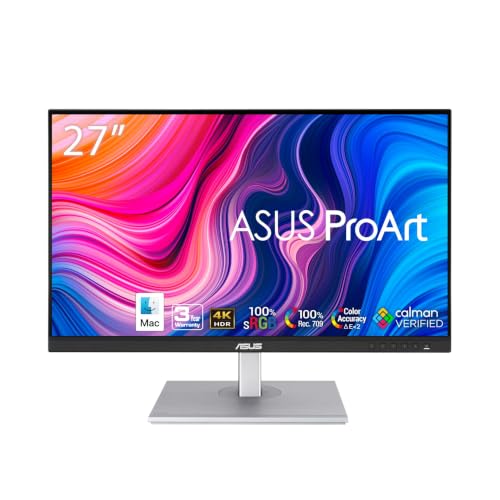
ViewSonic VP2768 PRO 27 Inch 1440p Monitor suits photographers and design-focused users better when calibration tools matter more than high-refresh extras.
A 32-inch screen changes the feel of a grading desk right away, and this Dell gives you that bigger canvas without forcing you into an ultrawide shape. The VA panel, meaning vertically aligned liquid crystals, usually brings stronger dark tones than many basic IPS office screens, which can help when you spend time checking contrast-heavy footage. It’s a sensible choice for mixed work and streaming.
The 99% sRGB coverage and anti-glare finish make day-to-day viewing easier in bright rooms, while the 3000:1 contrast spec adds more depth than a flat, washed-out panel. One thing worth considering is that a VA screen can look a little different off-center than an IPS model, so side-angle color work may feel less reassuring. For most desks, though, the comfort angle is a real plus.
What We Like
- 32-inch size gives you room to park a timeline, tools, and image preview at once.
- 4K sharpness helps with detailed footage review.
- Anti-glare coating is practical in offices with windows or overhead light.
- FreeSync Premium and 120Hz keep motion smooth for occasional gaming or video playback.
- Eye comfort tuning matters during long edit sessions at a shared desk.
Small Caveats
- VA viewing behavior can be less uniform from the side than a good IPS panel.
- Its larger footprint needs a deeper desk than a 27-inch model.
- Photographers chasing very exact off-axis color may prefer a different panel type.
Feature Snapshot
The Right Fit
You’ll appreciate this Dell most if you want a larger, comfortable screen for editing, browsing, and occasional gaming on the same desk.
Reach For A Different Pick When
ASUS ROG XG27UCG 27 Inch 4K 160Hz USB-C Monitor suits you better when a smaller 27-inch footprint and USB-C convenience matter more than a bigger panel.
This ViewSonic makes sense for a workstation that needs clarity without pushing straight into 4K territory. A 27-inch QHD panel, meaning 2560 x 1440 resolution, gives you a good middle point between sharpness and easier scaling on older laptops or midrange desktops. For color grading on a tighter budget, that balance can feel very practical.
The frameless look helps in dual-monitor setups, and the 100Hz refresh rate keeps the desktop feeling responsive while you scrub through footage or move between apps. The honest read is that it leans more toward everyday creative use than reference-level color work, so users chasing exacting calibration will likely look higher up the list. For many home offices, that’s still enough monitor.
Bright Spots
- QHD resolution is easier to drive than 4K, which helps older systems stay responsive.
- 27-inch size fits well on standard desks.
- HDMI and DisplayPort keep it flexible for laptops and tower PCs.
- 1ms response time helps motion look clean during fast timeline movement.
- 1.07 billion colors give the panel more tonal range than basic office displays.
Points To Note
- QHD does not give the same fine-detail headroom as 4K for high-end grading.
- It’s better suited to general creative work than color-critical studio reference use.
- The frameless design still needs careful handling during cleaning and transport.
At A Glance
Whose Shelf It Belongs On
You’ll likely like this one most if you edit from a home office, want a tidy 27-inch footprint, and care more about sensible value than prestige features.
Look Elsewhere When
ViewSonic VP2768 PRO 27 Inch 1440p Monitor is the better fit for you when tighter color workflow control matters more than cost-conscious versatility.
Color-conscious work is where this ViewSonic starts to separate itself from the more general picks above. The 100% sRGB and Rec. 709 coverage speak to web and video workflows, and the 14-bit 3D LUT, a lookup table that helps map color values more precisely, gives you a more serious foundation for correction work. For photography and graphic design, that focus matters.
The frameless IPS panel helps when you run more than one display, and the DisplayPort chaining support is handy in a studio where a tidy desk counts. The trade-off is that this model stays in the “serious color tool” lane rather than the flashy high-refresh lane, so it won’t feel as overtly fast as the ASUS. That’s fine for creators who value predictable output over gaming extras.
Highlights
- 100% sRGB and Rec. 709 align well with common photo and video workflows.
- 14-bit 3D LUT helps with smoother color mapping for calibrated work.
- IPS panel supports steadier off-axis viewing than many VA alternatives.
- DisplayPort chaining can simplify a multi-monitor desk.
- Frameless design looks clean in a studio environment.
Trade Offs
- The 1440p resolution is less detailed than the 4K options in this roundup.
- It focuses on color workflow, not gaming-style speed.
- Frameless edges call for a bit of care during cleaning and moving.
Technical Sheet
Best Suited To
You’ll get the most from this monitor if your day revolves around photography, graphic design, or Rec. 709 video work and you want dependable color behavior.
A Better Fit Elsewhere
EIZO ColorEdge CS2740-4K-BK 27 Inch 4K UHD Monitor is the smarter step up for you when 4K detail and hardware-calibration support move higher on the list.
An ultrawide panel changes how your workspace feels, and this CRUA leans into that hard. The 34-inch 21:9 shape gives you much more horizontal room than a standard 16:9 screen, which is useful for timelines, tool palettes, and side-by-side app layouts. For editors who hate constant tab switching, that extra width is a real comfort.
The curved 3800R design, which describes the screen’s bend radius, helps the large panel feel a bit more wrapped around your view, though that effect is more about immersion than color accuracy. With 120% sRGB, 92% DCI-P3, and built-in speakers, it’s a versatile creator desk screen, but the white finish and wide body also mean you’ll want enough desk room to do it justice. It’s a style-forward pick with practical upside.
Reasons To Buy
- Ultrawide 21:9 layout gives you room for a more efficient editing workflow.
- 3440 x 1440 resolution keeps the panel detailed without going into 4K territory.
- 120% sRGB and 92% DCI-P3 support wider creative color work.
- Built-in speakers reduce desk clutter for casual use.
- 100×100 mount support adds placement flexibility.
Honest Caveats
- The wide chassis needs a larger desk than a standard 27-inch display.
- Ultrawide framing is great for timelines, but not every app scales neatly across it.
- The curved shape may feel unfamiliar for exact straight-line design work.
Feature Rundown
Made For
You’ll like this best if your desk time revolves around editing timelines, managing several windows, or working in a layout that benefits from extra width.
Skip It When
Dell 32 Monitor S3225QS, 4K UHD VA, 120Hz is a better match for you when a more conventional screen shape and stronger contrast suit your room better.
This EIZO is aimed squarely at serious color work, and that shows in the feature set. A 27-inch 4K panel gives you dense detail, while 99% AdobeRGB and 98% DCI-P3 cover two wide-gamut spaces that matter in print and video pipelines. The built-in self-calibration sensor is the kind of feature that saves you from relying on memory and guesswork.
USB-C, DisplayPort, HDMI, USB hub, RJ-45 LAN, and KVM switch support make it unusually versatile for a studio desk with multiple machines. The trade-off is obvious: this level of control and connectivity makes more sense for committed professionals than casual hobbyists. For studio environments where consistency matters, it feels purposeful rather than ornate.
Plus Points
- 4K resolution on 27 inches keeps detail crisp for inspection and retouching.
- AdobeRGB and DCI-P3 coverage help across print and video color spaces.
- Self-calibration support reduces the need for constant manual adjustment.
- USB-C, LAN, USB hub, and KVM features support a busy production desk.
- True Black contrast tech helps darker tones carry more depth.
Worth Noting
- The feature set is more than many casual users need.
- Its studio-first approach may feel overbuilt for simple office use.
- More inputs and tools mean more setup planning at the start.
Details At A Glance
Built With In Mind
You’ll get the most value here if you work in a studio where exacting color behavior, multiple inputs, and a tidy multi-system desk all matter.
Another Choice May Suit
ViewSonic VP2768 PRO 27 Inch 1440p Monitor is the easier fit for you when you want a strong color-focused screen without stepping into EIZO’s more advanced studio tier.
This Eizo keeps the setup more focused than the CG2700X above, and that narrower scope can be a benefit for solo creators. You still get 27-inch 4K clarity, along with 99% AdobeRGB and 100% sRGB coverage, so the screen has the range to handle print and web work with confidence. The included calibration software support is a major reason serious users keep it in view.
DisplayPort, HDMI, and USB-C cover the main connection paths, so you can move between a desktop tower and a laptop without fuss. The five-year warranty listed by the manufacturer is longer than what many displays offer, which may matter to you if this screen is going to sit at the center of a long-term workstation. It feels like a monitor built to stay in the studio.
Best Bits
- 4K resolution helps reveal detail during photo and video review.
- AdobeRGB and sRGB coverage support both print and web output.
- Hardware calibration support is useful for keeping color behavior consistent.
- USB-C, HDMI, and DisplayPort cover common workstation hookups.
- The listed five-year warranty adds peace of mind for longer ownership.
Minor Gripes
- It is a serious work tool, so casual gaming extras are limited.
- The advanced focus can feel unnecessary for general office use.
- Color accessories and calibration habits still matter to keep results trustworthy.
Core Details
Perfect Match For
You’ll like this Eizo most if you want a serious 4K grading monitor for a personal studio and prefer a cleaner, more focused feature set.
Where A Sibling Pick Shines
EIZO ColorEdge CG2700X Graphics Monitor 27 Inch 4K is the better move for you when built-in self-calibration and a broader connection set matter more.
This ViewSonic is the broadest-feeling screen in the list, and that can be a real advantage for creators who spend hours in front of a desk. The 32-inch 4K IPS panel gives you plenty of room for timelines and palettes, while the 100% sRGB coverage and Pantone Validated status point toward predictable color behavior for content creation. It’s the kind of screen that feels calm rather than cramped.
The 100W USB-C connection is especially handy on a laptop desk because it can carry video and power through one cable, which trims clutter fast. Advanced ergonomics also matter more than people expect, especially during long editing stretches, since a monitor you can position well often feels easier to live with than a technically similar one. The honest read is that it’s a strong daily driver for creators who want comfort alongside color control.
Positives
- 32-inch 4K panel gives you generous working room.
- IPS technology helps color stay steadier from more angles.
- 100% sRGB suits common digital content workflows.
- 100W USB-C can simplify a laptop-based desk setup.
- Advanced ergonomics make it easier to find a comfortable viewing position.
Points To Note
- 32 inches needs more desk depth than a 27-inch model.
- It is tuned for creator comfort, not gaming-first speed.
- Pantone validation helps workflow confidence, but it does not replace your own calibration habits.
Feature Card
Who Will Love This
You’ll appreciate this monitor most if you work long sessions in creative software and want a big, comfortable screen that still keeps color work front and center.
Where Another Pick Suits Better
Eizo ColorEdge CS2740-4K-BK 27 Inch 4K UHD Monitor fits you better when a smaller desk footprint and hardware-calibration focus matter more than screen size.
How To Choose The Right Computer Monitors For Color Grading
Start With Resolution And Panel Type
Resolution decides how much fine detail you can see without scaling tricks getting in the way. For color grading, 4K on a 27- to 32-inch screen gives you a cleaner view of edges, texture, and subtle tonal changes, while QHD can still work well on a smaller budget or older machine.
Panel type matters just as much. IPS panels usually keep color more stable from the side, which helps when you lean back or work with a second person nearby, while VA panels often bring deeper contrast that can be useful for darker scenes. Neither is magic, but the match should suit how you actually sit and work.
Look Closely At Color Coverage
Color gamut, meaning the range of colors a display can show, is one of the biggest clues to fit. sRGB is the common web standard, Rec. 709 lines up with many video workflows, and AdobeRGB reaches wider into print-oriented work. A wider gamut helps, but only when the rest of your workflow is ready for it.
That’s why a panel with broad coverage can still disappoint if you rarely calibrate or work in software that respects color management. Photographers and editors who deliver to clients should value known standards more than flashy language on a spec page. Matching the gamut to your output keeps the screen useful instead of merely impressive.
Think About Calibration And Consistency
Calibration is the process of aligning the display so its colors and brightness stay closer to a known target. Factory calibration, self-calibration sensors, and support for hardware calibration all help reduce drift over time, which matters during long projects spread across weeks or months. That consistency is especially helpful in studios where several people review the same file.
For solo creators, a monitor with strong native accuracy and simple setup may be enough. For studio work or print handoff, built-in calibration tools are worth the higher outlay because they reduce guesswork and make repeat sessions easier to trust. The screen should help your workflow stay steady, not make you chase corrections every other day.
Match The Screen To Your Desk And Workflow
Size changes how the monitor feels in daily use. A 27-inch screen is easier to place on a compact desk, a 32-inch panel gives you more room for timelines and panels, and an ultrawide shape helps when you constantly juggle several windows. The right choice depends on whether you want focus, spread, or a bit of both.
Ports and ergonomics matter too. USB-C can simplify laptop setups, DisplayPort and HDMI cover most desktop rigs, and height, tilt, and swivel adjustments matter more than you might expect during long edit sessions. A monitor that fits your desk and posture often ends up serving you better than one with the flashier spec sheet.
What To Weigh Before You Commit
Mistakes Worth Dodging
Many shoppers get pulled in by refresh rate or gaming branding and forget that color work depends on gamut, calibration, and panel stability first. A fast screen can still be the wrong screen for grading if the color tools are thin. Size can also backfire, because a huge panel on a shallow desk gets tiring fast.
Another common slip is ignoring the connection path. A laptop-heavy workflow benefits from USB-C, while a tower with a graphics card may be happier on DisplayPort. Matching the ports to your setup saves frustration later.
The Upgrade Payoff
Higher-tier monitors cost more because they usually bring stronger calibration tools, wider color coverage, better uniformity, and smarter connectivity. Those parts take more design work and tighter quality control, which is why a studio-grade Eizo sits above a general-purpose display. You are paying for fewer compromises, not just a shinier label.
The upgrade starts to make sense once your work leaves the hobby stage. Delivery to clients, print jobs, or repeated review passes justify a screen that stays steadier and is easier to trust over time. For casual edits, that extra spend can feel unnecessary, but for production work it often saves time and second-guessing.
Closing Thoughts
Your best match depends on how much of your day is spent judging color versus just living with a screen. For a flexible all-rounder, the ASUS ROG XG27UCG and ViewSonic VP3256A-4K stand out for different reasons, while the Eizo pair makes the most sense for serious color work. Choose the one that fits your desk, your software, and the kind of files you hand off most often.
