
Photo editing asks more from a screen than casual browsing does. You need reliable color, enough resolution to judge fine detail, and a stand that won’t make long sessions annoying. The right monitor can make sorting, retouching, and soft proofing feel calm instead of cramped.
That’s why this shortlist mixes color-focused 4K panels, a few larger screens for comfortable layouts, and a couple of faster options for mixed creative and everyday use. You’ll see where each pick fits best, and where a different model makes more sense.
The Shortlist At A Glance

HP Series 3 27 inch FHD Monitor 327se
ASUS ROG XG27UCG 27 Inch 4K 160Hz USB-C G-SYNC Gaming Monitor

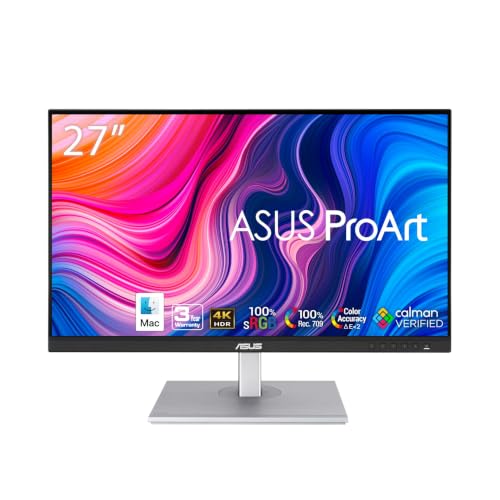
ASUS ProArt PA279CRV 27 Inch 4K UHD USB-C HDR Professional Monitor for Mac

Dell 32 Monitor S3225QS, 4K UHD VA, 120Hz, FreeSync Premium, Eye Comfort

LG 27UP650K-W 27-inch Ultrafine 4K UHD IPS Computer Monitor, White

Dell 27 Plus Monitor S2725HSM 27-inch FHD 144Hz 1ms Display, Ash White

Dell 27 Plus QHD Monitor S2725DSM 27-inch QHD 144Hz 1ms Display, Ash White
More Details On Our Top Picks
A 27-inch IPS panel with Full HD resolution gives you a roomy canvas without pushing the budget end of the category. That makes this HP feel sensible for photo sorting, file naming, and light retouching on a home desk, especially beside the more color-driven ASUS ProArt options.
The 250-nit brightness and 1300:1 contrast ratio are straightforward rather than flashy, so you get a basic editing setup with decent separation in shadows and highlights. Eye Ease and Eyesafe certification are helpful for long sessions, though serious print matching still belongs to the higher-resolution models in this roundup.
Strong Points
- 27-inch size gives you enough room for toolbars and image previews without crowding a smaller desk.
- IPS viewing angles help keep tone and color more consistent as your posture shifts during a long edit.
- Eye comfort features suit late-night catalog work or weekend culling sessions.
- The clean black finish and borderless feel make dual-screen setups look tidy.
Things To Consider
- Full HD is the least detailed option in this list, so fine texture work gets less room than on the 4K models.
- Color-focused work benefits from a more advanced panel, especially beside the ProArt PA279CRV.
- The spec set is modest, so you’re paying for comfort and size more than deep creator features.
Feature Snapshot
Who It Suits Best
You’ll get the most from this monitor as a casual editor, family photo organizer, or home-office user who wants a comfortable 27-inch screen without chasing pro-level color tools.
A Better Fit Elsewhere
ASUS ProArt PA279CRV is the stronger match for color-critical work, since its 4K panel and wide gamut suit you better when edits need finer detail and tighter color control.
This ASUS ROG panel blends creator-friendly color with gaming-speed ambition, which makes it unusual in a useful way. The 4K resolution gives you fine detail for image cleanup, while the 99% DCI-P3 coverage helps richer color work sit beside the more studio-leaning ProArt screen.
USB-C adds cleaner desk wiring, and the dual-mode setup gives you the choice between 4K sharpness and a faster Full HD path for motion-heavy use. The trade-off is simple, you pay for versatility, so pure photo editors may not need all that speed.
What We Like
- 4K resolution gives you room to inspect edges, masks, and small retouching details.
- 99% DCI-P3 coverage supports wider color work than basic sRGB-only screens.
- USB-C can tidy up a laptop desk by carrying display and data through one cable.
- The 160Hz ceiling makes scrolling and motion feel very smooth for mixed creative use.
Worth Noting
- The gaming-first feature set is more than many photo editors truly need.
- Dual-mode flexibility adds complexity you may never use in a static workstation.
- Desk setup can take a little more planning because the feature list is dense.
Core Details
Built With In Mind
You’re a good fit for this model if you split time between photo editing, gaming, and laptop docking, and you want a screen that can do more than one job without feeling cramped.
Look Elsewhere When
ASUS ProArt PA279CRV is the calmer choice for a photo-only desk, because its creator focus is easier to justify than the ROG model’s speed-first extras.
The ProArt PA279CRV sits closest to the needs of serious photo editing. Its 27-inch 4K panel gives you the extra pixel density you want for fine retouching, while the factory calibration and Delta E under 2 target tighter color accuracy than the more general-purpose LG and HP options.
USB-C with 96W power delivery is a practical touch for laptop users, since one cable can handle display and charging at the desk. The trade-off is that this screen is built for accuracy rather than spectacle, so it feels measured rather than dramatic, which is exactly the point for creator work.
Bright Spots
- 4K resolution on 27 inches gives you crisp detail for crops, masks, and color-sensitive corrections.
- 99% DCI-P3 and 99% Adobe RGB suit a wider creator workflow than basic sRGB panels.
- Calman Verified factory tuning helps you start from a more dependable color baseline.
- USB-C with 96W power delivery keeps a compatible laptop desk cleaner and easier to manage.
- Daisy chain support can help a multi-monitor setup stay less tangled.
Areas To Watch
- The creator-first tuning makes it less about entertainment flair and more about disciplined color work.
- Some desk setups may need a little cable planning to make the most of the ports.
- It’s the priciest-feeling direction in this roundup, so casual use won’t justify it as easily.
Technical Sheet
The Right Fit
You should gravitate to this monitor if your work leans toward serious photo editing, client delivery, or any desk where dependable color matters more than gaming extras.
Where A Sibling Pick Shines
LG 27UP650K-W works better for lighter editing and general home use, since it keeps the 4K detail but trims away some of the ProArt’s deeper creator emphasis.
The 32-inch size gives this Dell a more relaxed editing feel than the 27-inch models above, which matters a lot on a busy desk. You get 4K detail, a 3000:1 contrast ratio, and a VA panel, so images can feel deeper in darker scenes, though viewing angles usually don’t feel as open as IPS screens.
That makes it a strong all-round screen for photographers who also watch video or play games after work. The 120Hz refresh rate adds smoothness, but color purists may still prefer the ProArt PA279CRV for its creator-first setup.
Upsides
- 32-inch size gives you more room for palettes, timelines, and side-by-side images.
- 4K resolution stays sharp at that larger size, so details don’t feel cramped.
- 3000:1 contrast can make dark image areas look fuller and more dimensional.
- 120Hz refresh rate keeps motion and scrolling smooth during everyday use.
- Eye comfort tuning suits long editing sessions in a home office.
Minor Gripes
- VA panels often feel less wide-angled than IPS when you move off-center.
- It leans a bit more toward mixed use than strict color work.
- A 32-inch shell needs enough desk depth to feel comfortable.
Quick Facts
Whose Shelf It Belongs On
This Dell fits you well if you want a large desktop display for editing, streaming, and everyday work, and you prefer a more immersive screen than a compact 27-inch panel.
Skip It When
ASUS ProArt PA279CRV makes more sense for print-oriented editing, since its creator-first color setup is more directly aimed at that kind of work.
The LG 27UP650K-W sits in a very useful middle ground for photo editing. You get 4K detail on a 27-inch IPS panel, so sharpening, cropping, and general file cleanup feel more precise than on the HP’s Full HD screen.
Reader Mode and Flicker Safe are the kind of comfort features that matter in a home office, especially during long catalog sessions or evening edits. The 60Hz ceiling keeps it grounded for still work, though it won’t feel as lively as the Dell 27 Plus models.
Best Bits
- 4K resolution gives you a cleaner view of small image details.
- IPS panel suits editing sessions where you move around the desk a bit.
- Reader Mode can make long review sessions easier on the eyes.
- Tilt, height, and pivot adjustment help you dial in a comfortable setup.
Softer Spots
- 60Hz is fine for editing, though it feels slower than the higher-refresh Dell options.
- It’s more of a dependable all-rounder than a specialist color monitor.
- The white finish can show dust more plainly than darker shells.
Details At A Glance
Perfect Match For
You should look at this LG if you want a clean, capable 4K monitor for editing at home and you value comfort features almost as much as sharpness.
Another Choice May Suit
ASUS ProArt PA279CRV is a better fit for color-sensitive projects, because its wide gamut and factory calibration speak more directly to pro editing needs.
This Dell leans into smooth motion and simple comfort, which makes it easier to recommend for mixed desk use than for strict color grading. The 144Hz refresh rate and 1ms moving picture response time give it a quick feel, while the built-in speakers and adjustable stand make it practical for a setup that handles more than photo work.
For casual editors who also watch content or play games, that blend makes sense. The honest read is that Full HD is the limiting factor here, so it works better as a versatile everyday screen than as a precision-heavy monitor.
Positives
- 144Hz refresh rate keeps motion smooth during scrolling and mixed use.
- 1ms MPRT helps the screen feel responsive in fast-moving content.
- Height, tilt, pivot, and swivel adjustment make it easy to set up comfortably.
- Built-in speakers reduce desk clutter for a simple home workstation.
Room For Improvement
- Full HD leaves less room for detail work than the 4K screens in this list.
- It fits casual editing better than color-critical photo correction.
- Integrated speakers help with convenience, though serious audio still deserves separate gear.
Feature Rundown
Who Will Love This
You’ll like this Dell most if you want a comfortable all-purpose monitor for home use, light editing, and entertainment rather than exacting color work.
Swap It Out When
LG 27UP650K-W is the better move for photo editing, since its 4K panel gives you much finer detail where it counts.
The S2725DSM feels like the smarter Dell choice once you want more detail than Full HD can offer without jumping all the way to 4K. QHD, or 2560 x 1440 resolution, gives you a sharper workspace for browsing folders, checking image edges, and working in more than one window at once.
It also keeps the same practical 144Hz refresh rate, speaker pair, and full stand adjustment range as the FHD sibling. That combination makes it a good step up for mixed use, though strict color work still fits the ProArt monitor more naturally.
Standout Traits
- QHD resolution strikes a useful middle ground between Full HD and 4K.
- 27-inch size feels familiar while still offering better detail than the FHD Dell.
- 144Hz refresh rate helps the screen stay smooth for everyday movement.
- Height, tilt, pivot, and swivel adjustments make posture setup easy.
- Dual speakers reduce the need for extra hardware on a crowded desk.
Areas To Watch
- It still isn’t a color-calibration specialist, so dedicated photo work can outgrow it.
- The appeal is strongest when you want a mix of comfort, speed, and sharper text.
- Owners with a very color-focused workflow may want the ProArt route instead.
Core Details
Built With In Mind
This Dell suits you best if you want a sharper everyday screen for editing, browsing, and general work, and you like the idea of a smoother panel without stepping into true pro territory.
Where A Sibling Pick Shines
ASUS ProArt PA279CRV is the better fit for exacting image work, since its calibration and gamut support are more serious about photo output.
How To Choose The Right Computer Monitors For Photo Editing
Resolution And Screen Size Matter Together
For photo editing, resolution sets how much detail you can inspect without zooming constantly. A 27-inch 4K screen, like the ASUS ProArt PA279CRV or LG 27UP650K-W, gives you a much denser image than Full HD, so edges, skin retouching, and fine texture work feel easier to judge. Larger screens, such as the Dell 32 S3225QS, add room for panels and timelines, but size alone does not replace resolution.
Color Accuracy Beats Flashy Specs
A fast refresh rate sounds attractive, but still-image work cares more about color consistency, gamut coverage, and factory calibration. Wide gamuts such as DCI-P3 and Adobe RGB matter because they help the screen show a broader range of colors, while a low Delta E target points to tighter color error. For editing prints or client work, that matters far more than gaming extras.
Comfort Features Help Longer Sessions
Stand adjustment, IPS viewing angles, and eye-comfort modes matter because editing rarely ends after ten minutes. A monitor that tilts, raises, and pivots lets you settle into a healthier position and keep glare under control, especially in a bright room or a shared office. That’s where the LG 27UP650K-W and Dell S2725DSM make sense for mixed use, even though they don’t match the ProArt model for pure color precision.
Match The Screen To Your Workflow
Casual editors can live happily with a clean 4K or QHD panel and a simple stand. Serious image work benefits from factory-calibrated color, wider gamut coverage, and a more deliberate creator focus. If your desk handles both editing and entertainment, a hybrid model like the ASUS ROG XG27UCG or Dell 32 S3225QS can make sense, but dedicated photo work still points you back to the ProArt.
Before You Click Buy
Common Shopping Slip Ups
A frequent mistake is chasing refresh rate before color quality. That trade works for motion-heavy use, but photo work needs dependable tone first, then speed second. Another easy miss is buying a monitor that looks sharp in the spec sheet yet lacks height adjustment, which can make long sessions awkward.
Another trap is overlooking resolution on a 27-inch screen. Full HD can feel cramped once you start checking fine detail or stacking editing panels, so you may prefer 4K or at least QHD for a calmer workspace. Cable types matter too, especially on laptop desks, since USB-C and DisplayPort can simplify the setup.
Why The Extra Money Goes
Higher-tier monitors often pay for factory calibration, broader color gamut coverage, and better panel tuning. Those parts cost more because they help the screen present a more controlled image, which is useful when edits need to stay consistent across devices and print output. You also tend to get stronger stands, cleaner cable management, and better desk ergonomics.
That upgrade is worth it when your editing affects client work, print delivery, or any project where color accuracy carries weight. For casual home albums, the money often makes more sense spent on a larger or more comfortable display instead. The ASUS ProArt PA279CRV shows that difference clearly.
Final Thoughts
You’ve got a solid mix here, from simple everyday screens to monitors that lean hard into creator work. For serious photo editing, the ASUS ProArt PA279CRV is the cleanest fit, while the LG 27UP650K-W and Dell S2725DSM make sense for more general desk use. The right choice depends on how exact your color work needs to be, and how much room you want on your desk.
