
Video editing asks a lot from a screen. You want clean detail, stable color, enough size for timelines, and a setup that won’t feel tiring after a long cut session. That matters just as much in a home studio as it does beside a laptop in a cramped desk corner.
The seven picks below cover different editing styles, from color-first work to mixed editing and gaming setups. You’ll see where a 27-inch 4K panel makes sense, where a 32-inch screen helps with long timelines, and where a faster display suits hybrid use.
Quick Look At The Best Video Editing Monitors

Samsung 32″ Flat Computer Monitor LS32B304NWNXGO
ASUS ROG XG27UCG 27 Inch 4K 160Hz USB-C G-SYNC Gaming Monitor

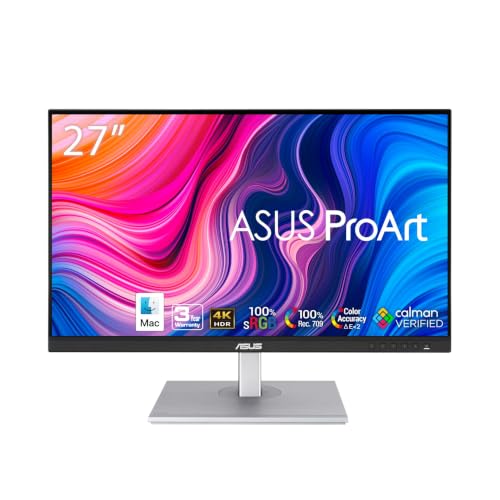
ASUS ProArt PA279CRV 27 Inch 4K UHD USB-C HDR Professional Monitor

Dell 32 Monitor S3225QS

LG 27US500-W Ultrafine Monitor 27-Inch 4K UHD White

LG 27UP650K-W 27-inch Ultrafine 4K UHD IPS Computer Monitor White

Dell 27 Plus Monitor S2725HSM 27-inch FHD 144Hz Ash White
More Details On Our Top Picks
A 32-inch screen changes the pace of editing by giving your timeline, bins, and preview window more breathing room. That extra spread helps in a home office where you also keep reference stills or audio tools open on the side.
The 75Hz refresh rate sits above the usual 60Hz baseline, so motion can feel a bit smoother during scrolling and casual playback. The trade-off is simple, it leans more toward roomy everyday editing than color-heavy finishing work.
Strong Points
- The 32-inch panel gives you space for layered editing windows without constant tab swapping.
- Borderless edges make multi-monitor setups look cleaner, which helps when you pair it beside a second display.
- HDMI and DisplayPort connections cover common desktop setups and most editing PCs.
- AMD FreeSync can make motion look steadier during playback or mixed work and play sessions.
Things To Consider
- The feature set is more general-purpose than color-accuracy focused, so finishing work may call for a more specialized panel.
- A 32-inch screen needs more desk depth, especially on compact desks.
- The glossy marketing appeal is low here, which is fine, but you will want to keep cable routing tidy because the larger footprint can look busy fast.
Feature Snapshot
Who It Suits Best
You’ll get the most from this one if you edit general content, keep several apps open, and want a larger screen without moving into a specialist color workflow.
Where A Sibling Pick Shines
ASUS ProArt PA279CRV 27 Inch 4K UHD USB-C HDR Professional Monitor fits color-critical editing better, especially for grading-heavy work where tighter color targets matter more than simple screen space.
This ASUS sits in a different lane from the Samsung, because it aims at people who split time between editing and gaming. The 27-inch size stays manageable on a normal desk, and the USB-C connection makes single-cable laptop setups easier to keep clean.
Its dual-mode idea is the real hook: you get 4K at 160Hz for sharp work, plus a separate lower-resolution high-speed mode for fast play. The honest read is that the gaming-first traits are a bonus for editors, not the reason to choose it.
What We Like
- 4K detail supports sharper timeline work and closer inspection of footage.
- The 160Hz ceiling gives motion a very fluid feel for hybrid editing and entertainment use.
- USB-C can simplify a laptop desk by carrying display and data through one connection.
- 99% DCI-P3 coverage is useful for color-conscious work where a wider gamut matters.
- Fast IPS, short for in-plane switching, usually means wide viewing angles and quick-looking motion for a panel class like this.
Points To Note
- Gaming features push the price direction upward compared with simpler creator monitors.
- The high-speed mode makes more sense for play than for editing itself.
- For editors who mostly grade stills and footage, the extra gaming hardware can feel like more monitor than you need.
Core Details
Who Will Love This
You’ll like this most if your editing desk also serves as a gaming station and you want one screen that can do both jobs well.
Another Choice May Suit
ASUS ProArt PA279CRV 27 Inch 4K UHD USB-C HDR Professional Monitor suits color-focused editors better, especially when accuracy matters more than refresh speed.
This is the most clearly work-first monitor in the set, and it shows in the feature mix. The 27-inch 4K panel gives you crisp detail without swallowing the desk, while the USB-C port with 96W power delivery makes a laptop workflow feel far less tangled.
The color story matters most here: Calman Verified means the display has been validated with calibration software, and Delta E under 2 points to very small color differences. For video editors, that usually translates into steadier confidence during grading, though a serious color pipeline still depends on your whole workflow being set up well.
Bright Spots
- 99% DCI-P3 and 99% Adobe RGB coverage suit color-sensitive video and mixed creative work.
- Factory calibration with Delta E under 2 is a strong signal for accurate-looking output.
- USB-C with 96W power delivery can run a laptop and reduce cable clutter.
- Daisy chaining helps you build a cleaner two-screen setup with less desk mess.
- The height-adjustable stand is useful for long sessions, since screen position matters more than people expect after a few hours.
Room For Improvement
- The creator-first feature set is excellent, but it’s less tuned to entertainment than the ASUS ROG pick.
- A 27-inch panel is compact for heavy timeline stacking compared with a 32-inch screen.
- To get the most from the color profile, you’ll want to keep your software settings and source files in order.
Details At A Glance
The Right Fit
You’ll get the most from this monitor if you edit video for clients, deliver color-sensitive work, and want a tidy USB-C desktop with a professional tilt.
Look Elsewhere When
LG 27UP650K-W 27-inch Ultrafine 4K UHD IPS Computer Monitor White makes more sense for a simpler setup that still wants 4K clarity without the higher-end creator extras.
The Dell 32 leans into scale and contrast, which makes it appealing for editors who sit close and spend a lot of time scanning footage. Its 31.5-inch VA panel gives dark scenes a deeper look than many basic panels, and that can help when your work includes mood-heavy clips or lots of evening use.
At 120Hz, the movement feels smoother than a standard office monitor, so the screen doesn’t feel out of place for gaming or motion-heavy review. The trade-off is that this is still more of a broad-use display than a precision-first creator tool.
Upsides
- The 4K 31.5-inch format gives you a large editing canvas without jumping to a very wide setup.
- 3000:1 contrast is helpful for deeper-looking dark tones and stronger separation in shadowy footage.
- 120Hz refresh can make scrolling and playback feel smoother than standard 60Hz screens.
- FreeSync Premium helps keep motion looking steadier in compatible content.
- Anti-glare coating is practical in bright rooms where reflections can distract you mid-edit.
Points To Note
- VA panels often favor contrast over the widest viewing consistency, so side angles are worth considering on shared desks.
- The larger body needs a bit more desk depth and careful placement.
- It’s a strong general-purpose screen, though not as color-specialized as the ProArt option.
Feature Card
Best Suited To
You’ll appreciate this most if you want a bigger 4K screen for editing, gaming, and general desk use without moving into a niche creator panel.
Where A Sibling Pick Shines
ASUS ProArt PA279CRV 27 Inch 4K UHD USB-C HDR Professional Monitor fits tighter color work better, especially for editors whose job starts and ends with consistency.
LG keeps this one focused on the basics that matter most for a clean editing desk. You get a 27-inch 4K IPS panel, a borderless look, and a white finish that fits a lighter setup better than the darker, more gaming-flavored ASUS ROG or Dell 32.
It’s a sensible pick for creators who want sharp output and a calm desktop without paying for a stack of extra features they won’t use. The catch is that it’s more straightforward than the ProArt model, so your color workflow needs will decide whether the simplicity is enough.
Highlights
- 4K resolution on a 27-inch screen gives you crisp detail without taking over the desk.
- IPS panel technology supports wide viewing angles, which helps when you lean in and shift position often.
- HDR10 and up to 90% DCI-P3 coverage add useful color depth for creative work and streaming content.
- On-screen control makes simple layout changes easier through software rather than front-panel poking.
- The included stand and accessories help make setup less fussy for a new editing station.
Areas To Watch
- The feature set is leaner than the higher-end ASUS ProArt option.
- 60Hz is fine for editing, though it won’t feel as fluid as the faster Dell and ASUS ROG screens.
- The stand only tilts, so full ergonomic adjustment is limited compared with the LG 27UP650K-W.
Quick Facts
Whose Shelf It Belongs On
You’ll fit this screen best if you want a straightforward 4K editing monitor for a bright, uncluttered workspace.
Swap It Out When
LG 27UP650K-W 27-inch Ultrafine 4K UHD IPS Computer Monitor White is the better match for editors who want more stand adjustability and a slightly fuller feature set.
This LG feels like the cleanest middle ground in the list. You still get 27-inch 4K resolution, but the big draw is the adjustable stand, which matters more than people expect once you spend a few hours lining up cuts and checking detail.
Reader Mode and Flicker Safe speak to comfort during long sessions, and the included tilt, height, and pivot adjustments make it easier to dial in your posture. It’s not flashy, but for a steady editing desk, that’s usually a good thing.
Best Bits
- The IPS 4K panel delivers sharp detail and dependable viewing angles for solo or shared work.
- DisplayHDR 400 adds a modest HDR step-up for compatible content.
- Tilt, height, and pivot adjustment give you more control over screen placement than basic stands.
- Reader Mode and Flicker Safe are useful touches for long desk sessions.
- HDMI and DisplayPort inputs make it simple to connect a desktop or laptop dock.
Honest Caveats
- 60Hz is perfectly serviceable for editing, though it won’t feel as quick as the Dell 32 or the ASUS ROG screen.
- The white finish looks tidy, but it may show dust and marks more readily than darker frames.
- HDR support is more modest here than on some higher-tier creative displays.
Feature Rundown
Best Suited To
You’ll like this most if you want a sensible 4K monitor with strong ergonomic adjustment for long editing days.
Reach For A Different Pick When
ASUS ProArt PA279CRV 27 Inch 4K UHD USB-C HDR Professional Monitor is the better call for stricter color work and USB-C laptop setups.
This Dell is the easygoing choice for smaller desks, secondary stations, or a setup that also handles entertainment. The 27-inch Full HD panel keeps the footprint modest, while the 144Hz refresh rate and 1ms MPRT, short for moving picture response time, help motion look brisk.
Built-in dual 3W speakers are handy when you don’t want extra audio clutter, and the height, tilt, pivot, and swivel adjustments make placement flexible. For editing, the trade-off is clear, Full HD gives you less workspace than the 4K monitors above, so this makes more sense for lighter projects or budget-conscious desk builds.
Positives
- The 27-inch size stays compact while still giving you a comfortable viewing area.
- 144Hz refresh and 1ms MPRT keep scrolling and motion looking smooth.
- Integrated speakers reduce the need for separate desktop audio gear.
- Height, tilt, pivot, and swivel support make it easier to fit odd desk layouts.
- AMD FreeSync helps motion appear steadier on compatible systems.
Small Caveats
- Full HD is the main limit here, since it leaves less space for dense editing timelines than 4K picks.
- The lower resolution makes this a better fit for lighter edits than for detail-heavy finishing.
- For color-sensitive work, the creator-oriented ASUS ProArt monitor is the stronger choice.
Core Details
Who Should Grab It
You’ll suit this best if you want a compact screen for lighter editing, everyday work, and occasional entertainment.
Where Another Pick Suits Better
LG 27UP650K-W 27-inch Ultrafine 4K UHD IPS Computer Monitor White is the smarter move for editors who want a sharper 4K canvas without losing ergonomic flexibility.
How To Choose The Right Computer Monitors For Video Editing
Resolution And Screen Size First
Video editing lives or dies on how much you can see at once. A 27-inch 4K panel gives you a crisp image and more room for timelines, bins, and preview windows, while 32 inches adds breathing space for people who keep multiple apps open.
Full HD still works for lighter projects, but it gives you less workspace and can feel cramped on dense timelines. That’s why the Dell 27 Plus makes more sense for simple edits, while the Dell 32 and the two LG 4K picks suit longer sessions better.
Color Accuracy Matters More Than Flashy Speed
For video work, color coverage and calibration matter more than very high refresh rates. DCI-P3 is a wider color gamut, meaning the panel can show a broader set of colors, and Delta E describes how closely a screen matches the intended color, with lower numbers being better.
The ASUS ProArt stands out for that reason, since it combines factory calibration, Delta E under 2, and wide color coverage. The ASUS ROG monitor is fast and flexible, but it makes more sense for hybrid use than for strict grading.
Connectivity And Desk Setup Shape Daily Comfort
USB-C can simplify a laptop workspace by carrying display and power through one cable, which matters a lot in a small studio or shared room. Adjustable stands also matter, because height, tilt, pivot, and swivel can save your neck during long export sessions and rough-cut passes.
That’s where the LG 27UP650K-W earns attention, and the ASUS ProArt goes further with 96W USB-C power delivery and daisy chaining. A tidy desk rarely makes the edit better by itself, but it does make the day easier to finish.
Things Worth Knowing First
Mistakes Worth Dodging
Many shoppers focus on refresh rate and forget that editing needs sharp detail, stable color, and enough screen real estate. A fast panel looks impressive, but it won’t help much if the timeline feels cramped or the color output is inconsistent.
Another common miss is ignoring stand adjustment. A screen that lands at the wrong height can turn a long edit into a sore-neck session, especially on a compact desk.
What The Higher Tier Buys
Higher-end monitors usually charge more for calibration, wider color coverage, stronger stand hardware, and premium connection options like USB-C power delivery. Those details sound small on paper, but they reduce friction every day.
The upgrade makes the most sense for editors delivering client work, grading footage, or using a laptop as the main machine. For casual cuts and social clips, a simpler 4K panel often does enough.
Final Thoughts
The best screen for your edit depends on how serious your color work is and how much desk space you have. The ASUS ProArt PA279CRV is the most focused creator choice, the Dell 32 and LG 27UP650K-W are easier to live with for longer sessions, and the Samsung gives you roomy basics without fuss. You’ve got good options here, so the right pick is mostly the one that fits your workflow without getting in the way.
