
Hand pain changes the whole feel of computer use, from email to spreadsheet work to late-night browsing. A mouse that keeps your wrist twisted or your grip tight can make a normal workday feel longer than it should.
The eight picks below focus on vertical shapes, trackball control, quieter clicks, and hand-friendly layouts. You’ll see which models fit small desks, multi-device setups, long office sessions, and heavier everyday use.
Quick Look At Our Shortlist
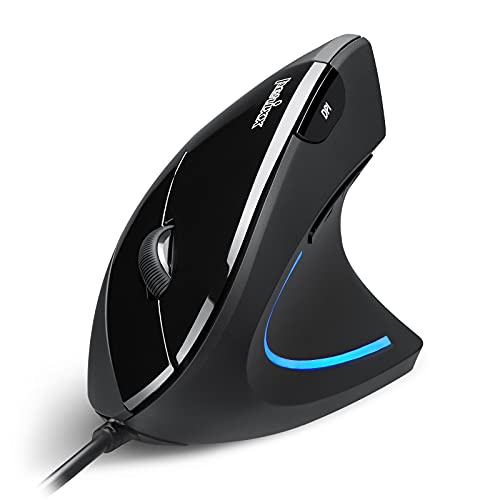
Perixx PERIMICE-513 Wired Ergonomic Vertical Mouse 6 Buttons

Anker 2.4G Wireless Ergonomic Mouse Right Hand Vertical

Logitech Lift Vertical Ergonomic Wireless Mouse Graphite

Acer Ergonomic Mouse Wireless Vertical Computer Mouse

Logitech MX Vertical Wireless Mouse Ergonomic Design Graphite

Nulea M501 Wireless Trackball Mouse Ergonomic Thumb Control

ProtoArc EM11 NL Wireless Ergonomic Vertical Mouse Black

Lekvey Ergonomic Mouse Rechargeable Vertical Wireless Mouse
More Details On Our Top Picks
The Perixx keeps things plain in a good way, with a wired vertical shape and six buttons that give you more control without adding clutter. The 5.9-foot USB cable helps on a crowded desk, and the 1000 to 6400 DPI range gives you room to slow down for careful work or speed up for general navigation.
Right-handed users who spend long stretches at a desktop should find the angled body easier to settle into than a flat mouse. The trade-off is simple, you give up wireless freedom, so this fits best where the cable won’t get in your way.
Strong Points
- Vertical shape keeps your hand in a more relaxed handshake grip.
- Six buttons give you handy shortcuts for office tasks.
- Wide DPI range helps the mouse feel calmer for precise work.
- Wired connection removes battery management from the equation.
- Long cable suits desktop setups with the tower a bit farther away.
Things To Consider
- Right-hand use only, so left-handed shoppers need a different layout.
- The cable can feel busy on compact laptop trays.
- Wired design keeps you tethered to the port.
Feature Snapshot
Who It Suits Best
You’ll like this most if your desk stays mostly fixed and you want a simple right-handed vertical mouse with plenty of sensitivity options.
Where Another Pick Suits Better
Logitech Lift Vertical Ergonomic Wireless Mouse Graphite is a better fit for commuters or hot-desk users who want wireless flexibility and quieter clicks.
This Anker model keeps the vertical-mouse idea straightforward, with a right-hand shape, 2.4G wireless connection, and a USB receiver for quick plug-in use. Three DPI settings, 800, 1200, and 1600, keep the pointer range modest, which suits everyday browsing and office documents more than fast, high-detail creative work.
The battery requirement is the trade-off, so you’ll want to keep spares nearby instead of counting on recharge cycles. That said, it’s an easy fit for a home office or laptop bag, especially when you want ergonomic comfort without a lot of setup fuss.
What We Like
- Wireless setup keeps the desk cleaner than a corded option.
- Right-hand vertical form encourages a more natural wrist angle.
- Three DPI steps cover routine navigation and document work.
- USB receiver makes pairing feel simple for everyday use.
Minor Gripes
- Batteries add another thing to manage over time.
- The smaller DPI range may feel less flexible for detailed tasks.
- Right-handed layout narrows the fit for shared-desk households.
Core Details
Who Will Love This
This suits right-handed office users who want an uncomplicated wireless vertical mouse for routine laptop or desktop work.
Skip It When
Logitech MX Vertical Wireless Mouse Ergonomic Design Graphite makes more sense for multitaskers who move between several computers and want a more premium feature set.
Logitech’s Lift leans into a calmer desktop experience, with Bluetooth or the included Logi Bolt USB-A receiver giving you two clean connection paths. Quiet clicks matter more than they sound on paper, because in a shared office or late-night work session they keep the mouse from adding extra noise.
Four of the six buttons can be customized, so the layout can grow with your habits instead of staying fixed. Compared with the simpler Anker and Perixx picks, this one feels more polished and more flexible, though the premium feel also means you’re paying for refinement rather than bare-bones simplicity.
Upsides
- Bluetooth and receiver support give you flexible connection options.
- Quiet clicks suit open offices, libraries, and shared homes.
- Button customization adds a welcome layer of personal control.
- Windows and Mac compatibility broadens its desk appeal.
- The vertical form helps reduce the need to twist your wrist inward.
Areas To Watch
- More advanced features usually come with a higher asking point.
- Left-hand users will need a different shape.
- Customization takes a little setup time before it feels natural.
Details At A Glance
Best Suited To
You’re the best fit here if you want a quieter, more refined vertical mouse for daily multitasking across a laptop and desktop.
Where Shoppers Go Wrong
Anker 2.4G Wireless Ergonomic Mouse Right Hand Vertical is the simpler route for shoppers who want basic wireless control without paying for customization.
The Acer takes a medium-to-large-hand angle seriously, and the 58° tilt is there to place your hand more upright than a flat mouse would. Paired with 2.4G wireless and a USB-A receiver, it suits laptop users who want a neat desk without juggling a cable.
Three DPI steps, 800, 1200, and 1600, keep control straightforward rather than fiddly. It sits between the simpler Anker and the more refined Logitech Lift, so it works well for someone who wants vertical comfort without chasing extra software-heavy features.
Positives
- 58° tilt promotes a more upright hand position.
- Rechargeable design cuts down on battery swapping.
- Wireless receiver keeps setup direct on a laptop or PC.
- Six buttons give you a little more control than a plain mouse.
- Medium-to-large hand fit can feel steadier for longer sessions.
Small Caveats
- Medium-to-large hand sizing may feel roomy for smaller hands.
- The DPI range is practical, not especially wide.
- Plastic surfaces on budget ergonomic mice can show wear with heavy daily carry.
Feature Rundown
The Right Fit
You’ll appreciate this most if your hands are medium to large and you want a straightforward vertical mouse for home office use.
Another Choice May Suit
ProtoArc EM11 NL Wireless Ergonomic Vertical Mouse Black is the better match for someone who wants a similar upright shape with three-device support.
The MX Vertical sits closer to a workspace anchor than a casual accessory, with a shape aimed at reducing strain and a rechargeable design that suits people who spend a lot of time at a desk. Its standout detail is cross-computer movement, because moving content between up to three Windows or Apple computers is useful in busy hybrid setups.
Compared with the Lift, this one leans more toward premium multitasking than compact convenience. The honest read is that you’re paying for broader workflow control and a more advanced feel, so it makes the most sense for people who bounce between devices all day.
Highlights
- Rechargeable design keeps it ready for frequent desktop use.
- Moves content between up to three computers for heavier multitasking.
- Vertical shape supports a more relaxed hand posture.
- Graphite finish keeps the look clean and understated.
- Strong fit for mixed Windows and Apple work setups.
Worth Noting
- Premium features make it a more serious investment than basic vertical mice.
- Its broader feature set can feel like more mouse than a simple home setup needs.
- Not the smallest option for travel pouches or tiny desks.
Technical Sheet
Who Should Grab It
You’ll get the most from this mouse if your day involves several computers and you want a more advanced ergonomic setup.
Look Elsewhere When
Logitech Lift Vertical Ergonomic Wireless Mouse Graphite is the easier fit for someone who wants a lighter-feeling vertical mouse with quieter clicks and less complexity.
The Nulea M501 changes the game in a practical way by moving the cursor control to your thumb instead of asking your whole hand and forearm to travel across the desk. For cramped workstations or long spreadsheet sessions, that can feel much calmer than a traditional mouse, especially since it supports Bluetooth, a USB receiver, and use with up to three devices.
Trackballs take a short adjustment period, so the first day can feel strange compared with the Perixx or Acer vertical shapes. Once the motion pattern clicks, the reduced desk movement is exactly what some hands want, though you still need to keep the ball and housing clean for smooth tracking.
Reasons To Buy
- Thumb control limits the need for wide arm movement.
- Three-device support helps in mixed-device homes or offices.
- Bluetooth and receiver options give you setup flexibility.
- Rechargeable design avoids the cycle of spare batteries.
- Four DPI levels let you tune cursor response.
Room For Improvement
- Trackball control usually needs a short learning curve.
- The ball housing needs regular cleaning for steady movement.
- Trackball shape is a taste issue, not a universal fit.
Feature Card
Built With In Mind
You’ll likely appreciate this most if you want very little cursor travel and prefer a thumb-led control style.
Swap It Out When
ProtoArc EM11 NL Wireless Ergonomic Vertical Mouse Black is the more familiar choice for anyone who wants a vertical mouse feel instead of a trackball layout.
ProtoArc’s EM11 NL leans on a 58° vertical angle, which helps your wrist sit in a more natural line during long stretches of pointing and clicking. The rechargeable 500mAh battery and support for three devices through Bluetooth or 2.4G USB-A make it easy to keep on a desk that changes between laptop, work machine, and personal computer.
Compared with the Lift, this one feels more straightforward and less software-driven, while still offering multi-device flexibility. You may find it especially sensible for shared homes or hybrid work desks where you want one mouse to cover a few machines without fuss.
Bright Spots
- 58° angle supports a more upright hand position.
- Three-device support fits busy desk switching.
- Bluetooth and 2.4G USB-A cover common connection needs.
- Rechargeable battery keeps it tidy for everyday use.
- Black finish keeps the look low-key and office-friendly.
Softer Spots
- Vertical mice still take a little getting used to.
- Some people will want a trackball instead for even less arm movement.
- The smaller rechargeable battery calls for routine charging habits.
Core Details
Right Fit For
This is a smart match for home-office or hybrid workers who want a simple rechargeable vertical mouse that can move between several devices.
Where A Sibling Pick Shines
Nulea M501 Wireless Trackball Mouse Ergonomic Thumb Control suits you better when your desk space is tight and you want the mouse itself to stay almost still.
Lekvey packs a lot into a familiar vertical mouse shape, including quiet clicks, USB-C charging, and page back and forward buttons that help during web-heavy work. The 800, 1200, and 1600 DPI options keep it grounded in everyday control rather than flashy speed, which is usually enough for browsing, email, and office documents.
The battery life claim and plug-and-play USB receiver make it appealing for people who dislike constant setup chores. Compared with the other vertical picks here, it feels especially convenient for mixed laptop and Mac use, though the vertical shape still asks for a short adjustment period.
Best Bits
- Quiet clicks help keep shared spaces calmer.
- USB-C charging is convenient for modern desk habits.
- Page back and forward buttons save extra hand travel.
- Three DPI steps keep the pointer easy to dial in.
- Broad compatibility supports Windows, Linux, and Mac use.
Honest Caveats
- Vertical design still takes a little getting used to.
- The feature list is handy, but not every function will matter to every shopper.
- Glossy or textured outer shells on similar mice can show hand wear over time.
Feature Rundown
Whose Shelf It Belongs On
This belongs on the desk of someone who wants a vertical mouse with quiet clicks, USB-C charging, and broad compatibility.
Reach For A Different Pick When
Perixx PERIMICE-513 Wired Ergonomic Vertical Mouse 6 Buttons is the cleaner fit for someone who wants a wired office mouse and doesn’t want to think about charging at all.
How To Choose The Right Computer Mouses For Arthritic Hands
Shape And Wrist Angle Matter First
Vertical mice reduce the sideways twist that comes with a flat body, so your hand rests closer to a handshake position. That matters in long work sessions, because the wrist and forearm don’t need the same kind of constant rotation.
Trackball designs take that a step further by reducing arm travel almost entirely. They ask for a short learning curve, though, so they suit people who want less movement more than people who want a familiar feel.
Connection Style Should Match Your Desk
Wired mice keep setup simple and remove charging from the routine, which suits a fixed desk. Wireless models clear the cable clutter and feel easier for laptop users, but they add battery or charging upkeep.
Bluetooth helps on newer laptops and multi-device desks, while a USB receiver can feel more direct on older machines. The right choice depends less on theory and more on how often you shift between home, office, and travel setups.
Buttons And Sensitivity Shape Daily Comfort
Extra buttons can cut down on repetitive clicks, especially for browsing, file work, or spreadsheet tasks. Customizable buttons help even more, but they also make sense only when you’ll actually use them.
DPI, which means dots per inch, controls pointer sensitivity. Lower settings feel steadier for careful work, while higher settings help on larger screens, so a useful range is often better than a single fixed speed.
Hand Size, Surface Feel, And Maintenance
Hand size matters more than most specs pages admit. A mouse that suits medium-to-large hands can feel secure and calm, while a smaller shell may suit compact grips or shorter desk sessions.
Surface texture, charging style, and cleaning needs all shape ownership too. Trackballs need more regular upkeep around the ball housing, while rechargeable mice reduce battery swaps, which feels simpler for daily work.
What To Weigh Before You Decide
Wrong Turns To Avoid
A common miss is choosing by shape alone and ignoring size. A vertical mouse can still feel awkward when the body is too small or too bulky for your hand.
Another mistake is treating extra features as automatic value. Quiet clicks, device switching, and custom buttons help in real use, but only when your desk habits actually call for them.
The Upgrade Payoff
Higher-tier models usually cost more because they pack in better sensor control, broader device switching, quieter switches, rechargeable power, and more polished shell shapes. Those details matter most for people who sit at a mouse for hours, not minutes.
The upgrade feels worth it when your desk is a daily work station and comfort has real stakes in how long you can keep going. For occasional email and light browsing, a simpler vertical mouse often covers the bases just fine.
Closing Thoughts
Your best choice depends on the shape your hand tolerates, the way your desk is set up, and how much movement your day demands. A wired vertical mouse like the Perixx keeps things simple, a trackball like the Nulea trims arm travel, and a premium model like the Logitech MX Vertical makes sense when your workflow crosses several computers. Pick the one that matches your routine first, because comfort only helps when the mouse fits how you actually work.
