
Wrist tension turns a normal workday into something you notice with every click, especially when your setup keeps you at a desk for hours. These eight vertical and ergonomic mice focus on hand position, button layout, and connection style, so you can match the shape to your own routine instead of forcing your wrist to adapt. Some are simpler wired or single-receiver picks, while others add multi-device switching and rechargeable batteries for busier desks.
The right choice often depends on hand size, how much travel your mouse needs, and whether you want a lighter everyday model or a more feature-heavy upgrade. That’s the angle here, practical fit first, spec sheet second.
Quick Look At The Shortlist
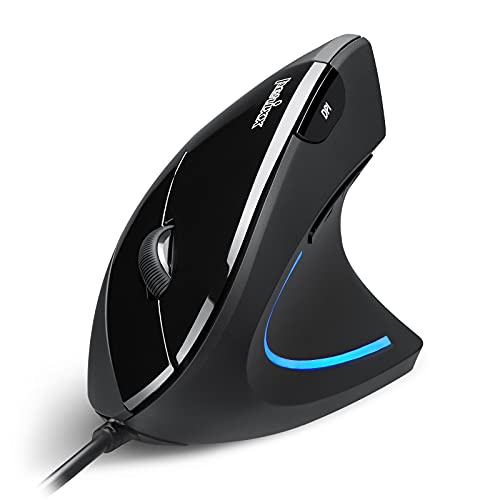
Perixx PERIMICE-513 Wired Ergonomic Vertical Mouse 6 Buttons

Anker 2.4G Wireless Ergonomic Mouse, Right Hand Vertical Mouse

TECKNET Ergonomic Mouse, 4800 DPI Wireless Bluetooth Vertical

Acer Ergonomic Mouse Wireless, Vertical Computer Mouse for Laptop

Logitech Lift Vertical Ergonomic Wireless Mouse – Graphite

Logitech MX Vertical Wireless Mouse Ergonomic Design – Graphite

ProtoArc EM11 NL Wireless Ergonomic Vertical Mouse, Rechargeable

Lekvey Ergonomic Mouse, Rechargeable Vertical Wireless Mouse, Comfort Grip
More Details On Our Top Picks
A wired vertical mouse like this keeps the setup simple, which matters on a desk where you want fewer charging habits to remember. The 5.9-foot USB cable gives you some room to arrange a laptop stand or external monitor without feeling pinned in place.
The four DPI steps, from 1000 up to 6400, let you slow things down for precise work or speed things up for broader screen movement. It’s a straightforward fit for right-handed desktop use, though the fixed cable makes it less convenient for people who constantly switch between rooms or carry a mouse in a bag.
Strong Points
- Wired USB setup avoids battery management.
- Four DPI levels help you match cursor speed to different tasks.
- Right-handed vertical shape encourages a more relaxed wrist angle than a flat mouse.
- Five buttons plus scroll control cover daily browsing and office work.
Things To Consider
- The cable keeps things tidy only to a point, since it still needs desk routing.
- Right-handed shaping leaves left-handed shoppers out.
Feature Snapshot
Who It Suits Best
You’re a good match here if you work from one desk and want a low-fuss vertical mouse with a clear, simple setup.
A Better Fit Elsewhere
Logitech Lift Vertical Ergonomic Wireless Mouse – Graphite suits you better if you want wireless freedom and quieter clicks for shared spaces.
For a simple wireless desk setup, this Anker keeps the formula familiar and easy to live with. It uses a USB receiver, so your laptop or desktop gets a direct 2.4G connection without the extra pairing routine that some multi-mode mice need.
The three DPI steps are modest, which actually suits basic office work, long email sessions, and browsing better than flashy sensitivity ranges. One thing worth considering, though, is the battery requirement, since that adds a small maintenance step that the wired Perixx skips.
What We Like
- Wireless receiver keeps the desk cleaner than a cable.
- Three DPI settings cover common laptop and desktop tasks.
- Five buttons give you enough control for everyday navigation.
- Right-hand vertical shape helps reduce the flattened wrist posture of standard mice.
Worth Noting
- Batteries are part of the routine here.
- The DPI range is narrower than the TECKNET and Perixx options.
At A Glance
Right Fit For
You’re the best match here if you want a no-drama wireless vertical mouse for office work on one computer.
Swap It Out When
TECKNET Ergonomic Mouse, 4800 DPI Wireless Bluetooth Vertical makes more sense if you move between devices and want broader connection options.
This TECKNET model is built for desks where one mouse has to serve more than one device. Bluetooth 5.0 and 2.4G USB-A support give you flexibility, and the three-device switching makes it easier to move between a laptop, a desktop, and a tablet-style setup without rethinking your workflow.
The six DPI levels stretch up to 4800, so the cursor can stay controlled for detailed work or feel quicker on wide screens. Quiet clicks are a useful touch in shared rooms, though the battery-powered design means you’ll want to keep an eye on power management more closely than with the wired Perixx.
Upsides
- Three-device switching suits mixed-device desks.
- Bluetooth and 2.4G give you connection flexibility.
- Six DPI levels provide finer cursor tuning than simpler picks.
- Quiet clicks help in libraries, offices, and late-night work sessions.
- Vertical shape keeps your hand in a more upright posture than a flat mouse.
Points To Note
- Battery power adds one more thing to monitor.
- More modes mean more to think about during setup than on the Anker.
Core Details
Whose Shelf It Belongs On
You’ll get the most from this one if your workday spans several devices and you want a single mouse to handle the handoff.
Where A Sibling Pick Shines
Logitech Lift Vertical Ergonomic Wireless Mouse – Graphite is the cleaner fit if you prefer a more polished feel with quieter operation and Mac and Windows support.
The Acer leans into shape first, with a 58-degree tilt that pushes your hand into a more upright grip than a standard office mouse. That matters on longer desk days, especially for medium to large hands that need a shell with a bit more room.
Its 2.4G USB-A receiver keeps setup fairly simple, and the three DPI steps are easy to understand without extra menu hopping. The trade-off is that this model feels more focused on basic comfort than on fancy extras, so it suits a steady desk more than a device-hopping workflow.
Bright Spots
- 58-degree tilt supports a more natural hand angle.
- Medium to large hands get a better-sized shell than smaller vertical mice.
- Wireless receiver setup stays straightforward.
- Three DPI settings cover common office and browsing needs.
- Six buttons leave room for practical shortcuts.
Small Caveats
- It appears aimed more at comfort than at advanced workflow features.
- Smaller hands may find the body a little roomy.
Feature Rundown
The Right Fit
You’re likely to appreciate this most if your hands run medium to large and you want a straightforward ergonomic shape for office hours.
Look Elsewhere When
ProtoArc EM11 NL Wireless Ergonomic Vertical Mouse, Rechargeable, Black is a better match if you want a rechargeable battery and three-device support in a lighter multi-device setup.
The Lift is the most polished-feeling option in this group for smaller to medium hands, especially around a shared home office or hybrid work setup. Bluetooth and the included Logi Bolt USB-A receiver give you two easy connection paths, which helps when one device is a laptop and the other sits in a dock.
Quiet clicks matter more than they sound like they should, since a softer button feel can make long sessions feel less noisy and less abrupt. Four of the six buttons are customizable, so you can map shortcuts around your own workflow, though that extra flexibility costs you a little simplicity compared with the Anker.
Highlights
- Bluetooth plus USB-A receiver give you flexible connection choices.
- Quiet clicks suit offices, libraries, and rooms with other people nearby.
- Customizable buttons help you shape the mouse around your routine.
- The vertical body supports a more neutral wrist angle than a flat design.
Room For Improvement
- The shape is tailored more toward smaller and medium hands than large ones.
- Custom button setup adds a bit of learning time.
- It’s less bare-bones than the Anker, so some shoppers may prefer simpler controls.
Details At A Glance
Who Will Love This
You’ll appreciate this most if you want a smaller ergonomic mouse with a cleaner feel and enough customization to streamline daily work.
Another Choice May Suit
Logitech MX Vertical Wireless Mouse Ergonomic Design – Graphite makes more sense if your priority is heavier workflow features and cross-computer movement.
The MX Vertical sits at the higher end of this roundup because it’s built for people who treat a mouse as a work tool, not just an accessory. Its cross-computer content moving feature is especially useful on a dual-screen or multi-machine desk, where jumping between Windows and Apple systems can otherwise feel clumsy.
Rechargeable power keeps the routine cleaner than disposable batteries, and the graphite finish gives it a serious, understated look. The catch is that this extra polish makes the mouse a better fit for committed desk work than for casual, grab-and-go use.
Reasons To Buy
- Cross-computer movement suits mixed-device workstations.
- Rechargeable design removes battery swaps from your routine.
- The vertical form aims to reduce the strain of a flat wrist angle.
- Its feature set feels more complete than the simpler Anker or Perixx picks.
Areas To Watch
- It makes the most sense in a serious desk setup, not a spare-travel bag.
- The extra capability also means a higher learning curve than basic models.
Key Specs
Built With In Mind
You’re the right fit here if you spend long stretches at a desk and want a more advanced vertical mouse for cross-system work.
Where A Sibling Pick Shines
Logitech Lift Vertical Ergonomic Wireless Mouse – Graphite is the easier call if you want a lighter-feeling ergonomic mouse with simpler everyday controls.
The ProtoArc EM11 NL lands in a useful middle ground, especially for anyone who wants a vertical angle without jumping straight to a heavier premium mouse. Its 58-degree design is meant to support a more natural wrist posture, and the rechargeable 500mAh battery keeps the routine compact.
Three-device support through Bluetooth or 2.4G USB-A is the real draw here, because it gives you flexibility in a laptop-and-tablet life. The honest read is that this kind of versatility matters most on a desk where space is tight and switching devices happens all day.
Best Bits
- 58-degree body angle suits a more upright hand position.
- Three-device connectivity helps at mixed-device desks.
- USB-C rechargeability keeps the charging routine simple.
- Black finish keeps the look low-key and easy to place beside other gear.
Softer Spots
- It still asks you to manage charging, just less often than disposable batteries.
- Three-device switching can feel like extra logic for people who only use one machine.
Technical Sheet
Who Should Grab It
You’re a strong match here if you want a compact vertical mouse with rechargeable power and multi-device support.
Reach For A Different Pick When
Logitech MX Vertical Wireless Mouse Ergonomic Design – Graphite fits better if you want the most work-focused feature set for a busy desktop setup.
The Lekvey keeps the focus on comfort basics, which makes it appealing for a home office where you want a vertical mouse without a lot of fuss. USB-C charging, quiet clicks, and a 2.4G receiver give it a familiar setup that most laptops and PCs can live with easily.
The included page back and page forward buttons help during browser-heavy work, and the three DPI levels keep the cursor control simple. The trade-off is that this model leans more toward practical comfort than the polished cross-device flexibility you get from the TECKNET or Logitech options.
Positives
- USB-C charging keeps the power routine modern and convenient.
- Quiet clicks suit shared rooms and late work sessions.
- Page back and page forward buttons help with browsing and research.
- Three DPI settings cover basic pointer speed needs.
- The vertical grip gives your hand a more upright posture than a traditional mouse.
Trade Offs
- It’s more comfort-first than feature-heavy.
- Single-receiver 2.4G use leaves out Bluetooth flexibility.
- Shoppers who jump between several devices may prefer a more advanced pick.
Feature Card
Whose Shelf It Belongs On
You’ll like this most if you want a budget-aware ergonomic mouse for a laptop, Mac, or PC without much setup friction.
Skip It When
TECKNET Ergonomic Mouse, 4800 DPI Wireless Bluetooth Vertical is the smarter fit if you need Bluetooth and multi-device switching for a busier workstation.
How To Choose The Right Computer Mouses For Tennis Elbow
Shape And Hand Position Matter Most
A vertical mouse changes the angle of your hand, so your palm sits more upright instead of flattening across the desk. That small shift can matter a lot during long spreadsheets, editing sessions, or remote work days because your grip feels less twisted. The exact angle varies, from the 58-degree Acer and ProtoArc models to the more upright Logitech MX Vertical, so your comfort will depend on how steep a tilt feels natural.
Hand size matters too. Medium and large hands often do better with fuller shells like the Acer, while smaller hands often settle in more easily with the Logitech Lift. The right shape should feel like it supports your hand, not like your fingers are reaching for the buttons.
Connection Style Changes Daily Friction
Wired mice remove charging from the equation, which helps on a fixed desktop or a laptop dock where the mouse rarely moves. Wireless models clean up the workspace, but they add a receiver, Bluetooth pairing, or both, depending on the model. That trade-off shows up fast in busy offices, shared desks, and travel bags.
For people who move between devices, Bluetooth plus USB-A can be worth the extra setup steps. The TECKNET and ProtoArc give you that flexibility, while the Anker keeps things simpler with its receiver-only approach. The smoother path is usually the one that matches how often you switch machines.
Buttons, DPI, And Work Style
DPI means dots per inch, a measure of how far the pointer moves on screen for each physical inch you move the mouse. Lower settings help with careful work, while higher settings help on wide monitors or multi-display setups. Perixx stretches to 6400, TECKNET reaches 4800, and the simpler Anker and Lekvey stay in a smaller range that suits everyday office use.
Extra buttons can be helpful, but only when you’ll actually use them. Page back and page forward buttons help in browser-heavy work, and customizable buttons on the Logitech Lift can speed up repetitive tasks. More buttons also mean more setup and a little more learning, which is worth remembering if you prefer a plain, familiar feel.
Think About Power And Maintenance
Rechargeable models reduce battery swaps, which is a nice fit for a home office or shared workstation. Still, charging matters, and battery life expectations vary by use pattern, brightness, and how often you hop between devices. Wired mice avoid that entirely, though they trade away mobility.
Cleaning and storage matter more than people expect. Vertical shells can collect dust around seams and buttons, so a smooth finish and simple shape are easier to wipe down after a long week. For commuters or hybrid workers, a lighter wireless mouse often feels easier to carry than a taller, heavier ergonomic shell.
Things Worth Knowing Before You Choose
Wrong Turns To Avoid
One common mistake is focusing on DPI alone. A mouse can list a wide range and still feel wrong in the hand, especially during long desk sessions. Shape, button placement, and hand size fit usually matter more than a big spec number.
Another slip is forgetting the connection path. A Bluetooth mouse sounds convenient, but some laptops pair more smoothly with a USB receiver. A wired mouse can be the calmer choice on a single desk, while a multi-device mouse makes more sense for people who switch systems several times a day.
The Case For Spending Up
Higher-tier models usually cost more because they bundle stronger materials, rechargeable power, extra connection modes, and more software control. The Logitech MX Vertical is the clearest example here, since it supports cross-computer movement and fits a more demanding workflow than the simpler Anker or Lekvey. That extra capability matters most for people who spend hours in front of multiple machines.
Spending more also makes sense when you know exactly which comfort details matter to you. Quiet clicks, customizable buttons, and a well-shaped shell can remove tiny irritations that build up over a workweek. For casual use, those extras may not be necessary, which is why a simpler pick can still be the smarter fit.
Closing Thoughts
The best mouse for your wrist is the one that fits your hand, desk, and daily routine without asking for much adjustment time. Wired simplicity, basic wireless ease, and multi-device convenience all have a place here, and each one suits a different kind of workday. The most helpful move is to match the shape and connection style to how you actually sit and work, not to the loudest feature list.
