
Twelve-core processors used to live exclusively in workstation towers. Now that silicon lands in mini PCs, slim laptops, and budget desktops alike. For anyone juggling spreadsheets, video calls, and browser tabs simultaneously, that core count means smoother multitasking without the stutter older quad-core chips produce. This roundup covers six options across form factors so you can match the hardware to your actual workspace.
The Shortlist At A Glance

KAMRUI P2 Mini PC Intel i5-12600H 12 Cores
Bmax B6Plus Mini PC Intel i3-1000NG4
Acer Aspire TC-1760-UA92 Desktop i5-12400

Lenovo IdeaPad 3i 15.6″ HD Touchscreen Laptop
GEEKOM IT12 Mini PC Intel i3-12300HE
HP 17.3″ Business Laptop Intel Ultra 5 225U
More Details On Our Top Picks
Stepping up from compact basics, this mini PC houses a 12-core i5-12600H with 16 threads, reaching 4.5 GHz. Intel’s hybrid architecture splits work between performance cores and efficiency cores, meaning background tasks stay quiet while demanding apps get priority. For a desk running spreadsheets alongside a video call, that division of labor keeps things responsive. Iris Xe graphics handle light creative work, though serious rendering isn’t the target here.
You may find the compact chassis runs warm during sustained loads. That’s the trade-off for fitting a 45-watt-class chip into a small footprint. Most office workflows won’t trigger it, but continuous video encoding likely will.
Strong Points
- 12-core hybrid architecture keeps multitasking smooth without stutter
- Windows 11 Pro adds remote desktop and BitLocker encryption for business use
- Iris Xe integrated graphics support triple-display setups for productivity
- 4.5 GHz burst speed handles short bursts of heavy calculation comfortably
- Small footprint frees desk space compared to traditional towers
Things To Consider
- Thermal throttling can kick in during sustained workloads in compact housings
- Integrated graphics won’t handle dedicated GPU tasks like gaming or 3D modeling
- Owners commonly report fan noise increases noticeably under heavy sustained load
Quick Facts
Who Will Love This
Home-office professionals who need workstation-class multitasking in a compact, desk-friendly form factor.
Where A Sibling Pick Shines
Shoppers needing a rugged machine for shared or industrial spaces should consider the GEEKOM IT12 with its metal chassis and extended coverage.
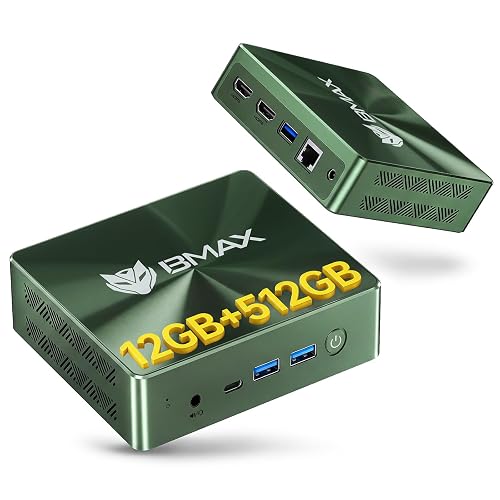
Where the KAMRUI P2 pushes hybrid architecture, the Bmax B6Plus keeps things straightforward for shoppers who just want a plug-and-play machine. The Intel Core i3-1000NG4 reaches 3.2 GHz, paired with 12 GB of LPDDR4 RAM and a 512 GB NVMe SSD. NVMe (Non-Volatile Memory Express) is a storage protocol that reads and writes data faster than older SATA drives, meaning quicker boot times and file access. For browsing, document editing, and 4K video playback, that combination covers the basics comfortably.
Triple-display output through dual HDMI and Type-C lets you set up an extended workspace. Wi-Fi 5 and Bluetooth 4.2 are older standards, though, so heavy network traffic might feel slower than Wi-Fi 6 allows.
Highlights
- Ready out of the box with no additional storage or memory upgrades needed
- Triple-display support through dual HDMI and Type-C for multitasking layouts
- NVMe SSD delivers faster boot and load times than traditional SATA drives
- Compact form factor fits easily on a shelf or behind a monitor
Trade Offs
- Wi-Fi 5 and Bluetooth 4.2 lag behind newer wireless standards for speed and range
- The i3 dual-core processor will strain under heavy multitasking or large file processing
- Dust buildup in the small chassis can reduce cooling efficiency over time if not cleaned periodically
Right Fit For
Beginners and casual users wanting a straightforward home office computer for daily tasks and media playback.
Look Elsewhere When
Anyone running multiple heavy applications simultaneously will benefit more from the KAMRUI P2 and its 12-core hybrid processor.
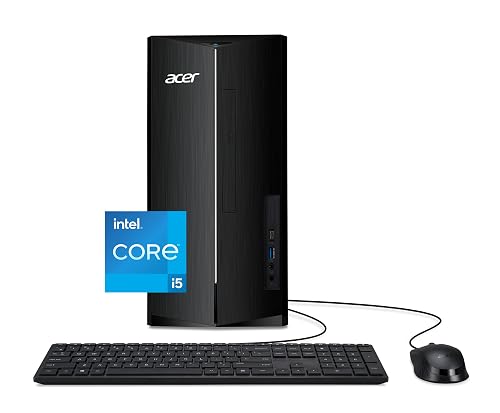
Unlike the mini PCs above, the Acer Aspire TC-1760-UA92 is a traditional tower. The 12th Gen Intel Core i5-12400 is a 6-core processor, not a 12-core chip, but it lands here because it powers a machine many shoppers compare against 12-core options. With 12 GB of DDR4 RAM and a 512 GB NVMe SSD, it handles everyday computing and multimedia without strain. The inclusion of an 8X DVD drive is increasingly rare, and useful for anyone with archival discs or media collections.
Wi-Fi 6 AX201 and Bluetooth 5.2 bring modern wireless connectivity. The tower form factor also means room to expand. You can add storage or a graphics card down the line, something the mini PCs don’t easily allow.
Plus Points
- Expandable tower design allows future storage and graphics card upgrades
- Built-in 8X DVD drive for users with physical media collections
- Wi-Fi 6 AX201 provides faster, more stable wireless connectivity than Wi-Fi 5
- Standard desktop form factor simplifies repairs and component swaps
Points To Note
- 6-core processor has half the thread handling capacity of true 12-core alternatives
- Tower footprint requires dedicated desk or floor space unlike compact alternatives
- Integrated graphics limit performance for gaming or graphics-intensive software
Feature Snapshot
Built With In Mind
Home office users and students who value upgradeability and physical media support over a compact footprint.
Reach For A Different Pick When
Shoppers wanting true 12-core performance in a tiny package should look at the KAMRUI P2 Mini PC for its hybrid architecture.
Shifting from desktops to a portable option, the Lenovo IdeaPad 3i brings a 15.6-inch HD touchscreen to the table. The Intel Core i3-1115G4 is a dual-core processor with a 6 MB cache and speeds up to 4.10 GHz. That’s modest compared to the 12-core chips on this list, but it serves a different purpose. For students or casual users writing papers, browsing, and streaming, the 12 GB DDR4 RAM and 256 GB PCIe SSD cover daily tasks adequately.
The touchscreen adds interactivity that non-touch laptops skip. Wi-Fi 6 and HDMI output round out the connectivity. You may find the 256 GB drive fills quickly with media files, so cloud storage or an external drive helps.
Bright Spots
- Touchscreen display adds intuitive navigation for casual computing
- Wi-Fi 6 connectivity delivers faster wireless speeds than older standards
- 12 GB RAM handles multiple browser tabs and light applications smoothly
- HDMI output allows connecting an external monitor for extended workspace
Room For Improvement
- Dual-core i3 processor lacks the core count for demanding multitasking
- 256 GB SSD storage may require external drives for large media libraries
- HD display resolution is basic compared to Full HD or higher panels on competing models
- Battery life may fall short during continuous video playback away from a charger
Who Should Grab It
Students and casual users wanting a portable touchscreen laptop for everyday browsing and document editing.
Swap It Out When
Mobile professionals needing serious processing headroom should step up to the HP 17.3″ Business Laptop with its 12-core Ultra 5 chip.
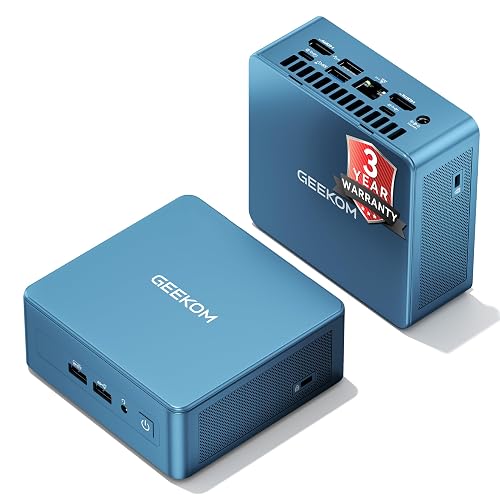
Unlike the KAMRUI’s plastic housing, the GEEKOM IT12 wraps its internals in a full metal chassis built for shared workspaces. The Intel i3-12300HE is an 8-core processor with 16 GB of RAM and a 512 GB SSD, both upgradable. USB4 connectivity and 8K display support set it apart from the Bmax’s older ports. For an office deploying multiple units, the metal body and low-heat design reduce replacement cycles.
Cleaning the chassis exterior is simple with a microfiber cloth. The internal cooling fans benefit from occasional compressed-air cleaning to maintain airflow.
Reasons To Buy
- Full metal chassis withstands daily wear in shared or industrial environments
- USB4 port enables high-speed data transfer and external display connectivity
- RAM and storage are upgradable, extending the machine’s usable lifespan
- 8K UHD output supports high-resolution commercial displays and signage
Softer Spots
- 8-core processor has less parallel capacity than true 12-core alternatives
- Metal chassis adds weight compared to plastic-bodied mini PCs like the Bmax
- Periodic compressed-air cleaning of internal fans is needed to maintain cooling efficiency
Core Details
Best Suited To
Small businesses and industrial users needing a durable, upgradable mini PC for shared workspaces.
Not Your Match When
Home users wanting maximum core count for multitasking intensity will find the KAMRUI P2 a closer fit with its 12-core layout.
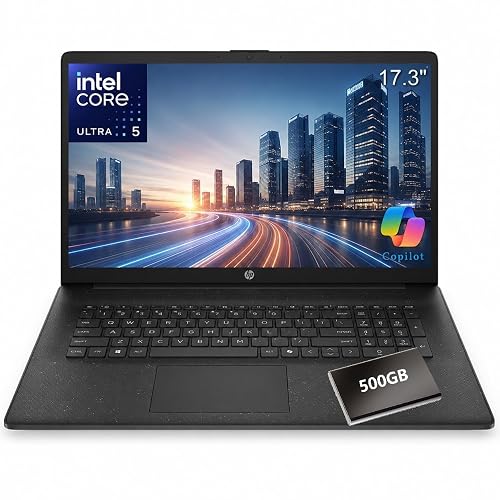
The HP 17.3″ Business Laptop takes the top spot for raw architectural advancement. Powered by the Intel Core Ultra 5 225U, this chip uses a 12-core design that Intel’s Series 2 platform introduces. It also features a dedicated NPU, or Neural Processing Unit, which handles AI-accelerated tasks separately from the main cores. For workflows involving AI tools, background blur, or noise cancellation, that NPU offloads work the CPU would otherwise handle.
With 16 GB of DDR5 RAM and a 512 GB SSD, the hardware matches the demands of modern business software. The 17.3-inch screen gives a large workspace, though the laptop’s physical footprint isn’t built for tight commuter bags.
Upsides
- 12-core Ultra 5 225U with dedicated NPU accelerates AI-enhanced workflows
- 16 GB DDR5 RAM provides faster memory bandwidth than DDR4 for data-heavy tasks
- 17.3-inch display offers extensive screen real estate for spreadsheet work
- Next-gen architecture outperforms legacy 10-core mobile processors
Honest Caveats
- 17.3-inch footprint is bulky for commuters who carry their laptop daily
- AI NPU benefits are limited without software specifically written to use it
- Integrated graphics still limit creative or gaming performance
Feature Rundown
Whose Shelf It Belongs On
Mobile professionals and business users needing a large-screen laptop with next-generation 12-core processing and AI capabilities.
A Better Fit Elsewhere
Commuters prioritizing portability over screen size will find the Lenovo IdeaPad 3i easier to carry daily.
What Matters Most Before Choosing 12 Core Computers
Core Count And Architecture
A 12-core processor divides work across twelve individual processing units called cores. More cores let a computer juggle simultaneous tasks better, which matters for video editing, large spreadsheets, or running virtual machines. Intel’s hybrid architecture goes further by splitting those cores into performance and efficiency types. Performance cores handle demanding apps, while efficiency cores manage background tasks quietly. A student writing essays won’t notice the difference, but a professional running multiple heavy applications will.
Form Factor Trade-offs
Mini PCs pack impressive power into spaces smaller than a hardcover book. The trade-off is thermal management, as compact cases trap heat and can throttle performance during sustained workloads. Traditional towers like the Acer Aspire solve this with better airflow and room for future upgrades. Laptops split the difference, offering portability at the cost of upgradability.
Memory And Storage Configuration
RAM determines how many applications stay active simultaneously without slowdown. 12 GB handles everyday multitasking, while 16 GB provides headroom for heavier workflows. Storage type matters as much as capacity. NVMe SSDs read and write data significantly faster than SATA drives, meaning quicker boot times and file access. Look for upgradable memory and storage, as fixed configurations limit lifespan.
Wireless Connectivity Standards
Wi-Fi 6 delivers faster speeds and handles more connected devices than Wi-Fi 5. Bluetooth 5.2 offers better range and audio quality than version 4.2. These specs affect daily experience more than most shoppers realize, particularly in busy households with multiple devices competing for bandwidth.
Before You Click Buy
Traps First Timers Fall Into
Many shoppers fixate on core count and ignore thermal design. A 12-core chip in a tiny case without proper cooling will throttle down under load, negating the performance you paid for. Another common mistake is overlooking RAM type. DDR5 runs faster than DDR4, and that difference shows up in data-heavy tasks. Fixed RAM that can’t be upgraded shortens a machine’s useful life.
The Upgrade Payoff
Spending more often buys better architecture rather than just higher specs. The HP’s Ultra 5 225U with its dedicated NPU handles AI-accelerated tasks that older processors can’t manage efficiently. That matters for video conferencing features like background blur and noise cancellation. Premium builds like the GEEKOM’s metal chassis also survive shared workspace environments longer than plastic alternatives. The upgrade pays off when daily workflows push the hardware hard enough to justify it.
Frequently Asked Questions
What does 12 cores actually mean for everyday use?
Twelve cores let a processor handle twelve instruction streams simultaneously. For everyday use, that translates to smoother multitasking when running several applications at once.
Is a 12-core mini PC better than a 12-core laptop?
Mini PCs generally have better thermal management and more port variety. Laptops offer portability and built-in battery backup, so the better choice depends on your workspace and mobility needs.
Can these computers handle gaming?
Most options here rely on integrated graphics, which handle casual and older titles but struggle with modern AAA games. A dedicated graphics card is necessary for serious gaming.
How much RAM do I need with a 12-core processor?
12 GB covers standard office work and browsing. 16 GB is preferable for heavier multitasking, content creation, or running virtual machines alongside your main workload.
Are these machines upgradable?
That varies by model. Mini PCs like the GEEKOM IT12 allow RAM and storage upgrades, while laptops typically have fixed memory. Tower desktops like the Acer Aspire offer the most expansion room.
Final Verdict
Twelve-core computing has spread across every form factor, from pocket-sized mini PCs to large-screen business laptops. The right pick depends less on raw core count and more on how the hardware fits your daily routine. A compact mini PC suits a tidy desk, a tower accommodates expansion, and a large laptop brings desktop power on the road. Match the form factor to your space, verify the cooling design, and prioritize upgradable components where possible.
