
A good HDMI cable should disappear into the setup and just do its job. That matters most in a PC gaming desk with a high-refresh monitor, a living-room TV rig, or a long run across a projector wall, where the wrong cable turns into flicker, laggy handoffs, or a cluttered install. You’re looking for the right mix of bandwidth, length, build, and device support, not just a flashy label. The picks below focus on real setup needs, from short desk runs to long in-wall routes.
Quick Look At Our Shortlist

Acer HDMI 2.1 Cable 6.6FT (8K@60Hz,4K@120Hz) 48Gbps High-Speed Braided Cord
Fiber Optic HDMI Cable 50 ft 2.1 8K 48Gbps High Speed

16K 8K HDMI 2.2 Cable 96Gbps 6.6FT/2M
4K HDMI Cable 50 ft 2.0 High Speed 18Gbps

HDMI 2.2 Cable 96Gbps 6FT, 16K@60Hz
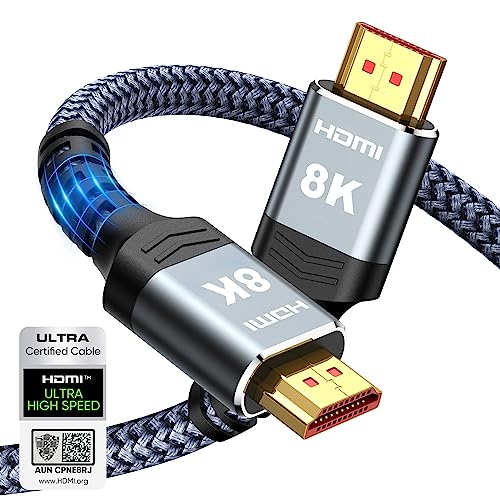
Highwings 8K 10K 4K HDMI Cable 48Gbps 6.6FT/2M

10K 8K 4K HDMI Cable 48Gbps 6.6 FT

Silkland Certified HDMI 2.1 Cable Ultra High Speed 48Gbps Braided HDR 6.6FT
More Details On Our Top Picks
Short desk setups benefit from this Acer cable’s 6.6-foot length, because it keeps a PC, monitor, or console connection tidy without leaving much slack to manage. The 48Gbps rating and HDMI 2.1 support matter for high-refresh gaming, while the braided jacket adds a sturdier feel than a bare PVC lead.
Support for HDR10+, HDCP 2.2, and ARC/eARC gives it broader home-theater flexibility too, so your gaming room can also handle a TV or sound system without much fuss. The honest trade-off is simple, it’s a short cable, so it suits desk-to-display setups far better than a room-spanning route.
Strong Points
- 6.6-foot length fits most desk-to-monitor runs neatly.
- 48Gbps bandwidth gives you headroom for fast video signals.
- Braided outer jacket should hold up well in daily use.
- HDR10+ and ARC/eARC broaden the setup options beyond gaming.
- Backward support makes older gear easier to keep in rotation.
Things To Consider
- The shorter reach limits placement in larger rooms.
- It’s aimed at modern HDMI use, so older displays may not use every feature.
- The braided build can feel a bit stiffer during first-time routing.
Feature Snapshot
Who It Suits Best
Desk-focused gamers and multi-use TV setups get the most from this length and feature mix.
Where A Sibling Pick Shines
FIBBR Fiber Optic HDMI Cable 50 ft 2.1 8K 48Gbps High Speed works better for a wall-mounted projector or a room where the display sits far from the source.
This FIBBR run is built for distance, and that’s the whole point. A 50-foot fiber optic design keeps the cable lighter and slimmer than many thick copper alternatives, which helps in conduit paths, wall runs, and big-room setups where bend radius starts to matter.
The directional SOURCE and DISPLAY ends deserve attention, because that kind of cable needs the right orientation to perform as intended. For a projector room, a large gaming den, or a TV placed far from the console, the layout benefits can outweigh the extra planning.
Highlights
- 50-foot reach solves long-distance routing cleanly.
- Fiber optic construction stays lighter than many copper cables.
- Directional labeling helps the install stay clear once you notice it.
- 48Gbps support covers modern gaming and theater signals.
- Flexible routing is useful in tight wall or conduit spaces.
Points To Note
- The source and display ends must be connected correctly.
- Long fiber runs call for more careful cable management during setup.
- The length makes it better for permanent or semi-permanent installs than quick desk swaps.
Details At A Glance
Who Should Grab It
Projector owners and gamers wiring a far display get the clearest benefit from this cable.
Reach For A Different Pick When
Acer HDMI 2.1 Cable 6.6FT 48Gbps High-Speed Braided Cord is the easier fit for a desktop setup that doesn’t need all that extra length.
That 96Gbps bandwidth puts this HOTUTUKI cable in the upper tier of the group, which matters most for users building around very high-refresh monitors or future-facing gear. The 6.6-foot length keeps it desk-friendly, so the extra headroom doesn’t come with a messy run.
Gamers who care about VRR and broad backward compatibility get a lot of flexibility here, and the 4K@480Hz and 8K@240Hz support pushes far beyond what many current setups need. The trade-off is obvious, it’s more cable than most everyday office displays will ever ask for.
Upsides
- 96Gbps capacity gives serious bandwidth headroom.
- Short 6.6-foot length works well at a desk.
- VRR support helps keep motion smoother on compatible gear.
- Backward compatibility keeps older HDMI devices in the mix.
- 4K@480Hz and 8K@240Hz support suits very demanding setups.
Areas To Watch
- Its feature set is overkill for basic media use.
- Some setups won’t use the highest-end resolution claims yet.
- Short length means it’s not meant for room-spanning installs.
Core Details
Built With In Mind
High-refresh PC rigs and future-focused console setups are the best match for this cable.
Skip It When
Silkland Certified HDMI 2.1 Cable Ultra High Speed 48Gbps Braided HDR 6.6FT makes more sense for a simpler, lower-demand desk setup.
Long 4K runs can get expensive quickly, so this Kirei V Wire cable plays a different game from the higher-spec picks above. It focuses on the basics, with an 18Gbps HDMI 2.0 design, nylon braiding, and a 50-foot reach that suits a TV across the room or a projector shelf.
The 4K2K support at 3840 x 2160 at 30Hz is the key detail to watch, because it fits many media and casual-use setups better than a fast-gaming desk. For consoles or PCs that need higher refresh output, a more modern cable from this list makes more sense, but for simple video delivery this one stays straightforward.
Bright Spots
- 50-foot length handles large rooms and long routes.
- Nylon braiding helps the cable feel more durable in daily handling.
- Gold-plated connectors are a useful durability touch.
- 18Gbps speed fits standard 4K home-theater needs.
- Backward compatibility makes older source gear easier to keep connected.
Small Caveats
- 4K at 30Hz is not aimed at fast gaming monitors.
- The long run can be more cumbersome to route and hide.
- It’s a simpler HDMI 2.0 cable, so newer feature sets are absent.
Feature Card
Whose Shelf It Belongs On
Budget-minded home theater owners who need a very long 4K cable will get the most from this one.
A Better Fit Elsewhere
FIBBR Fiber Optic HDMI Cable 50 ft 2.1 8K 48Gbps High Speed suits a longer gaming or projector route where current-gen HDMI features matter more.
This RyzzRooa cable sits in the same premium class as the HOTUTUKI pick, but it trades a little headline resolution drama for a very broad feature list in a 6-foot run. For a gaming desk with a monitor, PC, console, and maybe a soundbar nearby, that length keeps the setup tidy.
VRR, ALLM, QFT, SBTM, eARC, LIP Sync, and HDR10+ make it especially appealing for people who care about small quality-of-life gains across games and media. The only real catch is that many setups won’t use every feature at once, so the value comes from having them available.
Reasons To Buy
- 96Gbps bandwidth gives serious signal headroom.
- 6-foot length suits crowded desk setups well.
- VRR, ALLM, and QFT support a smoother gaming experience on compatible gear.
- eARC and LIP Sync help with AV-focused rooms.
- Braided construction is a sensible touch for everyday handling.
Worth Noting
- Many of the headline features matter only on compatible devices.
- The premium spec list is more than casual streamers need.
- Its short reach is best for near-field setups.
Technical Sheet
Perfect Match For
Feature-minded PC gaming desks and small AV setups are the clearest fit here.
Another Choice May Suit
Acer HDMI 2.1 Cable 6.6FT 48Gbps High-Speed Braided Cord is simpler and easier to justify for a basic monitor-and-PC connection.
The Highwings cable keeps things familiar in a good way, because a 6.6-foot, 48Gbps HDMI 2.1 build is exactly the kind of setup many PC gaming desks need. It’s not trying to be the most exotic choice here, and that plain approach can be reassuring when you just want the monitor to behave.
Support for 8K at 60Hz, 4K at 240Hz, and 4K at 120Hz makes it a sensible match for current gaming displays, while the braided cord should hold up well during regular desk movement. The main trade-off is that it doesn’t chase the far-out feature stack of the 96Gbps picks, so power users may want more headroom.
Best Bits
- 6.6-foot length fits many desk setups cleanly.
- 48Gbps support covers a broad set of gaming needs.
- 4K at 120Hz and 240Hz support suits high-refresh displays.
- Backward compatibility helps with mixed HDMI gear.
- Braided design gives the cable a sturdier everyday feel.
Room For Improvement
- It stays within the HDMI 2.1 class, so higher-end feature hunters may want more.
- Some home-theater users may want a longer run.
- The value story depends on whether you need the full spec list.
At A Glance
Right Fit
PC gamers who want a reliable short cable without overthinking the feature list will be comfortable here.
Look Elsewhere When
HOTUTUKI 16K 8K HDMI 2.2 Cable 96Gbps 6.6FT/2M makes more sense for the user chasing maximum bandwidth and future headroom.
Ubluker leans hard into feature density, and that makes sense for a PC gaming setup built around a fast panel. The 48Gbps cable spec, 6.6-foot length, and support for very high refresh values like 240Hz and 144Hz give it a very practical role at the desk.
What stands out here is the blend of HDR10+, eARC, HDCP 2.3, CEC, and multiple refresh-rate options, which gives you plenty of flexibility across gaming, streaming, and general media use. One thing worth considering is that the most detailed spec sheet in the world still needs matching hardware to matter.
Standout Traits
- Strong refresh-rate support suits fast gaming monitors.
- 48Gbps bandwidth covers demanding signal loads.
- HDR10+ and eARC add useful media-side flexibility.
- Short length works well at a desk or TV stand.
- Multiple compatibility markers make mixed setups easier to manage.
Minor Gripes
- The long feature list may exceed the needs of simpler rigs.
- Some features only matter on compatible equipment.
- The dense spec naming can make the listing harder to scan quickly.
Core Details
The Right Fit
Feature-heavy desk setups and mixed gaming-plus-media stations suit this cable well.
Swap It Out When
Silkland Certified HDMI 2.1 Cable Ultra High Speed 48Gbps Braided HDR 6.6FT is the cleaner choice for a simpler, less crowded setup.
Silkland lands in the middle of the pack in a useful way, because its feature set covers the needs that matter most for a standard PC gaming setup without drifting into excess. A 6.6-foot braided cable, 48Gbps bandwidth, and HDMI 2.1 positioning make it easy to slot into a desk with a monitor and console nearby.
Support for 4K at 240Hz, 144Hz, and 120Hz, plus 8K at 60Hz and 1440p, gives it enough range for several display types. The trade-off is that it doesn’t try to stand out through a giant feature list, which is actually a plus for anyone who wants a clear, plain read.
Positives
- 48Gbps throughput suits modern gaming displays.
- 6.6-foot length works well on most desks.
- 4K at 240Hz and 144Hz support covers fast monitors.
- Braided build adds a practical durability touch.
- Broad format support makes it flexible across PC and console use.
Trade Offs
- It doesn’t push into the higher-bandwidth 96Gbps class.
- The listing stays lighter on extra feature detail than some rivals.
- Long-room setups will need a different length entirely.
Feature Rundown
Whose Shelf It Belongs On
General PC gamers who want a simple, dependable short cable will be comfortable here.
Another Choice May Suit
Ubluker 10K 8K 4K HDMI Cable 48Gbps 6.6 FT is a stronger fit for someone who wants the densest feature sheet in a short desk cable.
How To Choose The Right Hdmi Cables For Pc Gaming
Bandwidth And Refresh Rate Come First
Bandwidth is the amount of data the cable can carry, and for gaming that directly affects how well it handles high resolutions and fast refresh rates. A 48Gbps cable is a strong match for many current PC gaming setups, while 96Gbps options leave more headroom for extreme displays and newer signal formats.
Refresh rate matters just as much as raw resolution. A 4K monitor at 120Hz or 144Hz needs a cable that won’t choke the signal, especially on a desk where you notice stutter, black-screen handshakes, or random dropouts right away.
Length Changes The Whole Job
Cable length sounds simple, but it shapes the entire install. A 6-foot or 6.6-foot cable works well between a tower and a monitor, while 50-foot runs are for projectors, wall-mounted TVs, or equipment racks far from the display.
Longer cables often bring more installation complexity, and in some cases that means directional ends, more careful routing, or a fiber optic build. For a small gaming desk, extra length usually adds clutter rather than convenience.
Match The Cable To The Display And Console
Your display is the real decider, not the logo on the jacket. A high-refresh monitor, a living-room TV, and a projector all need different balance points between bandwidth, length, and feature support such as VRR, ALLM, eARC, or HDR10+.
Compatibility also matters with the gear you already own. Backward support is useful when your setup mixes newer and older devices, but a cable packed with advanced features only pays off when the monitor, GPU, console, or TV can use them.
Things Worth Knowing First
Wrong Turns To Avoid
A common mistake is chasing the biggest spec number without matching it to the display. Another is buying a very long cable for a desk setup, then dealing with excess slack and a harder cable path.
You also want to avoid ignoring special design notes like directional fiber optic ends. That kind of detail can turn a smooth setup into a confusing one fast.
Where The Extra Money Goes
Higher-tier HDMI cables usually cost more because they use more demanding signal designs, stronger shielding, or fiber optic construction for long runs. Some also add broader support for features like VRR, ALLM, eARC, or very high refresh-rate modes.
That upgrade pays off most in a rig that actually uses those capabilities. For a basic 1080p or casual 4K setup, simpler cables often make more sense and keep the build cleaner.
Frequently Asked Questions
Do You Need HDMI 2.1 For PC Gaming?
Not always, but it helps with modern high-refresh monitors and newer consoles. For a basic 4K media setup, HDMI 2.0 can still be enough.
Does Cable Length Affect Gaming Performance?
Yes, especially as the run gets longer. Short desk cables are easier to manage, while long runs need better construction to stay stable.
What Does VRR Mean?
VRR stands for Variable Refresh Rate, and it helps compatible displays adjust more smoothly to changing frame output. That can reduce visible tearing in supported setups.
Are Braided Cables Better?
Braided jackets usually feel tougher and more resistant to daily handling. They can also be a little stiffer, so routing takes a bit more care.
When Does Fiber Optic Make Sense?
Fiber optic makes the most sense for very long runs across a room or through walls. It’s a smart fit when a heavy copper cable would be awkward to install.
Closing Thoughts
The right HDMI cable for your PC gaming setup is the one that matches your display, your room, and how much feature headroom you actually need. A short 48Gbps braided cable suits most desks, while a fiber optic run earns its keep in larger rooms and projector spaces. Very high-bandwidth 96Gbps options make sense for advanced monitors, but they’re not required for everyone. Pick for your setup first, then let the spec sheet do the rest.
