
For fast games, busy work setups, and mixed use desktops, the monitor matters more than most people expect. You want clean motion, sensible ergonomics, and a panel that fits your space without turning your desk into a cockpit.
These seven picks cover a wide spread, from practical 100Hz everyday screens to OLED models built for serious speed. That range helps you match the display to your habits instead of paying for motion handling you may never use.
The Shortlist At A Glance

ViewSonic VS2747-H 27-Inch 1080p IPS Monitor

LG 45GX950A-B Ultragear 45-Inch 5K2K OLED Curved Monitor
Alienware AW2725DM 27-Inch WQHD Fast IPS Monitor

ASUS ROG Strix XG27ACDNG 26.5-Inch QD-OLED Monitor

ASUS ROG PG27AQDP 27-Inch 1440p 480Hz OLED Monitor
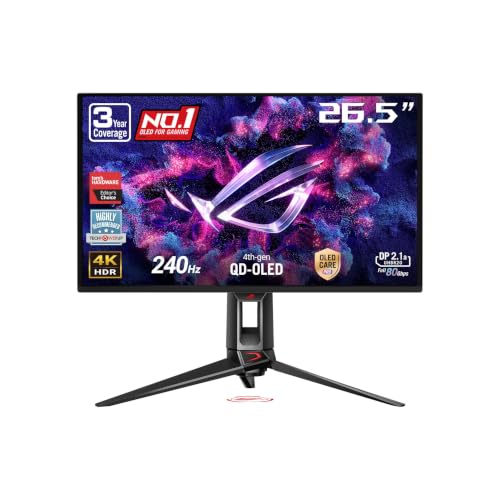
ASUS ROG PG27UCDM 27-Inch 4K 240Hz QD-OLED Monitor

LG 32GX850A-B 32-Inch 4K OLED Dual-Mode Monitor
More Details On Our Top Picks
A 27-inch 1080p screen like this fits the everyday desk without asking for much in return. The IPS panel means steadier color from off angles, which helps in a shared office or on a laptop docked beside the monitor.
The 100Hz refresh rate sits well above basic office displays, so scrolling and casual play feel smoother than a standard 60Hz panel. The trade-off is clear enough, though, since 1080p at 27 inches won’t look as crisp as the sharper QHD and 4K models later in this list.
What We Like
- 27-inch size gives you usable screen space without crowding a modest desk.
- IPS viewing angles help when you shift posture or share the screen.
- 100Hz motion feels calmer for browsing, document work, and lighter gaming.
- HDMI and VGA make it easier to fit older and newer setups.
- Thin bezels suit a dual-monitor desk better than bulkier frames.
Things To Consider
- 1080p on a 27-inch panel is serviceable, but not especially crisp for text-heavy work.
- 250 nits of brightness can feel modest in a bright room near windows.
- The feature set stays simple, so power users may want more ergonomic or resolution headroom.
Core Details
Who It Suits Best
Home office users who want a simple, roomy display for work, streaming, and light play should feel at home here.
Where A Sibling Pick Shines
Alienware AW2725DM fits you better for faster gaming and a sharper WQHD image, especially on a desktop built around play.
That 45-inch curved OLED panel is built for people who want a monitor to feel more like a wrapped workspace than a simple screen. The 5120 x 2160 resolution gives you a broad canvas for timelines, side panels, and large game worlds, which is handy in a hybrid work-and-play setup.
Dual Mode changes the personality of the display, so you can favor rich detail or a much faster pace without changing hardware. The catch is obvious, though, because a panel this large asks for serious desk depth and a setup that can actually accommodate its footprint.
Highlights
- Huge 45-inch curve creates an immersive, wraparound feel on a deep desk.
- 5K2K resolution gives you a wide work area for multitasking and content work.
- Dual Mode gives the monitor two clear usage profiles.
- USB Type-C with 90W output simplifies laptop docking for many setups.
- DisplayPort 2.1 suits high-bandwidth connections on newer gaming systems.
Points To Note
- The size asks for room, and cramped desks will make it feel overwhelming fast.
- OLED owners typically prefer some care with static interface elements during long desk sessions.
- Its scale and capability put it in a different class from the smaller, simpler picks here.
Feature Card
The Right Fit
Multi-taskers, sim fans, and desk-based creators with plenty of space will get the most from this curved ultrawide-style layout.
Look Elsewhere When
ViewSonic VS2747-H makes more sense for a compact office, while LG 32GX850A-B suits you better if you want OLED speed in a smaller footprint.
The AW2725DM lands in a practical sweet spot, because WQHD on 27 inches gives you noticeably more detail than 1080p without demanding a monster graphics card. Fast IPS keeps the motion profile lively while preserving the color consistency that helps in mixed gaming and everyday desktop use.
It feels like the pick for people who want a monitor that behaves well outside game time too. The 3H anti-glare surface can help in bright rooms, though glossy OLED fans may miss the richer look those panels bring.
Bright Spots
- WQHD resolution sharpens text and game detail versus 1080p models.
- 180Hz refresh rate supports quick motion without jumping to the most extreme tier.
- 95% DCI-P3 and 1.07 billion colors point to broad color output for games and creative work.
- HDMI 2.1, DisplayPort 1.4, and USB give you flexible connection options.
- Height, tilt, swivel, and pivot adjustment make it easier to fit your posture and desk layout.
Room For Improvement
- The anti-glare finish is practical, but it does soften the glassy look that some people prefer.
- Brightness is listed at 400 cd/m2, so sunlit rooms may call for careful placement.
- It sits between office-first and speed-first categories, which is useful, but not hyper-specialized.
Details At A Glance
Best Suited To
Desk gamers who want sharper-than-1080p detail, plus people who also use the same screen for work, should find the balance appealing.
Swap It Out When
ASUS ROG PG27AQDP is the sharper speed play for esports-focused setups, while ViewSonic VS2747-H is the simpler route for office duty.
This ASUS model leans hard into speed, and the 360Hz refresh rate puts it in territory that competitive game desks tend to appreciate. QD-OLED brings the contrast punch and rich color that flat IPS panels usually can’t match, so dark scenes and bright highlights carry more visual depth.
The built-in heatsink and OLED care features matter more than they sound, because they’re there to support long-term ownership rather than just spec-sheet bragging rights. The honest read is that you’re paying for a screen built with serious gaming habits in mind, not a casual living-room layout.
Best Bits
- 360Hz refresh rate supports very fluid motion for fast-paced play.
- QD-OLED panel gives you deep contrast and vivid image texture.
- 0.03ms response time suits twitch-heavy game genres.
- OLED Care+ and the custom heatsink address long-session ownership concerns.
- HDMI 2.1 and DisplayPort 1.4 keep it easy to pair with modern systems.
Minor Gripes
- Its focus on speed makes it more specialized than the all-rounder Alienware pick.
- OLED upkeep still asks for a little more attention than a basic IPS monitor.
- The compact 26.5-inch size gives you less workspace than the 27-inch and 32-inch alternatives.
Quick Facts
Whose Shelf It Belongs On
Competitive gamers who want fast motion plus OLED contrast will get the most from this display.
A Better Fit Elsewhere
ASUS ROG PG27AQDP is even faster for pure esports focus, while LG 32GX850A-B gives you a larger 4K OLED view with more desk presence.
At 480Hz, this monitor is aimed squarely at people who want motion to feel as immediate as possible. The 27-inch QHD layout keeps the pixel density sensible, so you get a sharp desktop without moving up to a much larger 4K panel.
That makes it especially appealing for esports spaces where speed matters more than giant screen real estate. Compared with the Strix QD-OLED above, this one is the more focused motion tool, while the 4K ASUS model later in the list gives you more image detail.
Upsides
- 480Hz refresh rate pushes motion smoothness into very specialized territory.
- 0.03ms response time supports crisp rapid movement in fast games.
- WOLED panel aims for deep contrast and strong image punch.
- DisplayHDR 400 gives the panel a useful HDR baseline.
- True 10-bit color and 99% DCI-P3 matter for rich color handling.
- Custom heatsink helps support long gaming sessions without making the chassis feel bare-bones.
Softer Spots
- The speed focus narrows the appeal compared with broader all-rounder monitors.
- 24-inch class alternatives may suit smaller desks more easily, though this 27-inch size is still manageable.
- OLED ownership usually rewards a bit of care around static content over long sessions.
Feature Rundown
Made For
Esports-focused gamers who care more about speed and clarity than extra screen size are the clear fit here.
Another Choice May Suit
Alienware AW2725DM is easier to justify for mixed gaming and daily work, while ASUS ROG PG27UCDM serves you better if 4K detail matters more than raw refresh rate.
This is the kind of monitor that fits a serious desk without making you choose between crisp text and fast motion. 4K at 27 inches gives you dense detail, while 240Hz keeps it squarely in premium gaming territory rather than pure content work.
QD-OLED, the quantum-dot OLED variant, brings strong contrast and cleaner-looking text than older OLED generations are often associated with. The Neo Proximity Sensor is a practical touch for people who leave the desk often, and that feels especially thoughtful compared with the more speed-only ASUS pick above.
Reasons To Buy
- 4K resolution gives you very sharp text and fine detail.
- 240Hz refresh rate keeps gaming motion smooth without cutting resolution.
- QD-OLED aims for deep contrast and crisp image texture.
- Neo Proximity Sensor supports smarter screen behavior during idle time.
- OLED Care Pro and the custom heatsink address long-term panel upkeep.
Areas To Watch
- 4K plus OLED plus high refresh rate pushes the premium side of the category.
- The 27-inch size is excellent for density, but not as expansive as a 32-inch panel.
- Care features help, though OLED still asks for reasonable day-to-day habits.
Feature Snapshot
Right Fit For
Power users who want a single screen for premium gaming, crisp desktop work, and sharp text should like this model a lot.
Skip It When
ASUS ROG PG27AQDP makes more sense for pure speed, while LG 32GX850A-B gives you a bigger 32-inch alternative with more breathing room.
LG’s 32-inch panel is the sort of screen that feels comfortable in more rooms because it blends 4K clarity with a size that doesn’t overwhelm a standard desk. Dual-Mode is useful here, since you can lean into fuller 4K detail or switch toward higher-speed play depending on what you do most.
The glossy OLED finish gives images a vivid, polished look, and the adjustable stand adds practical value for everyday setup changes. Compared with the 45-inch LG above, this one is far easier to place, which is a big part of why it makes sense for many setups.
Standout Traits
- 32-inch 4K format gives you a strong mix of sharpness and usable size.
- Dual-Mode lets you balance detail and speed.
- 330Hz mode offers a serious motion ceiling for fast play.
- Glossy OLED finish brings rich contrast and a vivid look.
- Tilt, height, swivel, and pivot adjustment make it easier to dial in posture.
Small Caveats
- The glossy surface can reflect room light more than matte panels.
- Dual-Mode helps flexibility, but the screen still sits in a premium bracket.
- The 32-inch size is roomy, though not as sprawling as the 45-inch LG.
Key Specs
Who Should Grab It
Gamers who want a large but manageable 4K OLED screen with flexible motion tuning will get a lot from this model.
Reach For A Different Pick When
LG 45GX950A-B is the bigger fit for ultra-wide immersion, while ASUS ROG PG27UCDM makes more sense for a smaller 27-inch 4K desk.
How To Choose The Right 720 Hz Monitors
Match Refresh Rate To Real Use
Refresh rate tells you how many times a monitor updates the image each second, so higher numbers can make motion feel smoother. That matters most in fast shooters, racing games, and any setup where rapid camera movement can look smeared on slower panels.
For office work and streaming, you usually do not need the fastest option available. A well-tuned 144Hz to 240Hz display already feels much cleaner than a basic screen, and the rest of your budget can go toward resolution, size, or panel quality.
Choose The Right Resolution For The Screen Size
Resolution is the pixel count on the screen, and it changes how sharp text and small detail look. A 27-inch 1440p panel often hits a useful balance, while 4K makes more sense once you want finer desktop detail or plan to sit a little closer.
Very large panels can benefit from ultrawide or 4K layouts because they give you more room for windows and game worlds. On a smaller desk, though, that same size can feel like too much screen to manage comfortably.
Panel Type Shapes The Whole Experience
IPS panels usually offer steady color from the side and tend to feel forgiving for mixed work. OLED, including QD-OLED and WOLED, brings deeper contrast and faster-looking motion, though it also asks for a bit more care during long desktop sessions.
For many homes, the right choice depends on how you spend the day. A shared office, a gaming room, and a content-editing desk each benefit from different trade-offs, even when the screen sizes look similar on paper.
Connectivity And Ergonomics Matter More Than They Look
Ports such as HDMI, DisplayPort, USB, and USB Type-C shape how easily the monitor fits your gear. USB Type-C with power delivery is especially handy for laptop users, since it can reduce cable clutter and simplify docking.
Adjustable stands matter too, because tilt, height, swivel, and pivot can turn a decent screen into a comfortable one. That’s the sort of detail you feel every day, especially on long work sessions or marathon gaming nights.
Things Worth Knowing First
Hidden Buying Traps
Shoppers often chase refresh rate alone and forget that panel size and resolution need to line up with the desk. A 27-inch screen with a low pixel count can look soft, while an oversized display can overwhelm a shallow workspace.
Another common miss is ignoring the room itself. Bright windows, glossy surfaces, and awkward cable access can turn a promising monitor into a fussy setup.
What The Higher Tier Buys
Higher-priced monitors usually spend the extra money on OLED panels, faster response times, stronger color coverage, and better motion tuning. You also tend to get smarter care features, sturdier stands, and more capable connection options.
That upgrade pays off most for gaming desks that pull double duty as workstations. For casual use or a secondary office screen, a simpler IPS model often makes more sense and keeps setup easier.
Frequently Asked Questions
What does 720 Hz mean for a monitor?
It refers to the refresh rate, or how often the picture updates each second. Higher refresh rates can make fast motion look smoother.
Do you need OLED for fast gaming?
No, but OLED can improve contrast and motion feel in the right setup. IPS still makes sense for many people who want a simpler, more forgiving screen.
Is 4K worth it on a 27-inch monitor?
It can be, especially if you want very crisp text and detailed game imagery. The trade-off is higher system demand and a higher display cost.
Why do curved monitors appeal to some setups?
A curve can help large screens feel more enveloping and keep edges easier to see at a glance. It tends to make the most sense on wide or very large panels.
What is the most practical size for mixed work and gaming?
A 27-inch or 32-inch screen usually stays manageable on most desks. That range gives you enough space for games and multitasking without taking over the room.
