
Fast 2K OLED panels have become the sweet spot for you if smooth motion matters more than extra desktop space. This roundup focuses on screens that fit competitive gaming, console play, and mixed-use desks, with enough panel variety to suit different room sizes and setup habits. You’ll see which picks make sense for long sessions, which lean into glossy contrast, and which are easier to position in a crowded workspace.
Quick Look At The Shortlist

INNOCN 40C1R Ultrawide Monitor 40″ WQHD 3440 x 1440p 144Hz

ASUS ROG XG27AQDMG 27 Inch 1440p 240Hz Glossy OLED Gaming Monitor

LG 27GX704A-B 27-inch Ultragear QHD OLED Gaming Monitor 240Hz
Samsung 27” Odyssey OLED G5 (G50SF) Series QHD & QD-OLED Gaming Monitor

Alienware AW2725DF OLED Gaming Monitor 26.7-inch WQHD 360Hz
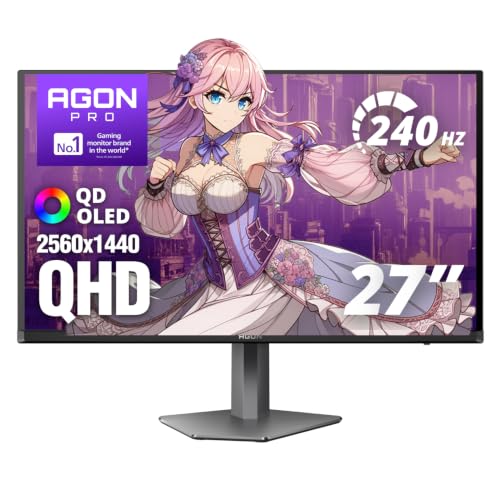
AOC Agon Pro 27 Inch QD OLED Gaming Monitor AG276QZD2

Samsung 27” Odyssey OLED G6 (G60SD) Series Gaming Monitor 360Hz
More Details On Our Top Picks
The INNOCN 40C1R makes sense for you if a single screen has to cover work files, side panels, and the occasional game without feeling cramped. A 40-inch ultrawide with 3440 x 1440 resolution gives you broad horizontal room, while the IPS panel should suit desk setups that need steadier viewing angles than a narrow gaming screen.
The 144Hz refresh rate is quick enough for smooth desktop motion and relaxed gaming, though it sits well below the 240Hz and 360Hz models farther down this list. USB-C also matters here, because it can simplify a laptop desk with one cable for video and power handling, assuming your machine supports that path. The honest read is that this is more about usable space than raw esports speed.
Strong Points
- Wide 21:9 layout gives you room for timelines, tabs, and side-by-side windows.
- IPS panel keeps the image stable from off-center seats.
- USB-C can tidy a laptop setup without extra adapters.
- Height and tilt adjustment help it fit different desks.
- 95% DCI-P3 color coverage points to broad, saturated color for games and media.
Things To Consider
- 144Hz is respectable, but competitive 240Hz and 360Hz models feel faster for twitch play.
- A 40-inch ultrawide needs real desk depth, so shallow desks can feel crowded.
- Gloss-free IPS clarity is practical, though it lacks the deep contrast OLED fans want.
Feature Snapshot
Who It Suits Best
Hybrid desk users who split time between work and gaming get the most out of this layout.
A Better Fit Elsewhere
Alienware AW2725DF OLED Gaming Monitor 26.7-inch WQHD 360Hz suits you better for pure competitive play, where refresh speed matters more than ultrawide workspace.
This ASUS ROG model leans hard into glossy OLED presentation, so dark scenes and saturated color have a vivid, glassy look that many desk gamers chase. The custom heatsink and uniform brightness tuning suggest a panel built to manage heat and keep image behavior steadier across the screen, which matters during long sessions at a fixed desk.
Its 240Hz refresh rate and 0.03ms response time place it closer to the speed-focused end of the group than the INNOCN 40C1R. PS5 and Xbox support also broaden the fit, though a glossy finish can be more sensitive to room reflections, so a bright window behind you deserves a second look.
What We Like
- Glossy OLED finish gives deep blacks a vivid, high-contrast look.
- 240Hz suits fast shooters and motion-heavy games.
- Custom heatsink helps support a cooler-running panel design.
- Anti-flicker and uniform brightness are helpful for long, steady sessions.
- Console compatibility widens the use case beyond PC-only rigs.
Small Caveats
- Glossy panel coating can pick up room reflections more easily than matte finishes.
- 27 inches is focused and efficient, but it offers less desktop spread than the ultrawide INNOCN.
- High-speed OLED value is strongest in darker rooms or controlled lighting.
Core Details
Made For
Competitive gamers who want OLED contrast in a compact 27-inch footprint will feel at home here.
Swap It Out When
LG 27GX704A-B 27-inch Ultragear QHD OLED Gaming Monitor 240Hz suits you better if you want a more restrained, all-round gaming display with broader adaptive-sync support.
The LG 27GX704A-B sits in the sweet middle ground for you if you want 240Hz speed without turning the desk into a shrine to one feature. Its 27-inch QHD panel is a familiar size for esports and general gaming, and the OLED layer should deliver the contrast and quick pixel response that make motion look crisp.
Compared with the glossy ASUS above, this LG reads as the quieter choice, which can matter in a brighter room or a shared setup. NVIDIA G-Sync Compatible and AMD FreeSync Premium Pro both broaden smooth-frame support, so the monitor works well for mixed GPU setups instead of locking you into a single path.
Highlights
- 240Hz keeps fast movement fluid for competitive sessions.
- 0.03ms response time supports sharp motion handling.
- G-Sync Compatible and FreeSync Premium Pro broaden variable refresh support.
- HDMI 2.1 and DisplayPort help it fit modern PC and console desks.
- Black finish keeps the design understated beside flashier gaming models.
Softer Spots
- The model name lists 2650 x 1440, which may prompt close comparison with standard 2560 x 1440 displays.
- It does not lean on special visual styling, so design drama stays low.
- 27 inches is versatile, but it lacks the panoramic feel of the INNOCN ultrawide.
Details At A Glance
Whose Shelf It Belongs On
PC gamers who want a balanced 27-inch OLED with flexible sync support get the cleanest fit here.
Look Elsewhere When
Alienware AW2725DF OLED Gaming Monitor 26.7-inch WQHD 360Hz is the sharper choice for you if your priority is the fastest motion in this list.
The Samsung Odyssey OLED G5 keeps things simple, which suits you if the goal is a clean 27-inch gaming monitor without extra visual clutter. QD-OLED, or quantum-dot OLED, blends OLED contrast with a color layer aimed at richer saturation, so it can look lively in games and media without asking for a huge desk.
At 180Hz, it is slower than the 240Hz and 360Hz options here, yet still well above basic screens. That makes it a sensible middle-ground choice for casual competitive play, especially in rooms where a dedicated service contract and Samsung technician support carry some peace of mind.
Upsides
- QD-OLED panel gives strong contrast and rich color.
- 180Hz still feels quick for most gaming sessions.
- 0.03ms response time supports crisp on-screen motion.
- Samsung support structure is straightforward for setup and troubleshooting.
Room For Improvement
- 180Hz sits below the faster OLED monitors in this roundup.
- It does not offer the wider desktop canvas of the INNOCN ultrawide.
- Shared-room setups may still benefit from a few adjustment checks during placement.
Feature Rundown
Best Suited To
You get the most from this model if you want Samsung styling and a manageable 27-inch footprint for mixed gaming use.
Where A Sibling Pick Shines
Samsung 27” Odyssey OLED G6 (G60SD) Series Gaming Monitor 360Hz suits you better for faster esports motion and a more aggressive performance focus.
The Alienware AW2725DF is built for you if speed sits at the center of your setup. A 26.7-inch QHD panel with 360Hz refresh and 0.03ms response is the kind of combination that makes fast camera movement feel tightly controlled, which is exactly why esports-focused desks tend to favor it.
Compared with the LG and ASUS 240Hz models, this Alienware steps harder into motion performance, while keeping a more compact 26.7-inch footprint than the 27-inch field standard. Height, tilt, swivel, and pivot adjustment also make placement easier, especially on a narrow desk where comfort and cable routing matter.
Best Bits
- 360Hz is the fastest refresh rate in this group.
- 0.03ms response time supports very tight motion handling.
- Height, tilt, swivel, and pivot adjustment help with ergonomics.
- 26.7-inch size feels focused without taking over the desk.
- AMD FreeSync Premium Pro suits fast, adaptive gaming setups.
Areas To Watch
- Its speed focus means less emphasis on a large workspace than the INNOCN ultrawide.
- Serious motion tuning comes with a stronger gaming-first personality.
- For mixed office and game use, a broader screen may feel easier to live with.
Spec Overview
Perfect Match For
Competitive PC gamers who want the fastest motion in the roundup will feel the appeal immediately.
A Better Fit Elsewhere
ASUS ROG XG27AQDMG 27 Inch 1440p 240Hz Glossy OLED Gaming Monitor fits you better when you want glossy OLED styling with a slightly less intense speed focus.
The AOC Agon Pro AG276QZD2 fits the shopper who wants a gaming monitor with a bit more built-in convenience. Height adjustment, VESA mount support, and built-in speakers make it easier to place in a bedroom, office, or shared desk where extra accessories are not always welcome.
Its 240Hz QD-OLED panel keeps it in the fast lane without pushing into the Alienware’s 360Hz territory. HDR TrueBlack 400 is also part of the story, which means the panel is aimed at stronger perceived contrast in supported content, though you still need to expect OLED-style care with brightness and room lighting choices.
Plus Points
- 240Hz offers fast motion for gaming without overcomplicating the setup.
- Built-in speakers add convenience for casual use and quick setup.
- Height adjustment and VESA mounting make placement flexible.
- HDR TrueBlack 400 points to strong dark-scene presentation.
Worth Noting
- Built-in speakers help in a pinch, but dedicated audio still matters for serious play.
- VESA mounting is useful, though it adds another setup decision for your desk.
- It remains a 27-inch display, so the workspace stays focused rather than expansive.
Technical Sheet
The Right Fit
You should look at this one if you want a tidy, flexible OLED monitor that covers more than just gaming.
Skip It When
Alienware AW2725DF OLED Gaming Monitor 26.7-inch WQHD 360Hz suits you better if absolute motion speed matters more than built-in convenience.
The Odyssey OLED G6 is the sharpest Samsung option in this lineup, and its 360Hz panel puts it squarely in the space for serious speed-focused play. Anti-glare treatment and a cooling system matter more than they sound, because both help the monitor stay easier to live with during longer sessions and under brighter room light.
The 3-year warranty listed on the product page also stands out in a practical way, though the real draw is the combination of QD-OLED contrast and fast motion handling. Compared with the G5, this is the obvious step up for you when higher refresh and a more polished gaming-first design justify the extra spend.
Bright Spots
- 360Hz makes it a strong choice for rapid competitive movement.
- Anti-glare finish helps in brighter rooms.
- Cooling system adds a practical layer for long gaming sessions.
- QHD and QD-OLED keep image quality and speed in the same lane.
Minor Gripes
- It is focused on gaming speed, so it does not try to be a broad desktop workhorse.
- Samsung’s support-oriented extras help, but they also make this a more feature-stacked choice.
- For mixed work and play, the ultrawide INNOCN can feel easier to organize.
Core Details
Built With In Mind
Fast-paced esports players who want a premium 27-inch OLED with room-light flexibility should look here first.
Where A Sibling Pick Shines
Alienware AW2725DF OLED Gaming Monitor 26.7-inch WQHD 360Hz suits you better if you want the fastest motion but prefer a slightly smaller, more compact frame.
How To Choose The Right 360 Hz Oled 2k Monitors
Start With The Panel And Refresh Rate
For this category, panel type and refresh rate do the heavy lifting. OLED and QD-OLED bring deep contrast and fast pixel behavior, while 240Hz and 360Hz separate the everyday fast panels from the truly speed-first ones.
You should match those traits to the games you actually play. Fast shooters and high-frame competitive titles benefit most from 360Hz, while 240Hz already feels very quick for mixed gaming and general desk use.
Match Screen Size To Your Desk
Size changes the entire ownership experience. A 26.7-inch or 27-inch display stays easy to center, while the 40-inch ultrawide INNOCN fills a wider span and asks for more desk depth.
That difference matters in real rooms, not just spec sheets. Narrow desks, dual-monitor setups, and shared workspaces usually favor the smaller 27-inch class, while multitaskers often prefer the wide 21:9 format.
Watch The Room, Not Just The Listing
Glossy OLED surfaces can look striking, but room lighting changes the result. Bright windows, desk lamps, and white walls can add reflections, so anti-glare treatment or a matte-style finish can be the safer path.
On the other hand, a controlled room lets glossy panels show off more contrast. That’s where the ASUS ROG XG27AQDMG and the Samsung G6 make the strongest case.
Look Past Raw Speed
Ports, stand adjustment, and mounting support matter more than they first seem. Height, tilt, swivel, and pivot help you keep the screen level with your eyes, and USB-C can simplify a laptop desk.
Think about long-term convenience too, not just the headline number. Built-in speakers, VESA compatibility, and adaptive sync support often decide which monitor feels easy to live with after the novelty wears off.
Things Worth Knowing First
Hidden Buying Traps
It’s easy to chase the highest refresh number and ignore the rest of the setup. A 360Hz screen still needs enough GPU output, a sturdy desk, and the right cable path to feel worth it.
Glossy panels can also catch reflections in bright rooms, so don’t treat them as a universal fit. The safer move is to match the finish to your lighting before you focus on extras.
The Upgrade Payoff
Higher-tier models usually cost more because they combine faster refresh, stronger panel tuning, better ergonomics, and more polished heat handling. Those touches matter most in desks that stay active for hours and in rooms where the monitor serves as the center of the setup.
Spending up makes the most sense for players who notice motion clarity, color handling, and stand quality every day. If your use is mostly casual, a 240Hz OLED often gives you the better balance.
Frequently Asked Questions
Are 360Hz OLED monitors worth it for you?
They make the most sense for competitive play where motion clarity matters every round. For mixed use, 240Hz models already cover a lot of ground.
Does 2K mean the same thing as 1440p?
In monitor shopping, 2K usually points to the 2560 x 1440 class. That gives you a sharper image than 1080p without the heavy load of 4K.
Is OLED better than IPS for gaming?
OLED usually offers deeper blacks and faster pixel response, which helps motion and contrast. IPS can still make sense for you if you want a steadier, more familiar desktop look.
Do glossy OLED screens cause problems in bright rooms?
They can show more reflections than matte finishes, especially near windows or desk lamps. Anti-glare coating helps, but room placement still matters.
Which size fits most desks best?
27 inches is the easiest place to start for a standard setup. The 40-inch ultrawide works better when your desk is deep enough to keep the screen at a comfortable distance.
Final Thoughts
Your best match comes down to how hard you push motion speed versus how much desk space you need. The Alienware and Samsung G6 cover the fastest end, the ASUS and LG hit the sweet 240Hz middle, and the INNOCN brings the broadest workspace. If you want a monitor that feels at home in a real room rather than a spec sheet, start with the one that fits your desk and lighting first.
